Field assessments conducted during the summer of 2026 have provided new insights into the longevity and technical versatility of discontinued Konica Infrared 750nm film. As the analog photography community continues to navigate the scarcity of dedicated infrared (IR) emulsions, the successful utilization of 25-year-old, fridge-stored Konica stock highlights a significant intersection between chemical preservation and optical innovation. By moving away from traditional, opaque infrared filters in favor of standardized red filtration (R25), photographers are reporting a streamlined workflow that allows for handheld operation and simplified composition without sacrificing the characteristic "Wood Effect" associated with infrared imaging.
Technical Profile of Konica Infrared 750nm
Konica Infrared 750nm was a staple of the black-and-white infrared market until its discontinuation in the mid-2000s. Unlike the more extreme Kodak High Speed Infrared (HIE), which lacked an anti-halation layer and produced a glowing, ethereal bloom, the Konica 750nm was noted for its finer grain, higher contrast, and more predictable rendering. Its sensitivity peaks near 750 nanometers, though it maintains a degree of sensitivity into the 820nm range.
Because the film is also sensitive to the visible light spectrum, particularly blue and green wavelengths, it requires filtration to isolate the infrared effect. Traditionally, this involved the use of an R72 or 89B filter, which appears opaque to the human eye. These filters necessitate the use of a tripod due to the significant light loss—often requiring five to eight stops of exposure compensation—and make through-the-lens (TTL) composition impossible without removing the filter for every shot.
The 2026 Summer Field Trials: Methodology and Equipment
The recent documentation of this film’s performance in South Yorkshire and the Peak District during the heatwaves of 2026 utilized a modified approach to filtration. By employing a Hoya R25 (Red) filter, the photographer was able to achieve a balance between infrared effect and operational efficiency. The R25 filter blocks wavelengths shorter than approximately 600nm, effectively cutting out blue and green light while allowing red and infrared light to pass. This results in a filter factor of approximately three stops, which, in the bright, high-UV conditions of a peak summer day, permits shutter speeds fast enough for handheld photography.
The primary equipment used in these trials consisted of a Pentax ME Super fitted with a Pentax-M 28mm f/2.8 lens. This choice of optics is significant, as wide-angle lenses provide the necessary depth of field to compensate for the slight focus shift inherent in infrared photography (where infrared light focuses at a different plane than visible light). Despite the availability of more modern bodies like the Pentax P30N, the ME Super was selected due to its manual ISO override capabilities. The P30N, a mid-1980s SLR, relies on DX-coding to set film speed; since vintage Konica Infrared canisters lack these electronic codes, the manual controls of the ME Super were essential for the +2 or +3 stop compensations required for the expired emulsion.
Chronology of Landscape Documentation
The 2026 sessions were divided into three distinct geographical phases, each testing the film’s response to different lighting conditions and subject matter.
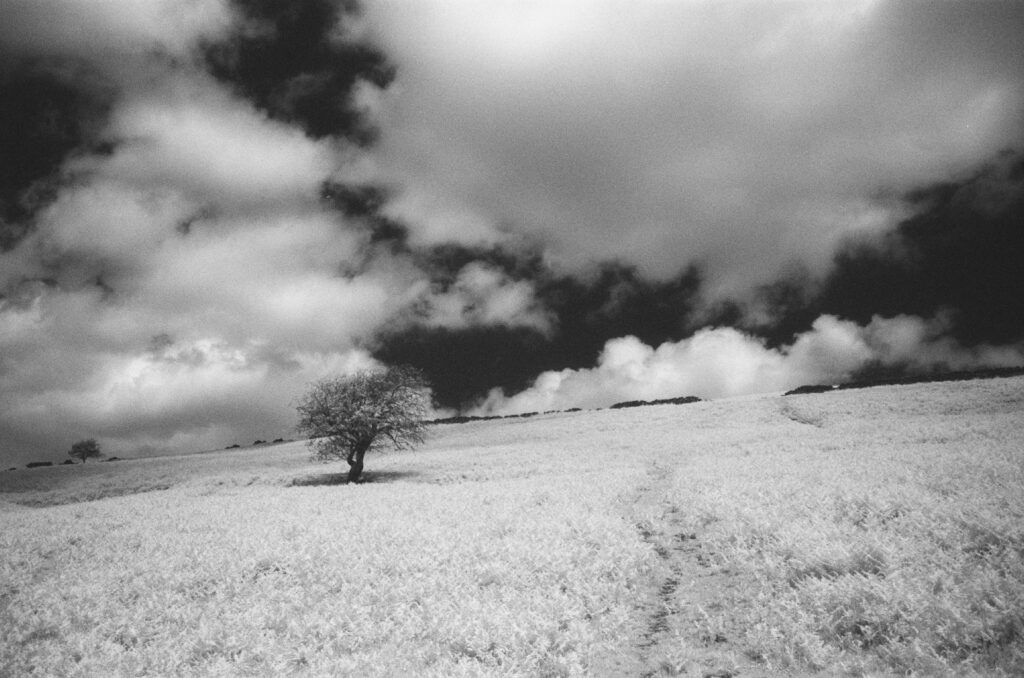
Phase I: Bradfield Edge and the Peak District
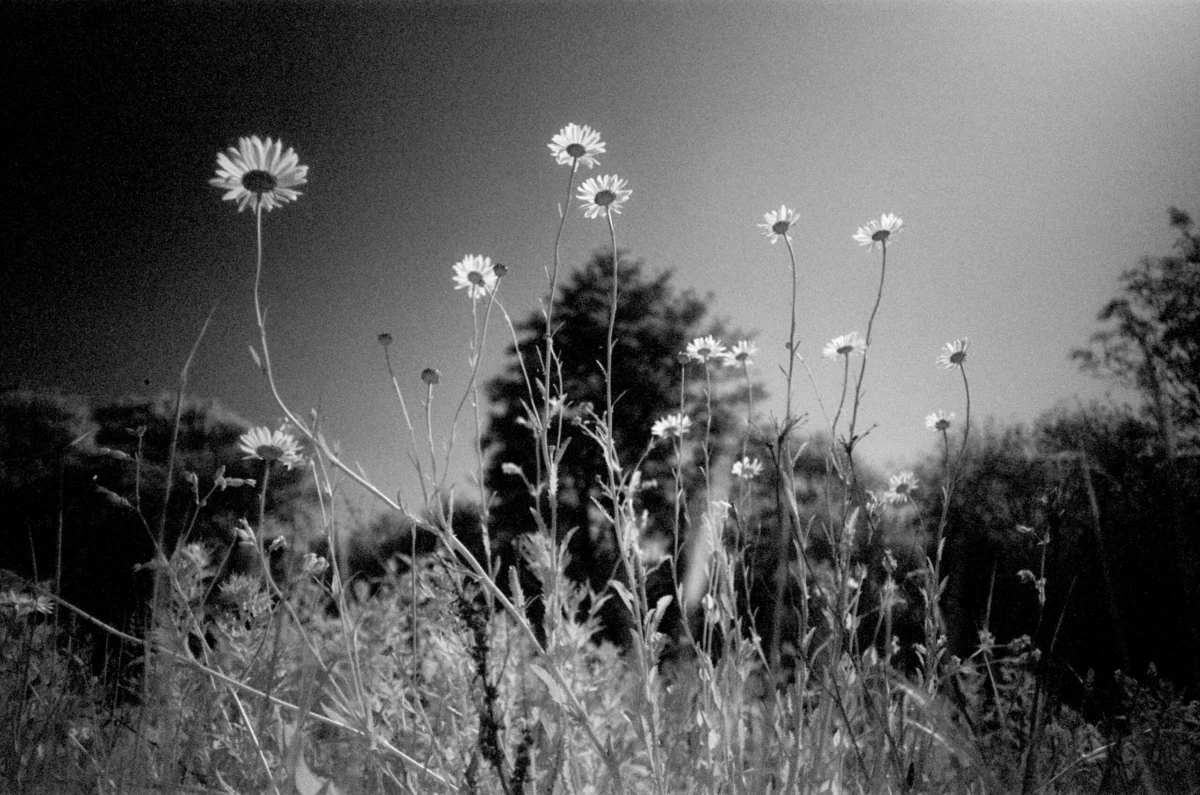
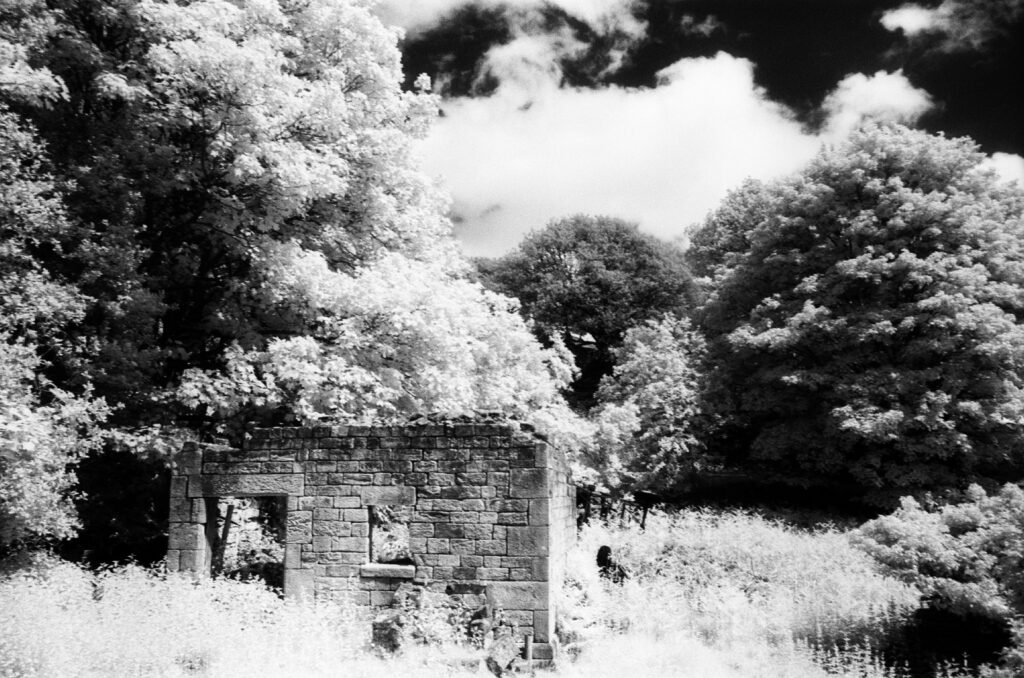
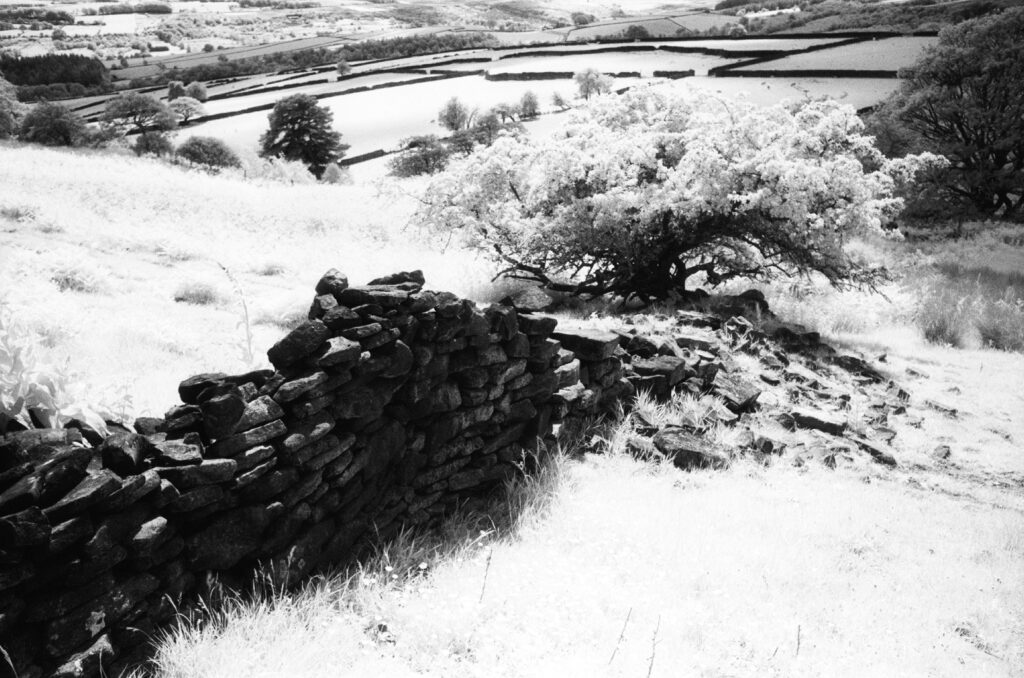
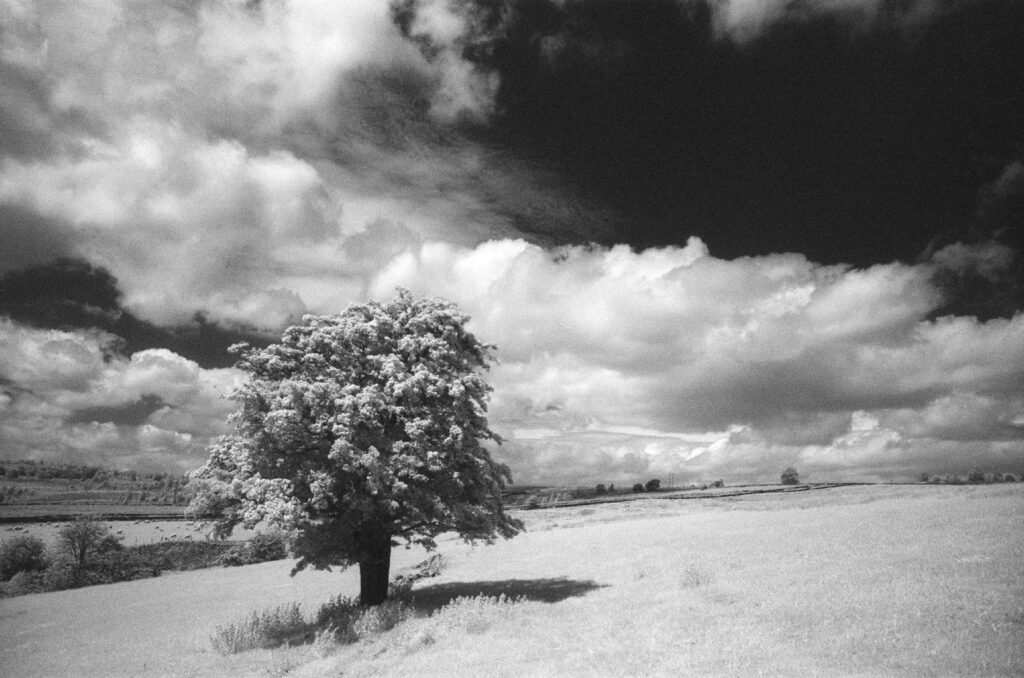
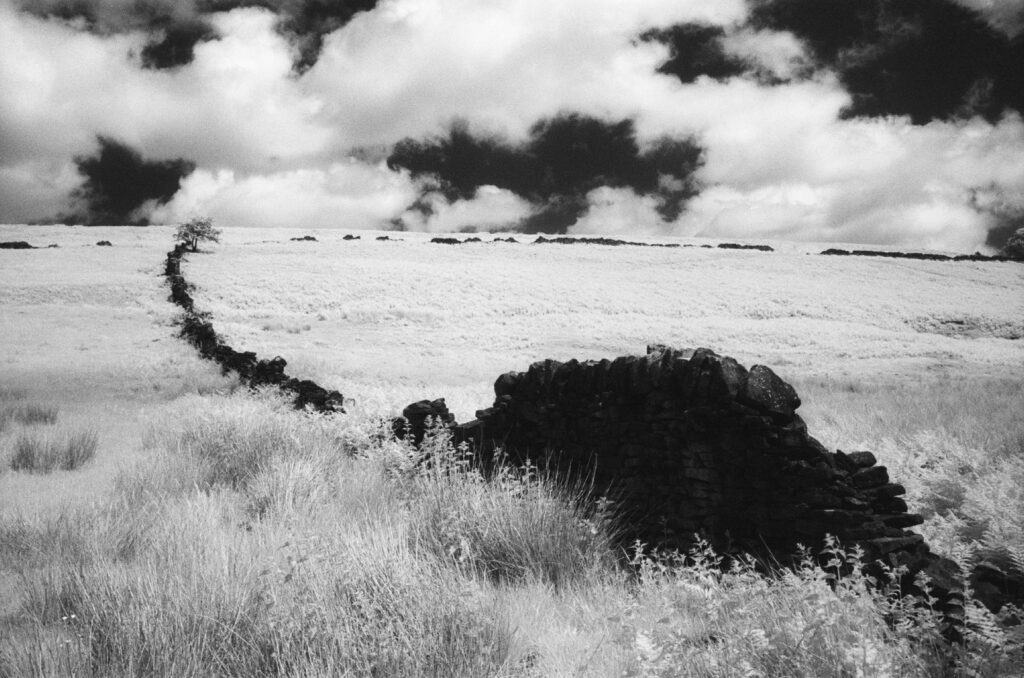
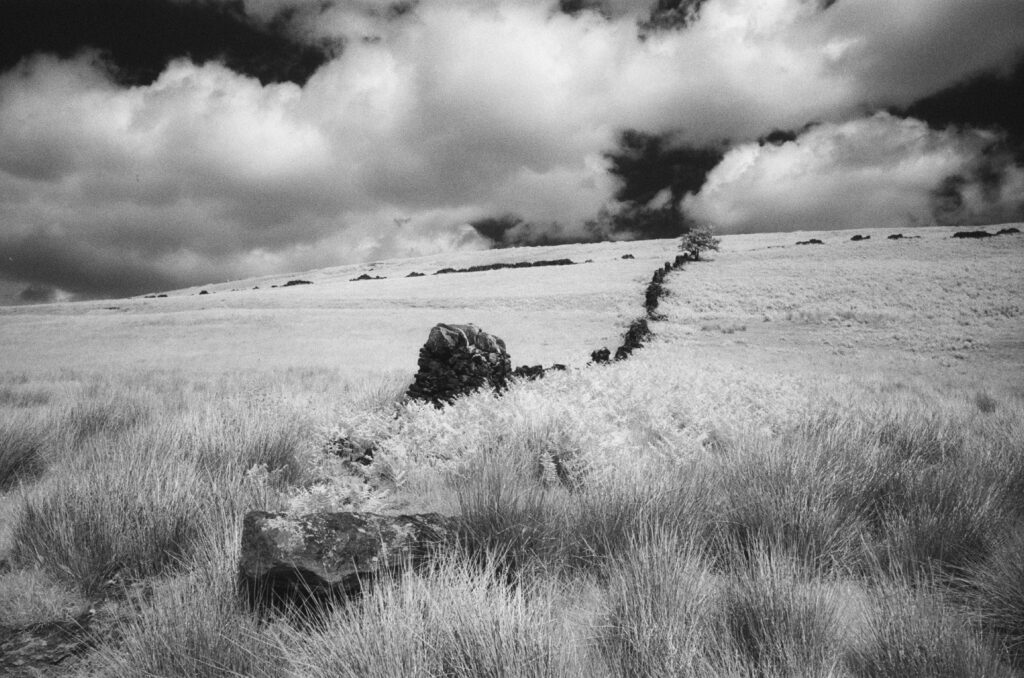
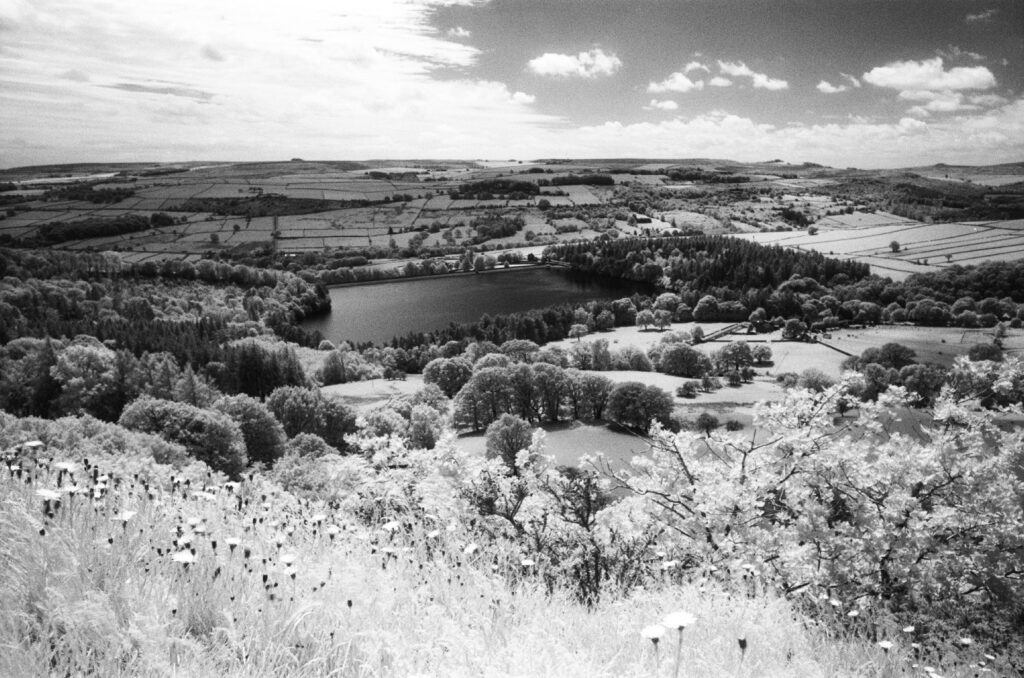
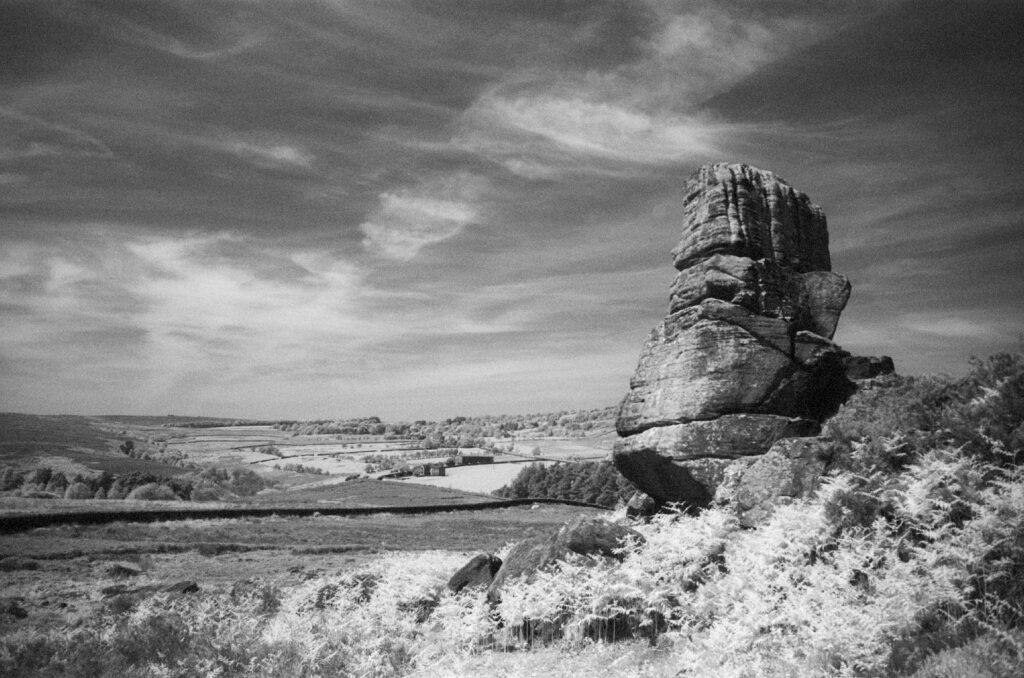
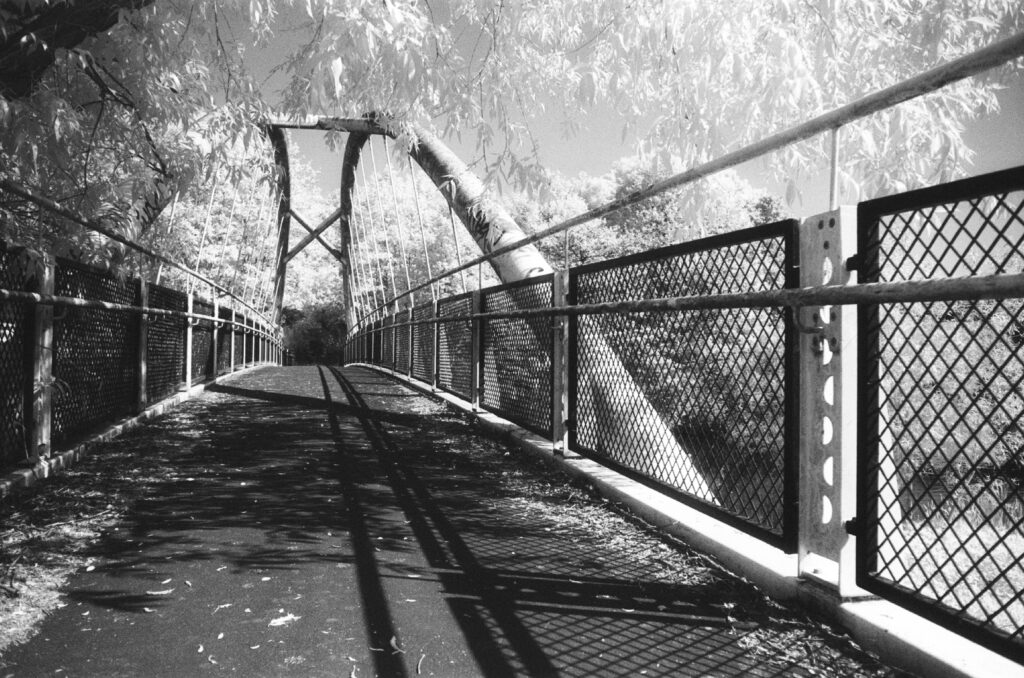
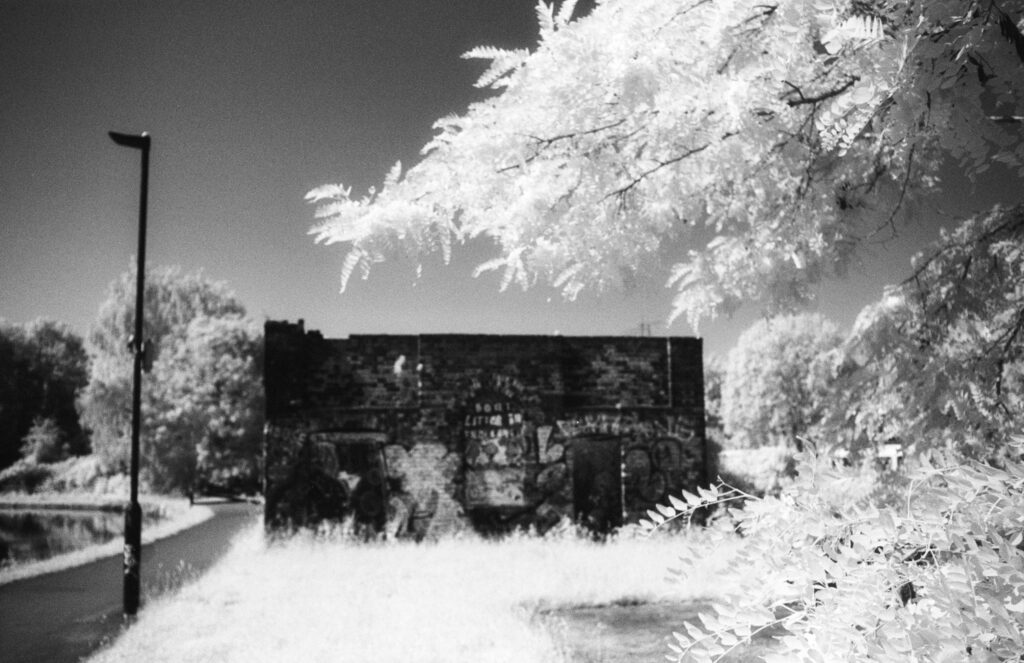
The initial testing occurred at Bradfield Edge, overlooking the Agden and Dale Dike reservoirs. Under a high-pressure weather system characterized by brilliant blue skies and "popcorn" cumulus clouds, the film demonstrated its maximum contrast potential. The R25 filter successfully rendered the blue sky as a deep, near-black tone, while the chlorophyl-rich foliage of the South Yorkshire landscape appeared as a stark, brilliant white. This phenomenon, known as the Wood Effect (named after physicist Robert W. Wood), is the result of infrared light being reflected by the cellular structure of green plants.
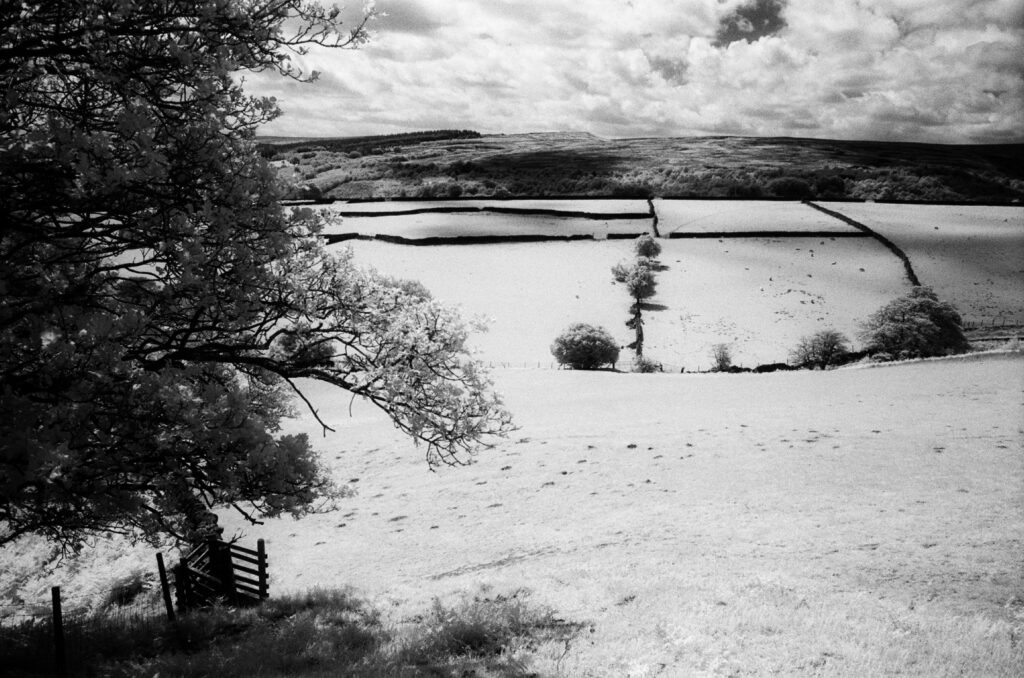
Key captures in this region included ruined farm buildings and collapsed stone walls. These subjects provided a neutral grey-scale reference against which the extreme whites of the trees and the dark voids of the sky could be measured. The results confirmed that even after a quarter-century of storage, the film’s base fog remained low enough to produce clear, punchy highlights.
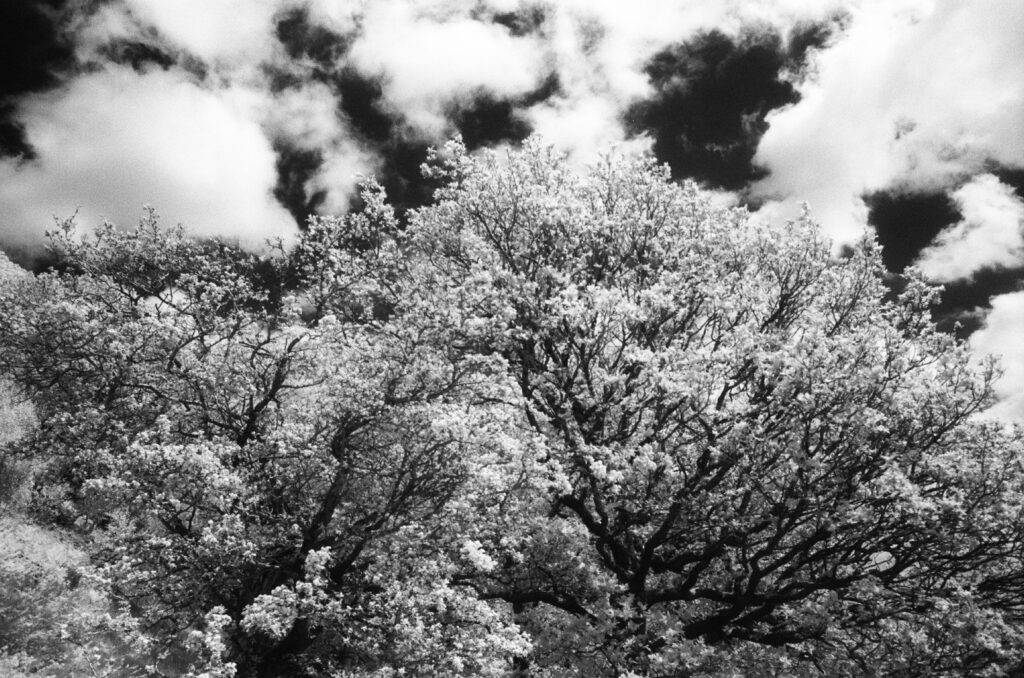
Phase II: Hallam Moors and Stanage Edge
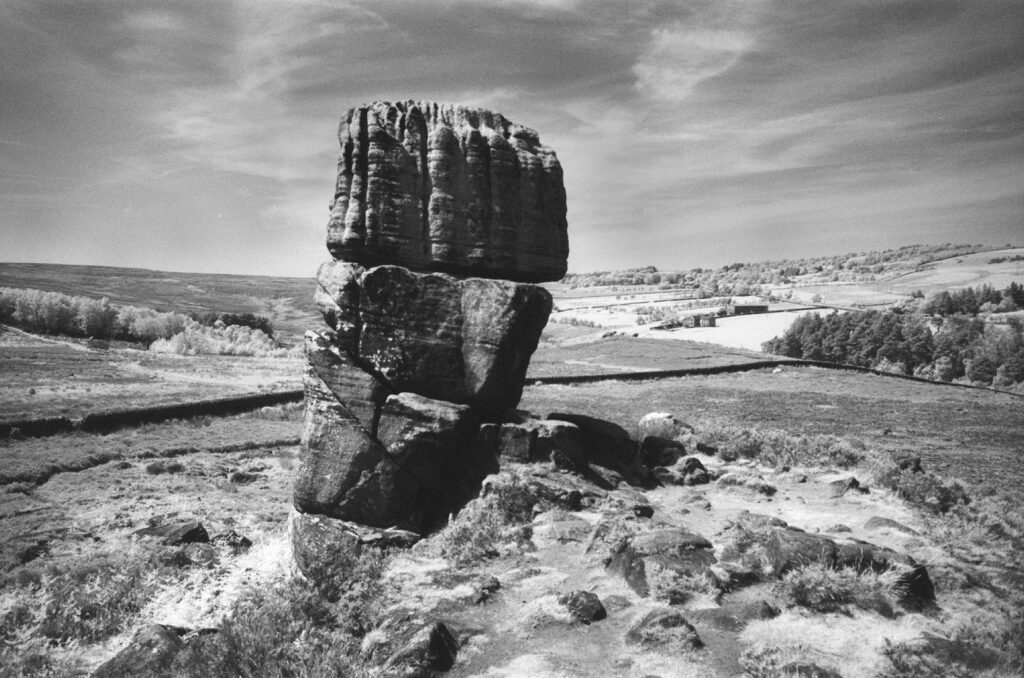
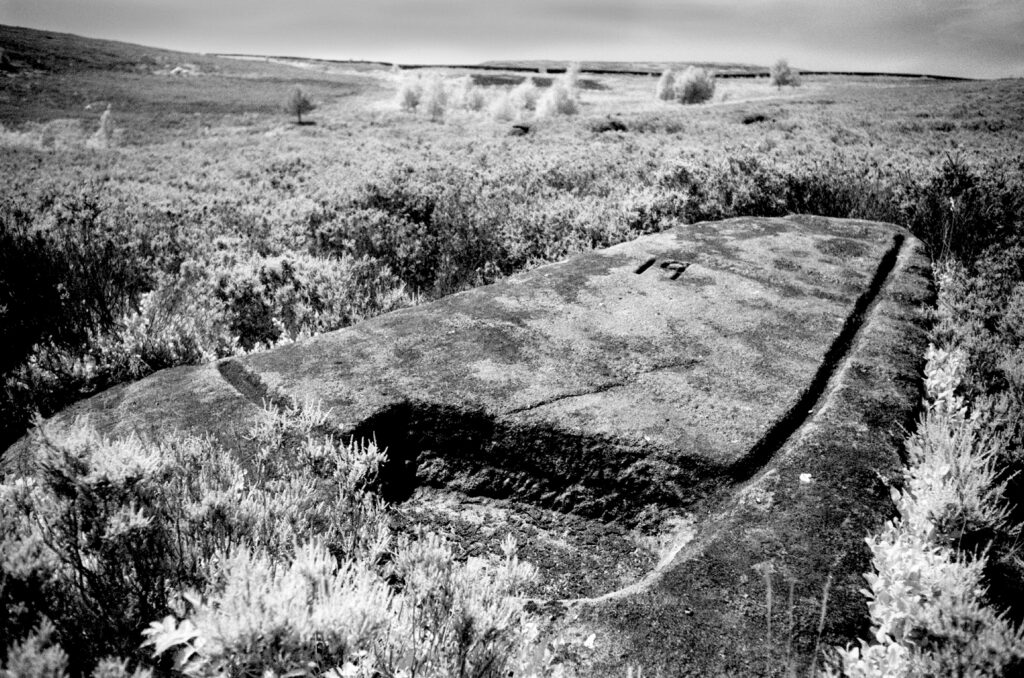
The second phase focused on the geological textures of the Peak District, specifically "The Headstone" rock formation on Hallam Moors and the plateau of Stanage Edge. In these environments, the infrared film was used to highlight the moisture levels and biological growth on gritstone. A notable discovery during this phase was the documentation of numbered stone pools on Stanage Edge. These man-made basins, designed to collect rainwater for grouse, provided a unique contrast between the reflective surface of the water (which typically appears black in IR) and the surrounding bracken.
Phase III: The Tinsley Canal Corridor
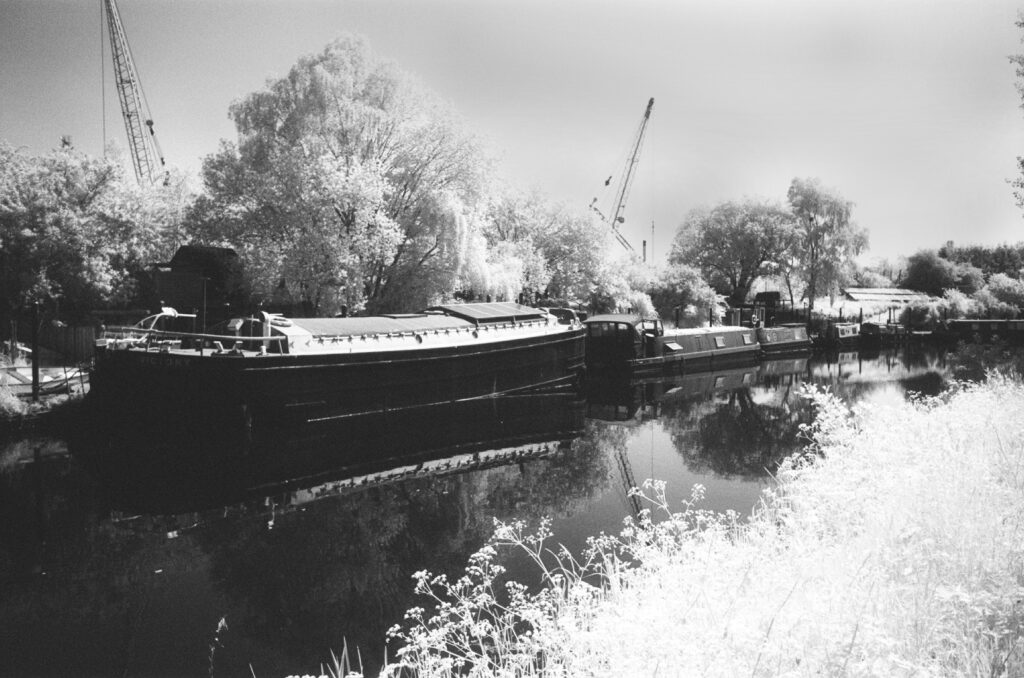
The final phase moved from the rural moors to the industrial-urban interface between Tinsley Locks and Rotherham. This session tested the film’s ability to handle complex urban textures, such as moored canal boats, industrial cranes, and derelict masonry. Despite the "unremittingly grim" atmosphere noted in local socioeconomic reports of the Rotherham center, the IR film transformed the canal-side foliage into a surreal, high-contrast landscape. Of particular technical interest was the rendering of bright red poppies; in standard black-and-white film, red flowers often appear dark, but in infrared, they reflect significant heat and light, appearing almost white or light grey.
Data Analysis: The Impact of Filter Quality
One of the critical findings from the 2026 trials was the correlation between filter quality and image clarity. The use of a Hoya-branded R25 filter, as opposed to generic, unbranded alternatives, appeared to mitigate internal reflections and flare. Technical analysis suggests that higher-quality multi-coatings on premium filters are essential when shooting into the sun—a common occurrence in landscape photography.
The data suggests that for expired film, where the latent image may already be degraded by background radiation and chemical aging, the preservation of micro-contrast through high-quality optics is paramount. The 25-year-old Konica stock showed surprisingly little "grain salt," a common defect in aged film where the silver halide crystals clump together, suggesting that consistent refrigeration is the single most important factor in the preservation of specialty emulsions.
Broader Implications for the Analog Industry
The success of these trials carries several implications for the niche market of analog photography. First, it reinforces the value of the secondary market for expired films. As of 2026, the price for a single roll of Konica Infrared 750nm on international auction sites has reached record highs, driven by the lack of modern equivalents. While companies like Ilford and Rollei produce "near-infrared" films (such as SFX 200 and Infrared 400), these often lack the true 750nm+ sensitivity required for the dramatic effects seen in the Konica stock.
Furthermore, the preference for the Pentax ME Super over the P30N highlights a growing trend among film enthusiasts: the rejection of "automated-only" features in favor of mechanical redundancy. The failure of the P30N to accommodate non-DX-coded film represents a significant design limitation for those working with vintage or hand-rolled stocks.
Conclusion and Future Outlook
The 2026 summer experiments by Mark Ellerby and others in the UK photography scene demonstrate that infrared photography remains a viable and evocative medium, provided the photographer adapts to the limitations of aging materials. The shift toward red filtration (R25) represents a practical evolution in technique, allowing for a more spontaneous, "street-style" approach to a genre that was once the exclusive domain of the tripod-bound professional.
As the global climate continues to produce more frequent periods of intense heat and cloud-scattered skies, the demand for infrared imaging—which thrives in such conditions—is expected to rise. The legacy of Konica’s 750nm emulsion serves as both a benchmark for quality and a reminder of the unique aesthetic possibilities that modern digital sensors, even with IR conversions, often struggle to replicate with the same chemical nuance. For the time being, the fridge-stored remnants of the 20th century continue to provide the clearest window into the invisible spectrum.