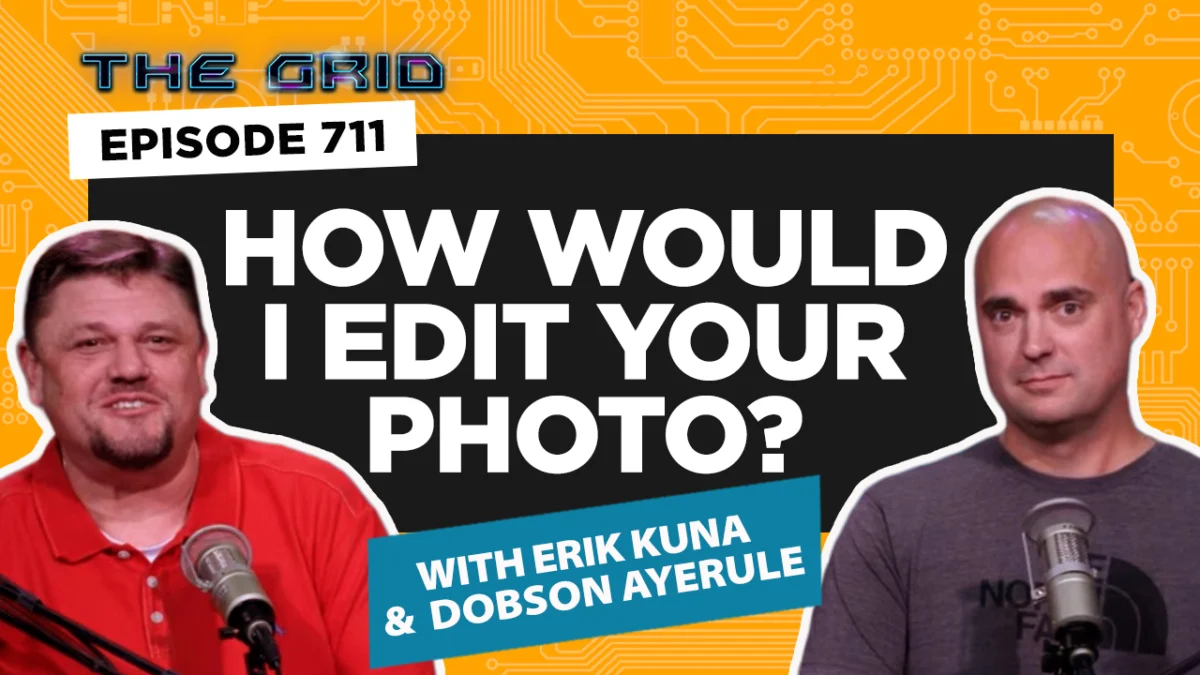
In a recent highly anticipated episode of "The Grid," the flagship photography talk show from KelbyOne, veteran photographer and educator Erik Kuna stepped into the editing chair, delivering an in-depth session on post-production techniques. Joined by the insightful Dobson Ayerule, Kuna expertly navigated a diverse array of viewer-submitted images, focusing on the critical question of visual guidance: "Where do you want the viewer’s eye to go?" This particular broadcast, episode 711, provided a comprehensive look into solving real-world editing challenges using Adobe Lightroom, while simultaneously underscoring the enduring importance of fundamental photography principles that precede the click of the shutter. The episode aired while Scott Kelby, the show’s usual host and a prominent figure in the photography world, was abroad teaching a photography workshop in the picturesque city of Florence, Italy, marking a seamless transition that highlighted the depth of talent within the KelbyOne ecosystem.
The Grid: A Pillar of Photography Education
"The Grid" has long established itself as a cornerstone of online photography education, offering weekly insights, tutorials, and discussions to a global audience of enthusiasts and professionals alike. Launched by KelbyOne, an online educational platform renowned for its high-quality training in photography, Photoshop, and Lightroom, the show has cultivated a loyal following since its inception. Typically hosted by Scott Kelby, a best-selling author, editor, and CEO of KelbyOne, the program covers a wide spectrum of photographic topics, from gear reviews and lighting setups to post-processing workflows and business strategies. Its interactive format, often featuring live Q&A sessions and viewer participation, has made it an invaluable resource for photographers seeking to hone their craft and stay abreast of industry trends. The continuity of "The Grid" is a testament to KelbyOne’s commitment to delivering consistent, high-caliber content, even when its primary host is engaged in other educational endeavors, such as the immersive photography workshops Scott Kelby conducts in iconic international locations, which draw photographers eager for hands-on learning from a master.
A Seamless Transition: Erik Kuna Steps In
The recent episode saw Erik Kuna, a respected educator, photographer, and Adobe Certified Expert, assume the lead role, a testament to his extensive knowledge and dynamic teaching style. Kuna, known for his expertise in Lightroom, Photoshop, and drone photography, has been an integral part of the KelbyOne team for years, regularly contributing to tutorials, workshops, and segments on "The Grid." His transition to the primary host for this episode was not merely a substitute but a deliberate showcasing of the deep bench of talent available within KelbyOne. His collaborative presence with Dobson Ayerule, a photographer whose artistic eye and technical acumen frequently enrich "The Grid"’s discussions, ensured the episode maintained its characteristic blend of practical advice and creative inspiration. Ayerule’s role often involves providing a complementary perspective, sometimes challenging or expanding upon the main demonstrator’s points, thereby offering viewers a more holistic understanding of the subject matter. This synergy is crucial for maintaining the show’s educational integrity and engaging its diverse viewership.
Unpacking the "How Would I Edit Your Photo?" Format
The "How Would I Edit Your Photo?" segment is a particularly popular feature of "The Grid," allowing viewers to submit their own images for live, expert critique and demonstration. This interactive format transforms passive viewing into an active learning experience, as photographers witness firsthand how professionals approach common challenges and unlock the potential within their raw files. For episode 711, the submitted photographs spanned a broad range of genres, including evocative wildlife captures, dynamic street scenes, expansive landscapes, poignant memorial images, and intricate cityscapes. This variety was deliberately chosen to illustrate the universal applicability of specific editing techniques across different photographic contexts. Each image presented its own unique set of problems, from exposure inconsistencies and color casts to distracting elements and compositional weaknesses, providing Kuna with ample opportunity to showcase Lightroom’s versatile toolkit. The process typically involves a brief initial assessment of the image’s strengths and weaknesses, followed by a systematic application of adjustments designed to enhance its visual impact and narrative clarity.
Mastering Post-Production: Techniques and Philosophy
Kuna’s demonstration was meticulously guided by the central question of visual flow: "Where do you want the viewer’s eye to go?" This foundational principle underpins effective composition and is equally crucial in post-processing. His workflow systematically applied a suite of Lightroom tools, each chosen for its specific impact on guiding the viewer’s gaze and refining the image’s narrative.
- Cropping: Often the first and most impactful step, cropping was used not just to adjust aspect ratios but to reframe compositions, eliminate distracting edges, and emphasize the main subject, thereby enhancing the visual weight and balance of the photograph. Strategic cropping can dramatically alter the story an image tells, isolating key elements and creating a stronger visual hierarchy.
- Lightroom’s AI Masking Tools: A highlight of the demonstration, these advanced tools allowed Kuna to make precise, localized adjustments. Features like "Select Subject," "Select Sky," and the sophisticated "Object Selection" enable photographers to target specific areas of an image with unprecedented accuracy. Kuna leveraged these tools to subtly enhance subjects, correct localized exposures, and fine-tune colors without affecting other parts of the frame, demonstrating their power in creating depth and dimension. This technology represents a significant leap forward in photo editing, democratizing complex masking techniques that once required meticulous manual effort.
- White Balance: Critical for accurate color representation, white balance adjustments were used to correct color casts and ensure natural-looking tones. Kuna showed how proper white balance can evoke a specific mood or time of day, transforming a flat image into one with vibrant, lifelike colors or a desired aesthetic.
- Vignettes: Applied judiciously, vignettes served to subtly darken the edges of the frame, drawing the viewer’s eye inward towards the main subject. This classic technique, when used with restraint, can create a sense of focus and intimacy, guiding the viewer’s gaze without being overtly noticeable.
- Dehaze: This powerful tool was employed to cut through atmospheric haze, enhance contrast, and restore clarity to images, particularly landscapes and cityscapes that might have suffered from atmospheric interference. Dehaze not only improves sharpness but can also deepen colors and add punch to an image.
- Color Grading: Beyond basic color correction, color grading was utilized to establish a consistent mood and aesthetic across the image. By adjusting the tones in the shadows, midtones, and highlights, Kuna demonstrated how to create a harmonious color palette that complements the subject matter and enhances the emotional impact of the photograph.
- Selective Adjustments: Throughout the editing process, Kuna emphasized the importance of selective adjustments—using brushes, gradients, and radial filters to fine-tune specific areas. These micro-adjustments are crucial for perfecting details, managing exposure differences within a single frame, and ensuring every element contributes positively to the overall composition.
Each technique was not just demonstrated but explained in the context of its strategic purpose, reinforcing the idea that editing is a series of deliberate choices aimed at refining the visual narrative.
Addressing Common Challenges: The Pre-Shutter Imperative
A significant portion of the discussion centered on identifying common photographic challenges and distinguishing between those that can be remedied in post-production and those that are best addressed in-camera. Kuna and Ayerule meticulously examined issues such as:
- Blown Highlights: Areas of an image that are so overexposed they lose all detail, appearing as pure white. While Lightroom offers some recovery capabilities for slightly overexposed highlights, truly "blown out" areas are often irrecoverable. This led to a crucial discussion on the importance of correct exposure settings at the time of capture, emphasizing the need to "expose to the right" (ETTR) without clipping highlights.
- Distracting Edges: Unwanted elements at the periphery of the frame that pull the viewer’s eye away from the main subject. While cropping can often mitigate this, the discussion highlighted the value of careful composition in the field, encouraging photographers to scout their surroundings and consciously exclude distractions from the outset.
- Flat Light: Light that lacks directionality, resulting in images with low contrast and a lack of three-dimensionality. While contrast and clarity sliders in Lightroom can add some punch, truly compelling light, which sculpts the subject and creates mood, is fundamentally a product of thoughtful lighting choices during capture. This reinforced the idea that while editing can enhance, it cannot fully create what wasn’t there to begin with.
This segment served as a powerful reminder that while Lightroom provides incredibly powerful tools, the most impactful editing decisions often occur before the shutter button is pressed. Understanding light, composition, and exposure are foundational skills that elevate an image beyond what any software can achieve alone. The synergy between in-camera excellence and post-processing finesse is what truly defines professional-grade photography.
Expert Perspectives and Community Engagement
The overarching philosophy articulated by Erik Kuna throughout the episode underscores a commitment to empowering photographers not just with technical skills but with a critical eye. "Our goal is always to empower photographers to tell their stories more effectively," Kuna might reflect, "and that involves understanding both the art of capture and the science of refinement. It’s about making conscious choices at every stage." Dobson Ayerule, known for his emphasis on creative vision, would likely concur, perhaps adding, "The beauty of a show like ‘The Grid’ is seeing how different eyes approach the same image. It’s not just about fixing problems, but about discovering potential and realizing a vision that might not have been immediately obvious."
This interactive format, a cornerstone of KelbyOne’s educational outreach, reflects the organization’s broader commitment to fostering a vibrant and supportive photographic community. By showcasing viewer-submitted work, "The Grid" not only provides invaluable practical advice but also validates the efforts of aspiring photographers, encouraging them to learn, share, and grow. The feedback loop created by these episodes is a testament to the efficacy of online, community-driven education in a field that constantly evolves.
Broader Implications for Contemporary Photography
The episode’s content and format have broader implications for the landscape of contemporary photography. In an era where advanced editing software is readily accessible to virtually anyone with a camera, the line between capture and post-processing has become increasingly blurred. This episode of "The Grid" serves as a crucial educational anchor, guiding photographers through this complex terrain. It highlights that while technology empowers unprecedented creative control, it does not diminish the need for foundational photographic knowledge. Instead, it elevates the importance of understanding why certain edits are made and how they serve the photographer’s artistic intent.
Furthermore, the episode reinforces the critical role of online educational platforms like KelbyOne in democratizing high-level photography instruction. By providing expert guidance on tools like Lightroom, these platforms ensure that photographers at all skill levels can access professional-grade techniques and insights, fostering a more skilled and creatively diverse photographic community globally. The ability to learn from leading practitioners, observe their workflows, and even submit one’s own work for critique, represents a significant advancement in photographic pedagogy.
Ultimately, "How Would I Edit Your Photo?" with Erik Kuna and Dobson Ayerule was more than just a tutorial; it was a masterclass in photographic discernment. It eloquently demonstrated that while software provides the tools, it is the photographer’s eye, understanding, and intentionality that truly shape a compelling image. The episode is a valuable resource for anyone looking to deepen their understanding of post-processing and reaffirm the timeless principles that govern great photography. Viewers are encouraged to watch the replay to witness Erik Kuna’s methodical approach to each image from start to finish, offering a practical blueprint for enhancing their own photographic endeavors.