Raja Ampat, an archipelago renowned globally as the ultimate destination for underwater photography, continues to captivate divers and conservationists alike with its extraordinary marine ecosystems. Situated strategically off the northwest tip of West Papua’s Bird’s Head Peninsula, this remote corner of Indonesia presents an almost fantastical panorama of verdant, jungle-clad islands rising from a crystalline sea, cradling an underwater realm of unparalleled richness. The region’s vibrant coral reefs teem with a diversity of wildlife so vast it would take a lifetime to fully appreciate, solidifying its status as a critical global biodiversity hotspot.
The Ecological Heart of the Coral Triangle
Often affectionately termed "The Last Paradise," Raja Ampat is more than just a picturesque destination; it is an ecological marvel. The archipelago comprises over 1,500 islands, cays, and shoals, clustered around the four main islands of Waigeo, Batanta, Salawati, and Misool. Its prime geographical location squarely within the heart of the Coral Triangle – a marine region recognized as the global center of marine biodiversity – is the fundamental reason for its extraordinary biological wealth. This diverse and abundant utopia is estimated to host over 75% of the world’s known coral species and an astounding array of marine fauna, unequivocally branding it as the mecca for scuba diving and underwater photography.

The Coral Triangle, encompassing the waters of Indonesia, Malaysia, Papua New Guinea, the Philippines, Solomon Islands, and Timor-Leste, is often likened to the Amazon rainforest for its oceanic biodiversity. Within this critical zone, Raja Ampat stands out due to a unique confluence of oceanographic factors, including complex current patterns that funnel nutrient-rich waters through its intricate network of islands and reefs. This constant influx of nutrients fuels an explosive growth of coral and provides an abundant food source for an astonishing variety of marine life. Scientific expeditions have cataloged over 1,000 species of reef fish, 540 distinct strains of coral – a figure unmatched anywhere else on Earth – and more than 700 types of mollusks. Beyond these foundational species, the waters are home to charismatic megafauna such as saltwater crocodiles, the gentle dugongs, and immense schools of manta rays, ensuring that every dive offers a spectacle capable of blowing even the most seasoned diver’s mind out of the water.
A History of Conservation and Growing Recognition

While Raja Ampat has likely been a hotspot for marine life for millennia, its recognition as a global diving and conservation priority is relatively recent. In the early 2000s, pioneering scientific surveys revealed the staggering biodiversity, prompting immediate calls for protection. In 2004, the Indonesian government, in collaboration with international conservation organizations like Conservation International and The Nature Conservancy, established the Raja Ampat Marine Protected Area (MPA) network. This network covers over 45,000 square kilometers, making it one of the largest and most ecologically significant MPAs globally.
The MPA designation was a crucial turning point, introducing regulations to combat illegal fishing, promote sustainable tourism, and empower local communities in conservation efforts. Before this, the region faced threats from destructive fishing practices such as dynamite and cyanide fishing. The establishment of "no-take zones" and sustainable fishing practices has allowed marine populations to rebound, creating a virtuous cycle where a healthy ecosystem attracts more tourism, which in turn provides economic incentives for further protection. The commitment from local communities, who often rely directly on marine resources, has been vital in the success of these initiatives, transforming them from passive beneficiaries into active stewards of their marine heritage.

Navigating the Journey to Paradise: Planning an Expedition
Reaching Raja Ampat, like most truly pristine salty wonderlands, requires dedication and careful planning. Its very remoteness is a double-edged sword: it preserves its untouched beauty but demands a multi-leg journey for international visitors. For those embarking from major hubs, the journey typically involves several flights, often with lengthy layovers, followed by a combination of local transport. For example, an itinerary might include two international flights, followed by a domestic flight to Sorong in West Papua, then a slow and often steamy two-hour ferry ride to Waisai, the capital of Raja Ampat’s Waigeo island, and potentially a final pothole-peppered car journey to a local accommodation or speedboat transfer to a liveaboard.

Once in the region, visitors have several options for experiencing its underwater splendors. Day trips from land-based resorts or homestays offer access to nearby dive sites. However, for serious underwater photographers and those wishing to maximize their exploration of this vast and expansive region, booking onto a liveaboard dive boat is widely considered the superior itinerary. Liveaboards provide the flexibility to cover significant distances, reaching some of the most remote and spectacular dive sites that are otherwise inaccessible. An added bonus is finding a liveaboard program that includes Misool, the southernmost of the four main islands. Misool is particularly celebrated, not only for its breathtaking limestone karst topography but also for its marine biodiversity, which is unique in that it is one of the few places where biodiversity is actively improving, a testament to robust local conservation efforts. After days at sea, many choose to decompress by staying at a local homestay on one of the islands, enjoying the pristine house reefs for leisurely dives or snorkeling.
Underwater Photography: A Spectrum of Opportunities and Challenges

Raja Ampat’s most wonderful attribute, particularly for photographers, is its capacity to offer something for every niche within underwater photography. The incredibly majestic reef systems, flourishing with unimaginable size and vibrant colors, are a true natural masterpiece that keeps many photographers returning. These extensive coral cosmoses create the perfect backdrop for wide-angle photos, capturing schooling fish, graceful manta rays, camouflaged wobbegong sharks, and ancient sea turtles. A 16-35mm lens is generally advised for these types of shots, though there are ample opportunities for close-focus wide-angle (CFWA) photography, highlighting specific reef sections or individuals against a broader backdrop.
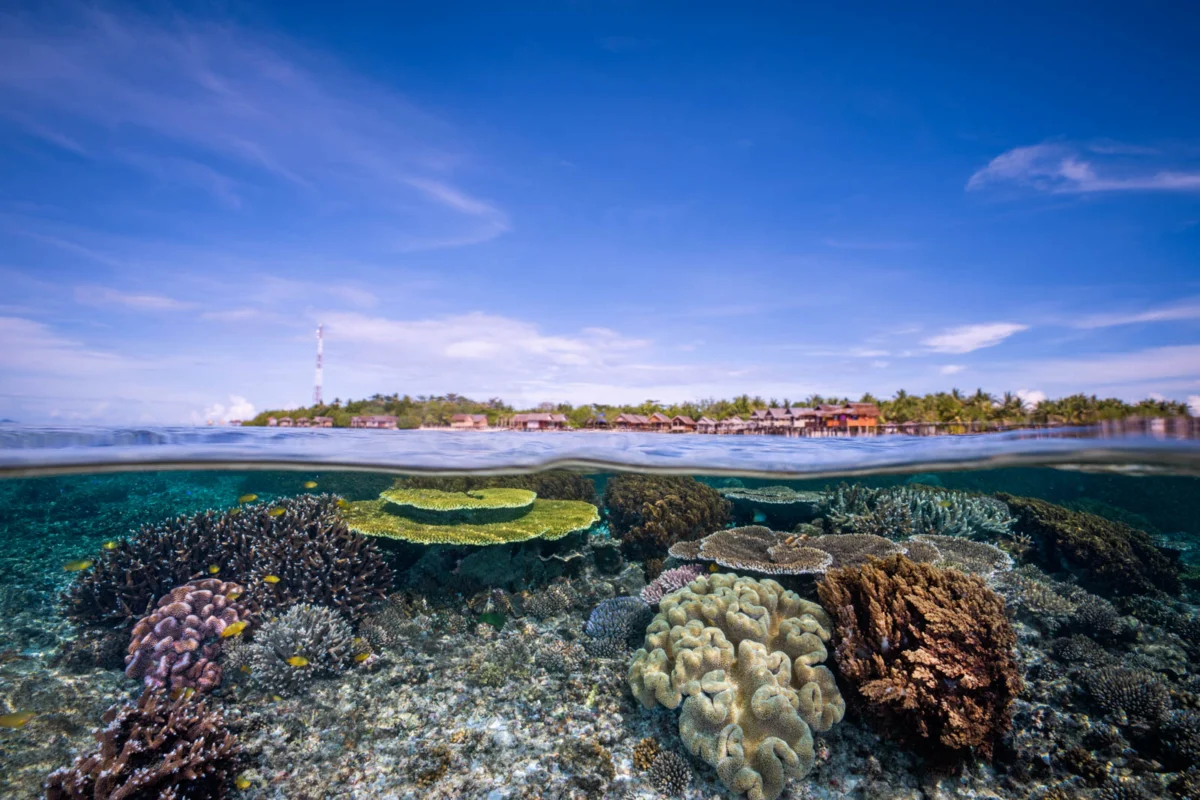
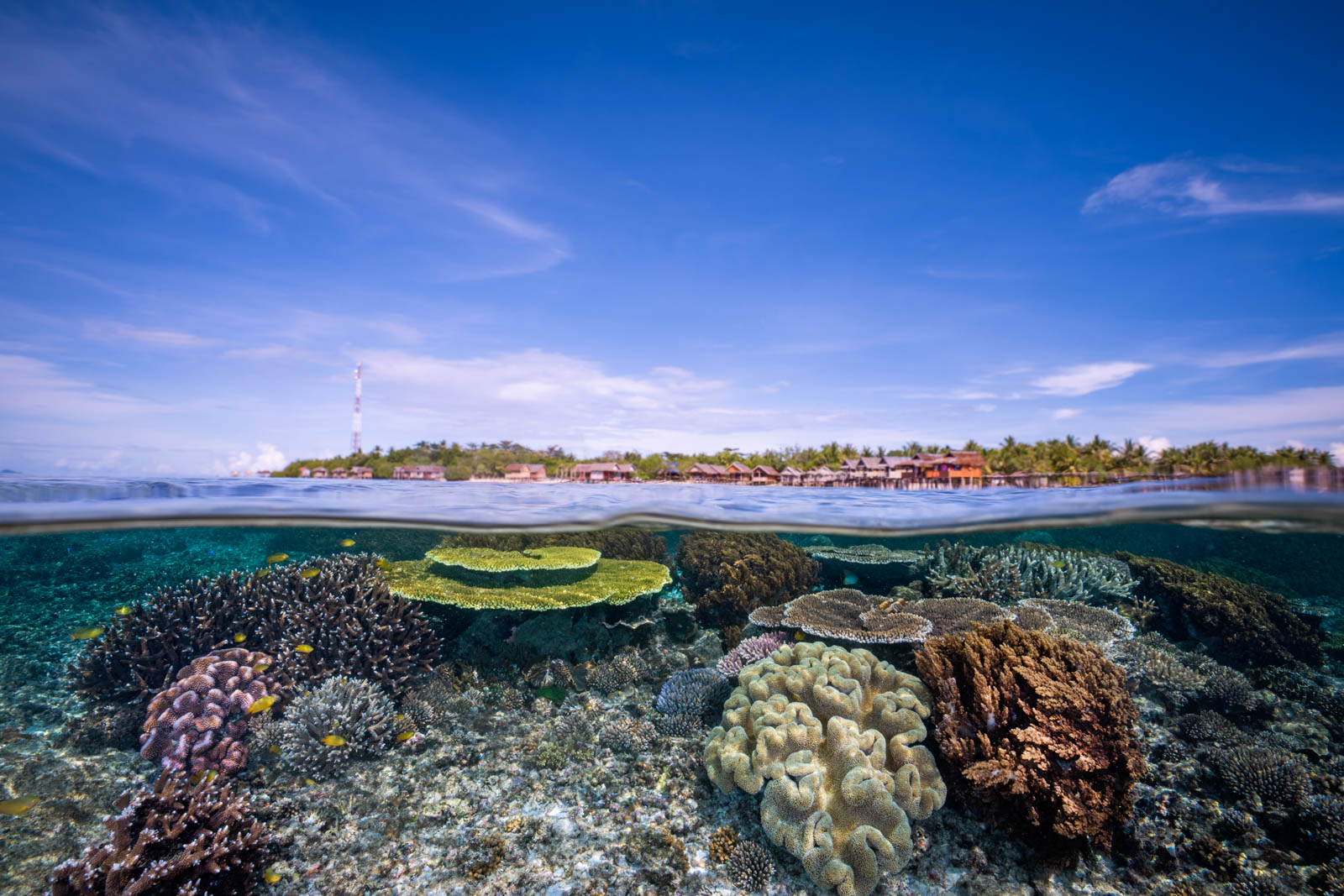
Beyond the grandeur of the wide-angle, Raja Ampat also excels in offering picture-perfect split shots, where both the underwater and above-water scenes are captured in a single frame. Many of these opportunities are easily accessible directly from various island house reefs, where the clear, shallow waters meet the dramatic limestone formations and lush jungle. When selecting a homestay, photographers are advised to be meticulous about choosing one with a pristine house reef, granting 24-hour access to a naturally choreographed coral backdrop, maximizing time in the water to capture that perfect over-under shot, especially during the breathtaking sunrises and sunsets.

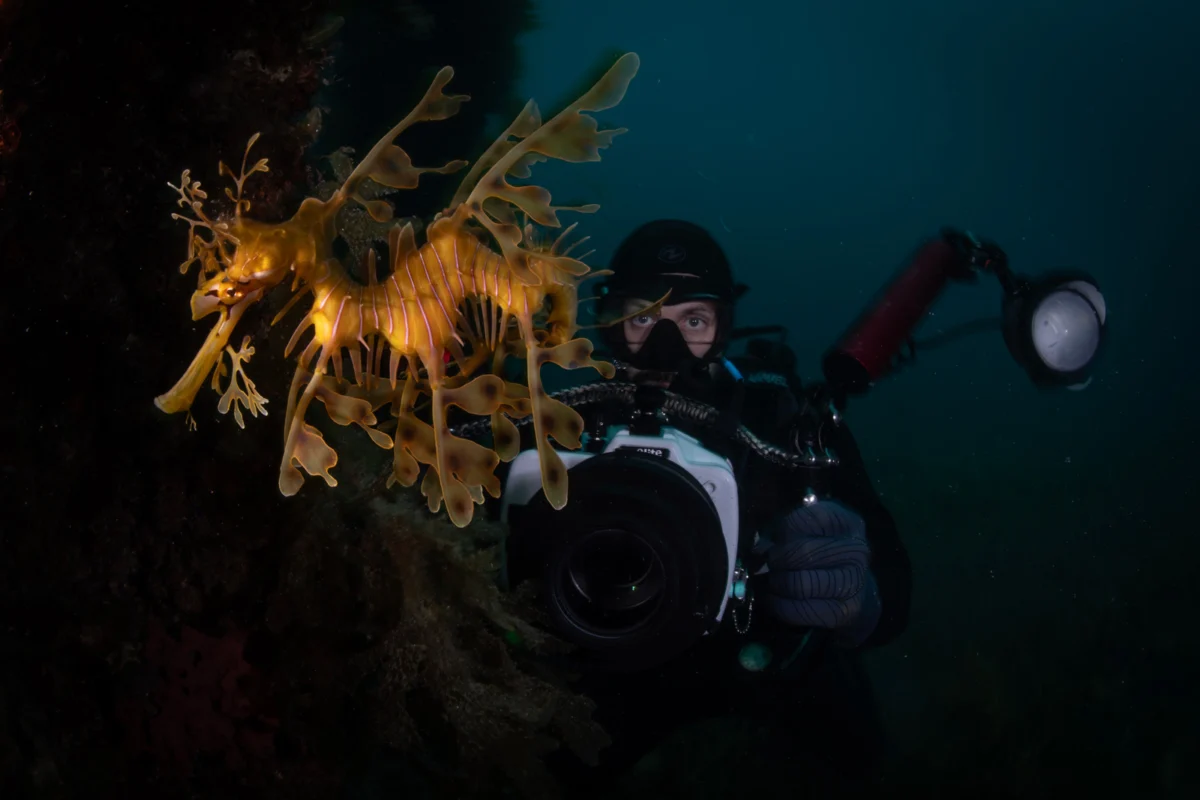
However, a major draw to the region, and arguably its most celebrated aspect among dedicated underwater photographers, gravitates towards the weird and wonderful macro critters. These tiny subjects hide in the cracks and crevices of the breathtaking reef systems, offering an endless treasure hunt for the observant eye. For macro photography, a mid-range macro lens such such as the 60mm is useful, but it is absolutely essential to pack something with more punch, like a 90mm or 120mm lens, to capture the minute details of the smallest inhabitants. Furthermore, an external diopter is highly recommended for those truly teeny tiny critters. Photographers can expect multiple encounters with elusive pygmy pipehorses, formidable mantis shrimps, artfully camouflaged leaf scorpionfish, comical frogfish, various species of cephalopods, delicate ghost pipefish, eels, blennies, and a host of other soft coral denizens. To optimize each dive, photographers are strongly advised to interrogate their dive guide beforehand about expected sightings, allowing them to choose the right photographic setup for the dive.
Navigating the Dynamic Waters: Challenges for Photographers

The very richness and diversity of Raja Ampat’s marine life are intrinsically linked to the region’s dynamic oceanography, which also presents unique challenges for underwater photographers. The nutrient-rich waters, while supporting immense biodiversity, can sometimes lead to less-than-desirable visibility, particularly after heavy rains or during certain tidal movements. Capturing those pristine wide-angle stunners can therefore be challenging, necessitating precise strobe positioning to minimize backscatter and ensure vibrant colors.
These nutrient-rich waters are a direct product of an incredibly intricate system of strong currents, particularly those flowing through the Dampier Strait. While these currents are the main contributing factor to the masses of marine life, they can also be a significant burden when handling heavy and cumbersome underwater photography equipment. Divers must be prepared for dives where the primary objective is simply to hold on for dear life, taking shelter behind any available boulder. If a dive guide describes the currents as "strong" before a dive, it is often a wise decision to leave the camera behind. Attempting to manage an expensive camera setup in fierce currents can result in losing control of the equipment, or worse, losing valuable photographic opportunities by being unable to stabilize and compose shots. It is paramount that cameras are securely attached to the diver at all times, and that a reliable insurance policy is in place for such expeditions.

Iconic Dive Sites for the Discerning Photographer
Several dive sites stand out as must-visits for any underwater photographer in Raja Ampat:

-
Melissa’s Garden: A wide-angle photographer’s dream, this site is a breathtaking expanse of hard coral plates, stretching as far as the eye can see. The elegance and sheer scale of this site’s topography create the perfect scene for wide-angle compositions, featuring schooling batfish, barracuda, snappers, lionfish, and angelfish. The vibrant coral formations themselves are a primary subject, showcasing the resilience and beauty of a truly healthy reef.
-
Batu Rufus: This hidden gem offers a surreal experience. It is a crystal-clear emerald lagoon, enclosed by towering limestone formations near the Fam Islands. The dive typically begins on the outer slopes, dropping to about 25 meters, where encounters with mantas and sharks are possible. However, the true photographic magic unfolds in the shallow lagoon, accessed through a large swim-through lined with dramatic coral fans and majestic rock structures. Inside, the lagoon opens into a natural pool of wonders with startling visibility, allowing hours to be spent in just 5 meters of water, capturing the flourishing reef systems under natural light. This site is ideal for freediving photographers and split shots, with the surrounding limestone structures providing a stunning above-water element.

-
Cape Kri: Perhaps the most well-known dive site in the region, Cape Kri once held the world record for the highest number of species spotted on a single dive. This site is a biodiversity explosion, offering overwhelming choices for marine life encounters. Due to its popularity, photographers often have the chance to dive it multiple times. It’s recommended to dedicate one dive to wide-angle photography, focusing on schooling barracuda, turtles, mantas, and various pelagic species along its sloping reefs that drop to 40 meters. Another dive can be dedicated to macro photography, as Cape Kri is saturated with exotic tiny critters. The site is famous for its pygmy seahorses, often found clinging to Muricella gorgonians, showcasing their incredible camouflage. Octopus, flatworms, nudibranchs, and various shrimps also abound, making it a macro paradise.
-
Manta Ridge: Located between Mansuar and Airborei Islands, this site is a renowned hotspot for schooling manta rays. While encounters can be hit-or-miss depending on conditions and luck, favorable days can see divers surrounded by mantas gracefully flying from every direction. Photographers must be particularly wary of the incredibly strong currents often present here and respect the potential for dangerous down currents, prioritizing safety over photography when conditions are challenging.

-
Citrus Ridge: A serious favorite for underwater photography, Citrus Ridge near the Gam Islands is celebrated for one of the most colorful reef systems in the region, making it an excellent site for wide-angle experimentation. The vibrant hues of the corals create a stunning backdrop. However, Citrus Ridge truly shines as a biodiversity hotspot for macro life. Divers can spend hours engaged in underwater detective work, peering into every rock and crevice for unique bottom dwellers. The colorful reef system enhances macro shots, providing a visually rich background for subjects ranging from wobbegongs and various sharks to schooling pelagics and an indescribable abundance of macro life.
Conclusion: A Delicate Balance for "The Last Paradise"

The photographic possibilities in Raja Ampat are truly limitless, reflecting an unparalleled diversity of marine life that calls to eager and devoted ocean lovers. Immersed in the true definition of island life, visitors can enjoy perfectly manicured reefs, an abundance of ocean creatures, and infinite archipelago structures during their surface intervals. The primary challenge for photographers often lies in deciding between a wide-angle or macro setup, as opportunities for both are equally compelling and diverse. Committing to one setup for a dive means accepting missed opportunities on the other end of the spectrum, a testament to the region’s rich offerings.
As Raja Ampat continues to attract global attention, the imperative for sustainable tourism and rigorous conservation remains paramount. Photographers, through their evocative imagery, play a crucial role in raising awareness about the fragility and importance of these ecosystems. Respecting the strong ocean currents, fragile underwater habitats, and adhering to responsible diving practices are not merely suggestions but obligations for anyone visiting this irreplaceable "Last Paradise." Its continued health and vibrancy depend on the collective commitment to its preservation, ensuring that future generations of divers and photographers can also experience its awe-inspiring beauty.