For three decades, the author has navigated the dense forests of Vancouver Island, a region renowned for its high cougar population, yet has only managed fleeting glimpses of these elusive felines. This profound experience, coupled with a deep-seated fascination for apex predators, fueled an enduring dream: to witness these magnificent cats in their natural habitat. The opportunity to photograph the famed pumas of Chilean Patagonia presented itself, an endeavor met with a blend of reserved expectation and mounting anticipation, a testament to the notoriously stealthy nature of big cats, as poet John Vaillant aptly described, "The tiger will see you a hundred times before you see him once." This journey, fraught with initial logistical challenges, ultimately unfolded into a profound encounter with wildlife in one of Earth’s most breathtaking landscapes.
The Genesis of an Expedition: From Passport Predicaments to Patagonian Peaks
The expedition to Chilean Patagonia began with an unexpected hurdle: a lost passport. This necessitated a detour to a Brazilian embassy, a bureaucratic labyrinth that tested the patience and resolve of the aspiring wildlife photographer. Upon finally arriving in Chile, the base of operations was established at a converted estancia, a traditional Patagonian ranch, situated on the periphery of Torres del Paine National Park. The property itself bore the marks of its working past, with functional farming and livestock equipment still present.
The region has witnessed a significant surge in tourism in recent years, drawn by the iconic, pristine granite peaks of Torres del Paine National Park. This influx has propelled ecotourism into a booming industry. The owners of the estancia represent a growing number of local stakeholders who have transitioned from traditional livestock ranching to coexisting with the very wildlife that was once perceived as a threat. Their staff, a vibrant collective of local individuals, embody the enduring values of gaucho culture, characterized by honesty, diligence, and a spirit of generosity. This cultural backdrop provided a unique context for the photographer’s immersion into the Patagonian wilderness.
Unveiling the Puma’s Realm: Expert Guidance and the Unfolding Landscape
The key to navigating the rugged terrain and understanding the elusive pumas lay with Rodrigo, a reputed local guide and an expert on the region’s feline inhabitants. Rodrigo’s intimate knowledge of the cats, akin to familial familiarity, was instrumental in guiding the photographer deep into the heart of puma territory. The journey commenced from the managed landscapes of the estancia, gradually giving way to a dramatic panorama of striking rock formations, pristine, snow-fed lakes, and expansive grasslands, the characteristic pampas of Patagonia. As the trek progressed, the majestic granite spires of the Andes Mountains loomed larger, their imposing presence a constant reminder of the raw, untamed beauty of the region.
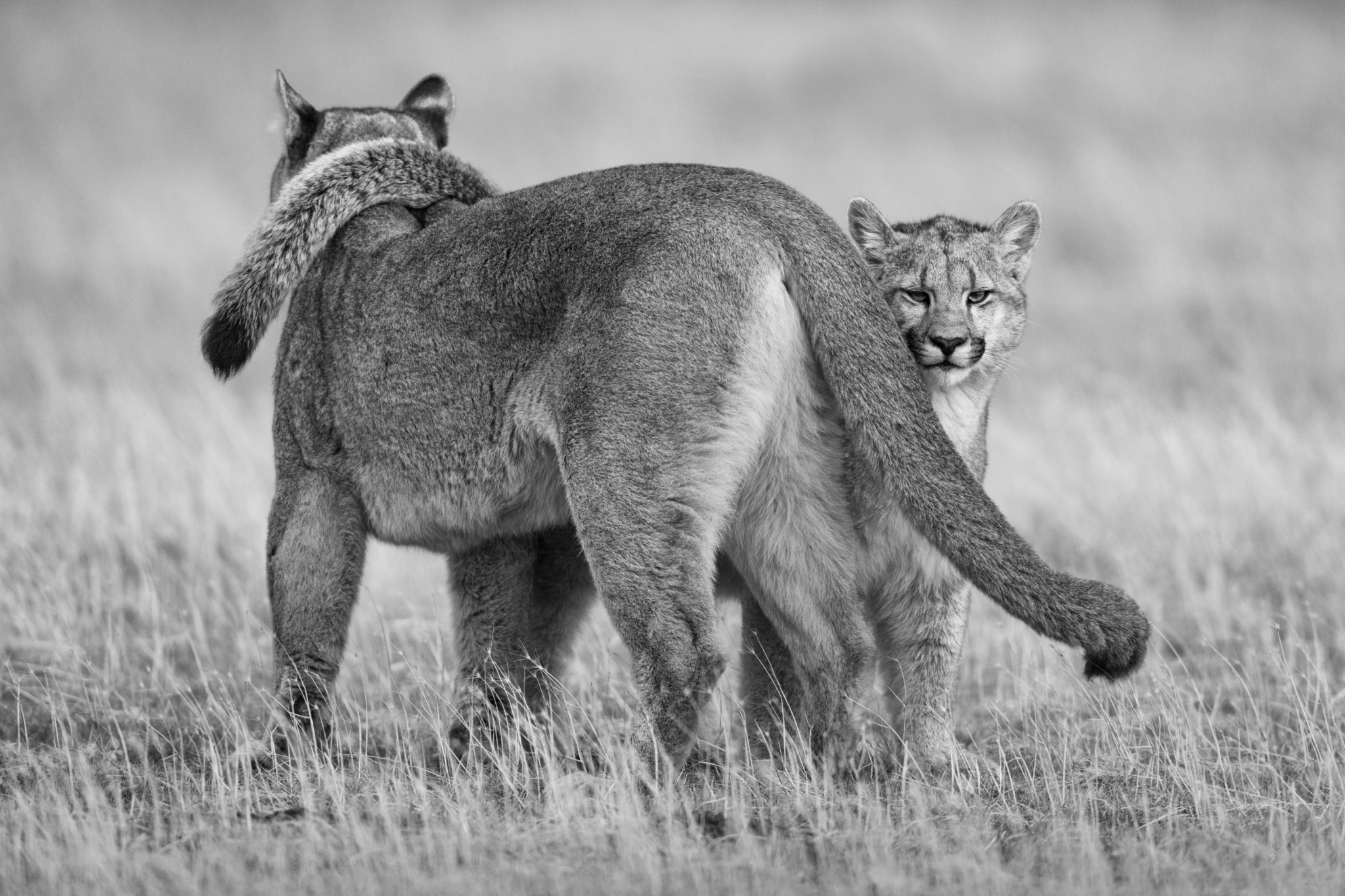
It was within this awe-inspiring setting, under the imposing shadow of the Andes, that the first significant encounter occurred. The subject was Petaka, a female puma of near-celebrity status within the local wildlife enthusiast community, accompanied by her two young kittens. Petaka’s reputation preceded her; her serene demeanor and an almost complete indifference to human presence had cemented her as a legendary figure among visitors to Torres del Paine and its surrounding areas.
The Protected Predator: Puma Conservation in Chilean Patagonia
A crucial aspect of the Patagonian puma’s behavior in this region is directly linked to its protected status. Unlike in neighboring Argentina, where hunting regulations may differ, pumas in Chile are designated as a protected species, with hunting largely prohibited. This conservation effort has yielded a remarkable outcome: some of the puma populations within the park have adapted to the presence of humans, often to the point of complete disregard. This tolerance, a testament to successful conservation strategies, allows for a unique form of wildlife observation. The photographer expressed profound satisfaction in experiencing the quiet passage of time in the company of a wild animal exhibiting such a profound sense of calm, relaxation, and contentment.
A Moment of Serenity: Observing Motherhood in the Wild
The privilege of observing Petaka as she nurtured her kittens was a deeply moving experience. The photographer recounted sitting in close proximity, silently captivated as the young pumas playfully tumbled in the grass, their youthful exuberance a stark contrast to their mother’s dignified composure. This intimate glimpse into the domestic life of these powerful predators underscored the success of conservation efforts and the potential for harmonious coexistence between humans and wildlife.
The Fury of the Andes: An Unexpected Blizzard and a Close Encounter
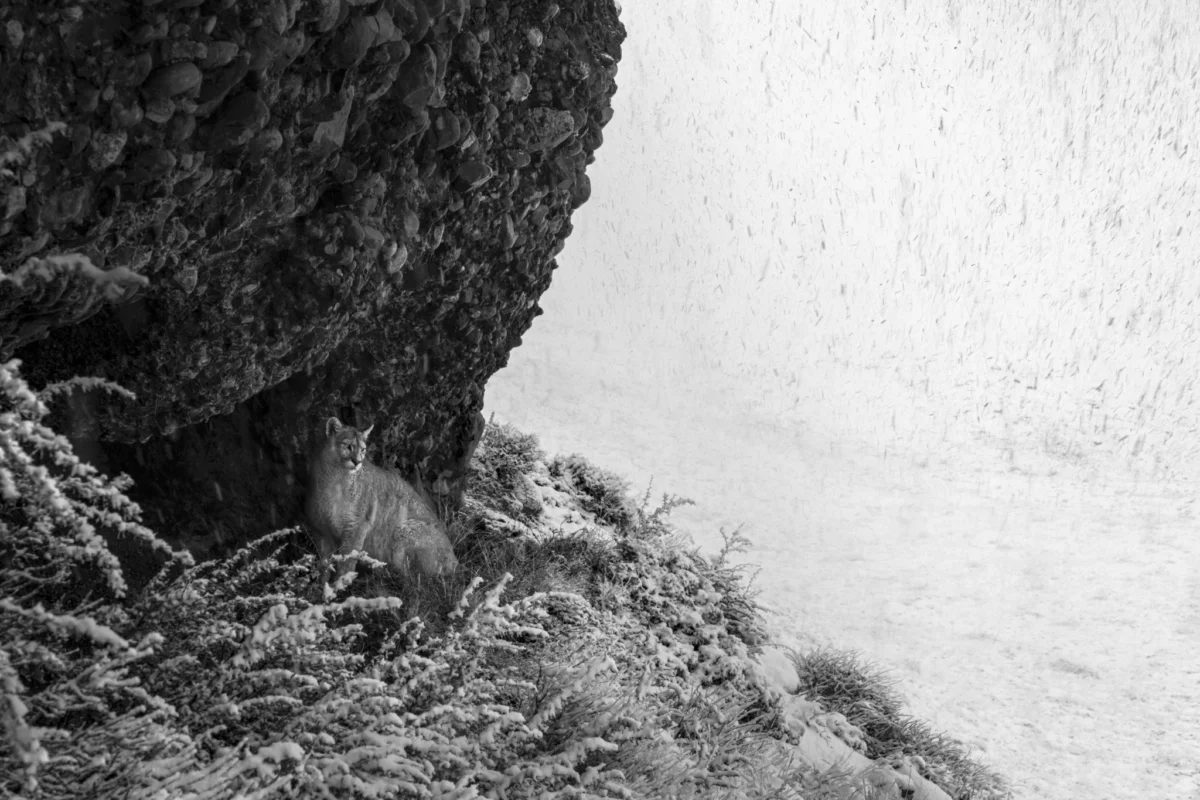
Shortly after these initial observations of Petaka and her family, and after gaining further insight into the behavior of other resident pumas within the park, the notoriously capricious Patagonian weather took a dramatic turn. The winds intensified, and the first snowflakes began to fall, escalating into a full-blown blizzard. The storm descended with a ferocity that muffled all external sounds, drawing the world into a close, intimate embrace.
Seeking refuge from the tempest, the photographer found shelter in a mountainside cave. It was within this temporary sanctuary that an extraordinary event unfolded. A large puma emerged from the swirling snow, settling down mere feet away, seemingly seeking the same respite from the storm. The instinct was to remain absolutely still, breath held, attempting to steady the camera against the surge of adrenaline and excitement.
A Silent Communion: Shared Shelter in the Storm
For an extended period, an unspoken accord settled between the human and the feline. They shared the silence of the cave, the snowdrifts accumulating outside, blanketing the willow thickets below. The puma, a creature of instinct and survival, remained utterly unfazed by the photographer’s presence, its attention fixed on its surroundings, ever vigilant. It was only when the weather finally relented, and the clearing sky revealed a landscape transformed by a fresh canvas of snow, that the puma quietly departed, melting back into the wilderness.
The release of emotion following this profound encounter was palpable. The photographer articulated a powerful realization: when nature is afforded the space and respect it requires to recover and flourish, humanity is granted the privilege of witnessing the full spectrum of life on Earth as it was originally intended – wild, raw, and profoundly awe-inspiring.
The Enduring Gift: Gratitude and Hope for the Future
The experience concluded with a deep sense of gratitude for the fleeting, yet profound, moment of shared existence with a wild animal in one of the planet’s most magnificent ecosystems. This encounter served as a potent reminder of the intrinsic value of wild spaces and the critical importance of their preservation. The journey into the heart of Patagonian puma territory, despite its initial challenges, yielded an invaluable gift: a deeper understanding of nature’s resilience and the enduring magic of its untamed inhabitants. The hope is that such experiences will inspire continued commitment to conservation, ensuring that these majestic creatures and their wild habitats endure for generations to come.