The intersection of automotive engineering and digital design has birthed a specialized niche that is rapidly expanding beyond its traditional boundaries. While vehicle templates have long been the backbone of the fleet branding and commercial signage industries, a new era of creative application is emerging, driven by high-fidelity digital assets and the increasing demand for precision in virtual environments. SignSilo, a premier provider of professional vehicle templates, has positioned itself at the center of this transformation, offering a library of editable vector formats—including AI, CDR, DXF, and EPS—that cater to a diverse array of professionals ranging from game developers to educational institutions.
The Technical Evolution of Vehicle Templates
The history of vehicle templates is rooted in the early days of computer-aided design (CAD) and the rise of vinyl cutting technology in the 1980s and 1990s. Initially, these were rudimentary outlines used by local sign shops to estimate the size of a logo on a van door. However, as digital printing technology advanced, the need for millimetric precision became paramount. The "wrap" industry—where entire vehicles are covered in high-quality vinyl—demanded templates that accounted for every curve, handle, and sensor.
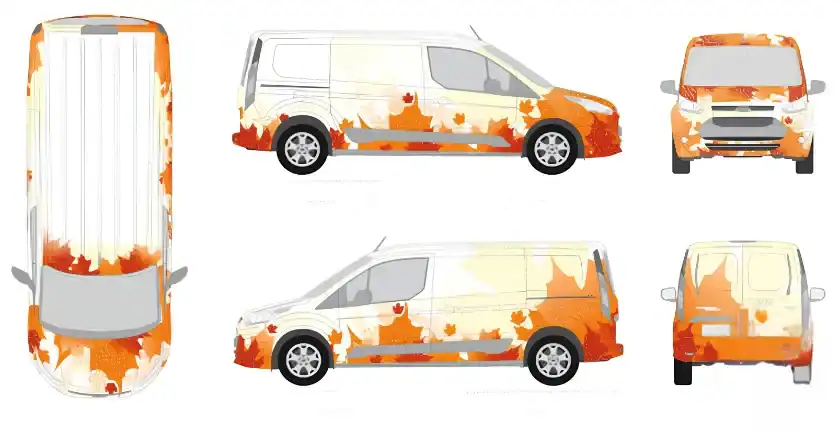
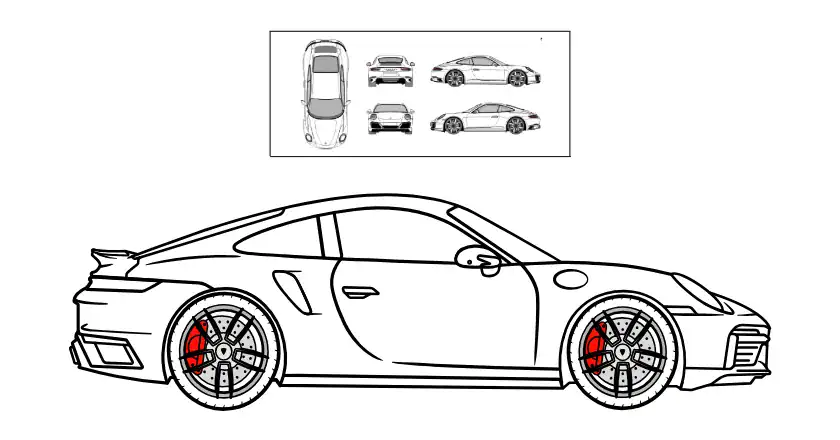
Today, the standard has shifted toward layered, multi-view vector files. SignSilo’s current library reflects this evolution, providing five-view layouts (front, back, left, right, and top) that allow designers to maintain visual continuity across complex 3D surfaces. The use of vector graphics is critical; unlike raster images, vectors can be scaled infinitely without loss of resolution, ensuring that a design created for a 1:20 scale template remains crisp when expanded to fit a 40-foot articulated bus.
Market Dynamics and Industry Growth
The demand for these professional assets is supported by significant growth in the global vehicle wrap market. Industry analysts report that the global automotive wrap market was valued at approximately $5.8 billion in 2022 and is projected to expand at a compound annual growth rate (CAGR) of 22.2% through 2030. This growth is not merely driven by commercial advertising but also by a surging interest in "color change" wraps for personal vehicles and the use of temporary branding for experiential marketing.
As the physical market grows, the digital secondary market for these templates has diversified. SignSilo has observed a shift in its user base. While sign-makers remain a core demographic, nearly 35% of new subscriptions are estimated to come from non-traditional sectors such as digital media, gaming, and academic research. This shift highlights a broader trend: the "digital twin" concept, where accurate digital representations of physical objects are used for simulation and visualization before a single cent is spent on physical production.
Concept Design in Gaming and Entertainment
One of the most significant "off-label" uses for SignSilo’s template library is found in the pre-visualization stages of the entertainment industry. Concept designers for AAA video games and high-budget film productions require accurate vehicle references to build immersive worlds.
In game development, particularly in "open-world" or racing titles, developers often use professional vehicle templates as the foundational blueprints for in-game assets. By starting with a DXF or AI file that contains accurate manufacturer dimensions, 3D modelers can ensure that the vehicles within the game maintain realistic proportions relative to the environment and human characters. This reduces the "uncanny valley" effect where vehicles look slightly "off" to the player’s eye.

Furthermore, in the film industry, production designers use these templates to plan "picture car" modifications. If a script requires a standard delivery van to be converted into a futuristic surveillance vehicle, designers use SignSilo’s layered templates to iterate on various structural and aesthetic additions. This allows the director to approve a concept in a 2D vector format before the fabrication team begins cutting metal.
Digital Art and the Rise of "Synthwave" Aesthetics
The digital art community has also embraced vehicle templates as a medium for creative expression. The resurgence of 1980s and 90s aesthetics—often referred to as Synthwave or Retrowave—frequently features stylized depictions of iconic cars. Artists use the precise outlines provided by SignSilo to create intricate "blueprint art" or neon-infused illustrations.
Because the templates are provided in layered formats, artists can isolate specific components of the vehicle—such as the wheels, windows, or grill—and apply unique textures or lighting effects. This has led to a burgeoning market for "digital liveries," where artists design custom skins for virtual vehicles that are then sold as NFTs or used in private racing simulators like iRacing or Assetto Corsa.
Marketing Presentations and the Psychology of Client Approval
In the corporate world, the ability to visualize a final product is often the deciding factor in securing a contract. Marketing agencies are increasingly using SignSilo’s templates to create high-stakes "mockups" for potential clients.
"The psychological impact of seeing a company’s brand on a high-resolution, accurate model of their own fleet cannot be overstated," says one senior creative director at a New York-based branding agency. "When we present a brand identity, we don’t just show a logo on a white background. We show that logo on the specific 2024 Ford Transit vans the client just purchased. It moves the conversation from ‘what if’ to ‘when.’"
These realistic visualizations serve a dual purpose: they act as a sales tool and as a risk-mitigation strategy. By using accurate templates, agencies can identify potential design "choke points"—such as a logo being cut off by a sliding door handle or a website URL being obscured by a bumper—long before the design reaches the print shop. This eliminates the "cost of error," which in the vehicle wrap industry can range from $500 to $5,000 per vehicle.
Educational Integration and Professional Training
Academic institutions have recognized the utility of professional-grade assets in preparing students for the workforce. Design schools and technical colleges are integrating SignSilo’s library into their curricula to teach "Production Art."
In these programs, students are tasked with taking a client brief and applying it to a complex 3D surface. Learning to manage the technical constraints of a vehicle template—such as bleeds, overlaps, and contour cuts—is a vital skill. Educators note that using "real-world" templates from SignSilo, rather than generic outlines, gives students a competitive edge. They graduate with a portfolio that demonstrates an understanding of the technical rigors of the industry, rather than just aesthetic theory.
Chronology of SignSilo’s Market Expansion
SignSilo’s trajectory reflects the broader technological shifts in the design industry:
- 2015-2017: SignSilo establishes itself as a niche provider of vector outlines primarily for the European and North American signage markets.
- 2018-2019: The library expands to include heavy machinery, buses, and specialty vehicles, responding to the growth of industrial and public transit branding.
- 2020-2021: During the global pandemic, a surge in "side-hustle" graphic design and the growth of e-commerce delivery fleets leads to a record number of new subscribers.
- 2022-2024: SignSilo integrates AI-assisted search tools and expands its format compatibility to support the growing number of designers using iPad-based vector software like Affinity Designer and Vectornator.
Strategic Membership Models for a Diverse User Base
To accommodate this diverse range of users, SignSilo has moved away from a "one size fits all" pricing model. Their current structure is designed to lower the barrier to entry for freelancers while providing robust tools for large-scale operations.
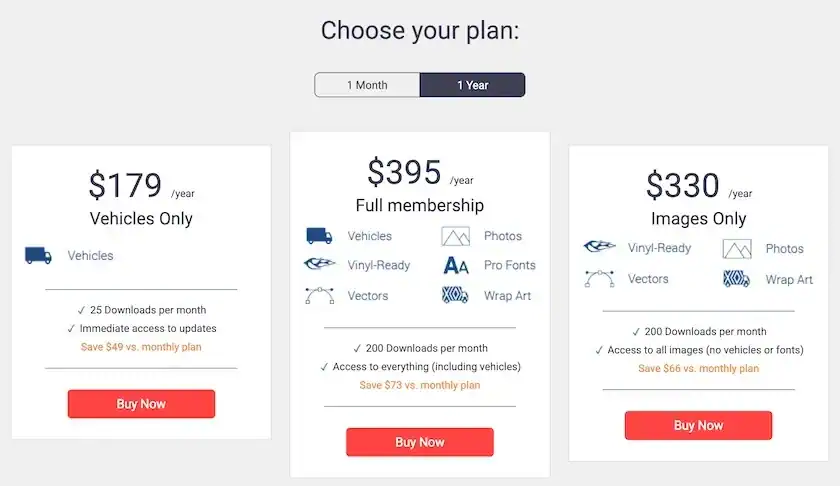
The Full Membership is engineered for high-volume environments. It provides 25 downloads per month, which is sufficient for a mid-sized sign shop or a busy marketing agency. Beyond vehicle templates, this tier includes access to a massive library of high-resolution stock photos, commercial-grade vectors, and wrap-specific artwork (such as textures and patterns). This makes it a comprehensive "creative hub" for professionals who need to build complex designs from scratch.
Conversely, the Vehicle Club Membership targets a more specific demographic: the "template-only" user. This plan allows for 50 vehicle template downloads per year. It is the preferred choice for independent freelancers, hobbyists, and educators who may not need stock photography but require the precision of a professional vehicle outline for specific projects.
Broader Impact and Future Implications
The expansion of vehicle templates into new creative territories is a harbinger of a more integrated digital-physical future. As augmented reality (AR) continues to mature, the demand for accurate 2D templates that can be mapped onto 3D spaces will only increase. We are moving toward a world where a technician can hold up a tablet to a plain white van and see a digital overlay of a proposed wrap in real-time.
SignSilo’s commitment to providing editable, high-precision vector files ensures that they remain the foundational "data layer" for these innovations. By democratizing access to professional-grade automotive blueprints, the platform is not just helping sign-makers—it is fueling a broader creative economy that spans from the classroom to the cinema screen.
In conclusion, the utility of a vehicle template is no longer confined to the dimensions of a vinyl sheet. It is a versatile tool for visualization, a blueprint for virtual worlds, and a bridge between a creative concept and its physical execution. As SignSilo continues to update its library with the latest 2025 and 2026 models, the potential for "beyond signage" applications will continue to grow, proving that in the world of digital design, the right template is the ultimate engine of efficiency.