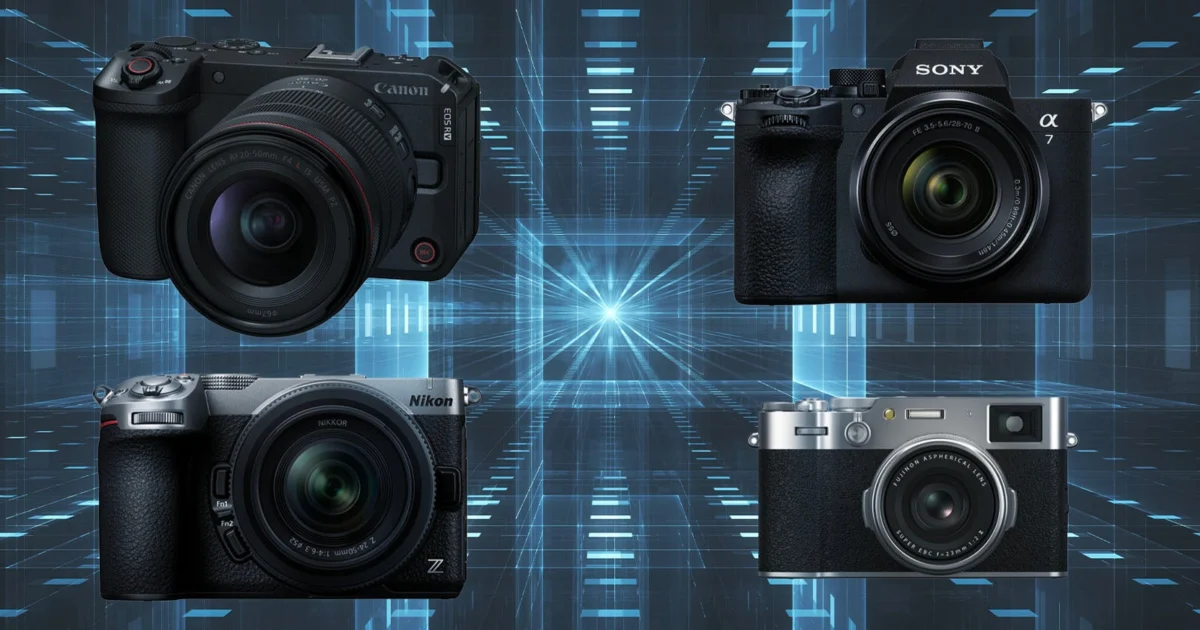
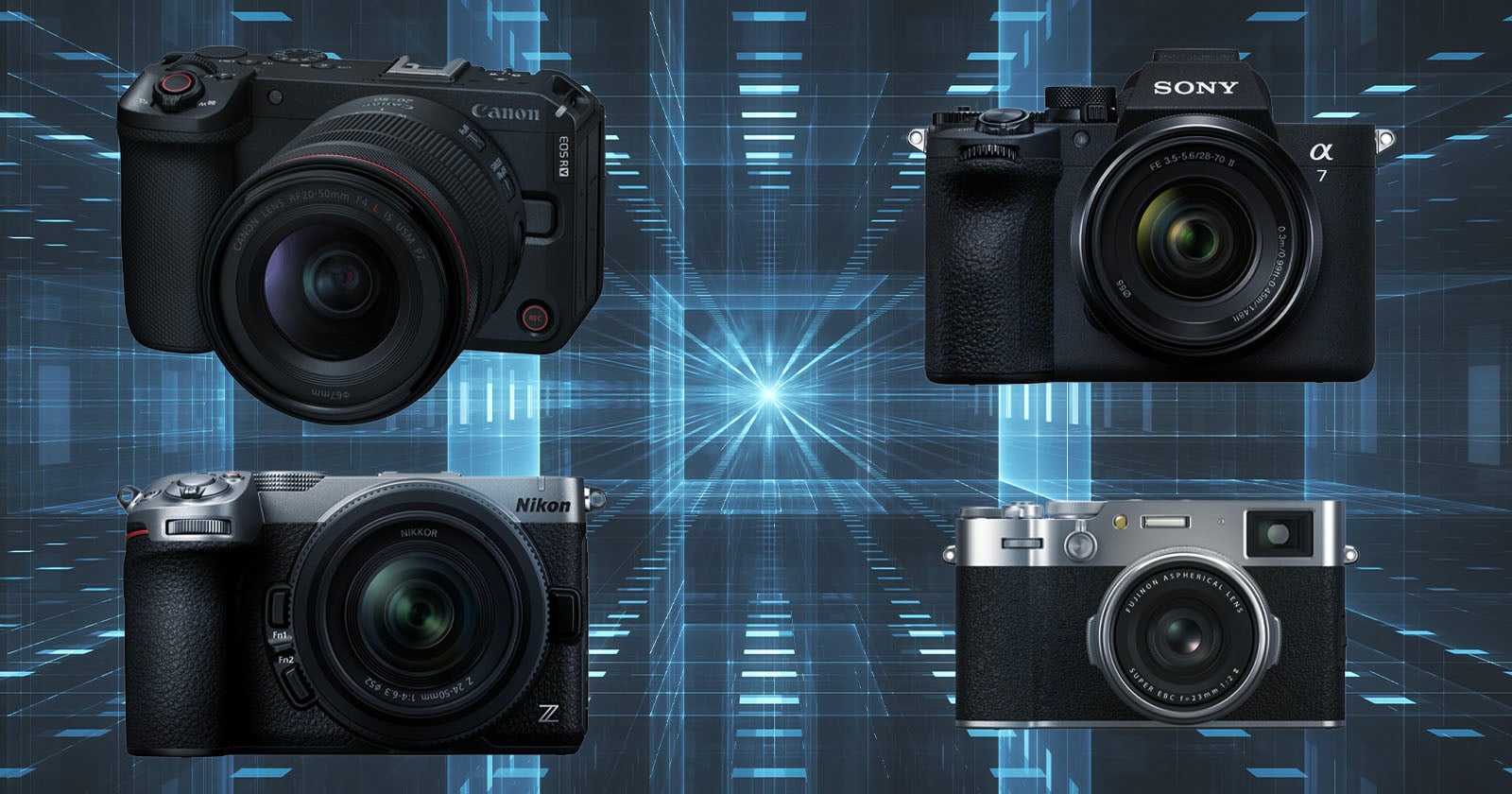
A recent in-depth report by the prominent Japanese financial newspaper Nikkei has cast a revealing light on the divergent strategic trajectories of the world’s leading camera manufacturers: Canon, Nikon, Sony, and Fujifilm. Published last month, the article featured exclusive interviews with key executives, providing an unparalleled glimpse into how these industry titans envision the future of photography amidst rapidly evolving technological landscapes, shifting consumer preferences, and the pervasive influence of artificial intelligence.
The Nikkei exposé, which garnered significant attention, including a notable mention by Photo Rumors, brought together Canon’s Go Tokura, Nikon’s Hiroyuki Ikegami, Sony’s Kenji Tanaka, and Fujifilm’s Koji Matsumoto. Each executive articulated their company’s unique philosophical and commercial responses to critical industry trends, including the exponential growth of AI, the increasing demand for advanced video capabilities, and the resurgence of interest in the distinctive aesthetics of film photography. Their responses highlight not just competitive strategies but also distinct interpretations of what photography means to contemporary users and creators.
The Evolving Landscape of Imaging: A Pre-Pandemic Snapshot and Post-Pandemic Acceleration
To fully appreciate the nuanced perspectives of these camera giants, it is crucial to contextualize the challenges and opportunities shaping the imaging industry. The market for standalone digital cameras has undergone profound transformations over the past two decades. Following a peak in 2010, when global digital camera shipments reached approximately 121 million units, the industry experienced a steep decline, largely attributable to the ubiquitous integration of increasingly sophisticated cameras into smartphones. By 2019, shipments had plummeted to around 15 million units, a testament to the smartphone’s disruptive power.
However, the post-pandemic era has presented unexpected shifts. While overall unit sales remain significantly lower than peak levels, the value of the market has stabilized, driven by a pivot towards higher-end mirrorless cameras and a burgeoning "creator economy." The Camera & Imaging Products Association (CIPA) reports indicate that mirrorless cameras have now surpassed DSLRs in shipments and revenue, signifying a fundamental technological transition. This shift is also fueled by a demographic renaissance: younger generations, often termed Gen Z and millennials, are increasingly seeking dedicated cameras not merely for superior image quality but for the tactile experience, aesthetic appeal, and distinct creative control they offer—qualities often lacking in smartphone photography. This renewed interest, coupled with the explosion of video content on platforms like TikTok and YouTube, has created new avenues for growth and specialization.
Canon’s Vision: Blending Style, Performance, and Video Expansion
Canon, a perennial market leader, appears to be adopting a multi-pronged strategy that acknowledges both the nostalgic pull of compact digital cameras for younger users and the undeniable ascendancy of video content creation. Go Tokura, representing Canon, emphasized the significant role of younger demographics in driving the current resurgence of compact digital cameras. "Young people are driving the current growth of compact digital cameras. They certainly aren’t buying them just because of high performance or image quality; they enjoy the shooting experience itself, even if it comes with some minor inconveniences," Tokura stated.
This observation is critical. It suggests a departure from a purely performance- and price-driven product development cycle towards incorporating elements of "style and feel." Canon recognizes that for a significant segment of the market, particularly younger consumers, the camera is an extension of personal expression and lifestyle. This perspective aligns with broader trends in consumer electronics where design, user experience, and emotional connection often trump raw specifications. For Canon, a company with a rich heritage in both professional and consumer imaging, this means re-evaluating its product segmentation. "Up until now, our lineup was structured primarily around performance and price, but now we need to weave in elements of style and feel [such as the shooting experience]. Individuals have their own unique sense of self they want to express, and diverse ways of enjoying photography are spreading across society," Tokura elaborated.
Beyond aesthetics and user experience, Canon is making a resolute push into the video-oriented camera market. Tokura explicitly outlined plans to expand the "V Series" lineup, a clear indication of their commitment to this segment. Furthermore, he stressed the critical importance of developing lenses that perform optimally for both video and stills. "We want to expand the video-oriented ‘V Series’ lineup based on customer demand. We also need to enrich our video-oriented lens selection further. It’s crucial that lenses can capture both video and stills, ensuring that lenses made for video can shoot stills without any issues," he affirmed. This dual-purpose lens strategy is a pragmatic response to the reality that many modern creators engage in both photography and videography, demanding versatile tools. Canon’s significant investment in its RF mount system, including a growing array of high-quality lenses, positions it well to capitalize on this demand, offering both professional-grade cinematic capabilities and top-tier photographic performance within a unified ecosystem.
Nikon’s Strategic Consolidation and the "Smartphone + 1" Approach
Nikon, a venerable name in professional photography, shares some common ground with Canon regarding market trends but is pursuing a slightly different strategic path. Hiroyuki Ikegami of Nikon detailed the company’s focus on technological innovation and a more consolidated product strategy. While acknowledging the need to cater to diverse demographics, Nikon’s immediate priority appears to be the careful trickle-down of advanced features from its flagship models, particularly the acclaimed Z9 mirrorless camera, to its broader lineup. "It is taking a bit of time to cascade the features of our flagship Z9 down to lower-end models. Completing a lineup from high-end to low-end drops the average selling price. Currently, we are concentrating investments on next-generation image processing engines, sensors, and video cameras. We are right in the middle of laying those foundations," Ikegami explained.
This statement suggests a deliberate, perhaps more conservative, approach to product expansion, prioritizing the foundational technological enhancements that underpin future innovations. Nikon’s emphasis on "next-generation image processing engines, sensors, and video cameras" indicates a commitment to core imaging science, aiming to provide superior performance across its range once these technologies mature. This strategy could be seen as a long-term play, ensuring a robust technological base before aggressive market expansion.
Crucially, Ikegami also articulated Nikon’s vision for cameras as a "smartphone + 1" device. This concept positions dedicated cameras not as replacements for smartphones, but as complementary tools that enhance the mobile imaging experience, particularly by preserving smartphone battery life—a common frustration for heavy mobile users. "As smartphones become increasingly sophisticated, there is a demand for dedicated cameras as a ‘smartphone + 1’ device that preserves smartphone battery life. We are developing products that younger demographics will want to pick up," he stated. This "plus one" strategy acknowledges the undeniable dominance of smartphones in casual photography while carving out a distinct value proposition for standalone cameras. For younger users accustomed to instant sharing and high-quality imaging, a dedicated camera must offer something significantly more – whether it’s superior low-light performance, optical zoom, specialized lenses, or a more engaging shooting experience – without being overly cumbersome. Nikon’s recent releases, such as the retro-styled Z fc and the Zf, appeal directly to this aesthetic and experiential demand, combining classic design with modern mirrorless technology.
Sony’s "Spatial AI" and the Broader Entertainment Ecosystem
Sony, a relative newcomer to the professional camera market but a dominant force in electronics and entertainment, is charting a significantly more ambitious and holistic course. Kenji Tanaka, speaking for Sony, unveiled a vision centered on "Spatial AI" as the future of its Alpha series cameras. This concept transcends traditional photography, integrating imaging into a broader digital and entertainment ecosystem.
Tanaka defined Spatial AI as "capturing the physical world using image sensors to create a digital twin, wherein we can make reality more attractive or simulate different ways of presenting it. That simulation is then turned into content for people to experience back in the physical world." This goes far beyond mere computational photography, suggesting an immersive, interactive digital reconstruction of reality. The implications are vast, extending into augmented reality (AR), virtual reality (VR), gaming, and advanced content creation. Sony’s robust portfolio in gaming (PlayStation), film production (Sony Pictures), and music (Sony Music) positions it uniquely to leverage such technology across its diverse entertainment divisions.
Tanaka further elaborated on the philosophical underpinnings of Spatial AI: "The term originated from the idea that AI should be used not just for operational efficiency or labor savings, but to expand the world of entertainment. Ultimately, we want to reach a point where we can generate content tailored optimally for each individual. Spatial recognition and subject tracking technologies can definitely be leveraged. With Alpha, physical space can be reproduced digitally." This indicates a fundamental shift in how Sony perceives its Alpha division—not merely as a camera manufacturer, but as a critical component in its overarching entertainment and content creation strategy. The Alpha series, with its cutting-edge sensors, autofocus systems, and real-time tracking capabilities, provides the foundational hardware for capturing the real-world data necessary for Spatial AI applications.
This expansive view also redefines the concept of a "creator." For Sony, creators are not limited to traditional photographers and filmmakers. "Anyone who creates something and inspires emotion is a creator. This includes not only photographers and film directors, but also dancers, musicians, and athletes. We want to utilize Spatial AI to enhance and expand their creativity," Tanaka asserted. This broad interpretation aligns with the burgeoning creator economy, where individuals from all walks of life are generating diverse forms of content. Sony’s vision positions Alpha cameras and Spatial AI as tools to empower this diverse creator base, enabling them to capture, transform, and share their experiences in innovative ways, blurring the lines between reality and digital rendition.
Fujifilm’s Embrace of "Joy" and Analog Aesthetics
Fujifilm, a company with a deeply rooted heritage in film photography, continues to champion a distinct philosophy centered on the "joy of photography" and the tangible, aesthetic experience of image-making. Koji Matsumoto reiterated a sentiment previously shared with PetaPixel: that photography, at its core, needs to be fun. This perspective has been a cornerstone of Fujifilm’s successful strategy in the mirrorless market, particularly with its X-series and GFX medium format cameras.
Matsumoto highlighted the democratizing effect of smartphones on photography while simultaneously pointing to the discerning eye developed by social media users. "The spread of smartphones democratized photography. Through social media, people developed a more discerning eye for photos. The demand for cameras among people who care deeply about self-expression has grown, leading to our strong performance," he explained. Fujifilm has capitalized on this demand by offering cameras that provide a tactile, engaging experience often missing from smartphone interactions. Their marketing strategies, including hands-on events and retail store experiences, are designed to allow consumers to "feel the ‘joy of photography’ that smartphones cannot deliver."
This "joy" is deeply intertwined with Fujifilm’s historical strengths. "This relies on a foundation of technology cultivated over many years. Finding affection in the tactile, analog feel of turning dials or enjoying the distinct color tones of film photography is only possible thanks to our accumulated camera technology," Matsumoto stated. Fujifilm’s cameras are renowned for their retro-inspired designs, physical control dials, and, most famously, their exquisite film simulations that meticulously replicate the looks of iconic Fujifilm film stocks. This blend of modern digital technology with an analog user interface and aesthetic output resonates strongly with a segment of photographers who crave a more deliberate, less clinical shooting experience.
Matsumoto also touched upon the role of AI, asserting a fundamental distinction between human creativity and algorithmic generation. "AI can generate images, but only humans possess the subjective sense of feeling, ‘This is real.’" This statement underscores Fujifilm’s belief in the irreplaceable human element in artistic expression. While AI can be a powerful tool, Fujifilm positions itself as a facilitator of genuine human creativity and subjective experience, offering tools that enhance rather than replace the photographer’s vision and connection to their craft. This approach has allowed Fujifilm to cultivate a loyal following, particularly among enthusiasts who value artistic control, unique aesthetics, and the pleasure of the photographic process itself.
Cross-Industry Trends and Challenges: A Synthesis of Divergent Paths
Despite their differing strategic focuses, several overarching themes emerge from these interviews. The pervasive influence of AI is a universal consideration, though its application varies from Sony’s expansive "Spatial AI" to Fujifilm’s nuanced view of human-AI collaboration. Video capabilities are also paramount across the board, reflecting the shift in content consumption. Furthermore, all companies acknowledge the importance of attracting younger demographics, albeit through different means—Canon with stylish compacts, Nikon with "smartphone + 1" devices, Sony with broad creative empowerment, and Fujifilm with experiential joy.
The primary challenge remains the continued innovation required to differentiate dedicated cameras from increasingly powerful smartphones. While smartphone cameras excel in computational photography and immediate sharing, dedicated cameras still offer advantages in sensor size, optical zoom, interchangeable lenses, advanced ergonomics, and specialized features for professional workflows. The strategies outlined by these executives demonstrate a clear understanding that simply offering "better photos" is no longer enough; the value proposition must be holistic, encompassing experience, ecosystem, and emotional connection.
Broader Impact and Future Outlook
The divergent strategies articulated by Canon, Nikon, Sony, and Fujifilm paint a dynamic picture of the future of imaging. Canon’s blend of aesthetic appeal for casual users and robust video expansion targets broad market segments. Nikon’s calculated technology cascade and "smartphone + 1" concept aim to secure its position as a serious photographic tool that complements, rather than competes directly with, mobile devices. Sony’s audacious "Spatial AI" vision seeks to integrate imaging into a vast entertainment and content creation metaverse, leveraging its extensive corporate ecosystem. Fujifilm, meanwhile, continues to carve out a passionate niche by prioritizing the tactile joy of photography and the unique aesthetics of film.
These distinct approaches will undoubtedly shape product development, marketing efforts, and ultimately, the choices available to consumers and creators worldwide. As technology continues its relentless march, and as the definition of "photography" itself expands to encompass more immersive and interactive experiences, the industry’s leaders are placing their bets on fundamentally different interpretations of what it means to capture, create, and share images in the 21st century. The coming years will reveal which of these visions, or perhaps a synthesis of several, will ultimately define the next era of imaging.