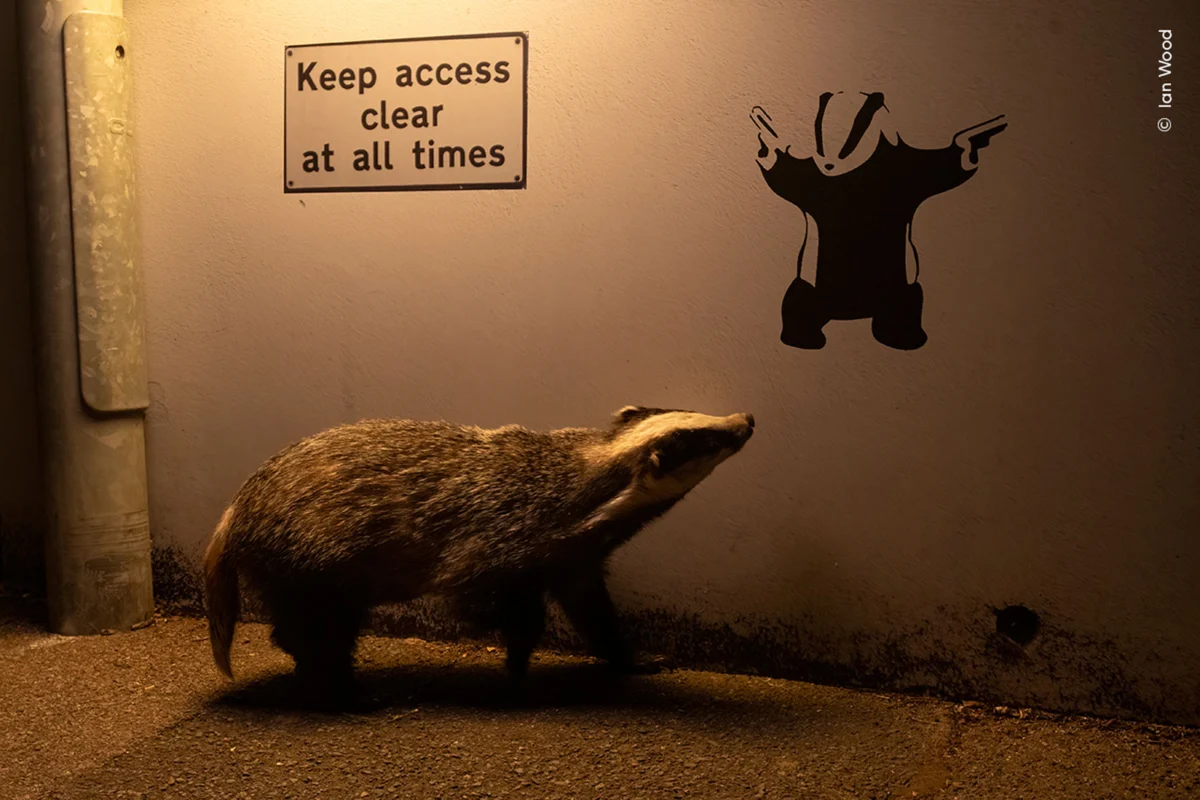
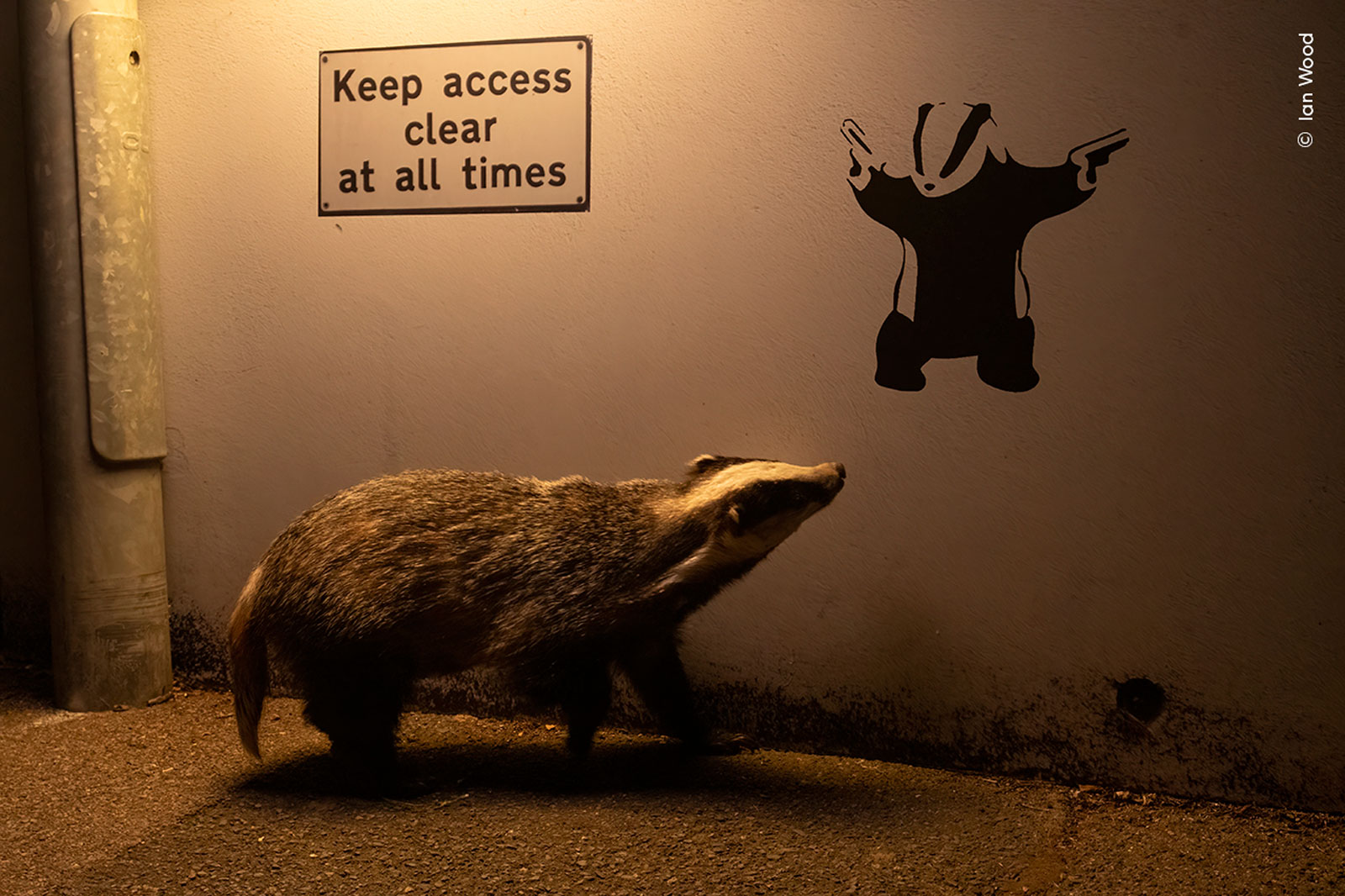
The photograph, a striking blend of urban starkness and natural resilience, captures a Eurasian badger (Meles meles) in a dimly lit alleyway, its gaze seemingly drawn to the graffiti proclaiming "No Access." This compelling image, imbued with a subtle narrative, emerged victorious from a highly competitive field of 25 nominated images, garnering the highest number of votes in the award’s history. Over 76,000 wildlife photography and nature enthusiasts from around the world cast their ballots, underscoring the increasing public engagement with wildlife conservation through the powerful medium of photography.
The Genesis of a Winning Shot: A Badger’s Urban Foray
Ian Wood’s journey to capture "No Access" began with keen observation of local wildlife patterns in St Leonards-on-Sea. Residents, perhaps unknowingly facilitating a unique interspecies dynamic, had been leaving food scraps on the pavement for foxes. Wood noticed that badgers from a nearby sett, ever opportunistic, had also begun to frequent the area to forage. This observation sparked the idea for the photograph.
One late night, having seen a badger traversing the very pavement by the graffiti-laden wall, Wood decided to act. He meticulously set up a small hide on the edge of the road, anticipating the badger’s return. The only illumination available was the ambient glow from a nearby lamppost, casting long shadows and creating a dramatic, almost theatrical, setting for the nocturnal visitor. The resulting image is not merely a snapshot but a testament to patience, understanding of animal behaviour, and a photographer’s dedication to his craft. The badger’s momentary pause and upward glance at the graffiti transforms a simple street scene into a commentary on encroaching human habitats and the adaptability of wildlife.
A Decade of Public Voice: The People’s Choice Award’s Impact
The Wildlife Photographer of the Year People’s Choice Award, now in its tenth year, serves as a crucial bridge between the professional world of wildlife photography and the global public. Initiated to allow a broader audience to participate in celebrating the natural world, it empowers individuals to vote for their favourite images from a carefully curated shortlist. This democratic approach has consistently fostered significant public engagement, turning the competition into a worldwide phenomenon.
The record-breaking 76,000 votes received this year highlight a growing global interest in wildlife and environmental issues. This award category is distinct from the main Wildlife Photographer of the Year competition, where an expert panel selects category winners and the overall Grand Title winner. By allowing public participation, the People’s Choice Award taps into the emotional connection people have with nature, amplifying the competition’s overarching mission to inspire and create advocates for our planet. It transforms passive viewing into active participation, encouraging viewers to consider the stories and conservation messages embedded within each photograph.
Official Acclaim and the Call for Urban Wildlife Understanding
Dr. Douglas Gurr, Director of the Natural History Museum, London, the institution that develops and produces the Wildlife Photographer of the Year competition, praised Wood’s winning image for its profound relevance. "Ian’s flawlessly timed image offers a unique glimpse of nature’s interaction with the human world, underscoring the importance of understanding urban wildlife," Dr. Gurr stated. He further emphasized the photograph’s power as "a powerful reminder that local nature and wildlife, often just outside our homes, can inspire and captivate us."

This statement highlights a critical contemporary theme in conservation: the increasing prevalence and importance of urban wildlife. As human populations expand and cities grow, many species find ways to adapt and coexist within these altered landscapes. Urban environments present both challenges and opportunities for wildlife, from new food sources (like the scraps left for foxes) to altered predator dynamics and habitat fragmentation. Understanding these interactions is crucial for developing effective conservation strategies that go beyond traditional wilderness preservation to encompass the biodiversity found within our urban centers. Wood’s photograph serves as a visual prompt for residents to acknowledge and appreciate the wild neighbours sharing their spaces, fostering a sense of stewardship even in unexpected places.
The "Darker Side": A Plea Against the Badger Cull
Beyond its aesthetic appeal and narrative charm, "No Access" carries a profound and urgent conservation message, as articulated by Ian Wood himself. While expressing humility and gratitude for the overwhelming "outpouring of badger love" his photo has generated, Wood quickly pivoted to a more somber reality. "However, there is a darker side to this image," he revealed.
Wood, who resides in rural Dorset and is actively engaged in re-wilding efforts to enhance habitats for local wildlife, used his platform to highlight the ongoing badger cull in England. This controversial government policy aims to control bovine tuberculosis (bTB) in cattle, with badgers identified as a wildlife reservoir for the disease. The cull involves the systematic trapping and killing of badgers in designated areas.
"The badger cull – which is still ongoing – has decimated their numbers and I fear that unless the cull is stopped, we’ll only see badgers in urban settings in several parts of England," Wood stated emphatically. His concern is that the severe reduction of badger populations in rural areas, driven by the cull, might push these creatures further into urban environments in search of safer habitats and food sources. This would represent a tragic shift for a species that is intrinsically linked to the British countryside.
The badger cull has been a subject of intense scientific and ethical debate for decades. While proponents argue it is a necessary measure to protect the agricultural industry, critics, including numerous wildlife conservation organizations and independent scientists, question its effectiveness and raise serious ethical concerns regarding animal welfare. Studies on the efficacy of the cull have yielded mixed results, and many argue that focusing on cattle-based measures (such as improved biosecurity, testing, and vaccination of cattle) would be more effective and humane. The emotional plea from Wood, amplified by the visibility of his award-winning photograph, aims to reignite public discussion and push for a re-evaluation of the policy. His hope is that "this image to raise awareness of the damaging effect of the badger cull and help push for change."
Highly Commended: Global Stories of Nature’s Grandeur and Grit
While "No Access" captured the top spot, four other images received "Highly Commended" status, showcasing the extraordinary diversity and talent within the Wildlife Photographer of the Year competition. These images, too, impressed wildlife lovers globally, each telling a unique story from the natural world:
-
"Earth and Sky" by Francisco Negroni (Chile): This unforgettable capture presents a breathtaking scene of a double lenticular cloud illuminated at nightfall by lava emitted from the Villarrica volcano in Chile. Negroni’s photograph is a testament to the raw, majestic power of geological forces and atmospheric phenomena. It encapsulates the sublime beauty and inherent danger of our planet’s active landscapes, reminding viewers of Earth’s dynamic and often volatile nature. The vibrant interplay of fire from the volcano and the ethereal clouds against the twilight sky creates a truly epic vision.
-
"Edge of Night" by Jess Findlay (Canada): Findlay’s action shot depicts a ghostly barn owl (Tyto alba) exiting through the hayloft window of a derelict barn to hunt. The image perfectly captures the elegance and stealth of this nocturnal predator, its wings outstretched against the dark, hinting at the solitary hunt that awaits. The setting—an abandoned human structure—adds another layer, suggesting how some species adapt to and even thrive in the forgotten corners of human habitation, serving as a reminder of the delicate balance between human structures and the natural world.
-
"Whiteout" by Michel d’Oultremont (Belgium): This image features a stoat (Mustela erminea) sitting up to observe its territory, blending seamlessly into a pristine snowy landscape. The stoat, with its winter white coat, exemplifies perfect camouflage, a crucial survival strategy in harsh environments. D’Oultremont’s photograph highlights the intricate adaptations of wildlife to their surroundings and the stark, yet beautiful, challenges of winter survival. The starkness of the white backdrop emphasizes the stoat’s alertness and its mastery of its environment.
-
"Spiked" by David Northall (South Africa): Northall’s interesting capture reveals a bloodied yet determined honey badger (Mellivora capensis) returning to finish off a Cape porcupine (Hystrix africaeaustralis), which had valiantly tried to defend itself earlier. This raw and visceral photograph is a powerful depiction of the brutal realities of the predator-prey relationship in the wild. It showcases the tenacity and resilience of both animals, highlighting the constant struggle for survival that defines natural ecosystems. The image is a stark reminder of nature’s unforgiving cycle and the incredible fortitude of its inhabitants.
These four highly commended images, alongside the winning "No Access," were selected from a shortlist of 25, themselves chosen by the Natural History Museum, London, and an international judging panel from almost 60,000 images submitted for the sixtieth Wildlife Photographer of the Year competition. This rigorous selection process ensures that only the most impactful, technically excellent, and narratively compelling photographs reach the public’s eye.
The Wildlife Photographer of the Year: A Global Platform for Conservation
The Wildlife Photographer of the Year competition, now in its 60th year, stands as a beacon for wildlife photography and conservation globally. Developed and produced by the Natural History Museum, London, it is an annual competition open to amateur and professional photographers of all ages from around the world. Its core mission extends far beyond celebrating photographic skill; it aims to "shine a light on inspiring and impactful stories from the natural world to create advocates for our planet." Through photography’s unique emotive power, the competition connects people with nature, fostering a deeper understanding and appreciation for biodiversity.

The images entered into the competition often serve as invaluable tools for scientific research, public education, and policy advocacy. They capture rare behaviours, document changing environments, and bring distant ecosystems into vivid focus for millions. By showcasing both the beauty and vulnerability of the natural world, these photographs inspire action and cultivate a global community committed to conservation.
Exhibition and the Future of Wildlife Photography
The five celebrated images – Ian Wood’s "No Access" and the four "Highly Commended" photographs – are currently on display both online and on the interactive voting screens within the flagship exhibition at the Natural History Museum, London. The exhibition will run until June 29, 2025, offering visitors an extended opportunity to engage with these powerful visual narratives.
Looking ahead, the Natural History Museum continues its vital work. Images entered into the sixty-first competition are presently undergoing evaluation by an international panel of experts. The anticipation builds for the next annual awards ceremony, which is scheduled to take place at the Natural History Museum, London, in October 2025, where new champions of wildlife photography will be unveiled. The enduring legacy of the Wildlife Photographer of the Year competition, driven by the dedication of photographers like Ian Wood and the passion of a global audience, remains a critical force in raising awareness and driving positive change for the planet’s diverse ecosystems.