The stark beauty of Norway’s winter coastline, often cloaked in prolonged twilight and challenging weather, recently played host to a remarkable display of marine power and grace. Amidst weeks of persistent searching, a team of wildlife photographers and researchers captured an extraordinary moment: a pod of orcas, specifically the Northern Norwegian ecotype, engaging in a dynamic feeding frenzy, culminating in a breathtaking series of breaches by a massive male. This event, documented by acclaimed nature photographer Paul Nicklen, offers a rare glimpse into the behavior of these apex predators in their natural habitat, highlighting both the challenges and profound rewards of wildlife observation in extreme environments.
The Long Wait for a Momentous Encounter
The expedition, which spanned several weeks, was dedicated to tracking and photographing orca pods in the frigid waters off Norway. This region is renowned for its winter gatherings of orcas, primarily attracted by the abundant herring populations that migrate into the fjords. However, the pursuit was fraught with difficulties. The prevailing conditions were characteristic of the Arctic winter: short daylight hours, with the sun barely cresting the horizon even at midday, casting a faint pink glow that quickly surrendered to prolonged darkness. Days were often marked by rough seas and low visibility, making the spotting of orca fins a fleeting and hard-won victory.
"We had spent weeks looking for orcas, but it was worth every minute once we found them," Nicklen recounted in a reflection on the experience. The initial sightings were often of distant black fins slicing through the choppy, dark waters, offering little indication of the dramatic spectacle that was to unfold. The patience and perseverance required in such an environment underscore the dedication of wildlife photographers who venture into the planet’s most challenging locales to document its inhabitants.
A Sudden Shift in the Arctic Canvas
The turning point arrived on a particular morning. As the team followed a distant pod, an unusual stillness seemed to pervade the group. While the presence of several large males was noted, the overall impression was one of quietude. This observation is particularly significant given the known behavioral differences between orca populations. Unlike their counterparts in British Columbia, which are frequently observed breaching, Norwegian orcas are less prone to such aerial displays. This distinction adds a layer of rarity to the subsequent events.
Suddenly, without any discernible prior warning, the pod’s demeanor shifted dramatically. From their vantage point, the observers noted a clear indication of heightened activity and excitement within the distant group. The tell-tale signs pointed to a feeding frenzy, a period of intense predatory engagement. This transformation instantaneously galvanized the observation team.

"We came alive, our senses suddenly alert and active, as if flicked on by a switch," Nicklen described. The research vessel accelerated, maintaining a careful distance to avoid disturbing the animals while striving to match the pod’s rapid movement. The speed of the chase, around 20 knots, was a testament to the orcas’ athletic prowess and the team’s determination to keep pace with this "unrivalled athletic spectacle." Crucially, for the first time during the expedition, the sea conditions abated. The water, often turbulent, became remarkably calm, providing an ideal stage for the unfolding drama.
The Spectacle of the "Dawn Patrol"
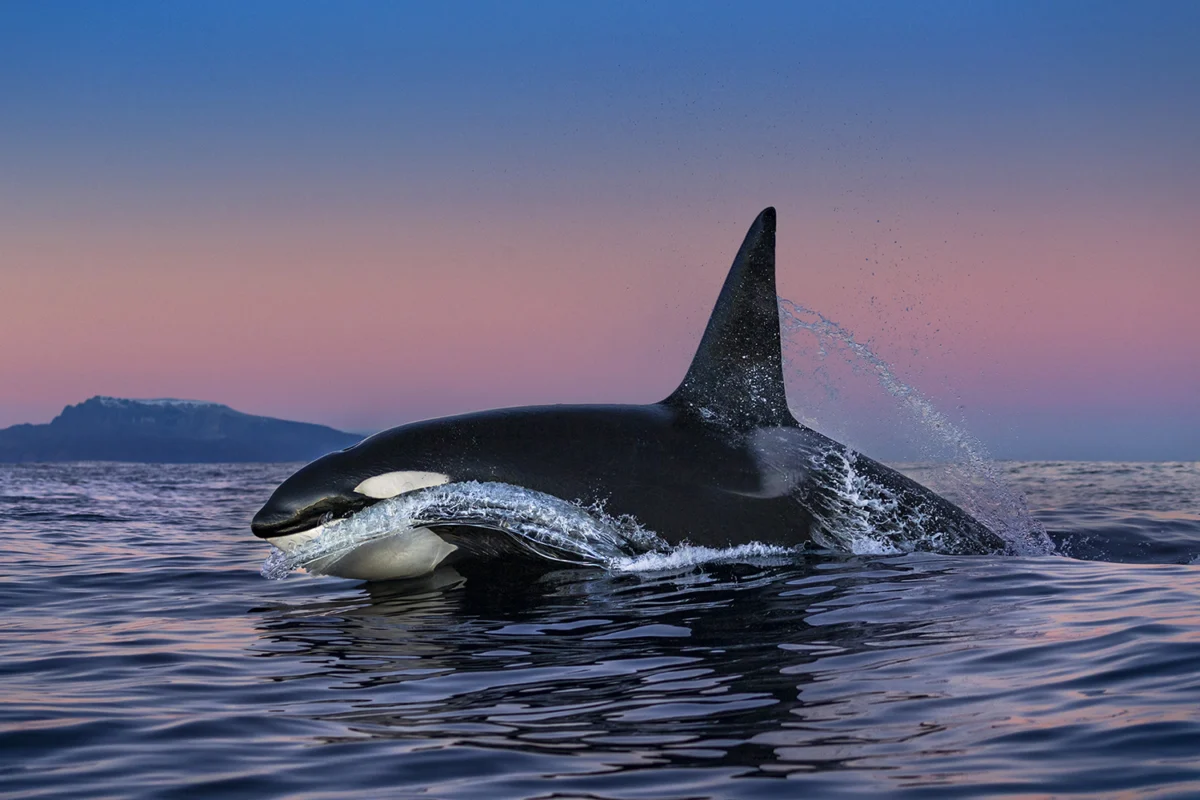
It was during this period of opportune conditions that a particularly massive male orca began to exhibit an extraordinary display of porpoising. This behavior, characterized by a series of powerful leaps and dives, was executed with such ferocity that the water seemed to explode from his body with each movement. The sheer scale of the animal, estimated to weigh around 12,000 pounds and measure approximately 25 feet in length, with a dorsal fin standing six feet tall and pectoral fins akin to car hoods, amplified the visual impact of his actions.
The photographic challenge in such low-light conditions is immense. Nicklen described the delicate balance required: "The light is almost always low in these kinds of situations. You have to make a tricky calculation, and do it quickly. You want a shutter speed that is fast enough to freeze a snapshot in time, otherwise the action will be blurred." Fortunately, the atmospheric conditions provided a fleeting window of opportunity. The sky had transformed into a canvas of soft pinks and oranges, with the rugged Norwegian mountains forming a majestic, silhouetted backdrop.
The act of capturing such a dynamic event with a single-lens reflex camera presented further technical hurdles. Nicklen explained the inherent limitation: "With single-lens reflex cameras, it was always hard to tell I was getting the shot or not. I was shooting at ten frames a second, which means that ten times every second I was blind because the mirror has to lift, the shutter has to rise, and the image is exposed. Essentially, I had no clue if I had captured the shot or not." This uncertainty amplifies the tension and anticipation inherent in wildlife photography, where moments of pure action are ephemeral.
A Moment of Epiphany
The entire sequence, from the initial stirrings of the feeding frenzy to the orca’s powerful leaps, unfolded in what Nicklen described as "a split second that passes by in the blink of an eye." Following the intense activity, a sense of quiet contemplation settled over the team. Safely back on the boat, Nicklen reviewed the captured images, a process fraught with the lingering anxiety of whether the fleeting moment had been successfully preserved.
In the past, he admitted, concerns about image sharpness in such challenging low-light and high-speed scenarios would have been paramount. However, on this occasion, a combination of perfect piloting by his companion, Goran, and fortuitous circumstances aligned. The review of the images on the camera’s LCD screen revealed a remarkable success.

"I immediately saw that the whole package was there. It was beautiful," Nicklen stated. The detail captured was astonishing: the water cascading off the orca’s eye, the subtle play of light and shadow across its massive form, the vibrant colors of the twilight sky, and the sheer power of the animal’s movement. The sharp focus on the orca’s eye, a detail he had doubted he could achieve, was particularly striking. He meticulously scrolled through the images, searching for any flaw, any indication of failure, but found none.
The Enduring Power of Nature’s Gifts
This profound experience served as a powerful reminder of the intrinsic value of observing and documenting the natural world. Nicklen articulated this sentiment: "These are the gifts of nature that transform the beauty of the natural world into your camera. You realize, in that moment of clarity and epiphany, that you have captured this perfect little bottle of light and time that will live on forever." The "Dawn Patrol" image, as it was later titled, encapsulates not just a singular event, but the culmination of dedication, technical skill, and a deep connection with the wild.
Supporting Data and Context: Orcas in Norwegian Waters
The orcas observed in Norway, often referred to as the "Bigg’s" orcas of the Pacific Northwest, are known for their specialized diet and hunting strategies. The Northern Norwegian ecotype, however, is primarily associated with the herring runs. Each autumn and winter, vast schools of Atlantic herring (Clupea harengus) migrate from the Barents Sea to the fjords of Northern Norway to spawn. This predictable influx of prey attracts significant numbers of orcas, creating a predictable hunting ground.
- Herring Migration: The herring’s journey to spawn in sheltered fjords is a crucial ecological event. These fjords, characterized by their deep, cold waters, provide ideal conditions for herring reproduction.
- Orca Feeding Strategies: Norwegian orcas employ various cooperative hunting techniques to corral and feed on herring. These can include "carousel feeding," where orcas circle schools of herring, stunning them with their tail flukes and then consuming them. While breaching is less common, spyhopping – where an orca raises its head out of the water to observe its surroundings – is frequently observed.
- Ecological Significance: The presence of orcas acts as a significant top-down pressure on herring populations. The health of the herring stocks is thus directly linked to the health and abundance of the orca population in the region.
- Tourism and Research: The predictable aggregations of orcas have led to a burgeoning wildlife tourism industry in areas like Tromsø. This tourism, while economically beneficial, also necessitates responsible practices to minimize disturbance to the animals. Scientific research efforts are also concentrated in these areas, studying orca behavior, diet, and population dynamics.
Broader Implications: Conservation and Appreciation
The captured moment underscores the importance of preserving these marine ecosystems. The health of the herring stocks, the clarity of the water, and the relative absence of disruptive human activity are all critical factors that contribute to the success of such wildlife encounters. As climate change continues to impact marine environments globally, understanding and protecting these predator-prey dynamics becomes increasingly vital.
The dramatic visual of the breaching orca serves as a powerful ambassador for the marine world, fostering a deeper appreciation for the power and complexity of life beneath the waves. Such images can inspire greater public engagement with conservation efforts and advocate for policies that protect these magnificent creatures and their habitats from threats such as pollution, overfishing, and habitat degradation. The "Dawn Patrol" is more than just a photograph; it is a testament to the wildness that still exists and a call to safeguard it for future generations.