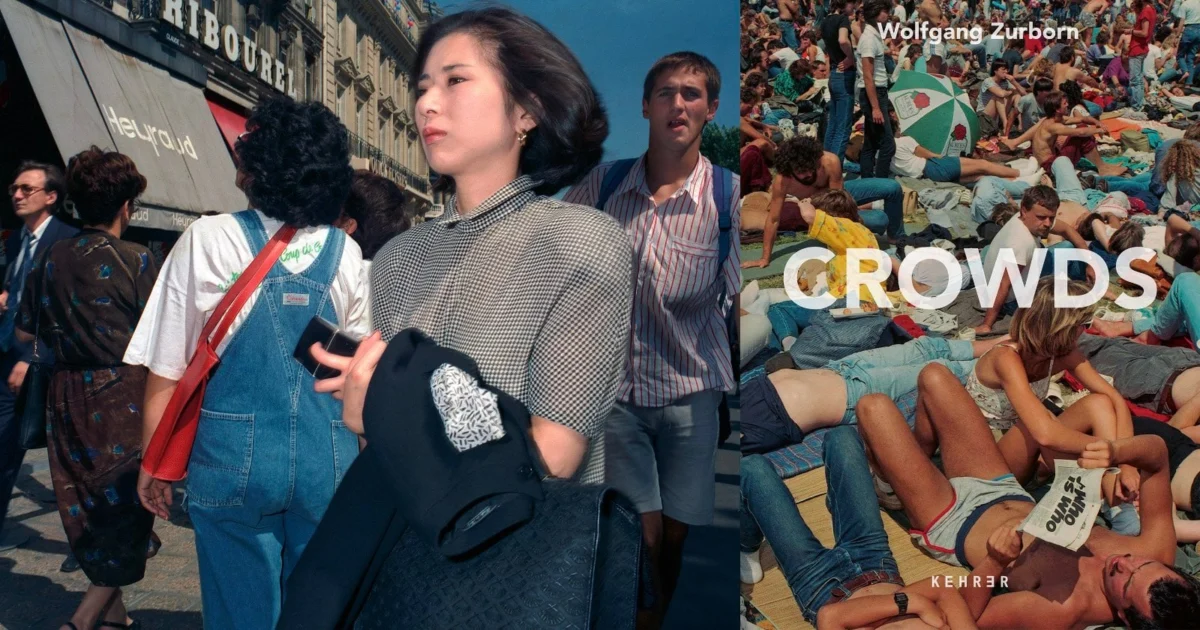
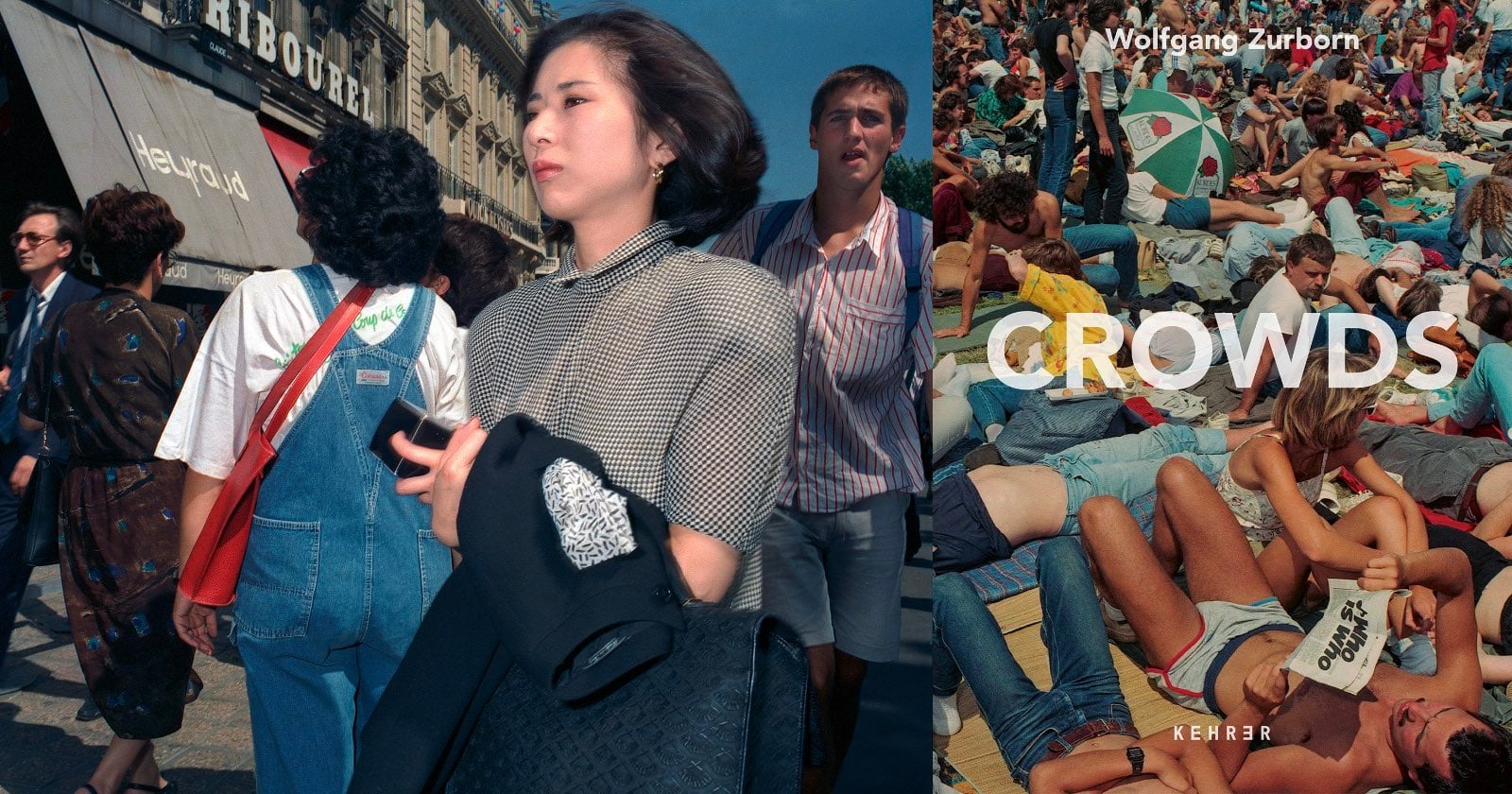
German photographer Wolfgang Zurborn is set to release his compelling new book, Crowds, published by Kehrer Verlag, offering an intricate visual tapestry of public life during the 1980s and 1990s. This meticulously curated collection, featuring hundreds of digitized analog color negatives, many previously unseen, provides a vivid and often profound look into a society undergoing significant transformation. Zurborn’s work moves beyond mere documentation, delving into the complex relationships, subtle tensions, and shared human experiences that unfold within collective gatherings, presenting an invaluable historical and sociological record.
The Genesis of "Crowds": A Pandemic-Inspired Archival Deep Dive
The impetus for Crowds emerged from an unexpected period of global introspection: the coronavirus pandemic lockdowns. As public spaces emptied and social gatherings became a distant memory, Zurborn, like many, found himself re-evaluating the fundamental aspects of human interaction and communal life. This enforced pause in an otherwise "overstimulated mass culture" provided a unique opportunity for the photographer to revisit his extensive archive. Over several decades, Zurborn had diligently captured the essence of public spaces, meticulously cataloging encounters, gestures, and coincidences. The quiet solitude of the lockdown allowed him to meticulously scan hundreds of analog color negatives, a process that revealed previously unrecognized connections and thematic threads spanning across his decades of work. This retrospective engagement with his own vast visual history enabled him to weave together a cohesive narrative about the dynamics of crowds, the individual’s place within them, and the broader societal forces at play.
This period of forced isolation also prompted Zurborn to reconsider deeper questions about human agency. He pondered how individuals are shaped by their social environments and the increasingly pervasive influence of media, and critically, the persistent possibility of living a self-determined life amidst these powerful external pressures. The resulting book is not merely a collection of photographs but a thoughtful meditation on these themes, inviting viewers to engage with the complex, often contradictory, and inherently chaotic structures that define human society.
Capturing an Era: The 1980s and 1990s Through Zurborn’s Lens
The specific timeframe Zurborn explores – the 1980s and 1990s – represents a pivotal epoch in modern European history, particularly for Germany. The images captured within Crowds bear witness to a society grappling with rapid change, from the final years of the Cold War and the dramatic fall of the Berlin Wall in 1989, to the subsequent reunification of Germany and the complex process of integrating two formerly disparate systems. This era was characterized by a potent mix of political activism, burgeoning consumerism, and the accelerating impact of mass media.
The 1980s saw the rise of significant social movements across Germany and Europe. For instance, the anti-nuclear protests, vividly hinted at by captions such as "Wackersdorf, 1986," were powerful expressions of public dissent against government policy and industrial expansion. These demonstrations often drew massive crowds, becoming focal points for collective identity and political expression. Zurborn’s presence at such events allowed him to document the raw emotion, unity, and occasional tension that defined these public gatherings.
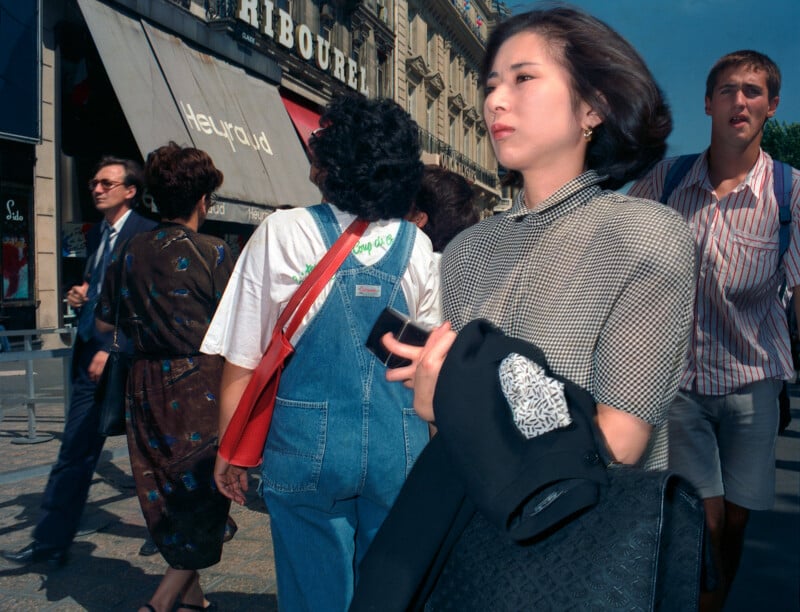
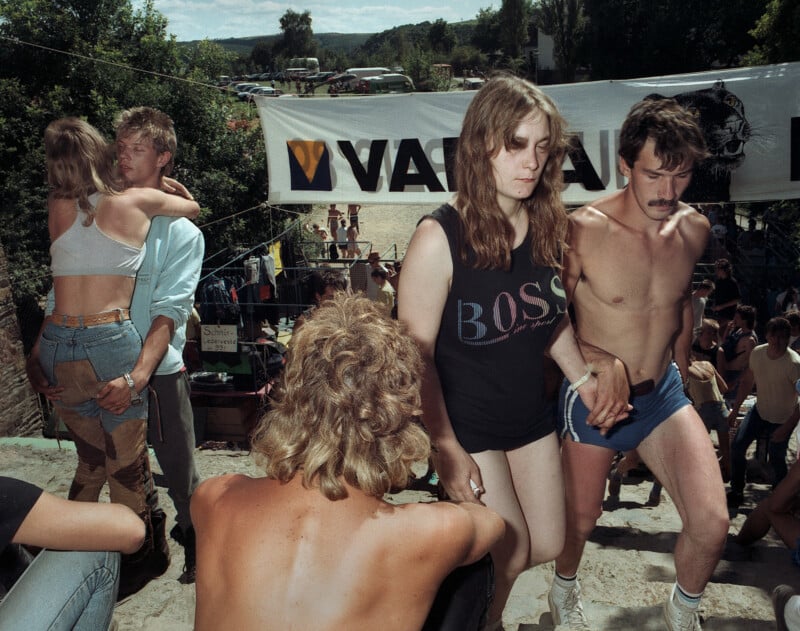
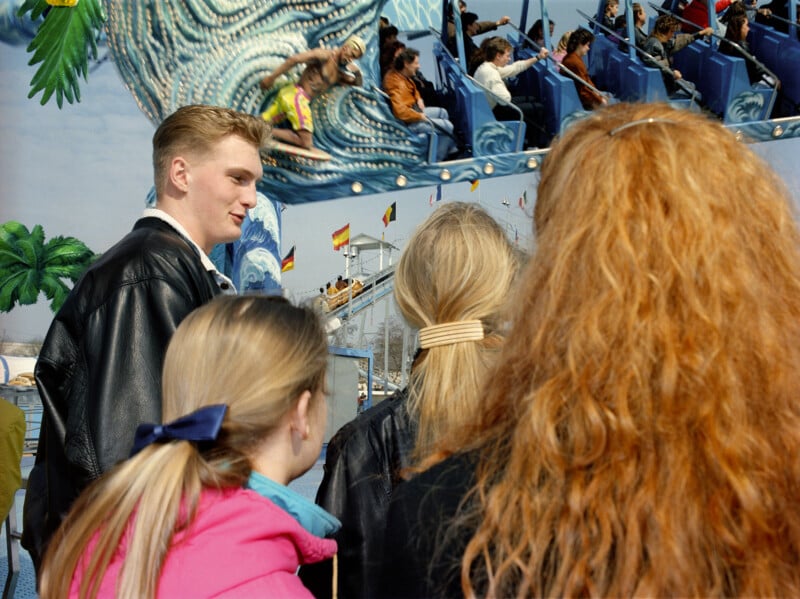
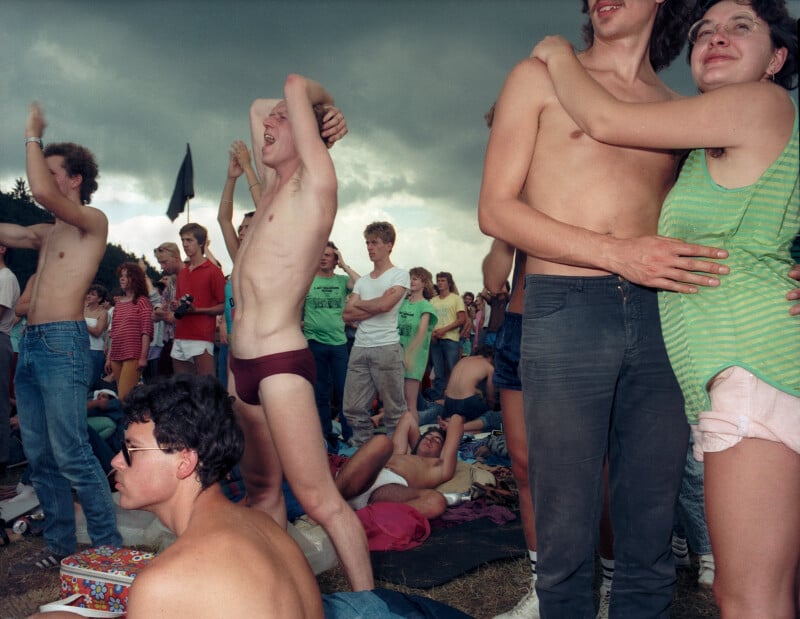
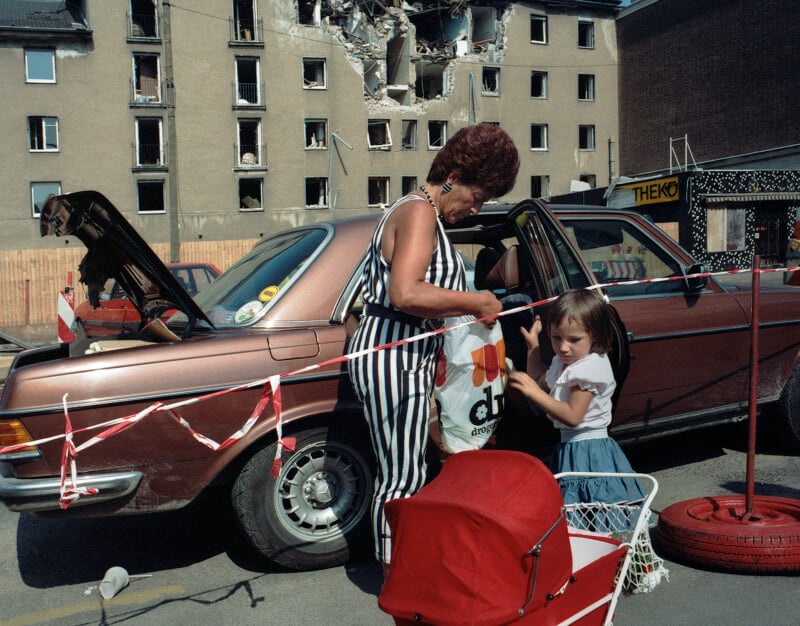
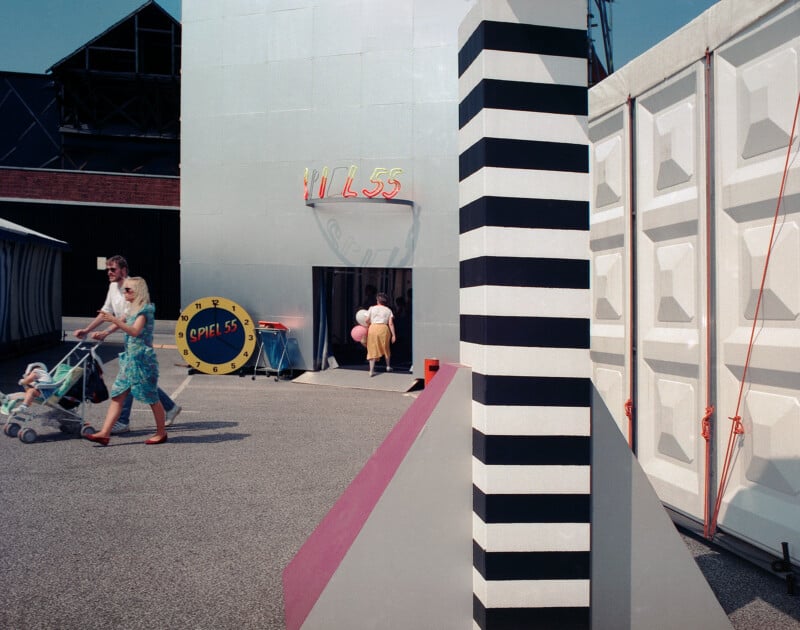
As the decade progressed into the 1990s, Europe experienced a surge in cultural exchange and globalization. The emergence of new youth subcultures, the proliferation of international music festivals, and an increasing emphasis on leisure and entertainment reshaped public spaces. Zurborn’s photographs from cities like Cologne and Paris, taken in years like 1989 and 1991, reflect this evolving landscape. They capture the vibrancy of urban life, the casual elegance of European fashion, and the timeless rituals of human connection, whether at a bustling fairground in Cologne or a street festival. The "Loreley, 1988" image, showing young people gathered outdoors, further encapsulates the spirit of youth culture and communal recreation during this transformative period.
The Art of Observation: Zurborn’s Unique Approach to Street Photography
For over four decades, Wolfgang Zurborn has honed a distinctive photographic style focused on people in public spaces. His work in Crowds is a testament to his mastery of street photography, yet it diverges from conventional approaches. Unlike photographers who might seek to isolate individuals from their environments or merely use people as anonymous background elements, Zurborn’s images are deeply concerned with the intricate relationships between people, groups, and their immediate surroundings. He meticulously observes and frames moments where gestures, fleeting expressions, and serendipitous coincidences coalesce to reveal broader social patterns.
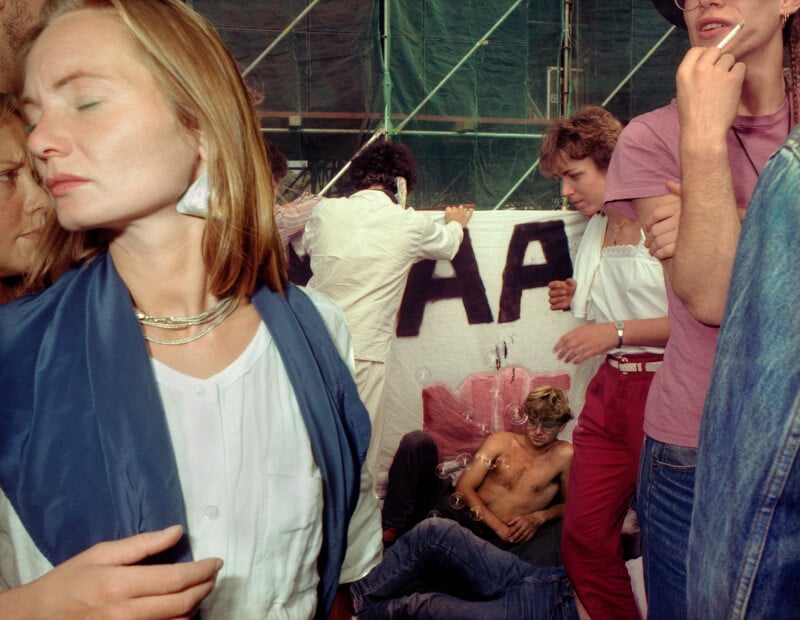
Zurborn’s lens captures the subtle choreography of collective existence. He looks for the ways in which individual actions, often seemingly random, contribute to the larger narrative of a crowd. Whether it’s a group embracing near a banner, a woman walking purposefully through a busy street, or individuals observing a shared spectacle, his photographs emphasize the connective tissue that binds people in public. This relational focus allows his work to transcend simple reportage, offering sociological insights into human behavior and interaction within various social settings.
His method embraces the inherent visual complexity of public life. Rather than striving for compositional simplicity or giving clear priority to a single element, Zurborn allows for a rich density of visual information. His photographs frequently feature significant activity in both the foreground and background, with smaller, intricate details coexisting alongside larger, more apparent patterns. This deliberate layering often means that scenes which initially appear chaotic gradually reveal a compelling visual order upon closer inspection, all while retaining the essential unpredictability and dynamism of everyday public life. This nuanced approach challenges viewers to look beyond the immediate, encouraging a deeper engagement with the frame and its myriad narratives.
Public Spheres, Private Moments: A Thematic Breakdown
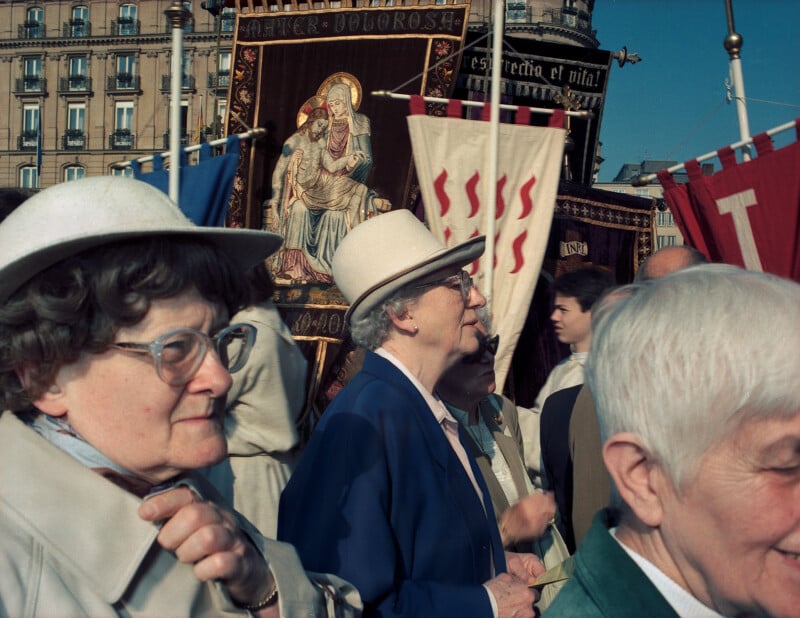
The range of public gatherings documented in Crowds is extensive, encompassing a spectrum of human activities and societal functions. Zurborn’s discerning eye has captured scenes from political rallies, where collective ideology and protest are visibly manifested; sporting events, showcasing shared excitement and competitive spirit; religious processions, highlighting ritual and communal faith; tourist attractions, where transient visitors interact with historical or cultural landmarks; and entertainment events, celebrating leisure and escapism. Each type of gathering provides a unique canvas for Zurborn to explore how individuals behave and interact as part of a larger group.
Consider the political gatherings at Wackersdorf in 1986, where anti-nuclear sentiment brought diverse groups of people together. Zurborn’s images from these protests capture not just the scale of the crowd, but also the individual faces within it – faces etched with conviction, solidarity, or quiet contemplation. Similarly, his photographs of religious processions, such as those depicting banners of the Mater Dolorosa, reveal a different kind of communal experience, one steeped in tradition and shared belief, where gestures of reverence and quiet devotion are paramount.
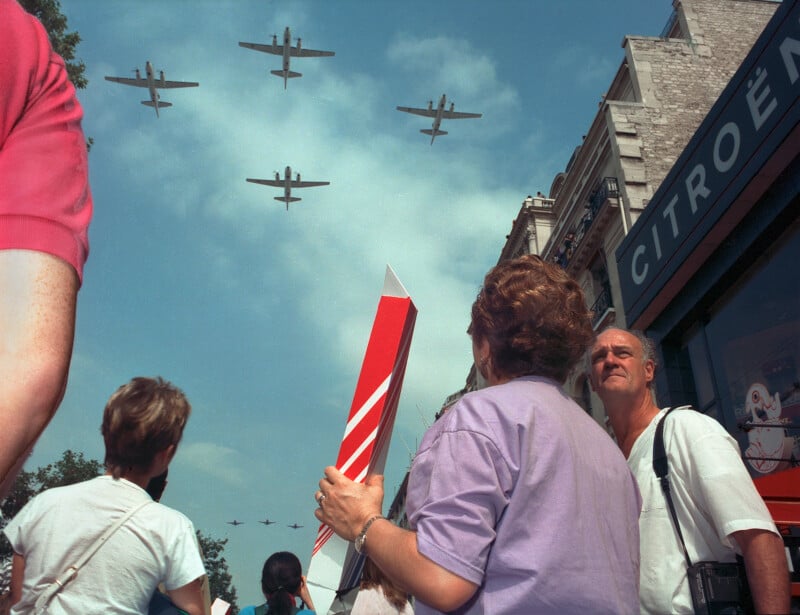
In contrast, images from fairgrounds in Cologne or bustling streets in Paris highlight the more spontaneous and celebratory aspects of public life. Here, Zurborn captures moments of joy, curiosity, and casual interaction – a young man with women at a fairground ride, families strolling past vibrant storefronts, or people looking skyward at an aerial display. These photographs demonstrate his ability to find universal human experiences within vastly different social contexts, revealing how public spaces serve as stages for both grand societal narratives and intimate personal moments.
Technique and Aesthetic: Analog Color and Visual Complexity
Zurborn’s commitment to analog color photography is central to the aesthetic and thematic depth of Crowds. The use of film from the 1980s and 1990s inherently imbues the images with a specific visual quality – a distinct color palette and grain structure that evoke the era with authenticity. The decision to digitize these hundreds of negatives for the book was a crucial step, preserving the original fidelity while making them accessible to a contemporary audience.
Working within the tradition of color street photography, Zurborn consciously embraces the sheer volume of visual information present in public spaces. His compositions are often dense, rich with overlapping details, vibrant hues, and dynamic forms. This approach stands in contrast to minimalist photography, which often seeks to distill a scene to its bare essentials. Instead, Zurborn invites the viewer into a sensory overload that mirrors the real-world experience of being in a crowd. His photographs are not meant to be passively consumed; they demand active engagement, rewarding closer inspection with layers of meaning and discovery. A casual glance might perceive chaos, but a sustained gaze reveals underlying patterns, subtle connections, and the intricate dance of human interaction. This visual strategy underscores the inherent unpredictability and vitality of everyday public life, mirroring the complex societal structures he aims to portray.
Contextualizing the Era: Societal Transformation in Germany and Beyond
The period documented by Zurborn was a crucible of profound societal change, especially in Germany. The 1980s saw the Federal Republic of Germany (West Germany) grappling with economic shifts, environmental concerns, and the ever-present geopolitical tension of the Iron Curtain. The anti-nuclear movement, epitomized by protests like those at Wackersdorf, became a powerful voice for environmentalism and pacifism, mobilizing tens of thousands and shaping public discourse. These movements often intersected with a growing youth culture that was beginning to assert its identity through music, fashion, and lifestyle choices, moving away from the more conservative norms of previous generations.
The year 1989 marked a seismic shift with the fall of the Berlin Wall, leading to German reunification in 1990. This event, while celebrated, ushered in a decade of immense social, economic, and cultural upheaval. Millions of East Germans adapted to a new political and economic system, while West Germany absorbed the challenges and opportunities of integrating its eastern counterpart. Zurborn’s photographs, though not explicitly political in every frame, inherently capture the atmosphere of these times – the nascent sense of freedom, the blending of cultures, and the visible signs of a society in flux. The images serve as visual footnotes to this complex historical narrative, documenting the lives of ordinary people as they navigated extraordinary circumstances.
Simultaneously, the 1980s and 1990s witnessed the relentless expansion of mass media. Television became ubiquitous, and new forms of popular culture, from blockbuster films to pop music, began to exert an unprecedented influence on public consciousness and individual identity. Zurborn’s work implicitly reflects this growing media presence, as he captures crowds not just interacting with each other, but also often being observed, entertained, or influenced by external stimuli, whether it be an advertisement, a public broadcast, or a performance. This interplay between the immediate human environment and the broader media landscape is a recurring, subtle theme throughout Crowds.
Implications and Relevance in the Digital Age
The release of Crowds in the post-pandemic era, following a period where the very concept of public gathering was fundamentally altered, imbues Zurborn’s work with renewed and profound relevance. In a world increasingly dominated by digital interactions and filtered realities, these analog photographs serve as a powerful reminder of the tangible, often messy, and essential nature of physical community. They prompt contemporary viewers to reflect on the meaning of collective experience, the dynamics of human connection in shared spaces, and the impact of isolation versus communion.
Moreover, in an age where visual culture is saturated with curated social media feeds and algorithm-driven content, Zurborn’s raw, unfiltered depictions of crowds offer an antidote. His refusal to impose a single, simplistic interpretation encourages critical engagement, inviting viewers to question the narratives presented to them and to discern the nuances of societal structures. The book can be seen as a valuable tool for understanding the historical evolution of social behaviors and the enduring human need for belonging, even within the anonymity of a large crowd.
Representatives from Kehrer Verlag have noted the timeliness of the book’s publication, stating, "Wolfgang Zurborn’s Crowds is more than just a photographic retrospective; it is a vital sociological document that resonates deeply with our current understanding of public life. His ability to capture the zeitgeist of a transformative era, combined with his unique visual language, makes this an essential contribution to photographic literature." Zurborn himself, reflecting on the project, has reportedly emphasized the importance of returning to one’s archive to find new meanings: "The pandemic forced us to pause, and in that pause, I found new connections in images I had taken decades ago. It made me see how consistently we navigate the tension between being part of a collective and striving for self-determination."
Conclusion
Wolfgang Zurborn’s Crowds is a significant photographic endeavor that transcends mere historical documentation. Through his distinctive lens, Zurborn offers an insightful, complex, and visually rich exploration of human interaction within the public spheres of the 1980s and 1990s. By meticulously digitizing and curating his analog negatives, he has created a timeless collection that not only captures the spirit of an era but also provokes contemplation on the enduring questions of community, individuality, and the pervasive influence of media. His photographs do not simply present moments; they invite an examination of the intricate, often chaotic, yet fundamentally ordered structures that underpin our shared human experience. This compelling volume promises to be an invaluable resource for photography enthusiasts, social historians, and anyone interested in the visual narrative of societal change. Wolfgang Zurborn’s book Crowds (published by Kehrer Verlag) is available for purchase now.