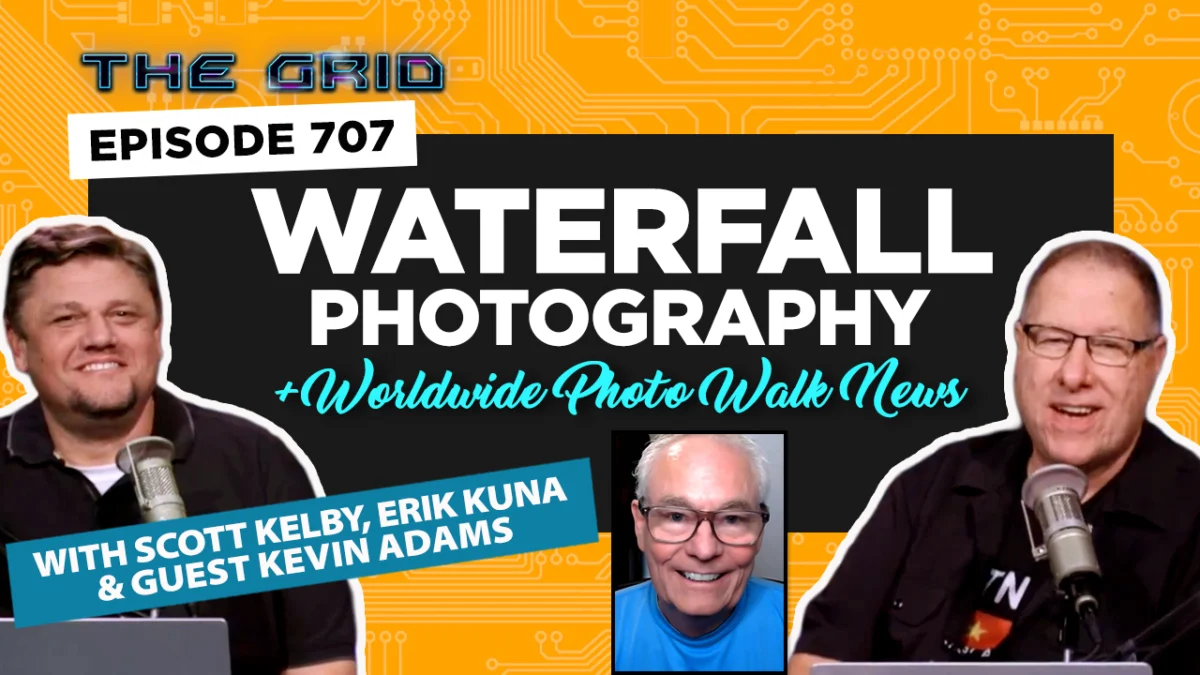
The latest episode of The Grid, KelbyOne’s flagship online talk show for photographers, delivered a comprehensive exploration of waterfall photography techniques with renowned expert Kevin Adams, while also providing critical updates on the upcoming 18th annual Worldwide Photo Walk and details regarding Photoshop World. This installment underscored The Grid‘s commitment to offering practical, actionable advice from industry leaders, coupled with timely news about key events shaping the global photography community.
Deep Dive into Waterfall Photography with Kevin Adams
The core of this week’s The Grid broadcast centered on a masterclass in waterfall photography, led by acclaimed photographer Kevin Adams. Known for his captivating work with both waterfalls and nightscapes, Adams joined hosts Scott Kelby and Erik Kuna to demystify the art of capturing moving water with precision and artistic intent. His segment was particularly valuable for photographers seeking to move beyond basic snapshots and achieve a professional, visually striking aesthetic directly in-camera.
Adams began by tackling one of the most frequently asked questions in landscape photography: the optimal shutter speed for waterfalls. Dispelling the common misconception of a single "correct" setting, he meticulously explained how varying shutter speeds dramatically alter the visual representation of moving water. A faster shutter speed, for instance, freezes the motion, capturing individual droplets and the raw power of the cascade, often revealing intricate textures and patterns within the water’s flow. This technique is particularly effective for conveying dynamism and the sheer force of a waterfall. Common fast shutter speeds for freezing water might range from 1/500th of a second to 1/2000th of a second, depending on the speed of the water and desired effect. Conversely, a slower shutter speed creates the popular "silky smooth" or "cotton candy" effect, blurring the water into an ethereal, soft texture that contrasts beautifully with the static elements of the surrounding landscape. This effect is typically achieved with shutter speeds ranging from 1/2 second to several seconds, often requiring neutral density filters in brighter conditions to prevent overexposure. Adams emphasized that the choice between these effects is fundamentally an artistic one, driven by the photographer’s vision for the final image. He encouraged experimentation across a range of exposures to discover the myriad possibilities and to ensure a diverse set of options during post-processing. This adaptive approach, he argued, is far more effective than rigid adherence to a single setting, empowering photographers to tailor their results to specific lighting conditions, water volume, and desired mood.
Beyond shutter speed, Adams highlighted the indispensable role of a polarizing filter in his waterfall photography toolkit. He elaborated on how this specialized filter operates by selectively blocking polarized light, thereby reducing glare and reflections from wet surfaces like water and rocks. This reduction in specular highlights not only enhances the saturation of colors—making greens of moss and browns of rock more vibrant—but also allows for greater visibility into the water itself, revealing submerged details that would otherwise be obscured by surface reflections. A polarizing filter functions by rotating two pieces of glass, allowing the photographer to control the amount of polarized light that passes through to the sensor. Furthermore, a polarizing filter typically reduces the amount of light entering the lens by one to two stops, which can be advantageous for waterfall photography as it allows for the use of slower shutter speeds even in relatively bright conditions, aiding in achieving the desired motion blur without overexposing the image. Adams underscored that the strategic use of a polarizing filter is a cornerstone for achieving rich, deep colors and maximizing detail in waterfall scenes, significantly contributing to the "in-camera" look he strives for.
Environmental conditions, often perceived as hindrances, were reframed by Adams as potential assets. He explained why overcast skies and even light rain can be ideal for photographing waterfalls. Overcast conditions provide soft, diffused lighting, eliminating harsh shadows and bright hotspots that can plague sunny day shoots. This even illumination ensures a broader dynamic range in the scene, making it easier to capture details in both highlights and shadows. The absence of direct sunlight minimizes contrast, allowing for a more balanced exposure across the entire frame. Rain, similarly, saturates the colors of the landscape, making foliage greener and rocks darker and more reflective, intensifying the visual richness of the scene. The wet surfaces often gain a luminous quality that enhances texture and depth. This insight challenges the conventional wisdom of waiting for "perfect" sunny weather, encouraging photographers to embrace a wider range of shooting opportunities and recognize the unique aesthetic qualities these conditions can offer.
Compositional elements also received significant attention, with Adams stressing the importance of finding a strong foreground to add depth and dimension to waterfall photographs. A well-chosen foreground element—be it a moss-covered rock, fallen leaves, a vibrant patch of flora, or a stream leading into the main cascade—serves multiple purposes. It creates a sense of scale, draws the viewer’s eye into the scene, and provides an anchor point that grounds the majestic power of the waterfall. By carefully selecting and positioning these elements, often employing compositional principles such as leading lines or the rule of thirds, photographers can craft more engaging and immersive compositions, transforming a simple landscape shot into a compelling narrative. The foreground acts as an entry point, guiding the viewer’s gaze through the scene towards the main subject.
In a segment that offered a truly unique perspective, Adams delved into the specialized realm of photographing waterfalls at night. This technique, requiring specific equipment such as sturdy tripods, remote shutter releases, and often external light sources for light painting, yields dramatically different results compared to daytime photography. Night photography of waterfalls often creates an ethereal, mysterious, and highly artistic aesthetic, where the water appears as glowing streaks against a dark, star-lit, or subtly illuminated background. Long exposures, sometimes lasting minutes, are essential to capture sufficient light and create the desired silky effect, while light painting can be used to selectively illuminate parts of the waterfall or its surroundings, adding dramatic highlights and shadows. This advanced technique opens up a new frontier for creative expression, pushing the boundaries of traditional landscape photography and offering a completely different "look."
The Grid: A Hub for Photography Education and Community
The Grid, hosted by industry stalwarts Scott Kelby and Erik Kuna, has long served as a vital nexus for photography education and community engagement. As KelbyOne’s premier weekly webcast, it has built a reputation for delivering high-quality, accessible instruction from leading experts across various photographic disciplines. Scott Kelby, a towering figure in the photography and creative software world, is widely recognized as an award-winning author of over 100 books, editor and publisher of Photoshop User magazine, and co-founder of the National Association of Photoshop Professionals (NAPP), which later evolved into KelbyOne. His extensive experience and passion for teaching have made him a global authority in digital imaging. Erik Kuna, a celebrated photographer, educator, and popular host, complements Kelby’s expertise with his dynamic presentation style and deep technical knowledge, particularly in areas like space photography and lighting. Together, they create an engaging and informative platform that caters to both amateur enthusiasts and seasoned professionals. The show’s format, blending expert interviews, practical demonstrations, and industry news, ensures that viewers remain abreast of the latest trends, techniques, and events in the rapidly evolving world of photography.
The 18th Annual Worldwide Photo Walk: A Global Phenomenon
A significant portion of The Grid episode was dedicated to the forthcoming 18th annual Worldwide Photo Walk (WWPW), scheduled for Saturday, October 3. Conceived and launched by Scott Kelby in 2007, the Worldwide Photo Walk has grown to become the largest social photography event globally, embodying a powerful blend of community, exploration, and charitable giving. Its inception was rooted in Kelby’s vision to unite photographers across the globe, encouraging them to step out, explore their local environments, and connect with fellow enthusiasts in a shared passion for visual storytelling.
Since its inaugural year, the WWPW has seen millions of participants gather in thousands of cities across more than 150 countries. Each walk is led by a volunteer "Walk Leader" who organizes a specific route in their local area, creating an accessible and informal environment for photographers of all skill levels. The event is entirely free to participate in, removing any financial barriers to entry and fostering broad inclusivity. Beyond the immediate benefits of learning, sharing, and networking, the Worldwide Photo Walk also carries a significant philanthropic component. For many years, it has supported Springs of Hope Orphanage in Kenya, with optional donations from participants contributing to vital resources for children in need, including food, education, and shelter. This charitable aspect adds a layer of profound purpose to the social and educational objectives of the walk.
The 18th iteration promises to continue this tradition, inviting photographers to sign up, find a walk near them, or even organize their own. The event serves as a powerful reminder of photography’s capacity to build bridges, transcending geographical and cultural divides. Participants consistently laud the WWPW for its ability to foster local photography communities, allowing individuals to discover hidden gems in their own cities, experiment with new techniques, and receive constructive feedback in a supportive atmosphere. The collective energy of thousands of photographers simultaneously capturing moments around the world creates a unique, shared experience that resonates far beyond the single day of the event, often sparking lasting friendships and collaborative projects among participants.
Photoshop World: The Premier Creative Conference
Further updates from Scott Kelby and Erik Kuna included details about Photoshop World, the industry’s leading conference for Photoshop, Lightroom, and creative professionals. Originally founded by the National Association of Photoshop Professionals (NAPP), now KelbyOne, Photoshop World has been a cornerstone event for digital artists, photographers, and designers for decades. It is renowned for its immersive training, featuring world-class instructors, hands-on workshops, and keynote presentations that cover the latest advancements in creative software and techniques.
The mention of a "26 social limited-time deal $200 off" for Photoshop World underscores an active promotional phase for an upcoming conference, signaling opportunities for attendees to secure their participation at a reduced rate. These events typically span several days, offering intensive tracks on various subjects, from advanced photo retouching and graphic design principles to cutting-edge uses of artificial intelligence in creative workflows and specialized photography techniques. Photoshop World attracts a diverse audience, from seasoned professionals looking to refine their skills and stay updated on software developments to aspiring creatives eager to learn from the best in the field. The conference is not merely an educational forum; it’s a vibrant networking hub, providing unparalleled opportunities for attendees to connect with peers, industry leaders, and product representatives. It remains an essential platform for professional development, fostering innovation and excellence within the creative industries. The insights shared and connections made at Photoshop World often directly influence the trajectory of creative careers and the evolution of digital artistry.
Ongoing Educational Initiatives: Workshops and Events
Beyond The Grid, the Worldwide Photo Walk, and Photoshop World, KelbyOne, under the guidance of Scott Kelby, consistently offers a rich calendar of photography workshops and events. These initiatives, ranging from online courses and tutorials to in-person seminars and field workshops, cover an expansive array of topics designed to cater to photographers at every stage of their journey. Such workshops provide focused, in-depth learning experiences that complement the broader discussions on The Grid, allowing participants to delve into specific genres like portraiture, landscape, sports, or studio lighting, often with direct guidance from leading experts. The commitment to continuous education through these diverse platforms reflects KelbyOne’s mission to empower photographers with the knowledge and skills necessary to achieve their creative aspirations, fostering a culture of lifelong learning within the photography community.
Broader Impact and Implications
The content featured on The Grid this week, encompassing both specialized photographic techniques and major community events, highlights several significant implications for the contemporary photography landscape. Firstly, the accessible format of shows like The Grid democratizes high-level photography education, making expert insights available to a global audience regardless of geographical location or financial constraints. This online model significantly lowers barriers to entry for learning advanced techniques, fostering a more inclusive and skilled photographic community that can readily adapt to new trends and technologies.
Secondly, events such as the Worldwide Photo Walk underscore the enduring human need for connection and shared experience, even in an increasingly digital world. The WWPW proves that while photography can be a solitary pursuit, it thrives when individuals come together to learn, share, and inspire one another. Its continued success, now in its 18th year, is a testament to the power of community in fostering creativity and personal growth. The charitable aspect further amplifies its positive societal impact, demonstrating how a shared passion can be leveraged for global good and provide tangible support to vulnerable communities.
Finally, the sustained relevance of conferences like Photoshop World emphasizes the dynamic nature of the creative industry and the continuous demand for professional development. As software evolves and new technologies emerge—particularly with the rapid advancements in artificial intelligence and computational photography—platforms that offer intensive, expert-led training are crucial for professionals to remain competitive and innovative. These events ensure that the creative workforce is equipped with the latest tools and knowledge, driving forward the standards of digital art and photography and enabling artists to push the boundaries of what’s possible.
In essence, the comprehensive offerings discussed on The Grid—from Kevin Adams’ detailed waterfall photography tips to the updates on global community events—illustrate KelbyOne’s multifaceted contribution to nurturing, educating, and uniting the global photography and creative communities. For anyone with waterfalls on their shooting list, or an interest in engaging with the wider photography world, this episode provided a wealth of ideas and opportunities, reinforcing the value of continuous learning and collective passion. The replay of the episode, readily available, serves as an invaluable resource for those looking to enhance their skills and connect with the vibrant world of photography.