The commercial fleet branding industry is currently undergoing a significant transition, moving away from uniform surface finishes toward a more sophisticated, multi-textured approach known as hybrid surfacing. In 2026, the traditional binary choice between high-gloss and ultra-matte wraps has been replaced by a strategic integration of both, driven by a need for enhanced legibility, brand distinction, and functional durability in varying light conditions. This shift represents a maturation of the vehicle wrap market, where aesthetic choices are increasingly dictated by the practical science of visibility and the demands of high-traffic outdoor advertising.
The Evolution of Vehicle Wrap Finishes: A Brief Chronology
The trajectory of vehicle customization has moved through several distinct eras. In the late 20th century, fleet branding was largely limited to cut-vinyl lettering and simple decals applied directly to factory paint. The early 2000s saw the rise of full-color digital printing, allowing for complex "mobile billboards" that covered entire vehicles in high-gloss laminates.
By the mid-2010s, matte finishes emerged as a premium trend, initially popularized by luxury car enthusiasts before being adopted by forward-thinking brands seeking a "stealth" or "modern" aesthetic. However, both extremes presented unique challenges. High-gloss wraps, while vibrant, were prone to "hot spots"—intense reflections of the sun that rendered text unreadable at certain angles. Conversely, full-matte wraps, while excellent at eliminating glare, often lacked the "pop" required to catch a pedestrian’s eye from a distance, sometimes appearing flat or dull in overcast conditions.
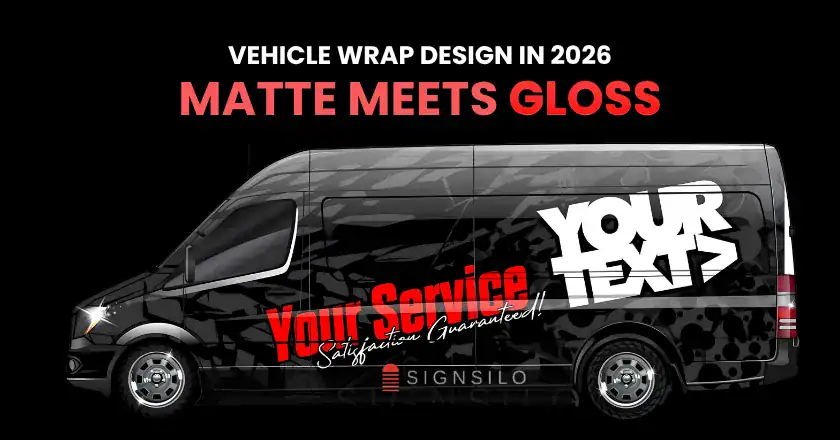
Entering 2026, the industry has reached a synthesis. Hybrid surfacing allows designers to utilize the strengths of both textures, using matte backgrounds to provide a non-reflective canvas and gloss accents to highlight critical brand information, such as logos, QR codes, and contact details.
The Science of Visibility: Light Diffusion and Contrast
The move toward hybrid finishes is grounded in the physics of light reflection. High-gloss surfaces produce specular reflection, where light bounces off the surface at the same angle it hits, creating a mirror-like effect. In direct sunlight, this can create a "washout" effect on printed graphics. Matte surfaces, through a microscopic texture, produce diffuse reflection, scattering light in many directions and providing a consistent appearance regardless of the sun’s position.
By layering gloss graphics over a matte base, designers create a "tactile contrast." This contrast does not rely solely on color theory but on how the human eye perceives depth and movement. When a vehicle with hybrid textures moves through a city, the gloss elements catch and reflect the shifting environment while the matte elements remain stable. This creates a visual "flicker" that naturally draws the eye toward the glossy brand elements without sacrificing the overall readability of the surrounding text.
Strategic Branding and Fleet Performance
For fleet managers, the primary goal of a vehicle wrap is return on investment (ROI) through brand impressions. Industry data suggests that a single intra-city truck can generate between 30,000 and 70,000 visual impressions per day. However, an impression is only valuable if the information is processed by the viewer.

The hybrid approach addresses several key performance indicators:
- Readability in High-Glare Environments: By applying matte laminates to the large, flat panels of a van or trailer, designers ensure that the primary message remains visible even under the harsh midday sun.
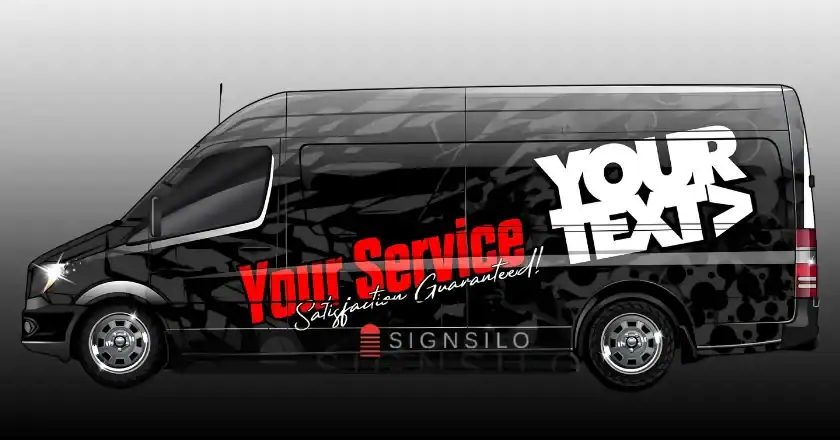
- Information Hierarchy: Just as a web designer uses bold fonts to highlight headers, a wrap designer uses gloss textures to highlight the most important information. A gloss logo on a matte black background creates a premium feel that suggests high-end craftsmanship.
- Durability and Maintenance: Modern hybrid wraps are often engineered with specific top-coats that resist UV degradation. Matte finishes are notoriously difficult to maintain as they can "burnish" or become shiny if scrubbed too hard; by strategically placing gloss in high-touch areas, installers can extend the perceived lifespan of the wrap.
The Role of Precision Assets: The SignSilo Ecosystem
The execution of a hybrid wrap requires a level of precision far beyond that of a standard single-texture application. Because the design relies on the interplay of different materials, the digital preparation must be flawless. This demand for precision has elevated the importance of high-quality design resources, such as those provided by SignSilo.
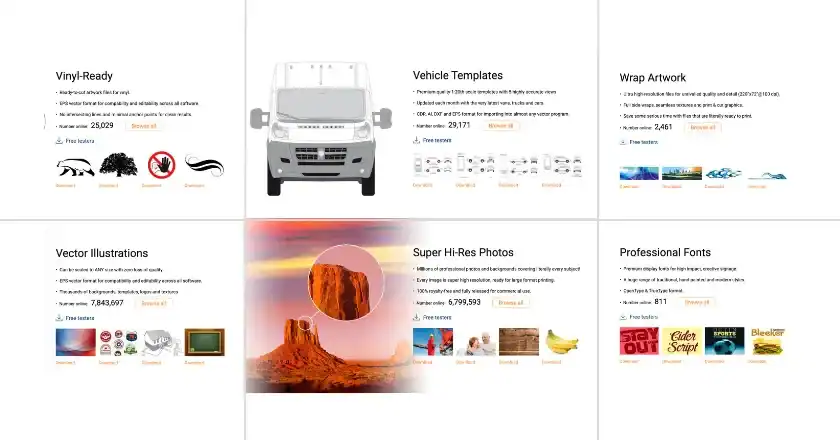
SignSilo has become a central utility for the professional wrap community, offering a repository of over 24,000 vehicle templates. These templates are essential for hybrid designs because they provide 1:1 scale accuracy, allowing designers to map out exactly where a matte section ends and a gloss section begins. When dealing with complex vehicle contours—such as the recessed channels of a Mercedes Sprinter or the aerodynamic curves of a Tesla Semi—having an accurate vector template is the difference between a seamless finish and a costly installation failure.
Beyond templates, the shift toward hybrid textures has increased the demand for high-resolution wrap backgrounds and metallic vectors. SignSilo’s library provides the raw materials that allow designers to simulate how different textures will interact before the first inch of vinyl is printed.
Economic Accessibility and Industry Standardization
As the technology behind vinyl manufacturing has improved, the cost of specialized laminates has decreased, making hybrid wraps accessible to small and medium-sized businesses (SMBs). To support this democratization, subscription models for design assets have become the industry standard.
SignSilo’s current pricing structure reflects the tiered needs of the 2026 market:
- The Essential Plan ($149/year): Targeted at boutique shops, providing 25 downloads per month.
- The Pro Plan ($199/year): Designed for high-volume wrap shops, offering 50 downloads per month and a larger initial "starting credit" to jumpstart fleet projects.
These plans allow shops to access premium vehicle templates, high-quality photos, and wrap-specific vectors without the overhead of per-asset licensing, which can often exceed the profit margins of a single job.
Expert Analysis: Implications for the Future of Fleet Design
Industry analysts suggest that the hybrid trend is merely the beginning of a broader movement toward "intelligent surfaces." As we look toward the late 2020s, we may see the integration of "smart" vinyl that can change its reflective properties based on electrical impulses, or bio-integrated materials that offer even higher levels of UV protection.

For now, the hybrid matte-gloss approach remains the gold standard for high-utility branding. "We are seeing a move away from the ‘louder is better’ philosophy," says one industry consultant. "In 2026, the most effective wraps are those that respect the environment they operate in. A hybrid wrap doesn’t just scream for attention; it earns it by being the most legible and professional-looking vehicle on the road."
Furthermore, the environmental impact of the wrap industry is under scrutiny. The shift toward hybrid finishes often involves the use of PVC-free films and water-based inks, which align with the sustainability goals of many modern corporations. By creating designs that are more durable and remain visually effective for longer periods, companies reduce the frequency of re-wrapping, thereby lowering their overall carbon footprint.
Conclusion
Matte meets gloss is not merely a stylistic choice; it is a functional response to the challenges of modern mobile advertising. By leveraging the unique optical properties of different finishes, designers can ensure that fleet vehicles remain effective brand ambassadors in any lighting condition. With the support of comprehensive resource platforms like SignSilo, the barrier to entry for high-end, multi-textured design has never been lower, allowing for a more vibrant and readable urban landscape. As vehicle technology continues to advance, the "skin" of the vehicle will remain a critical frontier for innovation, blending the art of design with the precision of material science.