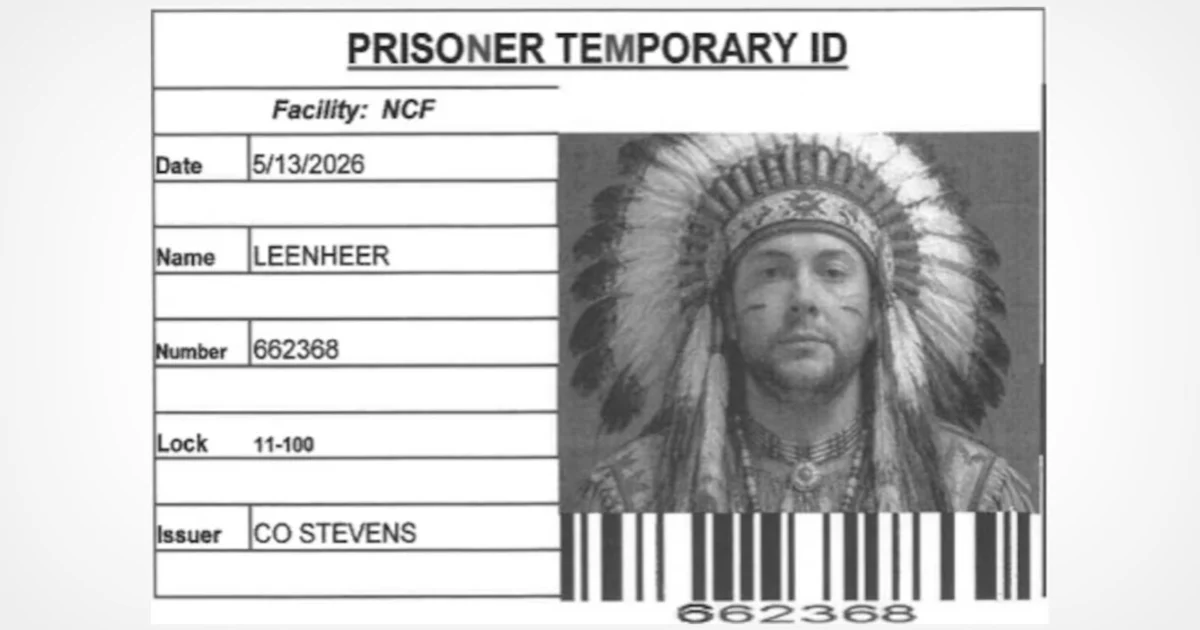
A former inmate has initiated a federal lawsuit alleging that correctional officers at the Newberry Correctional Facility in Michigan digitally manipulated his prison identification photograph, depicting him in stereotypical Native American attire, including a feathered headdress and facial paint. This deeply disturbing incident has ignited concerns over racial discrimination within the state’s correctional system and raises serious questions about the professional conduct and accountability of prison staff.
The Heart of the Allegation: Intentional Racial Humiliation
Dylan Leenheer, a Native American man and an enrolled member of the Gun Lake Tribe, filed the lawsuit against the Michigan Department of Corrections (MDOC) and three individual staff members: corrections officers Jay Stevens and Robert Marsh, and library technician JoLynn Cebula. Leenheer, who is currently on parole, was incarcerated at the Newberry Correctional Facility in Luce County, Michigan, at the time of the alleged incident in May. According to the complaint filed by Flood Law, a Detroit-based firm representing Leenheer, the actions constitute "intentional racial humiliation" targeting Leenheer specifically because of his Native American heritage.
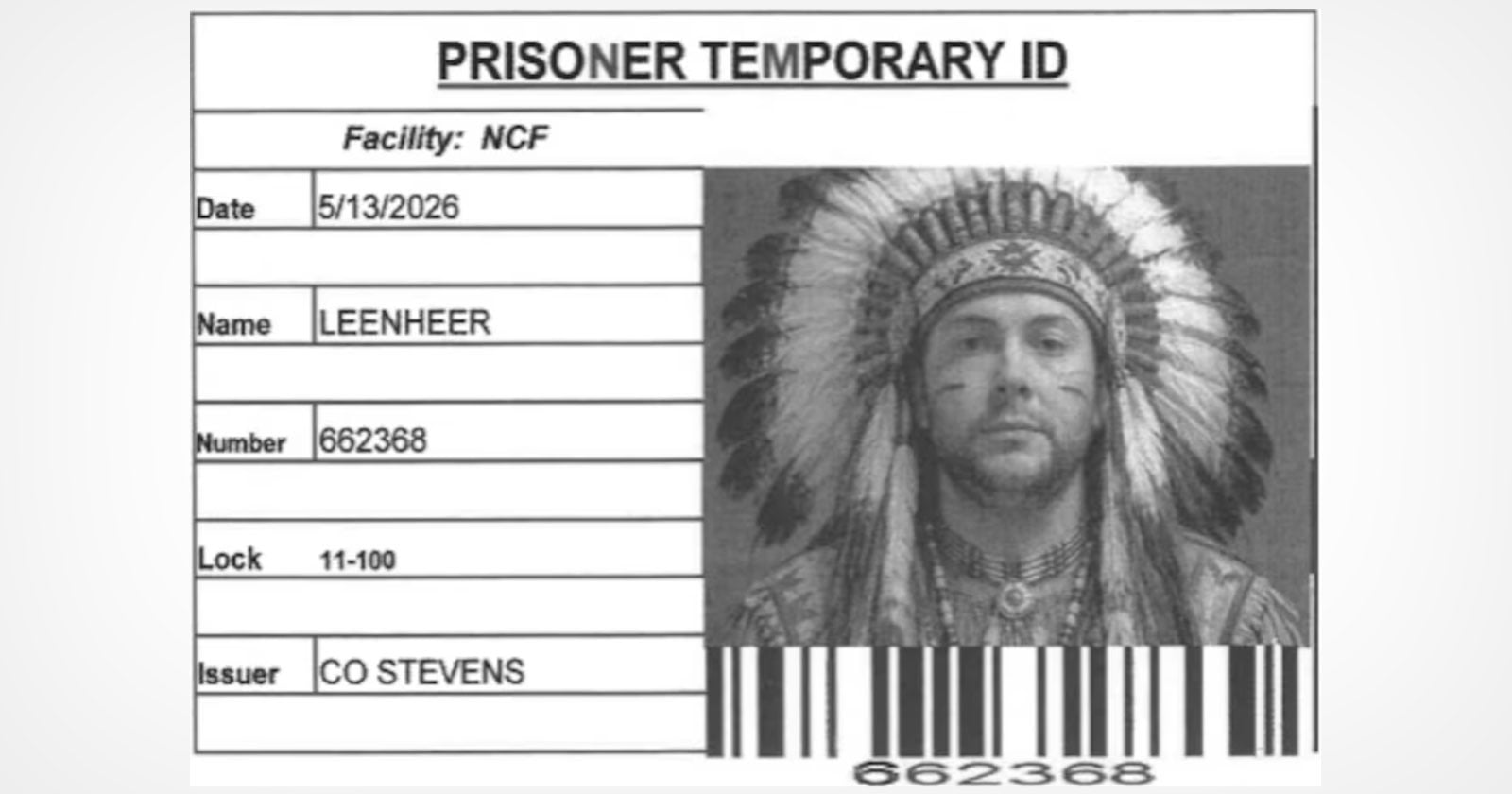
The lawsuit details that on May 13, Leenheer, who was one of only three Native American prisoners housed in Unit 11, requested a replacement temporary identification card from officers Stevens and Marsh. It is alleged that Officer Stevens then took Leenheer’s official identification photograph and, using photo-editing software, digitally altered it to superimpose stereotypical Native American clothing, including a prominent feathered headdress and traditional facial paint, onto Leenheer’s image. This altered photograph, featuring a striking visual of a man in a headdress with the name "Leenheer" clearly visible, became central to the legal complaint.
Further allegations state that Officer Stevens permitted this digitally doctored image to be prominently displayed in the Unit 11 window. This public display, visible to other prisoners and staff, is cited as a deliberate act designed to subject Leenheer to "public humiliation on the basis of his race and ethnicity," creating a hostile and demeaning environment within the correctional facility. The image, a black-and-white temporary ID card, visually underscores the gravity of the accusations, presenting a stark contrast between an official document and the racially charged caricature it allegedly became.
Obstruction of Justice and Further Allegations
The complaint extends beyond the initial act of photographic alteration, detailing alleged obstruction when Leenheer attempted to document the incident. Following the display of the altered ID, Leenheer filed a grievance within the prison system. To support his grievance, he requested photocopies of the offensive ID card from the facility’s law library. It is here that library technician JoLynn Cebula allegedly intervened, refusing to make the requested copies. Furthermore, Cebula reportedly declined to sign the request form, which would have formally documented her denial, and also withheld the original altered ID card from Leenheer. According to the lawsuit, Cebula’s rationale for her refusal was that she found the altered image "funny," an alleged statement that further highlights a concerning lack of sensitivity and professionalism among staff. These actions, if proven, not only compounded Leenheer’s distress but also potentially hampered his ability to formally challenge the alleged misconduct through official channels.
A Pattern of Racial Stereotyping: Broader Implications
The lawsuit against the MDOC and its employees gains even greater significance in light of revelations from Leenheer’s legal representation. Maura Battersby, a senior attorney with Flood Law, indicated that the firm has been contacted by other incarcerated individuals who allege similar incidents of their identification photographs being digitally altered with racial stereotypes. According to Battersby, one of these men is Black, and another is of Indian descent, suggesting that Leenheer’s experience may not be an isolated incident but rather indicative of a "broader pattern" of discriminatory behavior within the correctional system.
"From what we presently know, it appears that it’s a broader pattern," Battersby stated, emphasizing the potential systemic nature of the issue. "We know enough to know that this was really blatant and really brazen, but we don’t know the full extent of it as of yet." This assertion transforms the case from an individual grievance into a potentially larger investigation into the culture and practices within Michigan’s correctional facilities. The firm has proactively requested that all relevant evidence, including body-camera footage and other records that might show how the photograph was altered, be preserved, underscoring their commitment to a thorough investigation. Battersby firmly reiterated a fundamental legal principle: "Being incarcerated does not strip a person of their basic human dignity or constitutional rights… There’s a tendency to say that because you’re serving a prison sentence, you deserve what you get. It’s not a free-for-all."
Background and Context: Racial Discrimination in Prisons
Racial discrimination within correctional facilities is a long-standing and well-documented issue in the United States. Native Americans, in particular, face disproportionately high rates of incarceration and are often subjected to unique forms of discrimination, stemming from historical marginalization and persistent stereotypes. Statistics consistently show that Native Americans are incarcerated at rates far exceeding their proportion of the general population. For instance, according to data from organizations like The Sentencing Project, Native Americans are overrepresented in state and federal prisons, often facing harsher sentences and experiencing discriminatory treatment.
The use of stereotypical imagery, particularly against Native Americans, carries a heavy historical weight. From caricatures in sports mascots to misrepresentations in popular culture, such imagery often trivializes complex cultural identities, perpetuates harmful biases, and contributes to the dehumanization of individuals. In a prison setting, where power dynamics are already heavily skewed, such acts can be particularly devastating, undermining an inmate’s sense of self-worth and exacerbating feelings of vulnerability and injustice. An official prison ID card serves as a primary identifier and a symbol of an individual’s presence within the system; its deliberate alteration into a racist caricature is not merely a prank but an act of profound disrespect and humiliation.
The Michigan Department of Corrections, like all correctional agencies, is legally obligated to protect inmates from discrimination based on race, ethnicity, or national origin, as enshrined in the U.S. Constitution, particularly the Equal Protection Clause of the Fourteenth Amendment, and various federal civil rights statutes. MDOC policies typically prohibit harassment, discrimination, and the use of excessive force or demeaning treatment against inmates. The allegations in Leenheer’s lawsuit directly challenge the MDOC’s adherence to these fundamental principles and internal regulations.
Legal Ramifications and Demands for Accountability
The lawsuit seeks compensatory damages for the profound emotional distress, humiliation, anxiety, and depression Leenheer allegedly suffered as a direct result of the edited photo and the subsequent alleged obstruction. Additionally, the complaint seeks "exemplary damages" against the individual defendants, Stevens, Marsh, and Cebula. Exemplary damages, also known as punitive damages, are typically awarded not to compensate the victim but to punish the wrongdoer and deter similar conduct in the future, signaling the seriousness with which the court might view the alleged actions.
The legal process will involve discovery, where both sides gather evidence, including potential interviews with other inmates and staff, review of digital records, and examination of MDOC policies and training. If the allegations are substantiated, the case could have significant implications for the MDOC, potentially leading to mandatory sensitivity training, revised policies regarding staff conduct and photo handling, and stricter accountability measures. Beyond financial compensation, the lawsuit aims to send a clear message that such discriminatory behavior will not be tolerated, even within the confines of a correctional facility.
Official Responses and Institutional Responsibility
As of the current reporting, the Michigan Department of Corrections has not issued a detailed public statement regarding the specific allegations in Leenheer’s lawsuit. Typically, correctional departments do not comment extensively on pending litigation, citing legal protocols. However, it is expected that the MDOC will be compelled to respond formally in court, addressing the claims made by Leenheer and his legal team. The MDOC’s internal affairs division may also launch its own investigation into the conduct of the named officers and technician, a standard procedure when serious allegations of misconduct are raised. Any such internal investigation would examine whether the staff members violated departmental policies, codes of conduct, or ethical guidelines.
The implications for the MDOC extend to its public image and its commitment to equitable treatment for all individuals under its care. An incident of this nature, especially if part of a broader pattern, can erode public trust, invite scrutiny from civil rights organizations, and potentially lead to oversight reforms. The case serves as a critical test of the MDOC’s commitment to upholding the dignity and constitutional rights of incarcerated individuals, regardless of their background or the offenses for which they are serving time.
The Road Ahead: Seeking Justice and Systemic Change
Dylan Leenheer’s lawsuit represents more than just a personal quest for justice; it stands as a challenge to systemic issues of racism and abuse of power within the correctional system. The legal battle ahead will not only determine the culpability of the individuals named but could also set a precedent for how similar incidents are addressed in the future. For Leenheer, the lawsuit is an attempt to reclaim his dignity and to ensure that no other inmate is subjected to such a demeaning and racially charged act. For the broader community, it is a reminder that constitutional rights do not cease at the prison gates and that institutions are held accountable for the conduct of their employees. The outcome of this case will be closely watched by advocates for prisoner rights and those committed to eradicating racial discrimination in all its forms, particularly within institutions designed to rehabilitate and protect.