The highly anticipated publication of Elsebound: Photographs from the Quiet Hours by French-born, Belgium-based artist Nicolas Rachline marks a significant moment in contemporary photography, offering a profound visual commentary on the human condition in the modern urban landscape. Scheduled for release on September 29, 2026, by the esteemed art book publisher Rizzoli, this monograph presents a collection of Rachline’s distinctive images that have garnered critical attention for their cinematic quality, Edward Hopper-esque mood, and compelling exploration of solitude and ephemeral beauty. The volume features a foreword by renowned media figure Graydon Carter and Nathan King, underscoring its cultural significance.
A Decade of Poetic Observation: Rachline’s Artistic Journey
Nicolas Rachline’s transition to professional photography a little over ten years ago, following a career in advertising and editing, reflects a deliberate artistic evolution. This shift allowed him to dedicate his vision to capturing fleeting moments with a unique intensity, transforming ordinary scenes into profound visual narratives. Elsebound is the first comprehensive monograph dedicated to his work, serving as a culmination of a decade spent honing a distinctive style that resonates deeply with viewers. His background in advertising likely equipped him with a keen understanding of visual communication and composition, which he now deploys to evoke complex emotions and subtle stories rather than commercial messages. The meticulous curation of images for this Rizzoli publication speaks to a mature artistic voice, ready to be presented on a global stage.
The Cinematic Lens: Blending Hopper’s Melancholy with Film Noir’s Intrigue
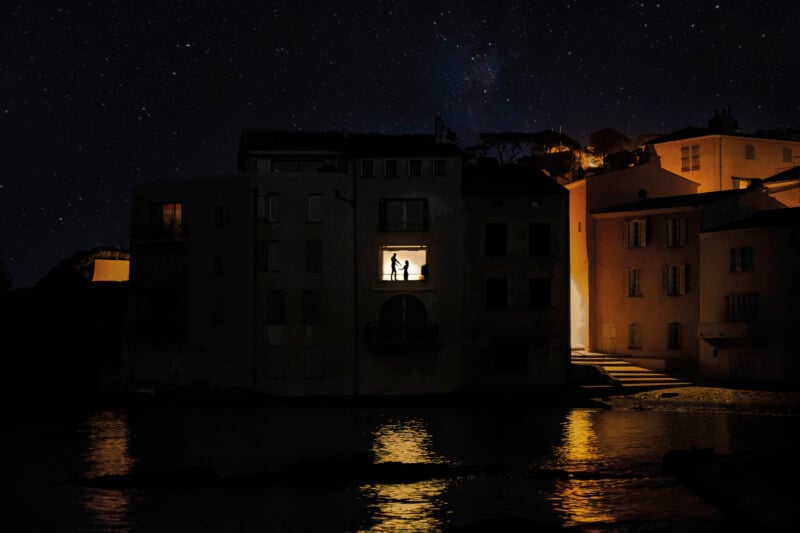
Rachline’s photographs are characterized by a potent blend of influences, most notably the American realist painter Edward Hopper and the classic film noir genre. Hopper’s iconic works, often depicting solitary figures in urban or domestic settings, are renowned for their portrayal of alienation, quiet contemplation, and the evocative use of light and shadow. Rachline masterfully translates this melancholic introspection into his photographic compositions. His images frequently feature anonymous, isolated figures framed within brightly lit windows or against stark architectural backdrops, such as the evocative St Tropez, 2021, where a couple stands silhouetted against a luminous window overlooking a dark expanse of water under a starry sky. This sense of being observed, yet simultaneously detached, is a hallmark of both Hopper’s painting and Rachline’s photography.
Complementing this Hopperian sensibility is a distinct film noir-style intensity. Film noir, a genre of crime films popular from the 1940s to the late 1950s, is famous for its low-key lighting, chiaroscuro effects, cynical tones, and complex, often morally ambiguous characters navigating urban environments. Rachline’s photographs capture this atmosphere of suspense and mystery. His dreamlike scenes of global cities—from the bustling streets of Paris and New York to the sun-drenched avenues of Los Angeles and the quiet corners of Brussels—are imbued with a sense of underlying tension. Deserted streets glow with pale, artificial light, casting long shadows that hint at unseen narratives. Figures linger at crossroads, appearing suspended in time, creating a feeling that something significant has just occurred or is imminently about to unfold. This narrative ambiguity invites viewers to construct their own interpretations, drawing them deeper into the enigmatic worlds he creates.
A Pantheon of Influences: Weaving Art Historical Threads
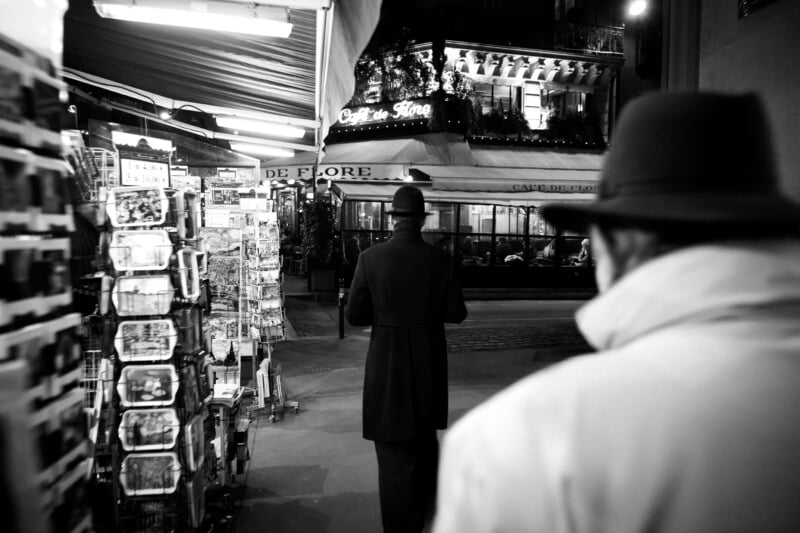
Rachline’s artistic vision is deeply rooted in a rich tapestry of influences drawn from both photography and painting. Among the photographers who have shaped his aesthetic, Brassaï, Philip-Lorca diCorcia, and Saul Leiter stand out. Brassaï, the Hungarian-French photographer, was celebrated for his nocturnal images of Paris, capturing the city’s hidden life, its denizens, and its unique atmosphere under artificial light. His work often explored the intimate and sometimes gritty reality of urban existence after dark, a sensibility clearly echoed in Rachline’s dimly lit urban landscapes and solitary figures, particularly evident in images like Paris, 2019, which captures a person approaching the iconic Café de Flore at night, shrouded in shadow and soft street illumination.
Philip-Lorca diCorcia is known for his highly staged, cinematic street photography, often employing elaborate lighting setups to transform candid moments into dramatic, almost theatrical scenes. His work blurs the lines between documentary and fiction, creating images charged with psychological depth and narrative potential. Rachline shares diCorcia’s ability to infuse everyday moments with an intense, almost hyperreal quality, making the ordinary feel extraordinary and slightly unsettling. The deliberate composition and dramatic lighting in Rachline’s work reflect a similar meticulousness in crafting a scene that feels both observed and constructed.
Saul Leiter, a pioneer of color photography, was celebrated for his abstract compositions, use of reflections, and his ability to capture the poetic beauty of everyday life in New York City. His work often focused on the subtle interplay of light, color, and form, transforming mundane street scenes into painterly masterpieces. Rachline’s appreciation for the "fragile beauty" he finds in ordinary places and his evocative use of light and atmosphere owe a debt to Leiter’s innovative approach to street photography. The shimmering quality of his landscapes, oscillating between the ordinary and the surreal, is reminiscent of Leiter’s unique visual language.
Beyond photography, Rachline also draws inspiration from painters like Edward Hopper (as previously discussed) and the Belgian surrealist Paul Delvaux. Delvaux’s dreamlike, melancholic scenes often feature nude women in classical architectural settings, evoking a profound sense of timelessness, mystery, and an almost hypnotic stillness. This influence adds another layer to Rachline’s "hauntingly striking spaces" and his ability to imbue his photographs with an enigmatic, otherworldly quality, despite their grounding in real-world locations. The deliberate placement of figures within expansive, often sparse environments, fostering a sense of isolation and contemplation, can be seen as a direct echo of Delvaux’s surrealist narratives.
A Chronology of Quiet Hours Across Global Cities
The photographs compiled in Elsebound span several years and diverse urban environments, offering a chronological insight into Rachline’s evolving vision while maintaining a consistent thematic core. The collection includes images such as:
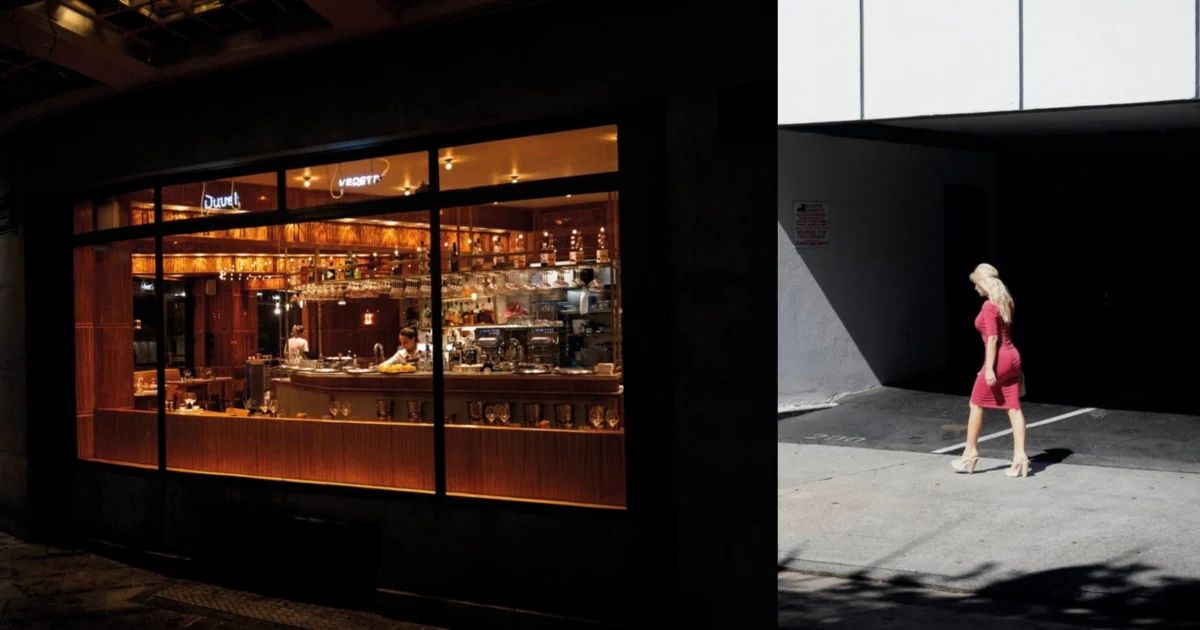
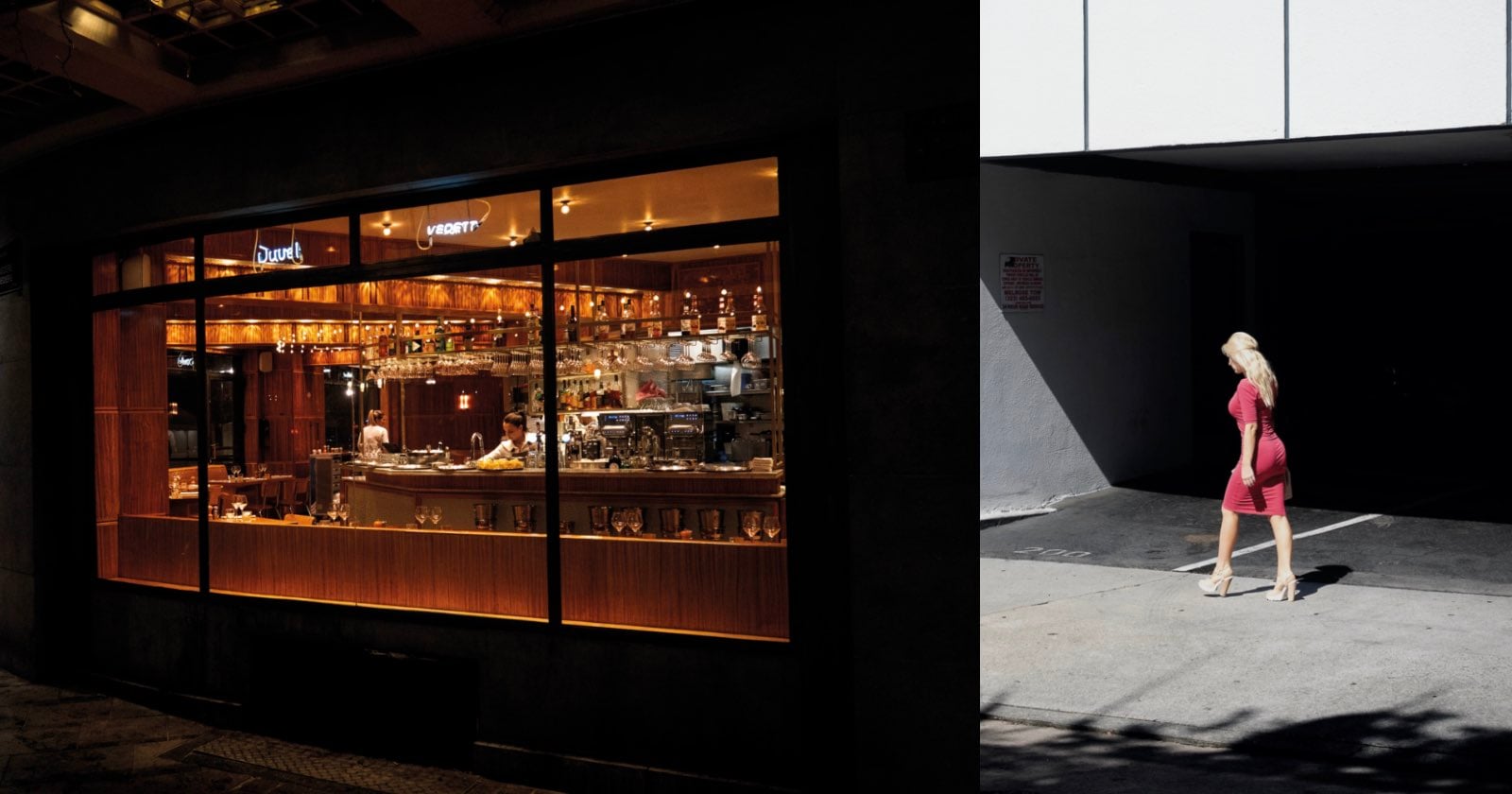
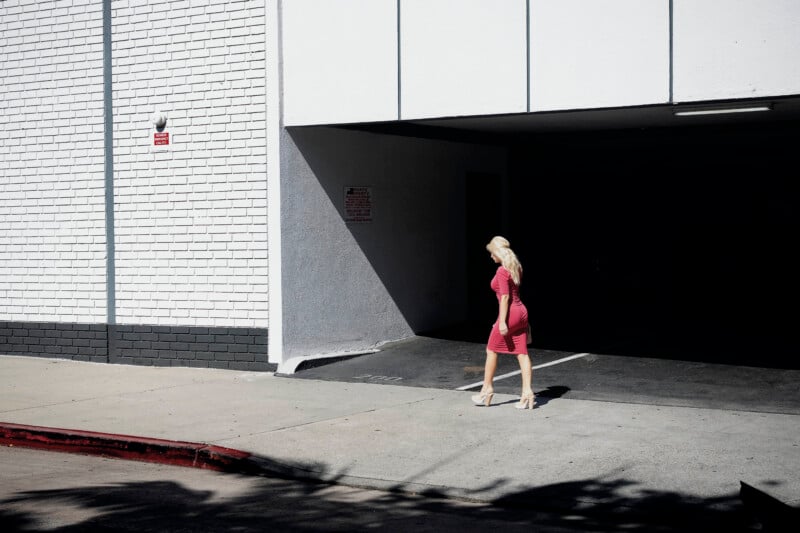
- Los Angeles, 2015: A blonde woman in a pink dress and high heels walks past a parking garage entrance on a sunny day. This image captures the unique blend of glamour and banality characteristic of L.A., with a figure that could be stepping out of a film scene, embodying a quiet drama against a stark urban backdrop.
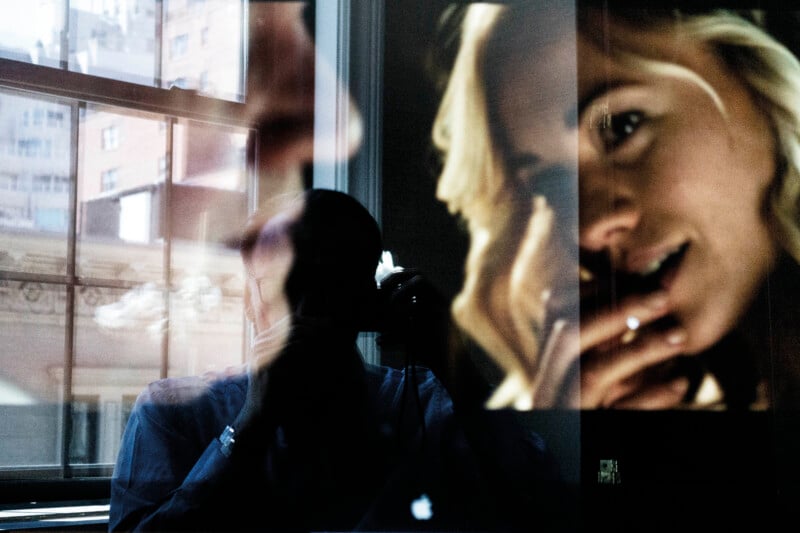
- NYC, 2016: A double exposure image featuring a person holding a camera in front of a window, overlaid with a close-up portrait of a smiling woman. This experimental piece speaks to the layers of perception and the subjective nature of observation, a thematic thread in much of Rachline’s work. It also hints at the photographer’s presence, albeit subtly.
- Paris, 2019: A figure in a hat and coat walks toward the Café de Flore at night, viewed from behind another person in the foreground. This captures the quintessential Parisian nocturnal ambiance, imbued with a sense of romance and solitary urban exploration, reminiscent of Brassaï’s work.
- St Tropez, 2021: A couple stands in a brightly lit window of a dark building overlooking a body of water under a starry night sky. This image perfectly encapsulates the Hopperian theme of isolated figures within a dramatic setting, offering a moment of quiet reflection amidst a potentially vibrant locale.
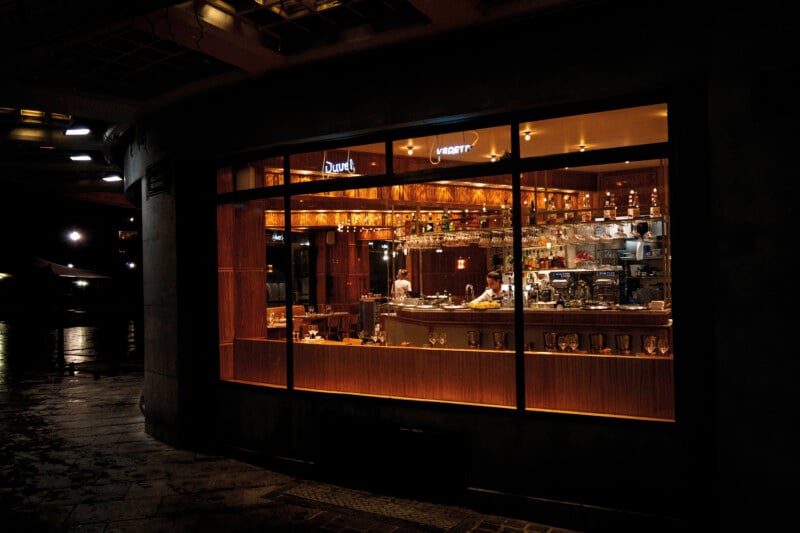
- Brussels, 2022: A brightly lit bar interior is viewed through a large window at night, showing a bartender working behind a wooden counter. The scene is both inviting and distant, a tableau observed from the outside, emphasizing the theme of observation and the separation between inner and outer worlds.
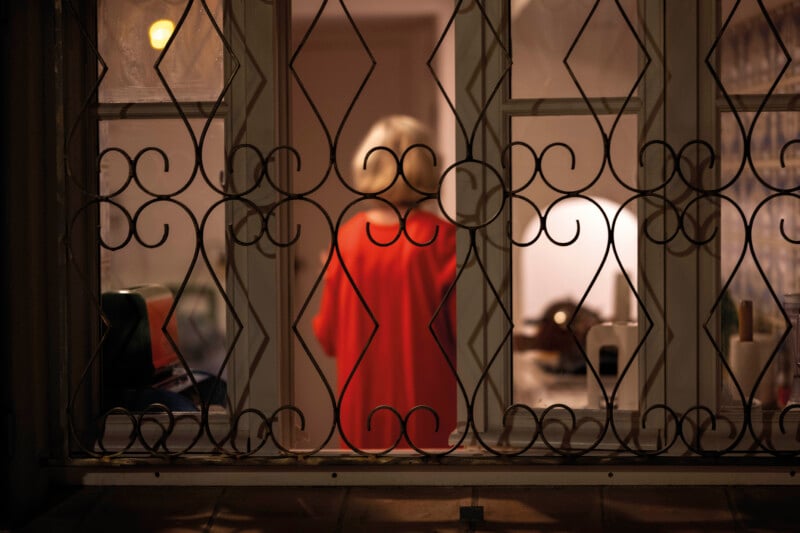
- St Tropez, 2024: A person with blonde hair wearing a red dress stands inside a room, viewed through a window with a decorative metal security grille. This image evokes a sense of confinement or contemplation, with the grille adding a layer of visual texture and perhaps symbolic meaning to the subject’s gaze.
These photographs, though taken in different years and locations, collectively articulate Rachline’s enduring fascination with the liminal spaces of urban life and the psychological landscapes of its inhabitants. They are snapshots of quiet anticipation, melancholic beauty, and the profound silence that can exist even in the heart of a city.
Thematic Depth: Enigma, Melancholy, and the Human Condition
At its core, Elsebound delves into the profound themes of solitude and fragile beauty in contemporary life. Rachline’s anonymous figures, often caught in moments of introspection or transition, embody a sense of modern alienation, yet without explicit judgment. Instead, there is an inherent dignity and beauty in their isolation. The photographs convey a pervasive atmosphere of enigma and melancholy, inviting viewers to ponder the unspoken stories within each frame. They speak to a universal experience: the quiet moments of waiting, the search for connection, and the underlying tension of navigating an uncertain world.
The title Elsebound itself suggests a yearning for something beyond the immediate, a state of being "bound for elsewhere" or perpetually seeking. This notion is reinforced by the persistent feeling in his images that "something has just happened — or is about to." This narrative suspense encourages active engagement from the viewer, transforming them from passive observers into participants in the unfolding drama. Rachline’s work offers a poignant reflection on the human condition, capturing the delicate balance between hope and longing, presence and absence. The images explore the uncertain spaces between different states of life, making them deeply human and relatable.
Rizzoli’s Endorsement and Critical Acclaim
The decision by Rizzoli New York to publish Elsebound is a significant endorsement of Nicolas Rachline’s artistic merit. Rizzoli is renowned globally for its high-quality publications in art, architecture, fashion, and photography, often championing artists whose work pushes boundaries or offers unique perspectives. Their selection of Elsebound positions Rachline as a noteworthy contemporary photographer whose vision aligns with the publisher’s commitment to showcasing influential and culturally resonant art. This partnership ensures that Rachline’s work will reach a broad international audience of art enthusiasts, collectors, and academic institutions.
The inclusion of a foreword by Graydon Carter and Nathan King further elevates the book’s standing. Graydon Carter, the former editor-in-chief of Vanity Fair, is a highly respected voice in culture and media. His involvement suggests a recognition of Rachline’s work beyond the confines of the art world, indicating its broader cultural appeal and relevance. While Nathan King’s specific background is not detailed, his collaboration with Carter implies a shared appreciation for Rachline’s distinctive photographic narrative. Their insights will undoubtedly provide a valuable critical framework for understanding and appreciating the nuances of Rachline’s artistry, offering context and deeper analytical perspectives on the themes and techniques employed in Elsebound.
Broader Impact and Legacy
Elsebound: Photographs from the Quiet Hours is poised to establish Nicolas Rachline as a compelling voice in contemporary photography. His ability to synthesize diverse artistic influences—from the stark realism of Hopper to the atmospheric mystery of film noir, and the subtle poetics of Leiter—into a cohesive and original style is a testament to his unique vision. The book’s exploration of universal themes like solitude, uncertainty, and the search for meaning in everyday environments will resonate with a wide audience.
Beyond its aesthetic appeal, Rachline’s work offers a valuable contribution to the ongoing dialogue about the human experience in an increasingly complex and often isolating modern world. His photographs serve as contemplative windows, inviting viewers to pause, reflect, and find beauty in the overlooked moments and quiet corners of existence. The formal publication by Rizzoli not only celebrates his journey and achievements to date but also firmly plants his work within the canon of significant photographic art, ensuring its study and appreciation for years to come. Elsebound is not merely a collection of images; it is a meticulously crafted visual poem that speaks to the heart of what it means to be human in the twenty-first century.