BYD, the world’s leading manufacturer of new energy vehicles (NEVs), has officially introduced its highly anticipated smart drone system, developed in a strategic partnership with DJI, the global leader in civilian drones and aerial imaging technology. This groundbreaking innovation marks the first time a major automotive manufacturer has fully integrated a high-performance unmanned aerial vehicle (UAV) system into the architecture of a production electric vehicle (EV). By merging advanced automotive engineering with state-of-the-art aerial robotics, BYD and DJI are ushering in a new era of "intelligent mobility," where the boundaries between ground transportation and aerial observation are increasingly blurred.
The initiative, which was first teased during the BYD Dream Day event earlier this year, represents a significant leap forward in the company’s "Xuanji" architecture—a smart vehicular system that coordinates various technologies including artificial intelligence (AI), 5G connectivity, and autonomous driving. The smart drone is not merely an accessory stored in the trunk; it is a sophisticated, vehicle-mounted aerial platform designed to enhance the driving experience through real-time environmental monitoring, cinematic documentation, and enhanced safety protocols.
The Strategic Alliance: A Synergy of Two Tech Giants
The collaboration between BYD and DJI is a logical progression for two of China’s most dominant technology firms. BYD, having recently overtaken Tesla in quarterly global EV sales, is pivoting its focus toward "intelligence" as the next frontier of competition. Meanwhile, DJI continues to command over 70% of the global drone market. By combining their expertise, the two companies have created a "Vehicle-to-Drone" (V2D) ecosystem that leverages BYD’s power management and DJI’s flight control algorithms.
Industry analysts suggest that this partnership is a direct response to the growing demand for lifestyle-oriented technology in the luxury SUV and off-road segments. Consumers in these markets are increasingly looking for features that support outdoor adventure, content creation, and advanced safety. The BYD-DJI drone system is specifically engineered to meet these needs, offering a level of integration that aftermarket drone solutions cannot match.
Technical Specifications and Hardware Architecture
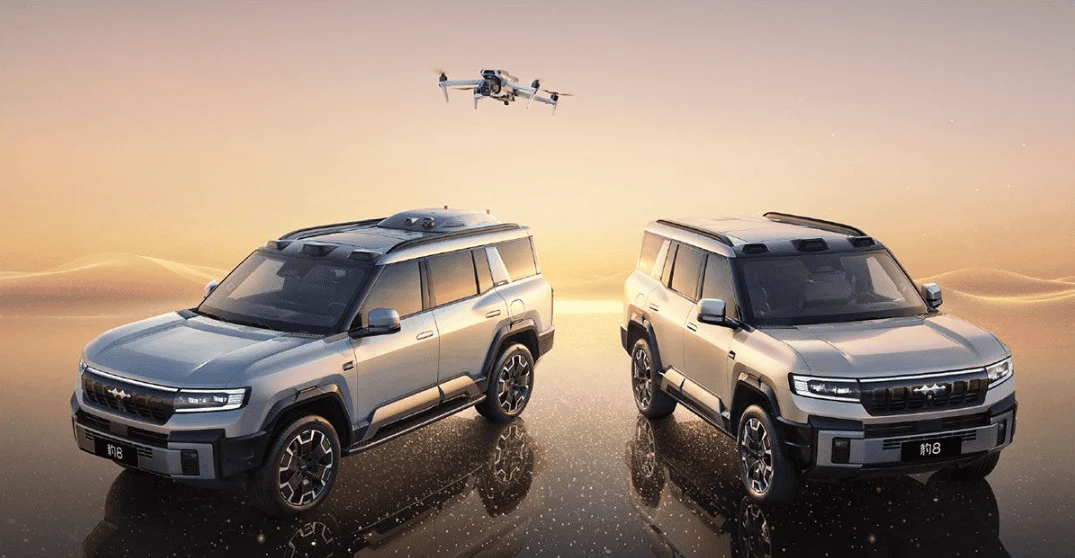
At the heart of this innovation is the integrated "Vehicle-Mounted Drone Hangar." Located on the roof of the vehicle, specifically featured on the premium Yangwang U8 SUV model, this hangar is a marvel of miniaturized engineering. It serves as a launchpad, landing bay, and charging station.
The Automated Hangar System
The hangar features an intelligent bay that opens and closes automatically. It includes a robotic mechanism that can automatically swap drone batteries, ensuring that the UAV is always ready for flight. This "hot-swap" capability is a first for the consumer automotive industry, allowing for continuous operation without the driver needing to manually intervene or wait for a charge.
High-Resolution Imaging and Stabilization
The drone itself is equipped with a high-performance camera capable of capturing 4K video at 60 frames per second. Utilizing DJI’s proprietary gimbal stabilization technology, the drone provides rock-steady footage even in high-wind conditions or while the vehicle is moving across rugged terrain. The camera system also features advanced zoom capabilities, allowing for detailed inspection of the road ahead or the surrounding landscape.
Transmission and Control
The system utilizes an enhanced version of DJI’s OcuSync technology, which has been optimized for the vehicle’s internal communication bus. This ensures a low-latency, high-definition video feed directly to the car’s central infotainment screen. Drivers and passengers can view the aerial perspective in real-time, with controls integrated into the vehicle’s steering wheel and touchscreen interface.
Operational Capabilities: AI and Autonomous Flight
What sets the BYD smart drone apart from conventional UAVs is its high degree of autonomy. The system is deeply integrated with the vehicle’s AI suite, allowing for "one-touch" operations that minimize pilot distraction.
- One-Click Takeoff and Landing: With a single command on the dashboard, the hangar opens, and the drone ascends to a pre-set altitude. Upon completion of its mission, the drone uses high-precision sensors and GPS to return to the moving vehicle and land safely in its docking station.
- Intelligent Follow Mode: The drone can automatically track the vehicle at speeds of up to 50 km/h (approximately 31 mph). It maintains a consistent distance and angle, capturing cinematic "follow" shots that were previously only possible with a dedicated drone pilot.
- Smart Obstacle Avoidance: Equipped with omnidirectional binocular vision sensors and infrared sensing systems, the drone can navigate complex environments—such as forests or urban canyons—without colliding with trees, power lines, or buildings.
- Aerial Pathfinding: In off-road scenarios, the drone can fly ahead of the vehicle to scout the terrain. The AI analyzes the ground surface and relays information back to the driver regarding potential obstacles, water depth, or path viability, significantly enhancing safety in unknown territories.
Practical Applications: Beyond Content Creation
While the ability to record stunning travel vlogs is a major selling point, the BYD smart drone offers several practical applications that contribute to the utility and safety of the vehicle.

Enhanced Safety and Situational Awareness
In heavy traffic or during long-distance highway travel, the drone can provide a "bird’s-eye view" of the road ahead. This allows drivers to see past large trucks or around corners, identifying traffic jams or accidents before they come into the vehicle’s sensor range. This aerial perspective acts as an extension of the car’s Advanced Driver Assistance Systems (ADAS).
Emergency Response and Search and Rescue
For adventurers who travel to remote areas, the drone serves as a vital safety tool. In the event of a breakdown or an emergency, the drone can be launched to find the nearest road, signal for help, or locate individuals who may have wandered away from the vehicle. Its thermal imaging capabilities (available in certain configurations) make it particularly effective for nighttime search operations.
Industrial and Agricultural Utility
BYD envisions that this technology will eventually trickle down to its commercial vehicle lineup. In agriculture, a drone-equipped truck could monitor crop health or irrigation systems. In the construction industry, it could be used for site surveys and progress monitoring, all controlled from the comfort of the truck’s cabin.
Market Context and Competitive Landscape
The launch of the smart drone is part of BYD’s broader strategy to redefine itself as a "tech-first" company. For years, the criticism against Chinese EV manufacturers was that they excelled at hardware but lagged in software and ecosystem integration. BYD’s "Dream Day" and the subsequent drone launch are designed to shatter that perception.
Currently, few competitors have an answer to BYD’s integrated drone system. While Tesla has discussed the idea of "Tesla Bots" and advanced AI, it has yet to integrate aerial hardware into its vehicles. Polestar previously showcased a concept car (the Polestar O2) with an integrated drone, but it has not yet reached mass production. BYD’s move to place this technology in the Yangwang U8—a vehicle already making waves for its ability to "tank turn" and float in water—solidifies the brand’s position at the pinnacle of automotive tech.
Regulatory and Safety Considerations
Despite the technological brilliance of the system, BYD faces significant regulatory hurdles as it looks to export this technology globally. Drone laws vary wildly between jurisdictions. In the United States, the Federal Aviation Administration (FAA) maintains strict rules regarding flying drones from moving vehicles and "Beyond Visual Line of Sight" (BVLOS) operations.
To address these concerns, BYD has implemented several software "geofences" and safety overrides. The drone is programmed to comply with local "No-Fly Zones" (such as airports and military installations) via DJI’s updated database. Furthermore, the system includes a "Safe Return" protocol that triggers if the drone loses connection with the vehicle or if its battery levels drop below a certain threshold.
The Future of Vehicle-to-Drone (V2D) Technology
The integration of drones into the automotive world is just the beginning. As 5G and 6G networks become more prevalent, we can expect "Swarm Intelligence," where multiple drones coordinate with a fleet of vehicles to manage traffic flow or perform large-scale environmental data collection.
BYD’s leadership has hinted that future iterations of the drone system may include delivery capabilities. Imagine a scenario where a vehicle, stuck in traffic, launches a drone to pick up a small parcel or food order from a nearby depot and delivers it directly to the car’s roof hangar. While this remains in the realm of future speculation, the hardware foundation laid by the BYD-DJI partnership makes such scenarios technically feasible.
Conclusion
The launch of the BYD smart drone is a landmark moment in the evolution of the automobile. It transforms the car from a simple mode of transport into a mobile command center capable of interacting with the world in three dimensions. By leveraging DJI’s aerial expertise and BYD’s innovative vehicle architecture, the two companies have created a product that is both a luxury plaything for the adventurous and a serious tool for safety and surveillance.
As BYD continues to expand its global footprint, the smart drone system will serve as a powerful differentiator in a crowded EV market. It proves that the future of mobility is not just about moving from point A to point B on four wheels, but about the seamless integration of AI, robotics, and connectivity to enhance every aspect of the human journey. Whether this becomes a standard feature across all vehicles or remains a hallmark of high-end luxury models, BYD has successfully set a new benchmark for what a "smart car" can truly do.