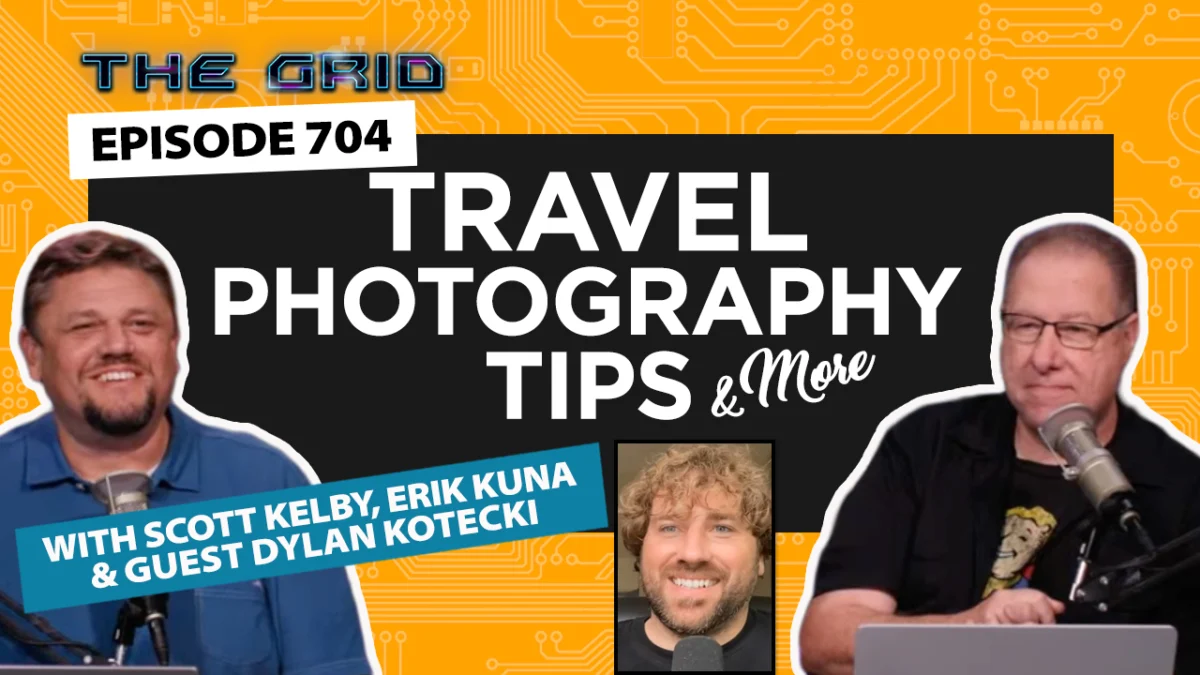
A recent episode of The Grid, KelbyOne’s long-running photography education webcast, featured industry luminaries Scott Kelby, Erik Kuna, and Dylan Kotecki offering an extensive collection of practical travel photography tips. The discussion centered on strategies designed to empower photographers to capture superior images during their travels, all while streamlining the logistical complexities of the journey itself. The expert panel’s insights provided a holistic view, spanning meticulous pre-trip planning, on-location execution, and advanced post-processing techniques, ultimately aiming to equip photographers with the knowledge to return with captivating visuals that transcend the ubiquitous "postcard shot."
Background: The Grid and its Educational Imperative
The Grid is a prominent weekly online show hosted by Scott Kelby, a globally recognized figure in photography education, publishing, and software training. Produced by KelbyOne, a leading platform for creative education, the show consistently delivers actionable advice, gear reviews, and interviews with top professionals across various photographic disciplines. For over 700 episodes, The Grid has served as a critical resource for a worldwide audience of photographers, from enthusiastic amateurs to seasoned professionals, seeking to refine their craft and stay abreast of industry trends. The inclusion of Erik Kuna, a renowned space and landscape photographer and educator, and Dylan Kotecki, a rising talent specializing in creative editing, underscores KelbyOne’s commitment to delivering diverse expertise. This particular episode, numbered 704, continued this tradition by focusing on one of photography’s most popular and challenging genres: travel photography.
The popularity of travel photography has surged dramatically in recent decades, fueled by the advent of digital cameras, the proliferation of social media platforms, and an increasingly interconnected world. What was once a niche pursuit, often requiring specialized film and darkroom techniques, has become accessible to millions. However, this accessibility also presents a challenge: how to stand out in a saturated visual landscape. The insights shared on The Grid directly address this by emphasizing deliberate planning, thoughtful execution, and creative post-production, transforming a mere vacation into a focused photographic endeavor.
Navigating the Journey: Scott Kelby’s Strategic Travel Logistics
Scott Kelby, known for his pragmatic and straightforward approach to photography education, dedicated his segment to the often-overlooked yet critical logistical aspects of travel. His advice was rooted in minimizing common travel headaches to maximize time spent on actual photography, asserting that a well-managed journey is foundational to successful image-making.
Mitigating Jet Lag for Optimal Performance: Jet lag, a physiological condition resulting from rapid travel across multiple time zones, can significantly impair a photographer’s ability to function effectively, affecting concentration, energy levels, and even creative vision. Kelby emphasized proactive measures to combat its effects. Scientifically, jet lag disrupts the body’s circadian rhythm, which governs sleep-wake cycles, hormone release, and other bodily functions. Practical strategies include adjusting sleep schedules gradually before departure, staying hydrated throughout the flight, avoiding excessive alcohol and caffeine, and strategic exposure to natural light upon arrival. For instance, early morning sunlight can help reset the body clock faster when traveling east, while avoiding bright light in the evening is beneficial when traveling west. The goal is not merely comfort but ensuring peak mental and physical readiness to seize photographic opportunities from the moment of arrival. Many professional travel photographers swear by a regimented schedule of light exposure and hydration, sometimes even using mild melatonin supplements under medical advice, to rapidly acclimatize and avoid losing precious shooting days to fatigue.
Intelligent Luggage and Gear Management: The dilemma of packing photographic equipment is universal for travel photographers. Kelby’s recommendations centered on efficiency and security. He advocated for a clear understanding of airline carry-on policies, noting that most essential camera bodies, lenses, and sensitive electronics should always travel in a carry-on bag. This not only protects valuable equipment from the rigors of checked luggage handling but also ensures immediate access upon arrival. He likely discussed the importance of TSA-approved locks, padded inserts, and dedicated camera bags designed for travel, which often include compartments for laptops, batteries, and other accessories. Furthermore, he implicitly underscored the importance of minimizing weight and bulk, as lighter loads translate to greater mobility and less fatigue during long shooting days. This often involves making difficult choices about which lenses or accessories to leave behind, prioritizing versatility and necessity over "just in case" items. The burgeoning market for compact, high-performance mirrorless cameras has significantly eased this burden for many photographers.
Seamless Transportation and Local Navigation: Navigating unfamiliar locales can be daunting, but Kelby’s advice highlighted methods to simplify this. Pre-booking airport transfers, researching local public transport options, and utilizing ride-sharing apps like Uber or Lyft where available can save time and reduce stress. He likely touched upon the importance of understanding local customs regarding transportation, such as tipping etiquette for taxi drivers or the validity of various public transport passes. For photographers, efficiency in moving between locations directly impacts the number of shots captured and the quality of light utilized. Having a clear plan for daily movements, backed by digital maps and possibly offline map downloads, is crucial. Moreover, safety considerations, such as avoiding unlit areas or late-night public transport in certain regions, would have been implicitly part of his pragmatic guidance.
Currency Management and Financial Preparedness: Financial logistics are often overlooked until a problem arises. Kelby’s segment likely covered the best practices for managing money abroad. This includes understanding exchange rates, the benefits of using credit cards with no foreign transaction fees, and the necessity of carrying a small amount of local currency for minor purchases or emergencies. He would have stressed the importance of notifying banks and credit card companies of travel plans to prevent account freezes and having backup payment methods. Security is paramount; advice would include using secure money belts, avoiding carrying large sums of cash, and being vigilant against pickpockets, particularly in tourist-heavy areas. The proliferation of digital payment methods and travel-specific debit cards has further simplified international transactions, but a foundational understanding of currency management remains vital.
Structuring the Photographic Day: Perhaps one of Kelby’s most impactful pieces of advice would have been on planning the actual shooting day. This goes beyond merely knowing what to photograph to understanding when and how. His goal was simple: "spend less time dealing with travel headaches and more time making pictures." This involves pre-researching locations for optimal light (golden hour and blue hour are critical), understanding opening and closing times for attractions, and even scouting locations digitally via Google Street View or physically upon arrival. Flexibility is also key; weather changes, unexpected closures, or spontaneous discoveries necessitate adaptable plans. Building in downtime for rest and review is equally important, preventing burnout and allowing for creative reflection. This meticulous planning ensures that photographers are present at the right place at the right time, maximizing their chances of capturing truly exceptional images.
Mastering Light and Composition: Erik Kuna’s Artistic Approach
Erik Kuna, celebrated for his breathtaking landscape and astrophotography, provided insights into the artistic and technical aspects of capturing compelling images, with a particular focus on leveraging natural light and unique compositional techniques.
The Early Bird Advantage: Crowd Removal and Unique Light: Kuna’s assertion that "getting up early may be the cheapest crowd-removal tool you’ll ever find" is a cornerstone of professional travel photography. Iconic locations, such as the Eiffel Tower, Taj Mahal, or Venice’s Piazza San Marco, are often teeming with tourists during conventional daylight hours. By arriving at dawn, photographers not only gain relatively unobstructed views but also benefit from the sublime quality of early morning light. This light is typically softer, warmer, and more directional than harsh midday sun, creating longer shadows that add depth and drama to scenes. The tranquil atmosphere of a waking city or landscape also offers a unique sensory experience that can translate into more contemplative and evocative imagery. This strategy, while demanding, consistently yields superior results in terms of both composition and lighting, allowing for cleaner shots without dozens of strangers in the frame. Beyond crowds, the atmospheric conditions—mist, fog, or dew—often present themselves only at dawn, offering additional layers of visual interest.
Strategic Location Planning for Optimal Illumination: Kuna further emphasized the critical role of planning locations around the best available light. This involves more than just knowing about "golden hour" (the period shortly after sunrise or before sunset) and "blue hour" (the twilight period immediately preceding sunrise or following sunset). It means understanding how light interacts with specific architectural features, landscapes, or cultural elements. For instance, a west-facing building might be best photographed in the late afternoon, while an east-facing mountain range would shine at sunrise. Tools like sun tracker apps (e.g., PhotoPills, The Photographer’s Ephemeris) have become indispensable for predicting sun position, sunrise/sunset times, and even moon phases, allowing photographers to precisely plan their shots days or weeks in advance. Weather forecasting also plays a crucial role, as cloud cover, rain, or clear skies dramatically alter lighting conditions and mood.
The Elusive "Magic Minute": Capturing Fleeting Perfection: Kuna spoke of a "magic minute" when "everything comes together." This concept refers to those brief, ephemeral moments when light, atmosphere, and subject align perfectly, often unexpectedly. It could be a sudden break in the clouds revealing a sun-kissed peak, a fleeting ray of light illuminating a specific detail, or a unique confluence of human activity and natural beauty. Capturing such moments requires not only meticulous planning but also an acute sense of observation, readiness, and a touch of serendipity. Photographers must be constantly aware of their surroundings, anticipating potential shifts in light or subject behavior, and having their camera settings pre-adjusted for quick capture. The "magic minute" is a testament to the blend of technical preparation and artistic intuition that defines exceptional photography.
Telephoto Compression: Reshaping Familiar Perspectives: One of Kuna’s more technical yet creatively impactful tips involved using longer lenses and telephoto compression to give "familiar locations a completely different look." Telephoto compression is an optical effect where objects at different distances appear closer together in the frame when photographed with a long focal length. This phenomenon can dramatically alter perspective, making distant elements (like mountains or skyscrapers) appear much larger and more imposing relative to a foreground subject. For example, a telephoto lens can "stack" layers of mountains, making a vast landscape feel more intimate and powerful, or bring a distant architectural landmark into striking proximity with a street scene. This technique is invaluable for creating unique compositions from popular viewpoints, allowing photographers to isolate subjects, simplify busy backgrounds, and imbue their images with a distinct sense of depth and scale that wide-angle shots cannot achieve.
Post-Processing Power: Dylan Kotecki’s Creative Enhancements with ON1 Photo RAW MAX 2026
Dylan Kotecki brought a crucial contemporary perspective to the discussion, demonstrating how advanced post-processing software can elevate travel photography beyond initial capture. His segment focused on leveraging the capabilities of ON1 Photo RAW MAX 2026 to introduce creative effects, showcasing the symbiotic relationship between field capture and digital artistry.
Introduction to ON1 Photo RAW MAX 2026: ON1 Photo RAW MAX 2026 is a comprehensive photo editing suite designed to compete with industry giants, offering a powerful array of features from raw file processing and layer-based editing to extensive effects and AI-driven tools. It positions itself as an all-in-one solution for photographers, minimizing the need to switch between multiple applications. Kotecki’s demonstration highlighted its user-friendly interface combined with professional-grade capabilities, making complex edits accessible to a wider audience. The software’s continuous evolution, often incorporating the latest advancements in artificial intelligence and computational photography, underscores the dynamic nature of digital image manipulation.
Dynamic Motion Effects for Enhanced Storytelling: Kotecki showcased how ON1 Photo RAW MAX 2026 can be used to create or enhance motion effects, which are powerful tools for conveying dynamism and energy in travel photographs. Traditionally, motion blur is achieved in-camera through techniques like panning (moving the camera with a moving subject) or long exposures (keeping the shutter open for an extended period). However, software like ON1 now allows for sophisticated post-production enhancements or even simulations of these effects. Kotecki likely demonstrated how to selectively apply motion blur to backgrounds to emphasize a moving subject, or to water features to create a silky, ethereal look. This capability provides photographers with greater creative control, allowing them to refine or introduce motion where it might have been missed in-camera, or to push the artistic boundaries of their captured images.
Artful Double Exposures: Merging Realities: Double exposure, a technique dating back to film photography where two images are exposed onto a single frame, was also featured. In the digital realm, this effect is achieved through layering and blending modes in software. Kotecki’s demonstration would have shown how ON1 Photo RAW MAX 2026 simplifies the creation of striking double exposures, merging different elements—such as a portrait with a cityscape, or a landscape with a textural overlay—to create surreal, dreamlike, or symbolic imagery. This technique moves beyond literal documentation, allowing photographers to tell more complex stories or evoke specific emotions by juxtaposing disparate visual elements. It’s a powerful tool for artistic expression, transforming straightforward travel snapshots into evocative works of art.
Depth-Based Lighting: Revolutionizing Selective Adjustments: A particularly innovative feature likely demonstrated was depth-based lighting. Modern cameras, especially smartphones, and advanced software can generate depth maps, which record the distance of objects from the camera. ON1 Photo RAW MAX 2026 leverages this data, often through AI, to allow photographers to apply lighting adjustments based on depth. This means one can selectively brighten foreground elements while darkening the background, or introduce virtual light sources that interact realistically with the scene’s geometry. This capability offers unprecedented control over light and shadow, enabling photographers to sculpt the mood and dimension of their images with remarkable precision. It allows for the creation of sophisticated lighting effects that would be incredibly difficult or impossible to achieve in a single shot in the field, making images pop with a sense of three-dimensionality and artistic intent.
Broader Implications for the Modern Travel Photographer
The collective wisdom shared by Scott Kelby, Erik Kuna, and Dylan Kotecki on The Grid episode 704 offers a comprehensive blueprint for elevating travel photography. Their insights underscore several critical aspects of contemporary image-making:
The Evolving Landscape of Travel Photography: The discussion highlights how travel photography has moved beyond simple documentation to embrace a more artistic and strategic approach. With millions of images uploaded daily, the emphasis is no longer just on what was seen, but how it was seen and presented. This necessitates a blend of technical proficiency, creative vision, and a deep understanding of post-processing capabilities. The democratization of photography has also led to a demand for higher quality and more unique perspectives, pushing photographers to continually refine their skills.
The Synergy of Planning, Execution, and Post-Processing: The episode implicitly argues that successful travel photography is a multi-stage process, not merely a spontaneous act. Kelby’s logistical advice ensures the photographer is physically and mentally ready. Kuna’s emphasis on light and composition guides the capture phase. Kotecki’s demonstration shows how post-processing breathes additional life and artistic flair into the captured raw material. All three phases are interdependent, with weaknesses in one potentially undermining the others. A well-planned trip provides more opportunities; skillful execution captures better raw material; and expert post-processing unlocks the full potential of that material.
Beyond the Postcard: Cultivating Unique Visual Narratives: The overarching goal articulated by the panel is to move beyond generic, easily replicable tourist shots. By integrating early morning shoots, telephoto compression, and creative editing techniques like double exposures and depth-based lighting, photographers are empowered to develop a distinctive style and create images that tell compelling stories rather than just showing landmarks. This emphasis on uniqueness and narrative is crucial for standing out in today’s visually saturated world. The advice encourages photographers to view their trips not just as vacations, but as opportunities for artistic exploration and personal expression.
In conclusion, the insights from Scott Kelby, Erik Kuna, and Dylan Kotecki on The Grid provide an invaluable resource for anyone aspiring to improve their travel photography. By embracing strategic planning, mastering the nuances of light and composition, and harnessing the power of modern post-processing tools, photographers can transform their travel experiences into a collection of truly memorable and impactful images. The episode serves as a powerful reminder that with preparation, patience, and a touch of creativity, one can indeed "come home with something more interesting than the same postcard shot everyone else gets."
The full replay of this enlightening episode of The Grid is available for viewing below, offering a deeper dive into these practical tips and creative demonstrations.