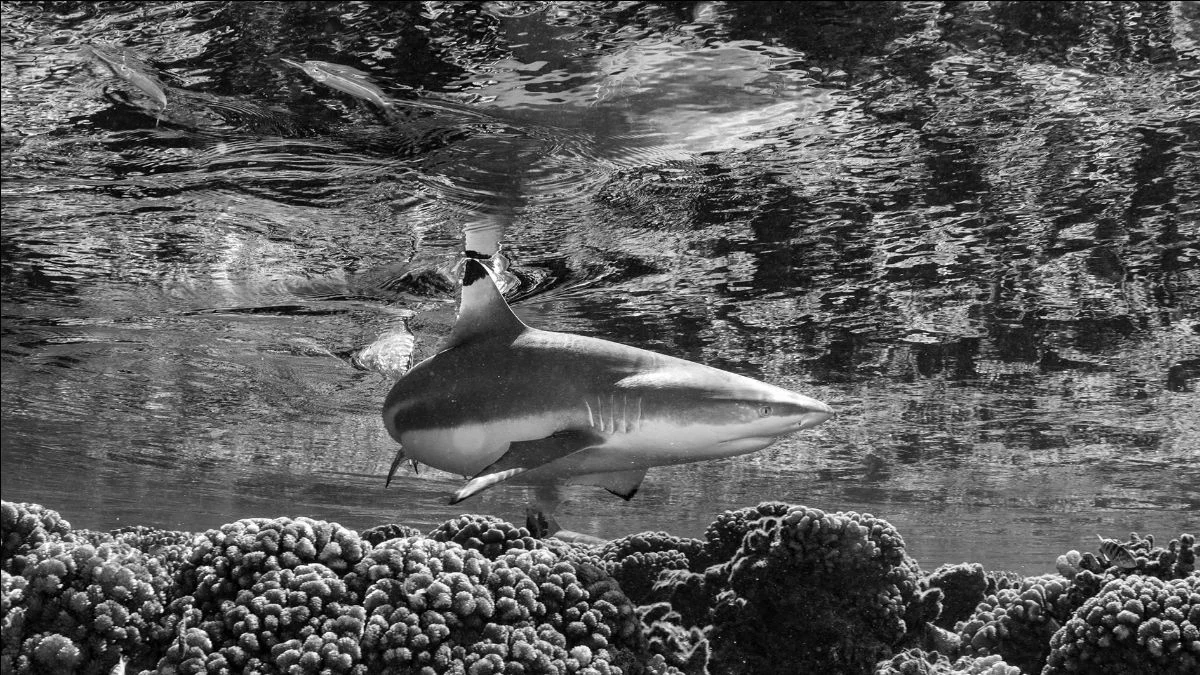
The tranquil waters of Fakarava atoll, a remote jewel in the Tuamotu Archipelago approximately 700 nautical miles north of Papeete, French Polynesia, transform into a breathtaking theater of life each year. This natural phenomenon, centered around the annual spawning aggregation of groupers, draws hundreds of sharks, creating a mesmerizing display of predator-prey dynamics and underscoring the intricate balance of marine ecosystems. The event, occurring during the warmer months and culminating around the full moon, highlights the vital, often misunderstood, role sharks play in maintaining oceanic health.
The Genesis of a Marine Migration
The Fakarava atoll, renowned for its pristine lagoons, idyllic beaches, and vibrant coral reefs, serves as a critical habitat for a diverse array of marine life, including countless fish species, seabirds, sea turtles, and majestic manta rays. For much of the year, these creatures coexist in a state of relative equilibrium. However, as the ocean temperatures rise, a profound shift occurs: thousands of resident groupers, their bodies heavy with reproductive potential, begin to congregate.
This annual migration is not a random occurrence but a precisely timed biological imperative. The groupers, driven by instinct, converge in the channel connecting the atoll’s vast lagoon to the open ocean. This area, spanning roughly 10 by 30 nautical miles, becomes the focal point of this massive reproductive event. The unique tidal patterns of Fakarava, where deep ocean water floods the lagoon for approximately six hours and then recedes for the same duration, play a crucial role. This rhythmic exchange of water not only facilitates nutrient dispersal but also provides the ideal conditions for the groupers’ reproductive strategy. As the tide reaches its zenith, typically coinciding with the full moon, the stage is set for a biological spectacle that has unfolded for millennia.

A Predatory Ballet: Sharks Converge on the Feast
Following the migrating groupers are the ocean’s apex predators: sharks. Drawn by the concentrated biomass of potential prey, hundreds of sharks descend upon the channel, their presence transforming the serene waters into a dynamic arena. These are not haphazard hunters but are often observed patrolling the reefs with a calculated purpose, akin to "motorcycle gangs," as described by observers. This convergence is a testament to the rich food web that supports Fakarava’s thriving marine environment.
During the peak of the spawning event, the scene beneath the surface is one of both remarkable stillness and explosive action. Divers who position themselves strategically at the edge of the atoll, particularly along the drop-off at the channel’s mouth, witness thousands of groupers nestled amongst the coral heads. These fish, employing their natural camouflage, remain largely motionless, their large eyes tracking the silent movements of the patrolling sharks. The apparent stillness is punctuated by sudden bursts of activity. The deep, resonant sound of a grouper being captured echoes through the water, immediately followed by the frenetic thrashing of numerous sharks engaged in a feeding frenzy.
The Culmination of Life’s Cycle
As the spawning reaches its apex, approximately 100 feet below the surface, the reproductive drive of the groupers culminates. Females release their eggs into the water column, creating a cloud of potential life. This release triggers an immediate response from the males, who swarm around the females, fertilizing the eggs with milt. The sheer scale of this event is overwhelming; thousands of groupers engage in this synchronized act of perpetuating their species, a vital process for the health of the reef ecosystem.
This explosion of reproductive activity, however, also presents an opportunity for the waiting predators. The swift descent of hundreds of sharks amidst the swirling clouds of eggs and milt creates a dramatic and awe-inspiring display. The event is breathtaking in its scale and intensity, yet it is also profoundly natural, a demonstration of the raw power and efficiency of ecological processes. The entire spectacle, from the initial congregation to the final dispersal, unfolds with a speed that can be both exhilarating and humbling for those fortunate enough to witness it.

Ecological Significance and Conservation Imperatives
The intricate relationship between sharks and groupers during the annual spawning event is a microcosm of the broader ecological balance within marine environments. While the scene might appear chaotic or even violent to an external observer, it represents the culmination of millennia of evolutionary adaptation and ecological interdependence. Every element, from the subtle camouflage of a grouper to the opportunistic feeding of a shark, plays a critical role in maintaining the delicate equilibrium of the ecosystem.
Predators like sharks are not simply consumers; they are integral to the nutrient cycling of the ocean. By consuming prey and dispersing nutrients across the reef system, they contribute to the overall health and productivity of the marine environment. The presence of a robust shark population is often considered an indicator of a healthy and balanced ecosystem.
The perspective articulated by renowned marine biologist Eugenie Clark – "When you see a shark underwater, you should say, ‘How lucky I am to see this beautiful animal in his environment’" – encapsulates a crucial shift in human perception. The notion of "learning to live with" sharks and other wildlife is a mischaracterization. As the Fakarava spawning event demonstrates, human existence is intrinsically linked to the health and functioning of these marine ecosystems. Sharks and the myriad other species that inhabit our oceans have played vital roles for eons, long before human exploitation of marine resources began.
The photographic and videographic documentation of events like the Fakarava spawning serves a critical purpose beyond capturing natural beauty. It aims to foster a deeper understanding and appreciation for these vital ecosystems, inspiring tangible conservation efforts. The hope is that by witnessing the wonder, drama, and inherent value of places like Fakarava, local and global communities will be motivated to protect these wild and essential marine environments for future generations.

Broader Implications and Future Outlook
The Fakarava spawning event, while a localized phenomenon, carries broader implications for marine conservation worldwide. It underscores the importance of understanding and protecting critical habitats and reproductive aggregations, which are often vulnerable to human activities such as overfishing and habitat destruction. The decline of grouper populations due to unsustainable fishing practices, for instance, could have cascading negative effects on the entire ecosystem, including the shark populations that rely on these aggregations.
Furthermore, the event highlights the need for a paradigm shift in how humans perceive and interact with apex predators like sharks. Misconceptions and fear have led to widespread culling and persecution of shark populations, often based on inaccurate portrayals in media and a lack of understanding of their ecological significance. Scientific research and conservation initiatives are increasingly focused on dispelling these myths and promoting a more informed and respectful coexistence.
The continued monitoring and protection of sites like Fakarava are paramount. This includes implementing and enforcing marine protected areas, supporting sustainable fishing practices, and engaging local communities in conservation efforts. The success of these initiatives relies on a global commitment to safeguarding the planet’s oceans and the invaluable biodiversity they harbor. The annual spawning of groupers in Fakarava serves as a powerful reminder of the intricate web of life that sustains our planet and the urgent need for collective action to preserve it.