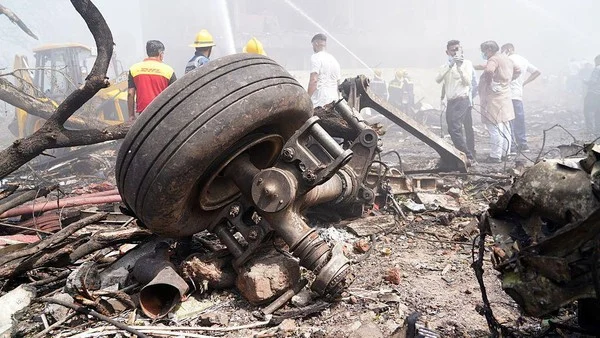
The global aviation community remains in a state of profound shock following the catastrophic loss of Air India Flight AI-171, a Boeing 787 Dreamliner that crashed on June 12, 2025, during its final approach to Sardar Vallabhbhai Patel International Airport in Ahmedabad. The flight, which originated from London Heathrow, was carrying 245 souls, including passengers and crew. In a tragedy of such magnitude, the survival of only one individual has been hailed as a miracle, yet it underscores the devastating nature of the impact. As the focus shifts from search and recovery to a high-stakes forensic investigation, the retrieval and subsequent analysis of the aircraft’s "black boxes"—the Flight Data Recorder (FDR) and the Cockpit Voice Recorder (CVR)—have become the primary focus for investigators seeking to understand the sequence of events that led to the disaster.
Chronology of Flight AI-171: From Departure to Disaster
Flight AI-171 departed London Heathrow (LHR) on the evening of June 11, 2025, scheduled for a routine long-haul journey to Ahmedabad (AMD). According to preliminary flight tracking data, the Boeing 787-8 maintained a steady cruise altitude of 37,000 feet for the majority of the journey across Europe and the Middle East. The flight was operated by a seasoned crew, and initial reports suggest that weather conditions along the route were largely unremarkable until the aircraft entered Indian airspace.
As the aircraft began its descent into the Gujarat region in the early hours of June 12, the situation appeared normal. At approximately 04:45 AM local time, the flight crew initiated contact with Ahmedabad Air Traffic Control (ATC), receiving clearance for a standard instrument approach. However, as the Dreamliner descended below 5,000 feet, radar telemetry indicated a sudden and unexplained deviation from the glide path. Witnesses near the airport perimeter reported seeing the aircraft struggling to maintain altitude, with some describing an unusual engine pitch before the jet disappeared from radar screens. The wreckage was subsequently located in a semi-rural area several kilometers from the runway threshold, where the aircraft had disintegrated upon impact.
The Role of the Black Boxes in Forensic Reconstruction
The recovery of the Flight Data Recorder and the Cockpit Voice Recorder within 24 hours of the crash marks a pivotal moment in the investigation. Despite the colloquial term "black box," these devices are painted in international orange to ensure high visibility amidst charred debris. The devices were transported under heavy security to the Aircraft Accident Investigation Bureau (AAIB) laboratory in New Delhi, where experts from the Directorate General of Civil Aviation (DGCA), Boeing, and the United States National Transportation Safety Board (NTSB) have convened.
The FDR is expected to provide a digital blueprint of the flight’s final moments, recording over 700 parameters, including airspeed, altitude, vertical acceleration, and engine performance. Perhaps most critically for this investigation, the FDR will show the exact position of the wing flaps and slats at the time of the descent. Simultaneously, the CVR will offer a two-hour loop of cockpit audio, capturing not only the verbal communication between the captain and first officer but also ambient sounds—such as mechanical clicks, alarms, or structural groans—that provide vital clues to the aircraft’s health.
Technical Scrutiny: The Flap System Hypothesis
While investigators have cautioned against premature conclusions, early focus has gravitated toward the aircraft’s flight control surfaces, specifically the flap system. Flaps are movable panels on the trailing edge of the wings that increase lift and drag, allowing an aircraft to fly safely at the lower speeds required for landing. Preliminary data suggests that Flight AI-171 may have experienced a "flap asymmetry" or a total failure of the flap actuation system during the configuration for landing.
In a flap asymmetry scenario, the flaps on one wing deploy further than the flaps on the other, creating a significant lift imbalance that can cause the aircraft to roll uncontrollably. If the flaps failed to deploy entirely, the aircraft would have been forced to land at a much higher speed than normal, potentially leading to a stall if the pilots attempted to maintain a standard approach profile. The analysis of the FDR will confirm whether the mechanical actuators responded correctly to the pilot’s inputs or if a software glitch within the Dreamliner’s sophisticated fly-by-wire system played a role.
International Cooperation and Official Responses
The gravity of the AI-171 crash has prompted an immediate international response. The Indian Ministry of Civil Aviation has declared a high-level inquiry, with Union Minister of Civil Aviation emphasizing that "no stone will be left unturned" in the pursuit of the truth. Air India, now under the stewardship of the Tata Group, has expressed its deepest condolences and has deployed "Angels of Air India" teams to support the families of the victims and the sole survivor.

Boeing, the manufacturer of the 787 Dreamliner, has dispatched a technical team to assist the AAIB. This crash puts the 787 program under renewed scrutiny. While the Dreamliner has generally maintained a strong safety record since its entry into service, any indication of a systemic mechanical or software failure would necessitate a global fleet inspection. The NTSB’s involvement is standard procedure for accidents involving American-manufactured aircraft, ensuring that the investigation adheres to the highest international standards of transparency and technical rigor.
The Human Impact and the Lone Survivor
The tragedy is compounded by the staggering loss of life. Among the 245 on board were families returning home, business professionals, and a dedicated crew of 12. The identity of the sole survivor has not been officially released to protect their privacy during recovery, but medical officials at an Ahmedabad trauma center describe the individual’s survival as "defying the laws of physics," given the high-energy impact and subsequent post-crash fire.
Psychological experts note that "survivor’s guilt" and the trauma of such an event will require long-term care. Meanwhile, the families of the deceased have gathered in Ahmedabad and London, demanding answers. The repatriation of remains and the identification process are ongoing, involving forensic odontologists and DNA specialists due to the severity of the crash site.
Broader Implications for Global Aviation Safety
The crash of AI-171 is expected to have far-reaching consequences for the aviation industry. In the immediate term, Air India has announced a comprehensive safety audit of its entire wide-body fleet. Aviation regulators worldwide are closely monitoring the New Delhi laboratory, awaiting the preliminary report which is expected within 30 days.
If the investigation identifies a flaw in the Boeing 787’s flap system or flight control software, it could lead to the issuance of Emergency Airworthiness Directives (EADs) by the Federal Aviation Administration (FAA) and the European Union Aviation Safety Agency (EASA). This would require airlines operating the 787—including major carriers like United Airlines, Qatar Airways, and British Airways—to conduct immediate inspections or modifications.
Furthermore, the incident raises questions about pilot training for "unreliable airspeed" or "flight control malfunction" scenarios in highly automated cockpits. The transition from automated flight to manual emergency handling is a critical phase where human factors often intersect with mechanical failure. The CVR analysis will be essential in determining if the crew’s response was hindered by confusing cockpit indications or "automation surprise."
Conclusion: The Long Path to Final Answers
The investigation into the loss of Air India Flight AI-171 is a marathon, not a sprint. While the extraction of data from the black boxes is the first critical step, the subsequent synchronization of that data with wreckage analysis and air traffic recordings will take months. The goal of the AAIB and its international partners is not merely to assign blame, but to uncover the "why" behind the tragedy to prevent a recurrence.
As the industry awaits the preliminary findings, the memory of the 244 victims serves as a somber reminder of the inherent risks of flight and the unyielding necessity of safety vigilance. For now, the world watches New Delhi, where two small orange boxes hold the secrets to one of the darkest days in the history of Indian civil aviation. The findings derived from these devices will likely shape aviation safety protocols and engineering standards for decades to come, ensuring that the legacy of AI-171 is a safer sky for all.