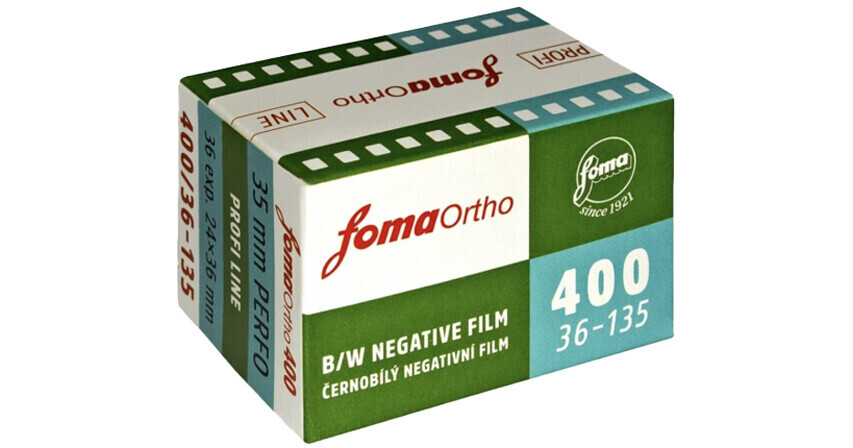
The global resurgence of analog photography has fostered a renewed interest in specialized film stocks, leading to a significant market presence for manufacturers like Foma Bohemia. Based in Hradec Králové, Czech Republic, Foma Bohemia (often referred to as Fomapan) has maintained a continuous production history exceeding 100 years. While the company is widely recognized for its traditional panchromatic films, such as Fomapan 100, 200, and 400, the introduction and sustained popularity of FomaOrtho 400 represents a unique intersection of historical chemical properties and modern high-speed requirements. As the only orthochromatic film currently available with a box speed of ISO 400, it occupies a distinct niche for photographers seeking high-contrast, "retro" aesthetics without the limitations of low-light sensitivity usually associated with orthochromatic emulsions.
The Historical and Technical Context of Foma Bohemia
Foma Bohemia spol. s r.o. was established in 1921, initially focusing on the production of photographic plates and papers. Over the decades, the company survived the economic shifts of the 20th century, including the transition through the Soviet era, during which it became a primary supplier of black-and-white materials for Central and Eastern Europe. Unlike many Western competitors that pivoted exclusively to digital or faced bankruptcy, Foma maintained its infrastructure for producing silver halide products, including medical X-ray films and industrial non-destructive testing materials.
The "Ortho" in FomaOrtho 400 refers to its orthochromatic nature. In the early days of photography, all emulsions were orthochromatic, meaning they were sensitive primarily to blue and green light but almost entirely insensitive to red light. It was not until the early 20th century that panchromatic films, which are sensitive to the entire visible spectrum, became the industry standard. By utilizing an orthochromatic emulsion in a contemporary context, Foma provides a tool that renders colors differently than the human eye perceives them: red objects appear nearly black, while blue skies can appear significantly brighter or even washed out.
Technical Specifications and Market Positioning
FomaOrtho 400 is distinguished by its high speed. Most orthochromatic films on the market, such as Ilford Ortho Plus or various technical films, typically range between ISO 25 and ISO 80. The leap to ISO 400 is significant for street photography and candid portraiture. A higher ISO allows for shutter speeds of 1/200 of a second or faster, even in suboptimal lighting or when using telephoto lenses, which is essential for freezing motion and reducing camera shake.
The film is packaged in traditional 35mm metal canisters. This is a notable point of interest for enthusiasts, as Foma had previously transitioned some of its product lines to plastic canisters to manage production costs. The return to or maintenance of metal housing is often perceived by the consumer base as a mark of durability and professional standards, although the internal chemical emulsion remains the primary factor in image quality.
In terms of pricing, Foma remains one of the most accessible brands in the analog market. In its home region of the Czech Republic, a roll of FomaOrtho 400 retails for approximately 7 euros. When compared to the rising costs of major brands like Kodak or Ilford, which can see prices ranging from 12 to 18 euros per roll in various European and North American markets, Foma offers a cost-effective entry point for beginners and a sustainable option for high-volume professionals.
Optical Hardware and Field Application
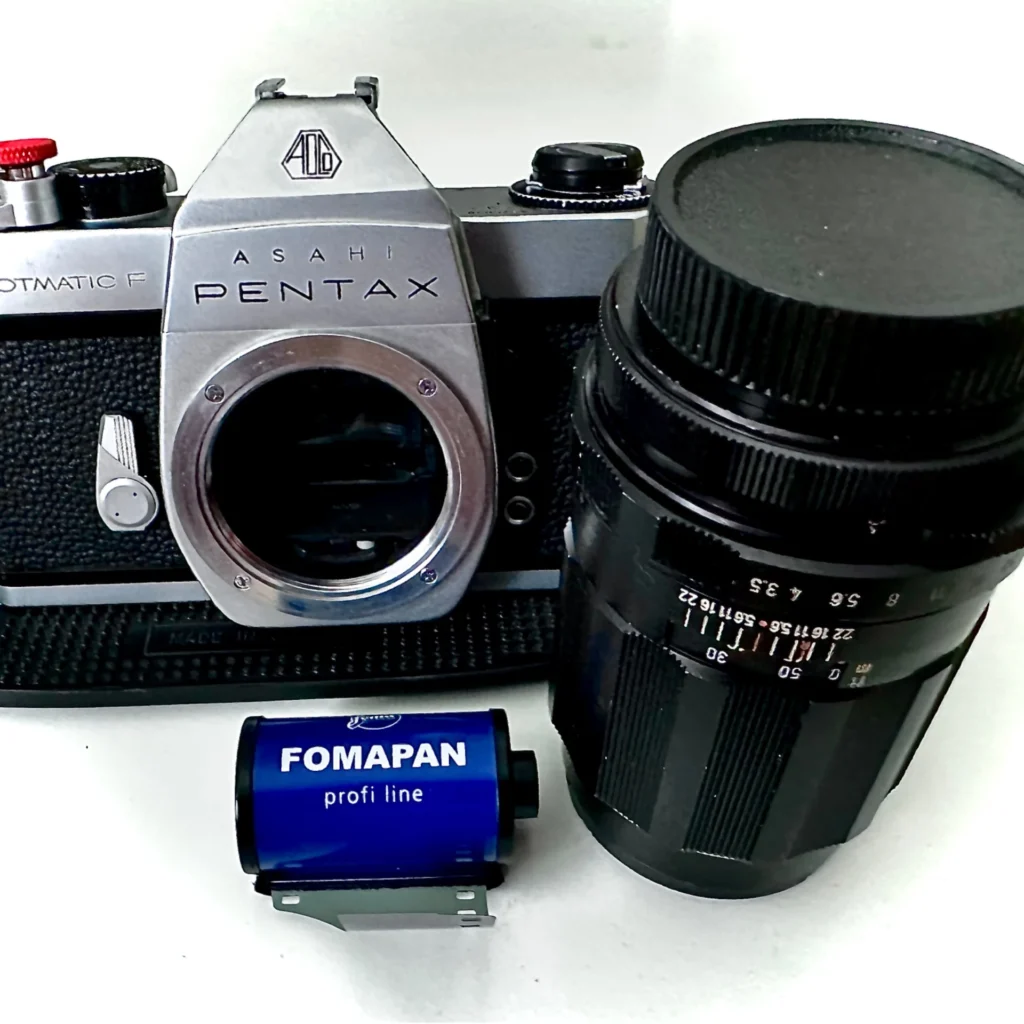
The practical application of FomaOrtho 400 often involves vintage hardware that complements its "old-world" rendering. A common pairing is the Pentax Spotmatic F, a classic 35mm SLR produced around 1973. The Spotmatic series is renowned for its robust mechanical build and the M42 screw mount, which allows for the use of legendary optics like the Super-Takumar series.

For street photography, the use of a Super-Takumar 135mm f/3.5 lens provides a unique perspective. Unlike the standard 35mm or 50mm lenses typically used in street photography, the 135mm focal length allows the photographer to remain at a distance, capturing candid moments without intruding upon the subject’s personal space. The non-SMC (Super Multi-Coated) versions of these lenses often exhibit more flare and slightly lower contrast than modern glass, which, when paired with the high-contrast FomaOrtho 400, results in an image with significant "character"—a term used in the industry to describe a non-clinical, aesthetically pleasing departure from digital perfection.
Modern Digitization and Hybrid Workflows
The workflow for modern film photography has shifted toward a hybrid model. While traditional darkroom printing remains a dedicated craft, the majority of contemporary photographers utilize digital scanning to share and archive their work. The process of "camera scanning" has gained traction as a high-quality alternative to traditional flatbed or dedicated film scanners.

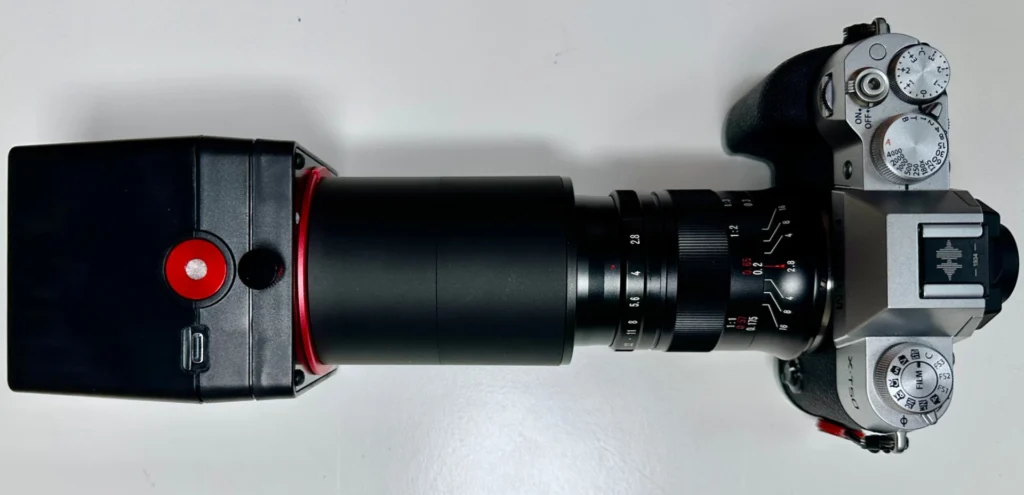
Using a setup such as the Fujifilm X-T50—a mirrorless camera featuring a 40-megapixel sensor—photographers can capture raw digital files of their negatives. When mounted with a specialized macro lens, such as the 7Artisans 60mm macro, and a film carrier like the Valoi Easy 35, the resulting digital files retain the full resolution and dynamic range of the film grain. This method provides several advantages:
- Resolution: 40MP scans exceed the output of most commercial lab "standard" scans.
- Cost Efficiency: While a home scanning setup requires an initial investment, it typically pays for itself after approximately seven to ten rolls of film, given the high price of professional high-resolution lab scans.
- Control: Photographers maintain complete control over the "positive" conversion process, ensuring that the contrast and exposure levels match their artistic intent.
Post-Processing in the Open Source Ecosystem
For the editing of these digitized negatives, many photographers are turning to open-source software like darktable. Darktable offers a specialized module known as "negadoctor," which is designed specifically for inverting film negatives and neutralizing the film base color. The software allows for precise adjustments in exposure, local contrast, and color calibration.

The philosophy of post-processing in analog photography generally leans toward minimalism. The goal is often to let the inherent qualities of the film—the grain structure, the halation, and the spectral response—speak for themselves. In a digital landscape saturated with heavy filters and artificial intelligence-driven enhancements, the "imperfections" of FomaOrtho 400 are viewed not as flaws, but as authentic textures.
Analysis of Visual Characteristics and Red-Light Insensitivity
The primary draw of FomaOrtho 400 is its unpredictability. Because the film does not "see" red light, the tonal values of a scene are redistributed in a way that differs from panchromatic film.

- Skin Tones: In portraits, red blemishes or skin tones with high red content will appear darker and more textured. This can create a dramatic, rugged look in masculine portraits but may require careful lighting for softer subjects.
- Landscapes: Foliage, which reflects a certain amount of light that orthochromatic film is sensitive to, often renders with deep, rich blacks, while the sky remains bright.
- Contrast: The film is inherently high-contrast. The grain is described as "pleasant" and "sharp," providing a tactile quality that digital sensors struggle to replicate without software intervention.
Broader Implications for the Film Industry
The success of niche products like FomaOrtho 400 indicates a broader trend in the photographic industry. There is a clear move away from the pursuit of clinical perfection. As smartphone cameras and high-end digital SLRs become increasingly capable of producing flawless, noise-free images, a segment of the market is actively seeking the "analog flaw."
Furthermore, the survival and growth of Foma Bohemia provide a case study in industrial resilience. By maintaining a balance between medical/industrial production and the enthusiast market, the company has stabilized its supply chain against the volatility of the global economy. The availability of affordable, high-character film is essential for the education of new photographers, who might otherwise be priced out of the hobby by the premium costs associated with larger multinational corporations.

Conclusion and Future Outlook
FomaOrtho 400 is not intended to be a "daily driver" or a universal replacement for panchromatic film. Its specialized spectral sensitivity makes it a tool for specific projects where mood, contrast, and historical aesthetics are paramount. However, its existence at the ISO 400 speed point is a technical achievement that expands the creative boundaries for street photographers and portraitists alike.
As the analog community continues to grow, the demand for specialized emulsions is expected to rise. Foma’s ability to provide a high-speed orthochromatic film at a budget-friendly price point secures its position in the market. For the photographer, the roll represents more than just a medium for capturing light; it is an invitation to embrace the unpredictable nature of chemistry and the enduring legacy of a century-old Czech manufacturer. The imperfections of the film—the very grain and contrast that digital technology sought to eliminate—have become its greatest assets in the modern era.