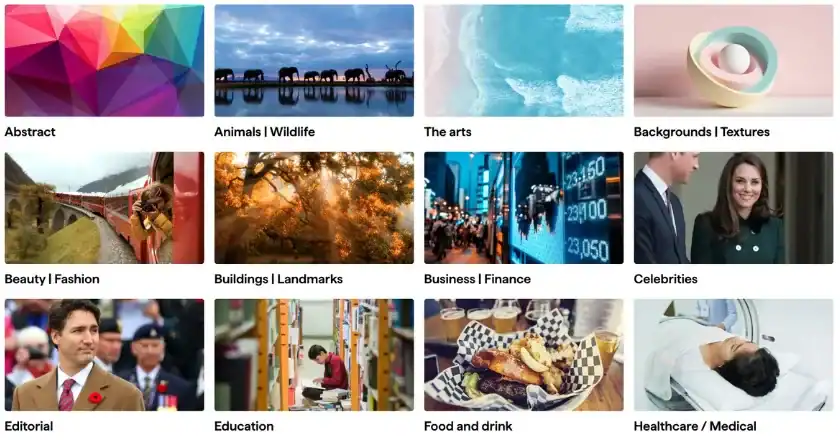
The traditional concept of the blank canvas, long celebrated as the pinnacle of creative freedom, is increasingly being viewed as a logistical bottleneck in the high-velocity world of modern commercial marketing. As digital platforms proliferate, the demand for visual content has shifted from a few marquee assets to a continuous stream of variations tailored for diverse social media channels, regional markets, and performance-testing algorithms. This shift has necessitated a fundamental change in creative workflows, moving away from manual "from-scratch" production toward a hybrid model that utilizes professional stock media as a foundational layer, enhanced by integrated artificial intelligence (AI) tools.
The Economic Reality of the Blank Canvas
In contemporary marketing, starting a project with a zero-asset baseline is a significant financial and temporal investment. A single product launch often requires a massive content supply chain: website hero images, mobile banners, Instagram Stories, LinkedIn carousels, YouTube thumbnails, and localized versions for global audiences. Research into creative production costs indicates that a substantial portion of a designer’s time is spent on non-creative, repetitive tasks. Industry data suggests that designers spend up to 20% to 30% of their workweek on asset searching, cropping, and basic formatting—tasks that do not contribute to higher-level brand strategy or artistic direction.
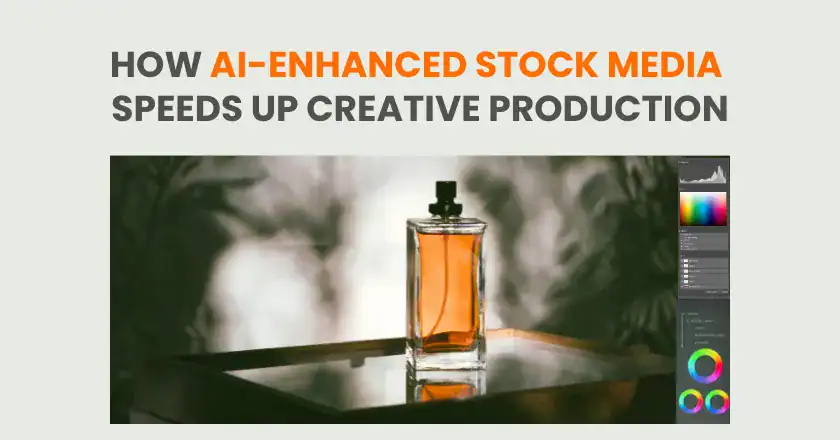
When a team starts from scratch, every decision—from lighting and composition to subject selection—must be made and executed manually. By contrast, beginning with a professionally produced stock asset provides a pre-vetted aesthetic and technical foundation. The emerging "AI-enhanced" model allows teams to bypass the initial 60% of the production process, moving directly to the refinement and adaptation stages where human creative judgment adds the most value.
A Chronology of the Visual Asset Industry
The evolution of stock media into an AI-integrated ecosystem follows a clear historical trajectory. Understanding this timeline provides context for the current shift in creative production.
- The Physical Era (Pre-1990s): Stock photography existed as physical archives. Creative directors would browse printed catalogs and order transparencies via mail. Production times were measured in weeks.
- The Digital Transition (1990s–2000s): The rise of the internet led to the digitization of libraries. Platforms like Shutterstock emerged, making millions of images searchable via keywords. This reduced the time from discovery to implementation from days to minutes.
- The Metadata and Optimization Era (2010s): Libraries expanded into video, vectors, and music. Sophisticated metadata and early machine learning algorithms improved search relevance, though the assets remained static.
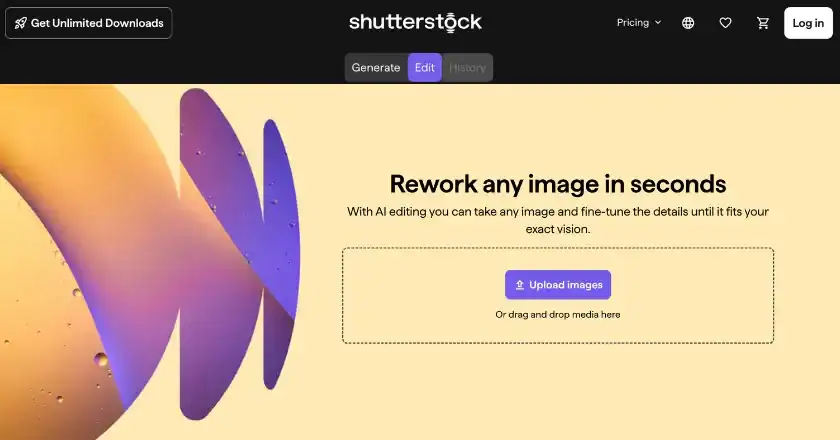
- The Generative AI Integration (2022–Present): AI tools are no longer separate from stock libraries. Instead, they are embedded within them. Designers can now take a licensed professional image and use "generative fill" to expand its background, "magic brush" to change a subject’s clothing, or "variations" to alter the lighting—all within the stock platform’s interface.
The Role of AI in Eliminating Production Friction
The primary limitation of traditional stock media was its rigidity. If an image was perfect in tone but the wrong aspect ratio, it was often discarded. AI-enhanced stock media solves this through several key technological applications:

Generative Expansion and Outpainting
One of the most frequent challenges in digital marketing is the mismatch between an image’s original format and the requirements of a specific platform. A horizontal photograph taken for a desktop website cannot easily be used for a vertical TikTok ad without losing significant detail. AI-assisted "outpainting" allows designers to expand the borders of a professional image, generating a seamless background that matches the original lighting and texture. This turns a single asset into a multi-format tool.
Intelligent Semantic Search
The "discovery phase" of production is often the most frustrating for creative teams. Traditional keyword searches frequently return thousands of technically relevant but stylistically mismatched results. Modern AI-enhanced platforms use semantic search to understand the "vibe" or "intent" of a query. A search for a "collaborative office environment" can now be filtered by lighting (e.g., "golden hour"), emotional tone (e.g., "authentic" vs. "polished"), and negative space (e.g., "room for text on the left").
Localized Adaptation
Global campaigns require cultural nuance. An image that resonates in New York may feel out of place in Tokyo or Dubai. AI tools allow for the "modular" replacement of elements—such as backgrounds, clothing, or props—while maintaining the core composition and brand consistency. This allows a central creative team to produce a global campaign that feels locally relevant without the cost of multiple international photo shoots.

Supporting Data: The Productivity Gap
Marketing analysts have noted a widening "content gap" between the amount of material brands need and what traditional teams can produce. According to recent industry surveys:
- Content demand has increased by an estimated 10x over the last five years, while creative budgets have remained largely flat or increased by only 10% to 15%.
- Teams utilizing AI-enhanced workflows report a 50% reduction in the time required to move an asset from the "discovery" phase to the "final approval" phase.
- Performance marketers have found that creative testing—running multiple versions of an ad to see which performs best—is 70% more cost-effective when using AI to generate variations of a stock foundation rather than commissioning unique assets for each test.
Industry Perspectives and Official Reactions
The shift toward AI-enhanced stock has drawn mixed but generally pragmatic reactions from industry stakeholders.
Chief Creative Officers (CCOs) at major agencies have noted that AI is not a replacement for talent but a "force multiplier." In a recent roundtable discussion, one executive stated, "Our job is no longer just about making the image; it is about directing the system that generates the image. The artist becomes the curator and the editor."

Stock media contributors—the photographers and illustrators whose work forms the foundation of these libraries—have expressed concerns regarding compensation and the "dilution" of original work. In response, leading platforms like Shutterstock have established "Contributor Funds" to ensure that artists are compensated when their work is used to train AI models or when AI-generated variations are based on their intellectual property. This ethical framework is seen as a critical component for the long-term sustainability of the hybrid model.
Broader Implications for Brand Consistency
As the volume of content increases, the risk of "brand fragmentation" grows. When multiple team members independently generate AI imagery from scratch, the resulting visuals often lack a cohesive aesthetic. One may look cinematic, while another looks like a 3D render.
Professional stock libraries mitigate this risk by providing "visual families." A brand can select a series of assets from the same photographer or studio, ensuring consistent lighting, color palettes, and subject styles. AI tools are then used to tweak these consistent assets rather than creating entirely new ones. This ensures that even as a brand produces thousands of assets for different channels, they all feel part of a singular identity.
Fact-Based Analysis: The Hybrid Future
The data suggests that the future of creative production is not a binary choice between human-made and AI-generated. Instead, it is a hybrid ecosystem where professional quality and algorithmic speed coexist.
The "from scratch" approach will likely be reserved for high-budget, high-concept "hero" campaigns where a unique, unrepeatable visual is the primary goal. However, for the 90% of commercial marketing that drives day-to-day engagement, social commerce, and lead generation, the AI-enhanced stock model is becoming the industry standard.
This transition represents a democratization of high-quality production. Small-to-medium enterprises (SMEs) that previously could not afford professional art direction now have access to tools that allow them to compete visually with global brands. For large enterprises, the benefit is found in the "content supply chain" efficiency, allowing them to react to market trends in real-time.

Conclusion: Creativity with Less Friction
The integration of AI into professional stock media libraries marks the end of the "blank canvas" era for commercial design. By providing a professional starting point and the tools to adapt it instantly, platforms are shifting the creative burden from repetitive execution to strategic direction.
In this new landscape, the value of a creative professional is measured not by how many hours they spend at a computer, but by the quality of their judgment and their ability to guide AI tools toward a result that resonates with a human audience. The result is a marketing environment that is faster, more experimental, and significantly more efficient, without sacrificing the technical excellence that only professional source material can provide.