Embarking on a photography journey in 2025 presents a unique paradox: an unparalleled wealth of information coexists with a potential for overwhelming complexity. While digital resources, online communities, and sophisticated camera technologies offer unprecedented access and assistance, novice photographers frequently encounter fundamental hurdles that, if unaddressed, can impede progress and dampen enthusiasm. This article aims to distill key insights and practical solutions for common technical challenges, providing a structured framework for beginners navigating the intricate world of modern photography.
The Landscape of Beginner Photography in 2025
The contemporary photographic ecosystem is characterized by rapid technological advancements, from increasingly intelligent autofocus systems to superior high-ISO performance and sophisticated in-camera processing. However, these innovations, while powerful, often rely on a foundational understanding of photographic principles. Without grasping concepts like the exposure triangle or the nuances of camera handling, even the most advanced gear can produce subpar results. The common mistakes discussed below are not merely equipment failures but often stem from a lack of mastery over core settings and techniques, regardless of the camera’s vintage or price point.
Combating Blurry Images: Precision in Capture
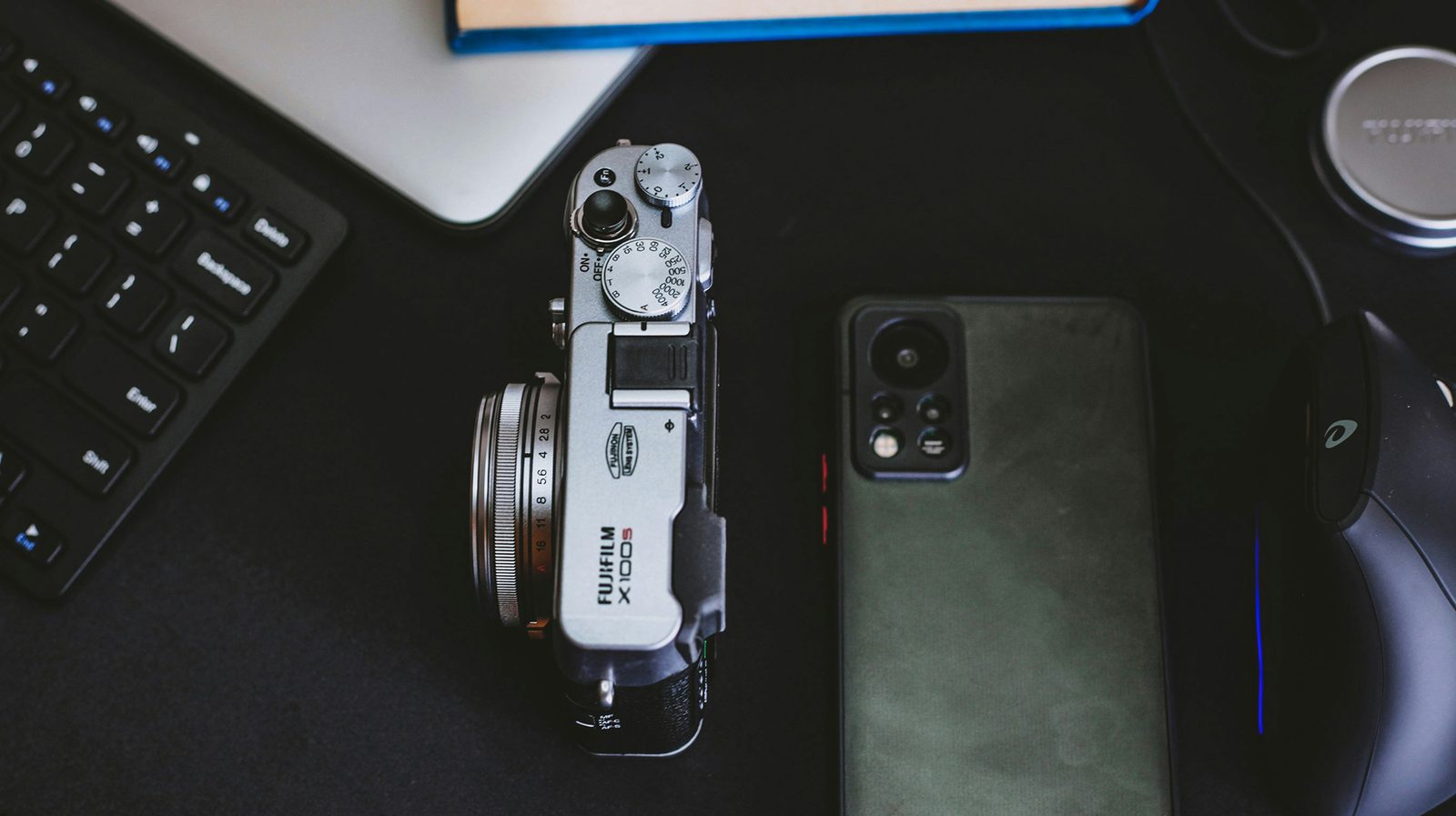
Blurry photographs are perhaps the most frustrating and ubiquitous issue for aspiring photographers. This problem typically arises from one of three primary sources: camera shake, subject motion, or inaccurate focus. Addressing these requires a systematic approach to camera settings and shooting technique.
Shutter Speed and Camera Shake: The most critical defense against camera shake-induced blur, particularly when shooting handheld or with telephoto lenses, is an appropriate shutter speed. The classic "reciprocal rule" suggests that for handheld shooting, the shutter speed should be at least the reciprocal of the lens’s focal length (e.g., 1/100th of a second for a 100mm lens). However, with the advent of advanced in-body image stabilization (IBIS) and optical image stabilization (OIS) in lenses, modern cameras can often achieve sharp results at significantly slower shutter speeds, sometimes extending to several stops below the reciprocal rule. For instance, a photographer using a stabilized 100mm lens might comfortably shoot at 1/25th of a second or even slower, depending on the system’s effectiveness and personal stability. Despite these technological aids, maintaining a shutter speed fast enough to "freeze" any inherent camera movement remains paramount.
Managing Subject Motion Blur: When photographing moving subjects, the challenge shifts from camera shake to motion blur caused by the subject itself. Here, shutter speed becomes even more critical. Fast-paced action, such as sports or wildlife, often demands shutter speeds of 1/500th of a second or faster to render subjects sharply. In scenarios with less frantic movement, such as portraits of children or pets, speeds around 1/250th of a second might suffice. The choice of aperture plays a secondary, yet crucial, role here; a wider aperture (smaller f-number) allows more light to reach the sensor, enabling faster shutter speeds without compromising exposure. This symbiotic relationship between aperture and shutter speed forms a cornerstone of the exposure triangle.
Achieving Critical Focus: Beyond motion, a photograph can appear blurry if the point of focus is incorrect. Modern cameras offer a diverse array of autofocus (AF) systems and modes. Understanding and correctly deploying these is essential.
- Single-Shot AF (AF-S/One-Shot): Ideal for stationary subjects, where the camera locks focus once the shutter button is half-pressed.
- Continuous AF (AF-C/AI Servo): Designed for moving subjects, continuously tracking focus as the subject moves.
- Automatic AF (AF-A/AI Focus): Attempts to intelligently switch between AF-S and AF-C, though often less reliable than manual selection.
- Area Modes: Cameras provide various AF area modes, from single-point to wide-area or tracking modes. Single-point AF offers precise control, while advanced subject-tracking modes (e.g., eye-AF, animal-AF) leverage AI to automatically detect and follow specific subjects, a significant advancement in recent years.
Photographers should routinely verify their AF settings match the shooting scenario. Furthermore, refining one’s technique, such as adopting back-button focus, can improve consistency. Back-button focus separates the autofocus activation from the shutter release, allowing photographers to lock focus independently and recompose without losing it, thereby minimizing the micro-movements associated with pressing the shutter button fully.

Equipment Calibration and Maintenance: In persistent cases of blur, the issue may lie with the equipment itself. Lenses, particularly after heavy use or impacts, can suffer from focus calibration issues. Many manufacturers offer calibration services, and specialized tools, such as focusing charts and lens calibration systems available through rental services like Lensrentals, empower photographers to perform precise adjustments themselves. Regular maintenance ensures optimal performance of both camera body and lenses.
Navigating Exposure: Dark, Bright, and Dynamic Imagery
Images that are consistently too dark (underexposed) or too bright (overexposed) point to a fundamental misunderstanding or misapplication of exposure settings. The exposure triangle—comprising aperture, shutter speed, and ISO—governs the amount of light captured by the camera sensor. Mastering its interplay is crucial for achieving balanced exposures.
The In-Camera Light Meter: Modern cameras feature sophisticated built-in light meters, typically displayed as a vertical or horizontal scale in the viewfinder or on the LCD screen, with a ‘0’ indicating a theoretically perfect exposure. This meter measures the reflected light from the scene and suggests settings. However, it’s critical to understand that light meters are calibrated to achieve a "middle grey" (18% grey) exposure. Scenes that are predominantly bright (like snow) or dark (like a black cat) can trick the meter, leading to underexposure in the former and overexposure in the latter if the photographer doesn’t compensate.
Metering Modes and Compensation: Cameras offer various metering modes to address diverse lighting conditions:

- Evaluative/Matrix Metering: Analyzes the entire scene, attempting to balance highlights and shadows. Default for most cameras.
- Center-Weighted Metering: Prioritizes the central area of the frame, useful for subjects in the middle.
- Spot Metering: Measures a very small, specific area, providing precise control for challenging lighting or specific subject exposure.
Learning to use exposure compensation (+/- buttons) to adjust the meter’s recommendation is a key skill. A general rule of thumb suggests that while it is often possible to recover detail from slightly underexposed RAW files in post-processing, blown-out highlights in overexposed images typically contain no recoverable data. Therefore, many photographers prefer to "expose to the right" (ETTR) when shooting RAW, slightly overexposing to maximize data capture while carefully monitoring highlights to avoid clipping.
The Role of Dynamic Range: Dynamic range refers to the camera’s ability to capture detail in both the brightest and darkest parts of a scene. Modern sensors have significantly improved dynamic range, particularly when shooting in RAW format, which captures a much broader spectrum of light information than JPEG. This allows for greater flexibility in post-processing to recover details from shadows and highlights that might appear lost in a standard JPEG. Understanding the camera’s dynamic range limitations for a given ISO setting can inform exposure decisions, especially in high-contrast situations.
Minimizing Noise: The ISO Dilemma
Noisy images, characterized by a grainy or speckled appearance, are predominantly a consequence of high ISO settings. While often mistaken for film grain, digital noise is an artifact of amplifying the electrical signal from the image sensor in low-light conditions.
Understanding ISO Sensitivity: ISO in digital photography mimics the film speed rating, indicating the sensor’s sensitivity to light. Unlike film, where higher ISO meant physically larger silver halide crystals, digital ISO functions by amplifying the electronic signal. This amplification inevitably introduces random electrical interference, which manifests as noise. This noise can be broadly categorized into luminance noise (monochromatic grain) and chroma noise (colored speckles).

Sensor Technology and Noise Performance: The ability of a camera to handle high ISO settings is largely dictated by its sensor size and design. Larger sensors (e.g., full-frame) generally have larger individual photosites, which can collect more light, thus requiring less signal amplification and resulting in cleaner images at higher ISOs compared to smaller sensors (e.g., APS-C, Micro Four Thirds). Recent advancements in sensor technology, such as back-side illuminated (BSI) and stacked sensors, have further improved light gathering efficiency and reduced noise, pushing the boundaries of usable ISO. For instance, while an entry-level camera might start showing significant noise at ISO 3200, a professional-grade full-frame camera from 2025 could produce remarkably clean images even at ISO 12800 or higher.
Strategic Approaches to High ISO:
- Prioritize Light: The most effective way to mitigate noise is to maximize the light reaching the sensor without resorting to excessively high ISOs. This means utilizing lenses with wider maximum apertures (e.g., f/1.4, f/2.8) and employing slower shutter speeds when the subject is stationary and camera shake can be controlled (e.g., with a tripod).
- External Lighting: In dark environments, introducing external light sources (flashes, LED panels) can dramatically reduce the need for high ISO.
- Identify Usable Limits: Photographers should test their specific camera’s ISO performance to determine their personal "usable limit" – the highest ISO at which they are comfortable with the level of noise, considering their intended output (e.g., web use vs. large prints). Many find ISO 6400 to be a practical ceiling for many contemporary cameras before noise becomes overly distracting.
- Post-Processing Noise Reduction: Software like Adobe Lightroom, Capture One, and specialized noise reduction tools (e.g., Topaz DeNoise AI) offer powerful algorithms to effectively reduce noise in post-processing, often with minimal loss of detail. However, it is always preferable to capture a clean image in-camera.
Broader Implications and the Path Forward
The journey of a photographer is one of continuous learning and adaptation. While modern camera technology provides powerful tools and automated features, a solid grasp of foundational principles remains indispensable. These common mistakes—blurry images, exposure errors, and noisy photographs—are not merely technical glitches but represent critical learning opportunities. Each instance of a suboptimal image provides feedback, guiding the photographer toward a deeper understanding of their gear and the art of capturing light.
The industry, including manufacturers and educational platforms, continually strives to simplify the learning curve. Camera menus are becoming more intuitive, and smart features are increasingly sophisticated. However, the onus remains on the photographer to move beyond automatic modes and actively engage with the creative and technical controls. Resources such as detailed blog articles, online tutorials, and specialized equipment rental services like Lensrentals, which provide access to a vast array of lenses and calibration tools, are invaluable for both education and practical application.

As we look towards the future, artificial intelligence is poised to further revolutionize photography, potentially offering even more intelligent in-camera error correction and scene analysis. Yet, the artistic vision and the fundamental decisions regarding light, composition, and moment will always remain uniquely human. By systematically addressing these common pitfalls, new photographers can build a robust technical foundation, freeing them to focus on the creative aspects of image-making and truly master their craft in the dynamic photographic landscape of 2025 and beyond.