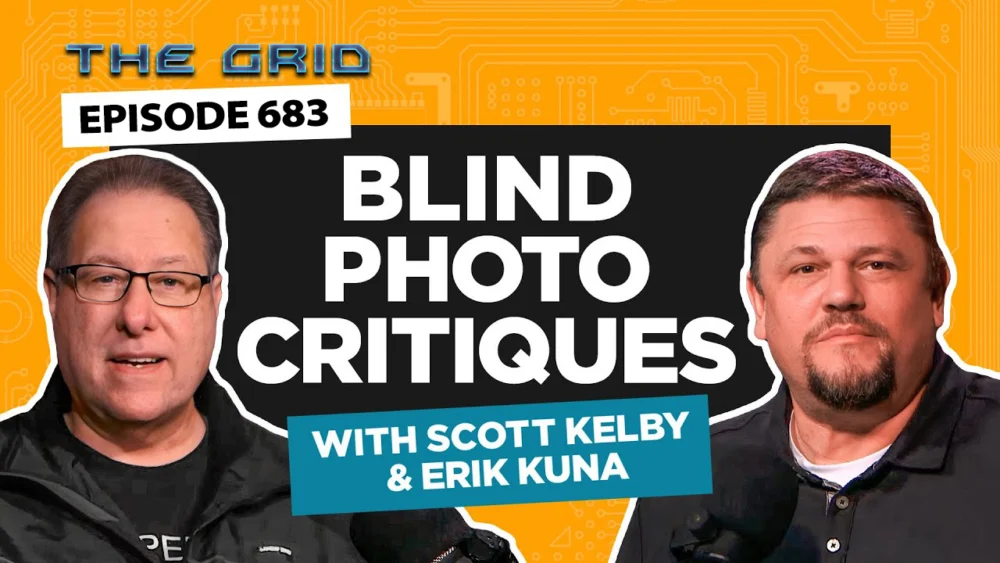
The latest installment of The Grid, episode 703, provided viewers with an in-depth and often humorous exploration of photographic excellence through its popular "Blind Photo Critiques" segment. Featuring industry stalwarts Scott Kelby, CEO of KelbyOne and a globally recognized figure in photography education, and Erik Kuna, an accomplished photographer and educator, the episode meticulously dissected a diverse portfolio of images spanning travel, wildlife, sports, portraiture, architecture, landscapes, and product photography. While offering practical, actionable feedback for each submission, a recurring and critical lesson emerged as the central theme: the fundamental importance of strong initial lighting in the field, a factor that ultimately dictates the efficacy of any subsequent post-processing. Kelby, in particular, consistently underscored how superior lighting choices inherently amplify the impact of every adjustment made within editing suites like Adobe Lightroom and Photoshop.
The Enduring Appeal of Blind Photo Critiques
"The Grid," a long-running and highly respected weekly photography talk show produced by KelbyOne, has cultivated a loyal global audience by consistently delivering high-quality educational content in an engaging format. Its "Blind Photo Critiques" segment stands out as a particular fan favorite, designed to provide unbiased, constructive feedback on submitted photographs without revealing the photographer’s identity. This anonymized approach ensures that the critique focuses purely on the technical and artistic merits of the image, fostering a learning environment free from preconceptions. Photographers from various skill levels submit their work, making the segment a rich tapestry of different styles, subjects, and technical approaches. The format not only offers direct learning opportunities for those whose images are selected but also provides invaluable insights for the broader viewing audience, enabling them to develop a more critical eye and understand common photographic challenges and solutions. The success of such segments underscores the ongoing demand for practical, expert-led education in the rapidly evolving world of digital photography.
A Comprehensive Review Across Photographic Genres
Episode 703 exemplified the breadth of photographic disciplines that "The Grid" typically covers. The reviewed images showcased the vast landscape of contemporary photography:
- Travel Photography: From sweeping panoramic vistas to intimate street scenes, the critiques explored how to move beyond mere documentation to create images that evoke emotion and inspire wanderlust.
- Wildlife Photography: Submissions likely included challenging scenarios, such as capturing fast-moving subjects in natural habitats, highlighting the importance of sharpness, composition, and understanding animal behavior.
- Sports Photography: Images capturing peak action moments would have prompted discussions on timing, focal points, and conveying dynamism.
- Portraiture: Critiques would have focused on lighting a subject effectively, evoking personality, and subtle refinements to enhance facial features.
- Architecture and Landscapes: These often require precise compositional choices, attention to lines and forms, and mastering techniques for capturing grand scales or intricate details.
- Product Photography: Essential for e-commerce and marketing, these critiques would have emphasized clarity, accurate color representation, and highlighting product features.
This diverse selection ensures that viewers, regardless of their primary photographic interest, can find relevant lessons and apply them to their own work. The constructive nature of the feedback, delivered with both expertise and a touch of humor, makes complex photographic concepts accessible and digestible.
The Primacy of Light: A Foundational Principle Reaffirmed
Throughout the episode, the most salient and frequently reiterated point was the indispensable role of strong lighting. Scott Kelby, drawing from decades of experience and his prolific career as a photographer, author, and educator, repeatedly demonstrated how even the most sophisticated post-processing techniques struggle to compensate for fundamentally poor light captured in the field. This observation is not merely anecdotal but is supported by the very physics of photography: light is the raw material from which an image is built. Without sufficient, well-directed, or appropriately diffused light, the sensor captures less data, resulting in issues such as excessive noise, lack of detail, and flat, unappealing tones.
Kelby’s argument can be broken down into several key tenets:
- Data Capture: A well-lit scene provides the camera sensor with a richer, more complete dataset. This abundant information gives editing software more to work with, allowing for greater flexibility in adjusting exposure, color, and contrast without introducing artifacts or degrading image quality.
- Efficiency in Post-Processing: When the light is right, post-processing becomes a refinement process rather than a rescue mission. Minor tweaks can yield significant improvements, saving photographers considerable time and effort in front of the computer.
- Natural Aesthetics: Images captured with excellent natural or artificial lighting often possess a more organic and pleasing aesthetic. Over-reliance on editing to simulate good light can frequently result in an unnatural or "over-processed" look, which the episode specifically advised against.
- Creative Control: Understanding and manipulating light in the field empowers photographers with immediate creative control. It allows them to sculpt subjects, create mood, and direct the viewer’s eye before ever pressing the shutter button.
This emphasis on foundational principles resonates with the broader educational philosophy of KelbyOne, which consistently advocates for mastering the basics as the cornerstone of advanced photographic skill.
Mastering Post-Processing: Techniques Unveiled
While championing the role of in-camera lighting, the episode also provided a detailed look at several powerful and practical Adobe Lightroom and Photoshop techniques, underscoring that effective editing, when applied to a strong foundation, is crucial for elevating an image. Erik Kuna, known for his technical prowess and clear explanations, guided viewers through these digital darkroom processes:
- Advanced Masking Feather Controls in Lightroom: A significant advancement in recent Lightroom iterations, the refined masking feather controls allow for incredibly smooth and natural-looking selections. This is particularly vital when isolating subjects or applying localized adjustments to specific areas of an image, such as brightening a face or darkening a sky. The ability to precisely control the falloff of an adjustment ensures seamless integration, preventing harsh edges or an artificial appearance.
- Isolating Subjects for Enhanced Background Blur: Viewers learned how to effectively isolate a subject within Photoshop to manipulate the background, often to create a more pleasing and artistic depth of field. This technique is invaluable for portraiture and product photography, where a clean, blurred background can help the subject stand out without the need for expensive, fast prime lenses in every scenario. By selectively blurring the background, photographers can direct attention and enhance the overall aesthetic appeal of the composition.
- Subtle Portrait Refinements with Liquify: Photoshop’s Liquify filter, while powerful, can be misused, leading to overly distorted or artificial results. The episode demonstrated how to employ Liquify with restraint for subtle portrait refinements, such as gently reshaping features or correcting minor distortions. The key takeaway was the importance of a light touch to enhance, rather than alter, the natural beauty of the subject.
- Rescuing Challenging Images Without Overprocessing: A common pitfall for many photographers is the temptation to push edits too far, resulting in an unnatural or "HDR" look. The episode provided a variety of approaches for salvaging challenging images—perhaps those with difficult exposure or color casts—while maintaining a natural appearance. This involved judicious use of global and local adjustments, careful color grading, and understanding when to stop editing to preserve the integrity of the original scene. These techniques are crucial for photographers who frequently encounter less-than-ideal shooting conditions but still need to deliver high-quality results.
These demonstrations served as a testament to the fact that while light is paramount, intelligent and nuanced post-processing is the final brushstroke that can transform a good photograph into a truly exceptional one.
Beyond Technicalities: The Art of Storytelling in Travel Photography
Beyond the technical discussions, the episode also touched upon the philosophical aspects of photography, particularly in the context of travel. A poignant reminder was offered: the most compelling travel photographs transcend mere documentation. They don’t just show where a place is; they create an image that makes the viewer want to be there. This distinction is critical for aspiring travel photographers. It shifts the focus from purely capturing landmarks to conveying the atmosphere, culture, and emotional essence of a location. This often involves:
- Emotional Connection: Capturing moments that evoke feelings, whether joy, wonder, solitude, or excitement.
- Unique Perspectives: Seeking out angles and compositions that offer a fresh view of familiar subjects.
- Storytelling Elements: Incorporating human elements, cultural details, or natural phenomena that tell a broader narrative about the place.
- Evoking Sensory Experiences: Using light, color, and composition to suggest sounds, smells, or textures.
This advice highlights that photography, at its heart, is a form of communication and storytelling. A successful image invites the viewer into the scene, creating a vicarious experience that resonates long after they’ve moved on.
The Educational Impact and Broader Implications
The longevity and consistent viewership of "The Grid" and segments like "Blind Photo Critiques" underscore the robust demand for accessible, high-quality photography education. In an era where billions of photos are captured daily, distinguishing oneself requires more than just a good camera; it demands a deep understanding of photographic principles and sophisticated post-processing skills. KelbyOne, through platforms like "The Grid," plays a significant role in democratizing this knowledge, making expert insights available to a global audience.
The implications for aspiring and professional photographers are clear:
- Prioritize Fundamentals: Investing time in understanding light, composition, and exposure in the field will yield greater returns than relying solely on post-processing.
- Continuous Learning: The rapid evolution of software tools necessitates ongoing education to stay current with the most efficient and effective editing techniques.
- Develop a Critical Eye: Engaging with critiques, whether as a participant or viewer, helps cultivate the ability to self-critique and improve one’s own work.
- Embrace the Journey: Photography is a blend of technical mastery and artistic vision. The most impactful images often come from a place of passion and a desire to tell a story.
The episode’s lighthearted moments, including a quick "burger update" (a running gag on the show), served to reinforce the approachable and community-oriented atmosphere that "The Grid" is known for. This blend of serious education and engaging banter ensures that learning remains enjoyable and relatable.
Expert Perspectives on Photography’s Core Principles
Reflecting on the episode, Scott Kelby’s recurring emphasis on "getting it right in camera" before resorting to extensive digital manipulation echoes a philosophy deeply rooted in traditional photography. He frequently posits that "the best Lightroom adjustment is often the one you don’t have to make because the light was perfect from the start." This viewpoint is critical in an age where digital tools can sometimes foster a reliance on fixing errors after the fact, rather than preventing them.
Erik Kuna, while concurring on the importance of strong initial capture, consistently demonstrates how modern software provides unparalleled creative control and corrective power when applied judiciously. His segment on specific editing techniques highlights that "post-processing isn’t about making a bad photo good; it’s about making a good photo great, or rescuing a challenging one without sacrificing its integrity." This nuanced perspective acknowledges both the foundational importance of in-camera technique and the transformative capabilities of contemporary digital workflows.
In conclusion, episode 703 of The Grid offered more than just a round of photo critiques; it provided a masterclass in photographic philosophy and practical application. By highlighting the enduring supremacy of good light and demonstrating intelligent post-processing, Scott Kelby and Erik Kuna delivered an educational experience that is both entertaining and profoundly impactful for photographers at every stage of their journey. Viewers are encouraged to revisit the replay to absorb the rich lessons and integrate these critical insights into their future photographic endeavors.