The close of the previous year marked a period of introspection for many across various sectors, reflecting on achievements and challenges. Within the dynamic world of photography and videography, this reflective phase often involves a deep dive into market trends, rental data, and purchasing patterns, as seen in analyses shared by industry platforms like LensRentals.com. However, as the calendar turns to a new year, the focus invariably shifts from past performance to future potential. For 2026, the industry is poised for significant evolution, with key areas identified for growth and innovation that promise to reshape how content is captured, processed, and shared. This outlook delves into five pivotal developments anticipated to gain traction, spanning optical technology, artificial intelligence applications, and fundamental camera design, all aimed at enhancing the capabilities and workflows of creative professionals and enthusiasts alike.
The Resurgence of Third-Party Lenses in the Mirrorless Era
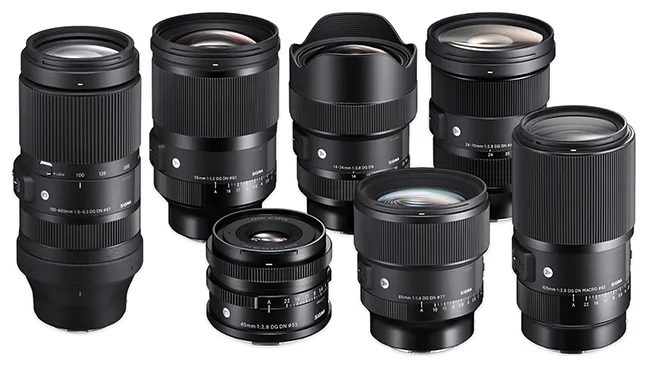
For over a decade, the photography industry witnessed a vibrant ecosystem of third-party lens manufacturers complementing the offerings of major camera brands. Companies like Sigma, Tamron, and Tokina provided photographers with diverse, often more affordable, and sometimes uniquely specified alternatives for Canon, Nikon, and Sony DSLR systems. This era was characterized by intense competition and innovation, leading to a wide array of high-quality optics at various price points. However, the seismic shift to mirrorless camera systems introduced a new paradigm. With proprietary lens mounts like Canon’s RF and Nikon’s Z, initial access for third-party manufacturers became significantly restricted, primarily due to complex licensing agreements and the technical challenges of reverse-engineering communication protocols.
The early years of the mirrorless transition saw Sony’s E-mount as a notable exception, with a comparatively open architecture that allowed third-party developers to flourish, offering a rich selection of lenses that significantly contributed to the E-mount’s popularity. For Canon RF and Nikon Z users, the options remained largely first-party, often at premium prices, limiting accessibility and choice. This scenario began to shift in late 2024 and early 2025, as major third-party players like Sigma and Tamron announced renewed commitments to developing lenses for these previously guarded mounts. This move is indicative of either successful negotiations for licensing agreements or advanced reverse-engineering capabilities that have matured sufficiently.
Industry analysts suggest that this re-engagement of third-party manufacturers is crucial for the overall health and competitiveness of the mirrorless market. The influx of new lenses, particularly those offering competitive pricing and unique optical characteristics, is expected to stimulate demand for RF and Z systems, making them more attractive to a broader segment of photographers. This competition is also anticipated to exert downward pressure on first-party lens prices, ultimately benefiting consumers. For professionals and hobbyists, a wider selection means greater creative freedom and the ability to assemble more cost-effective gear kits without compromising quality. The implications extend beyond just pricing; these manufacturers often experiment with focal lengths and apertures that complement or even surpass first-party offerings, driving overall innovation in lens design. The market is now keenly watching for a significant expansion of the third-party lens catalog for RF and Z mounts throughout 2026, marking a return to the diverse options cherished in the DSLR era.
Democratizing Optical Excellence: The Rise of Affordable Fast Primes
The allure of fast prime lenses – those with wide apertures like f/1.2 or f/1.4 – has long captivated photographers. These lenses excel in low-light conditions, produce exquisite background blur (bokeh), and offer a distinct aesthetic that often defines professional imagery. Historically, such optical performance came with a prohibitive price tag, placing these coveted tools out of reach for many. Legendary lenses like the Leica Noctilux 50mm f/1.2 from the 1960s or Canon’s early f/1.2 EF series lenses were considered luxury items, often costing several thousand dollars. Even with advancements in manufacturing processes over decades, fast primes generally remained a premium investment.
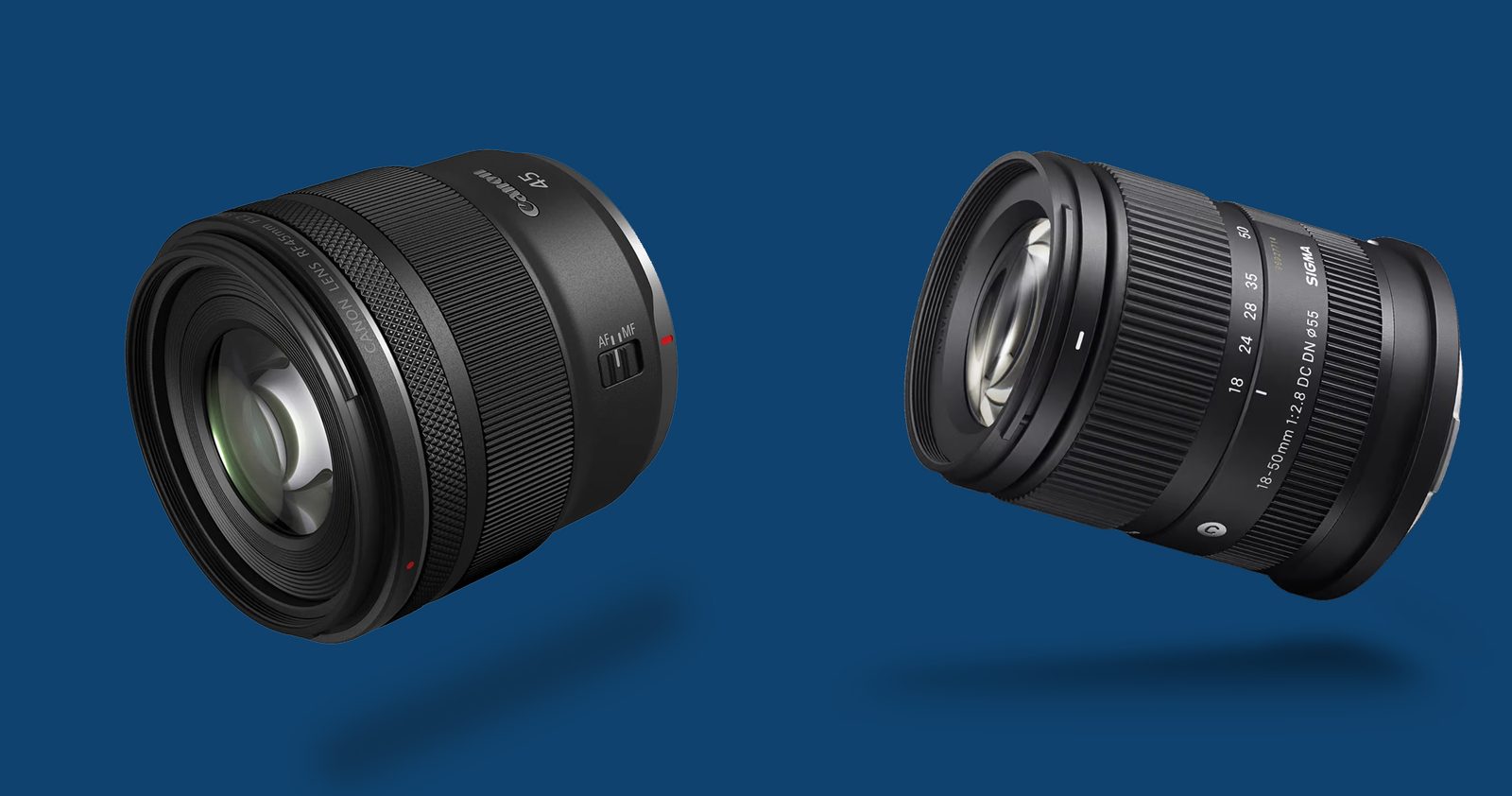
However, a notable shift occurred in late 2025 with the introduction of the Canon RF 45mm f/1.2 STM. What made this particular lens groundbreaking was not just its impressively wide aperture but its unprecedented sub-$500 price point. This release challenged the long-held assumption that f/1.2 optics must inherently be expensive. The Canon 45mm f/1.2 STM demonstrates that modern optical design, coupled with efficient manufacturing and potentially a strategic choice of autofocus motor (STM over USM to manage costs), can deliver exceptional speed and image quality at a remarkably accessible price.
This development holds significant implications for the market. It suggests that the technological barriers and cost drivers that once dictated the pricing of fast primes are being overcome. As manufacturers refine production techniques and optimize material usage, the ability to produce high-performance optics more economically becomes a tangible reality. For photographers, this democratization of optical excellence means that the distinctive look and low-light capabilities previously reserved for an elite few could become standard tools in many camera bags. It empowers emerging artists, students, and budget-conscious professionals to explore creative avenues that were once financially impractical. Industry observers anticipate that other camera brands will likely follow Canon’s lead, recognizing the strong market demand for affordable, high-performance prime lenses. This trend could spark a new wave of innovation in lens design, forcing manufacturers to compete not just on optical quality but also on value proposition, making 2026 a pivotal year for expanding creative possibilities for photographers across all skill levels.
AI’s Evolution: From Generative Spectacle to Workflow Enhancement
The last few years have undeniably cemented artificial intelligence at the forefront of technological discourse, and the photography and videography sectors have been no exception. The initial public fascination with AI largely centered on its generative capabilities – systems that could create photorealistic images, compelling corporate headshots, or even entire video sequences from simple text prompts. While impressive, these generative tools, often accessible through user-friendly interfaces, frequently raised questions about artistic integrity, intellectual property, and their role in the creative process. The market became saturated with applications designed to generate content, often with a focus on novelty and speed.
However, the professional creative community has voiced a growing desire for AI applications that transcend mere content generation, shifting the focus towards practical workflow enhancement. The aspiration for 2026 is to witness a reorientation of AI development, prioritizing tools that streamline the demanding and often repetitive aspects of a working professional’s daily routine. This "workflow AI" aims to augment human capabilities, allowing creatives to dedicate more time and energy to the core artistic process.
Examples of highly anticipated workflow AI include advanced studio management software integrated with AI-driven automation. Imagine systems that not only schedule sessions and manage client databases but also intelligently send invoice reminders, personalized follow-up emails to potential clients based on engagement metrics, and even suggest optimal pricing strategies. In post-production, the demand is for tools that go beyond basic image enhancement. Professionals envision AI that can perform complex object removal – seamlessly eliminating distracting elements like trash bins, telephone poles, or even unwanted people from a background with a single click, a task that currently consumes significant manual effort. Furthermore, AI could revolutionize the ideation phase, helping catalog and organize creative inspiration, mood boards, and client feedback into cohesive, presentable documents. This would allow photographers and videographers to articulate their artistic vision more effectively to clients, fostering better collaboration. The creative community largely agrees: AI should serve as an intelligent assistant, offloading mundane tasks and providing insights, thereby allowing artists to dive deeper into the conceptual and expressive dimensions of their work, rather than overshadowing or replacing their unique creative input. The year 2026 is expected to mark a critical transition where the utility of AI for professionals moves beyond spectacle to become an indispensable component of efficient and inspired creative workflows.
Bridging the Gap: The Imperative for Robust Camera-to-Phone App Integration
The advent of mirrorless camera systems was accompanied by a powerful promise: seamless integration with mobile devices. The vision was compelling – the ability to instantly review, perform quick edits, and publish high-quality photos and videos directly from a smartphone, leveraging the speed and connectivity of modern mobile ecosystems. This promised to transform workflows, especially for content creators operating in fast-paced environments or those heavily reliant on social media for dissemination. However, the reality of proprietary camera apps provided by manufacturers has largely fallen short of this initial enthusiasm.
Users consistently report a litany of frustrations: frequent app freezes, unexpected crashes, sluggish image transfer speeds, and often unresponsive interfaces. Basic functionalities like remote camera control or reliable background transfers remain elusive or inconsistent across many platforms. While some brands, like Fujifilm, have made strides, even their applications are often cited as having room for significant improvement in usability and stability when compared to the polished experience offered by other smart device integrations. This persistent gap between promise and performance has led to widespread dissatisfaction among users who expect the same level of seamless connectivity and intuitive design from their camera apps as they do from other modern consumer electronics.
The implications of poor app support are significant. In an age where speed of delivery and immediate sharing are paramount, cumbersome app experiences can hinder professional workflows and frustrate casual users. Photographers often resort to transferring files via SD card readers or tethering to laptops, bypassing the very mobile workflow that was initially envisioned. For 2026, there is an urgent call for camera manufacturers to invest substantially in improving their mobile application development. This means not only addressing core stability and connectivity issues but also enhancing functionality to include more sophisticated in-app editing capabilities, reliable cloud integration, and perhaps even open APIs for third-party developers to create more specialized tools. The strategic importance of robust app support cannot be overstated; it is a critical component for integrating high-quality camera imagery into the broader digital ecosystem and maintaining relevance in a content-driven world. Manufacturers who prioritize this aspect stand to gain significant user loyalty and market share, transforming what has been a source of frustration into a genuine competitive advantage.
The Global Shutter Revolution: Redefining Image Capture
One of the most profound technological advancements on the horizon for photographic and videographic capture is the widespread adoption of electronic global shutters. While the concept has existed in specialized scientific and industrial cameras for some time, its integration into mainstream consumer and professional cameras remained a challenge until recently. Sony made a significant breakthrough by highlighting this feature in its a9 III camera, demonstrating its tangible benefits and sparking renewed interest in the technology. Unlike traditional rolling shutters, which scan an image sensor line by line, a global shutter exposes and reads out all pixels simultaneously.

The advantages of a fully electronic global shutter are particularly transformative for video production. It completely eliminates the "Jello effect" or "wobble" artifacts commonly known as rolling shutter distortion, which occurs during fast camera movements or when capturing quickly moving subjects. This means cleaner, more stable footage, even in dynamic scenarios. For still photography, the benefits are equally compelling, particularly concerning flash synchronization. Most cameras with mechanical or electronic rolling shutters have a maximum flash sync speed, typically around 1/250s for crop sensors and 1/200s for full-frame sensors. This limitation often forces photographers to use specialized techniques like high-speed sync (HSS) or expensive leaf shutters, both of which come with their own trade-offs in terms of light output, efficiency, or cost.
An electronic global shutter fundamentally bypasses this limitation. By reading all pixels at once, it theoretically allows for flash synchronization at any shutter speed, even extremely fast ones like 1/8000s or faster. This capability is revolutionary for off-camera flash users, enabling them to overpower ambient light more effectively, achieve shallower depths of field in bright conditions, and freeze ultra-fast motion with unparalleled precision. Imagine sports photographers capturing peak action with strobe lighting without worrying about sync speed, or portrait photographers utilizing large aperture lenses in bright sunlight with perfect flash balance. The challenges to wider adoption typically revolve around sensor design complexity, potential compromises in dynamic range or low-light performance, and manufacturing costs. However, as sensor technology continues to evolve rapidly, 2026 is anticipated to see more camera manufacturers integrate electronic global shutters into their product lines, moving beyond niche applications to become a more common feature, fundamentally redefining the possibilities for both video and still image capture across various genres.
In conclusion, 2026 stands to be a year of significant maturation and user-centric innovation in the photography and videography industry. From the re-establishment of a competitive third-party lens market to the democratization of advanced optics, and from the strategic evolution of AI towards practical workflow solutions to the fundamental redesign of image capture mechanisms through global shutters and robust app support, the landscape is shifting. These anticipated developments collectively promise to offer creators more accessible tools, enhanced efficiency, and expanded creative freedom. The ongoing dialogue between manufacturers and the creative community will be crucial in shaping these trends, ensuring that technological progress genuinely serves the evolving needs and aspirations of photographers and videographers worldwide.