The intersection of urban environments and adverse meteorological conditions has long served as a fertile ground for fine art photography, yet it remains a challenge for the burgeoning population of mobile photographers. As smartphone hardware continues to evolve, the distinction between professional DSLR output and mobile imagery narrows, particularly in the realm of street photography. The ability to capture compelling, high-contrast, and emotionally resonant images during rain, snow, or fog is no longer reserved for those with expensive weather-sealed camera bodies. Instead, the modern iPhone has become a primary tool for documentarians of the urban experience, provided they understand the technical and compositional nuances of shooting in "bad" weather.
The Evolution of Mobile Street Photography and Technical Context
To understand the current state of mobile street photography, one must look at the chronology of smartphone development. When the original iPhone was released in 2007, its 2-megapixel camera lacked the dynamic range and low-light capabilities required for atmospheric street work. However, the introduction of the iPhone 4 in 2010 marked a turning point with the implementation of a back-illuminated sensor, followed by the dual-lens systems of the iPhone 7 Plus and the advanced computational photography of the current Pro models.
Crucially, the introduction of the IP67 and subsequent IP68 water-resistance ratings—beginning with the iPhone 7—democratized bad-weather photography. An IP68 rating, which is standard on current iPhone models, signifies that the device can withstand submersion in up to six meters of water for up to 30 minutes. This technical baseline has removed the primary barrier to entry for street photographers: the fear of hardware failure due to moisture. Consequently, urban environments during storms have transitioned from "avoidance zones" to "prime opportunities" for visual storytelling.
Strategic Approaches to Rain and Urban Geometry
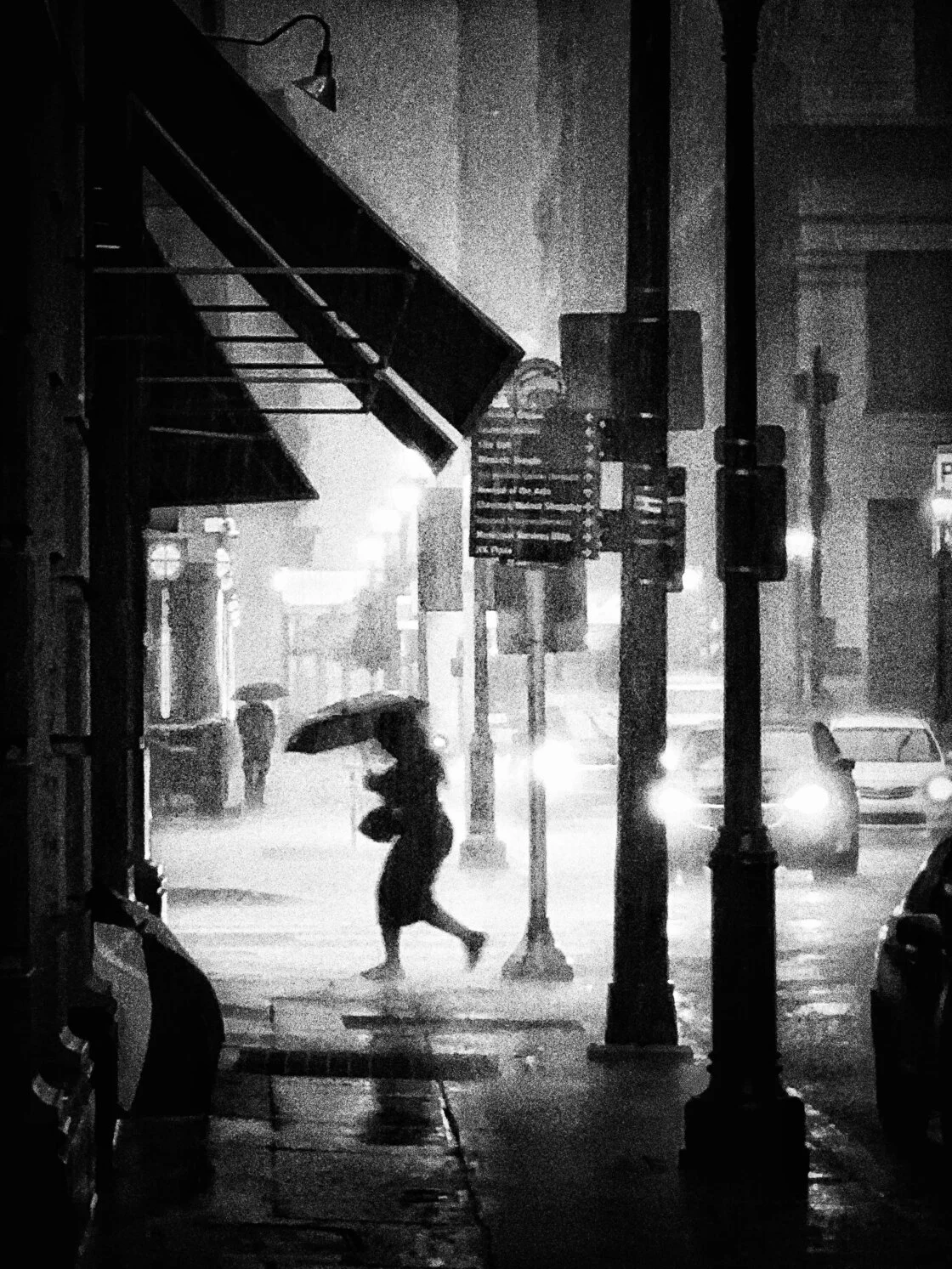
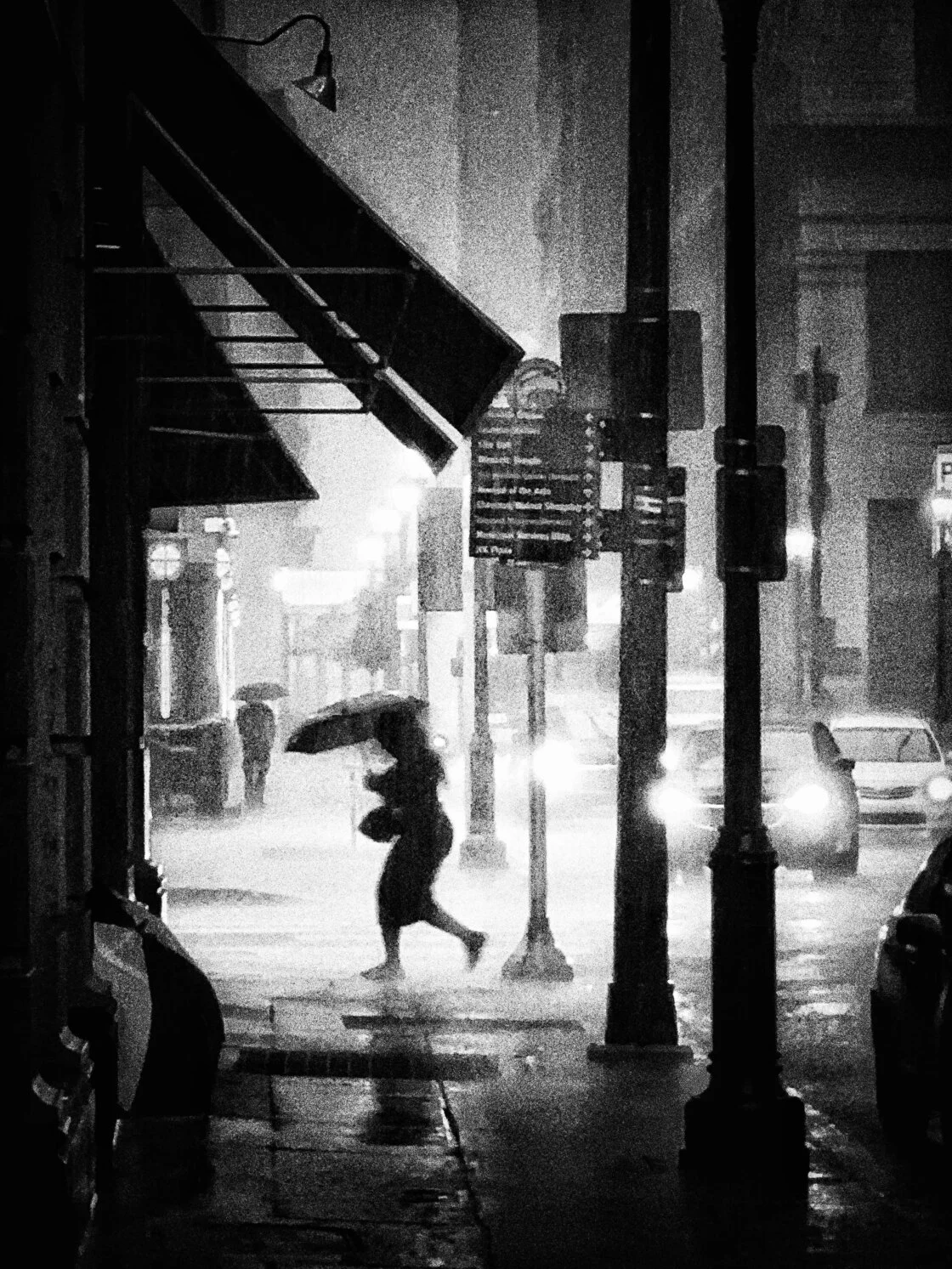
Rain offers a transformative layer to the city, altering textures and introducing new geometric elements. For the street photographer, the primary objective is to utilize these changes to create a focal point. Journalistic analysis of urban movement shows that human behavior shifts during precipitation; the introduction of umbrellas provides both a splash of color and a distinct shape that breaks the monotonous lines of city architecture.
Professional street photographers, such as Philadelphia-based Andrew Gimblet, suggest that one need not be exposed to the elements to capture them. Strategic positioning under awnings, bus stops, archways, and doorways allows for a stable shooting environment while observing the chaos of the rain. From a compositional standpoint, the umbrella serves as a narrative device, signaling the subject’s struggle or harmony with the environment.
Beyond direct observation, creative techniques such as shooting through raindrops on glass surfaces—café windows or bus portals—introduce an abstract quality to the work. By manually setting the iPhone’s focus on the droplets in the foreground, the background is rendered into a soft, impressionistic blur. This utilizes the "bokeh" effect through computational depth-of-field, creating a sense of intimacy and isolation that is hallmark to high-end street photography.
The Physics and Art of Puddle Reflections
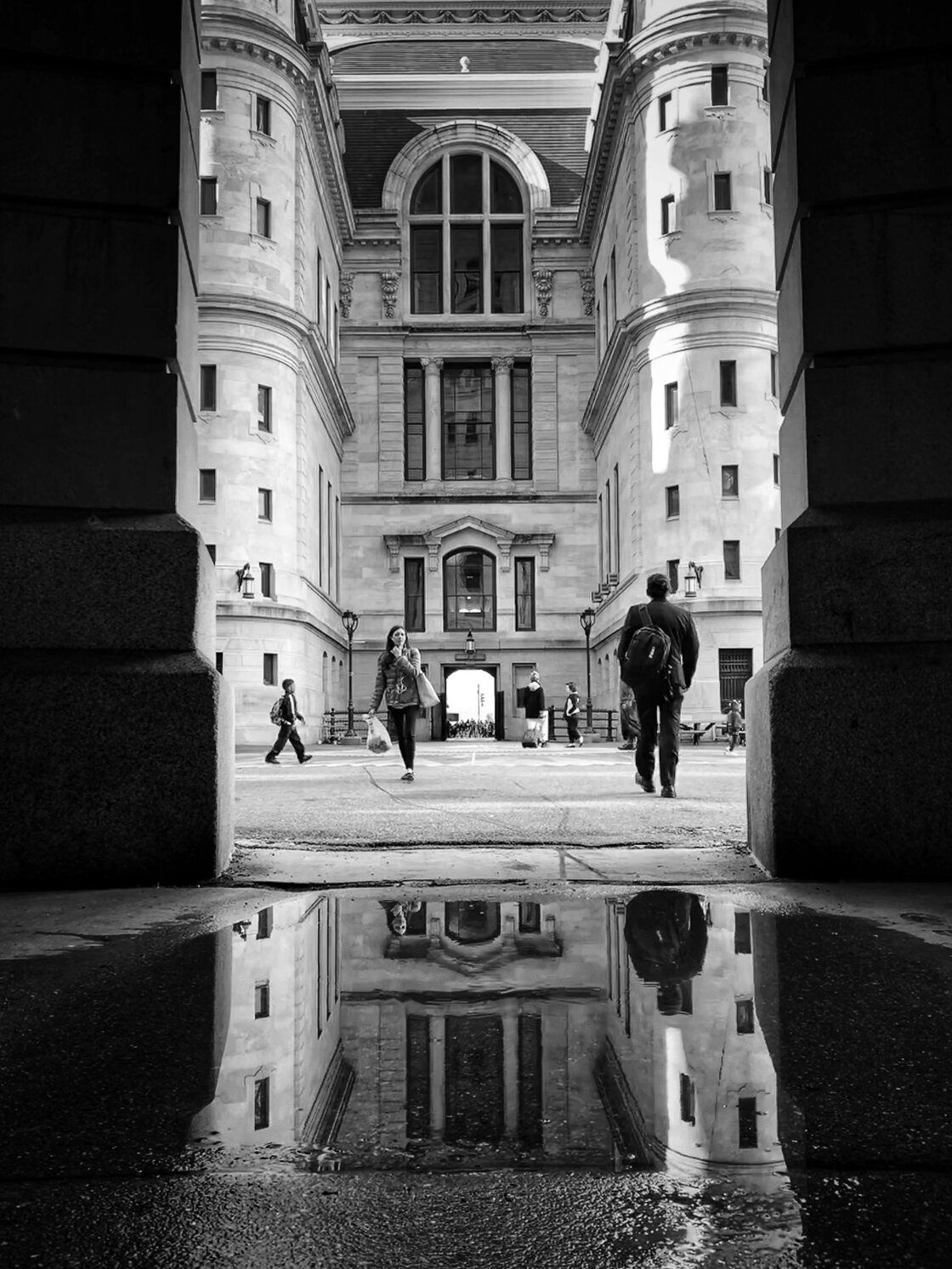
Post-precipitation conditions offer perhaps the most significant visual reward: the puddle reflection. This technique relies on the principles of light and symmetry. To achieve a professional-grade reflection shot, the photographer must minimize the distance between the camera lens and the water surface. On an iPhone, this is best achieved by physically flipping the device upside down, bringing the lens within centimeters of the ground.
Data from photographic composition studies indicates that 50-50 symmetry is highly engaging to the human eye, as it creates a "Rorschach" effect. However, practitioners also find success in asymmetrical compositions, where only a portion of the subject—such as the legs of a passerby—is visible in the physical world, while the rest of the narrative is told through the reflection.
The use of "Burst Mode" is essential in these scenarios. In the time it takes for a subject to take a single step through a frame, an iPhone in burst mode can capture ten or more frames. This ensures that the "decisive moment"—the exact point where the subject’s gait is most aesthetically pleasing—is captured. On modern iPhones, this is activated by dragging the shutter button to the left (in vertical orientation), a technical maneuver that has replaced the slower manual shutter release of previous generations.
Atmospheric Storytelling: Snow and Fog
Snow and fog provide a unique set of challenges and opportunities, primarily regarding light metering and depth perception. Snow acts as a natural "reflector," bouncing light back into the sensor and often confusing the iPhone’s internal exposure algorithm. This frequently results in "middle-gray" snow rather than crisp white.
To counter this, photographers must utilize exposure compensation. By tapping the screen to set focus and then swiping up on the sun icon, the photographer can manually override the sensor’s tendency to underexpose bright scenes. This technical adjustment is vital for maintaining the "airy" feel of a winter storm. Furthermore, capturing falling flakes requires a dark architectural background—such as a brick wall or a bridge—to provide the necessary contrast for the white flakes to be visible.
Fog, conversely, is the ultimate tool for creating a sense of mystery and depth. It utilizes "atmospheric perspective," where objects become lighter and less distinct as they recede into the distance. This naturally creates "leading lines" out of roads or bridges that vanish into a white void. The key to successful fog photography is the inclusion of a strong foreground subject to anchor the image. A lone figure silhouetted against a foggy backdrop is a classic trope that remains effective because it evokes universal themes of solitude and the unknown.
The Impact of Black and White Conversion in Adverse Conditions
One of the most significant implications of shooting in bad weather is the "muddying" of colors. Overcast skies and rain can lead to flat, uninspiring color palettes. The industry-standard solution is the conversion to black and white. By removing color, the photographer forces the viewer to focus on tone, texture, and contrast.
Analysis of successful street photography reveals that black and white imagery is more effective at conveying emotion during "moody" weather. The contrast between bright highlights (street lamps, headlights, or the sky) and deep shadows (archways, silhouettes) creates a dramatic visual tension. Modern mobile editing suites—such as Adobe Lightroom Mobile, Snapseed, and specialized apps like Blackie—allow for the manipulation of "digital grain," which can emulate the look of traditional Tri-X or Ilford film, adding a timeless quality to the smartphone image.
Broader Implications and Official Perspectives
The rise of high-quality mobile photography in adverse conditions has had a significant impact on the media landscape. News organizations now frequently rely on "citizen journalists" to provide real-time visual documentation of weather events, and the quality of these iPhone-captured images is often indistinguishable from professional press photography in a digital format.
Software developers have responded to this trend by integrating more robust "night mode" and "deep fusion" technologies into smartphone operating systems. These features use multi-frame rendering to reduce noise in the dark, murky conditions typical of bad weather. According to data from various photo-sharing platforms, images tagged with "rain," "storm," or "fog" often see higher engagement rates than those taken in clear, sunny conditions, suggesting a public preference for the atmospheric and the dramatic.
Conclusion: Embracing the Elements
The transition from traditional film to the iPhone has not changed the fundamental rules of street photography; it has merely changed the accessibility of the craft. As Andrew Gimblet’s work demonstrates, the city does not stop when the weather turns; it merely changes its face. By mastering exposure compensation, utilizing technical features like burst mode, and embracing the aesthetic of black and white conversion, the mobile photographer can transform a "bad" weather day into a gallery-worthy portfolio.
The broader implication is a democratization of art. When every person with a weather-resistant phone in their pocket has the potential to capture a masterpiece in the middle of a blizzard or a rainstorm, the urban narrative becomes richer and more diverse. The "bad weather" is no longer a deterrent; it is a canvas, and the iPhone is the most versatile brush currently available to the modern urban documentarian.