The arid expanse of the Colorado River Delta, once a vibrant testament to the power of a mighty river reaching the sea, now presents a complex tableau of ecological fragility and remarkable resilience. This region, stretching across the border of the United States and Mexico, has become a focal point for understanding the profound impact of human intervention on natural waterways and the potential for collaborative restoration efforts to bring about renewal. For decades, the delta’s intricate network of waterways and riparian habitats withered as the Colorado River, a vital artery for millions across the American Southwest and Northern Mexico, was dammed, diverted, and depleted to meet the burgeoning demands of agriculture and urban development. However, a recent surge of water, a deliberate act of ecological intervention, has reignited a glimmer of hope in this parched landscape, offering valuable lessons in conservation and international cooperation.
A River’s Journey and a Delta’s Decline
The Colorado River’s journey is one of immense scale and historical significance. Originating in the Rocky Mountains, it traverses over 1,500 miles, carving through seven U.S. states—Colorado, Wyoming, Utah, New Mexico, Arizona, Nevada, and California—before entering Mexico and historically emptying into the Gulf of California, also known as the Sea of Cortez. This river basin is the lifeblood for an estimated 40 million people and irrigates vast agricultural lands that are crucial for food production in arid regions.
However, the ecological narrative of the Colorado River since the mid-20th century has been one of increasing strain and eventual near-collapse. Extensive dam construction, including the Hoover Dam and Glen Canyon Dam, alongside a complex system of aqueducts and diversions, has drastically reduced the river’s flow downstream. This management strategy, driven by the Colorado River Compact of 1922 and subsequent agreements, aimed to allocate the river’s waters among the basin states, prioritizing human development over ecological needs.
The consequences for the Colorado River Delta have been devastating. For decades, the river’s waters rarely, if ever, reached the Sea of Cortez. This cessation of flow led to the desiccation of its once-lush delta wetlands, the salinization of soils, and the loss of critical habitats for numerous species of flora and fauna. The intricate labyrinth of channels, marshes, and lagoons that characterized the delta, a vibrant ecosystem teeming with life, gradually transformed into a parched, saline wasteland. This ecological degradation occurred against a backdrop of increasingly severe drought conditions, exacerbated by climate change, which has plunged the entire Colorado River Basin into its most severe drought in over 1,200 years, according to scientific assessments.
The Genesis of a Vision: Aerial Perspectives and Artistic Inspiration
The profound transformation of the Colorado River Delta, from a verdant expanse to a threatened ecosystem, has been a subject of concern for environmentalists and scientists. For some, like photographer Paul Nicklen, the stark reality of this ecological decline was brought into sharp focus through a unique vantage point: from the skies above.
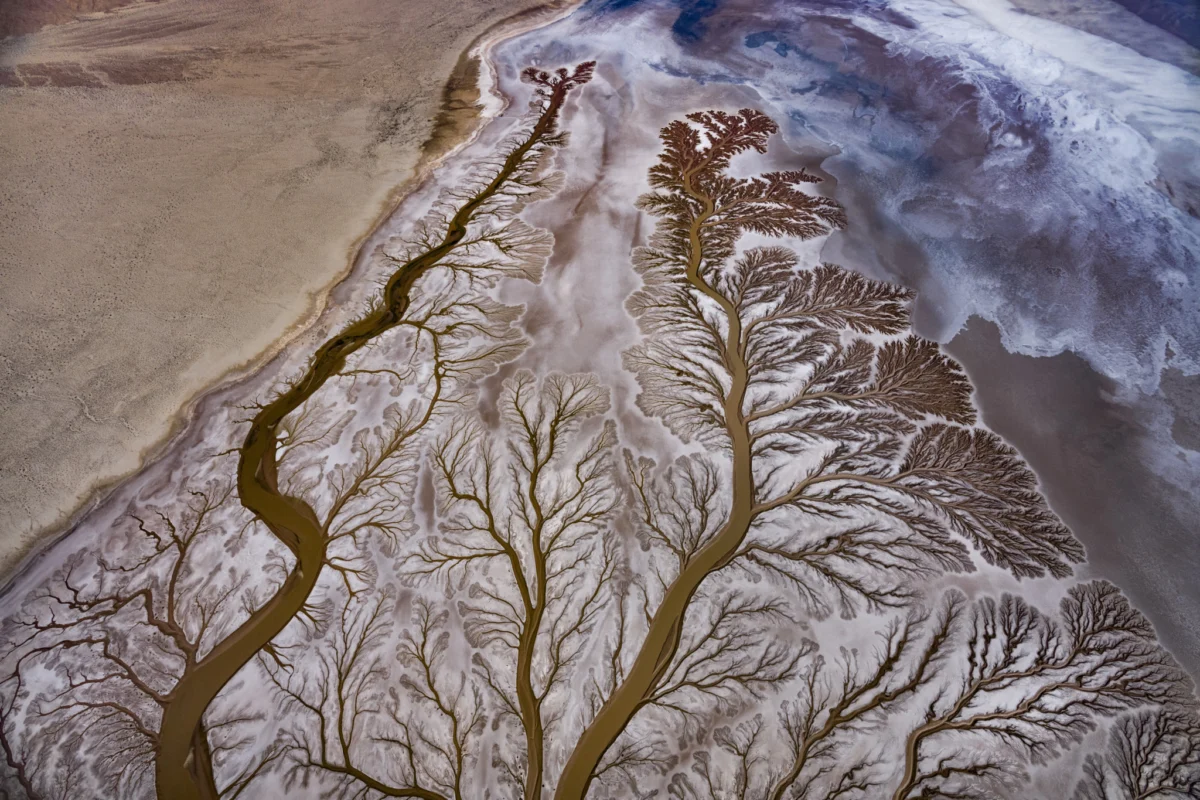
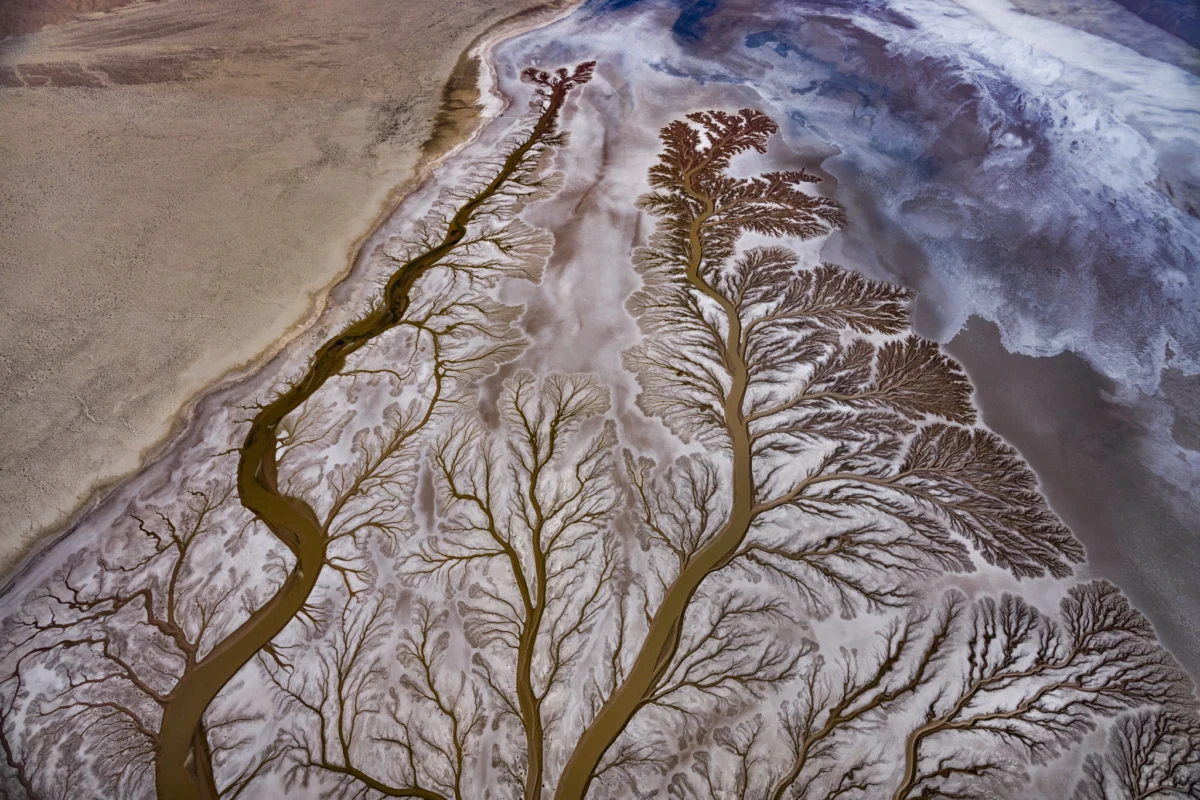
Nicklen, a renowned wildlife photographer whose early life in Canada’s far north fostered a deep connection with nature and its inhabitants, embarked on a mission to capture the essence of the Colorado River Delta. His initial descent into the region, flying over the delta, revealed a landscape far more complex and breathtaking than he had anticipated. Instead of the "little fingers" of water he expected, he encountered a vast, five-mile expanse of "sheer beauty." This overwhelming scale and intricate beauty, a stark contrast to the underlying ecological crisis, presented a profound photographic challenge: to create images that were not only aesthetically striking but also conveyed a message of life and renewal.
His experience echoed an early childhood fascination with exploration. At the age of nine, entrusted with operating a snowmobile alone, he began a lifelong journey of connecting with the natural world. This early immersion allowed him to "connect intimately with wild animals and their vast habitats," fostering an understanding of the "weave of this great fabric of life." This profound appreciation for the interconnectedness of ecosystems fueled his desire to document and communicate the state of the natural world.
Flying at varying altitudes, from 200 to 1,000 feet with his pilot Rodrigo, Nicklen began to discern the intricate patterns that emerged from the delta’s landscape. He described these patterns as a "three-dimensional canvas of poetry and art," reminiscent of the "tree of life." These formations, a "quilted mosaic of silt and sediment," with their intricate networks of "veins, capillaries, and branches," were likened to the "lungs of the Earth." This artistic and observational approach, while capturing the immense beauty, also highlighted the fragility of these natural formations, prompting Nicklen to grapple with how to translate these ephemeral patterns into lasting photographic moments that could resonate with a global audience.
A Terrible Beauty: The Human Footprint on the River
The beauty observed from above, however, is inextricably linked to what Nicklen describes as a "terrible beauty." The very patterns that captivate the eye are a testament to a river system that has been fundamentally altered by human endeavors. The Colorado River’s story since the 1950s is a stark illustration of how an overburdened system, managed for human consumption, has failed to sustain its natural ecological functions, particularly its ability to reach the sea.
The region’s current predicament is compounded by the most severe drought in over a millennium, a climatic reality that places immense pressure on the already depleted water resources. Scientific data indicates that the Colorado River Basin has experienced a significant decline in its water supply, with reservoir levels, such as those at Lake Mead and Lake Powell, reaching historic lows in recent years. This drought, amplified by the effects of global climate change, has intensified the competition for the river’s dwindling flows.
Beyond the climatic challenges, the delta’s ecological decline is a direct consequence of human population growth and industrialization. The insatiable demand for water for agriculture, particularly for water-intensive crops in arid regions, and the needs of burgeoning urban centers and industries have led to the systematic denudation, drainage, and decay of one of North America’s most significant natural waterways. This over-extraction has not only diminished the river’s flow but has also altered its sediment transport, impacting the very geological processes that sustain the delta.
A Glimmer of Hope: The MinuteFlow Agreement and Binational Restoration
Amidst this ecological crisis, a beacon of hope has emerged in the form of a collaborative binational effort to restore a portion of the Colorado River’s flow to the delta. This remarkable initiative, known as the MinuteFlow agreement, represents an unprecedented collaboration between conservation organizations, the governments of the United States and Mexico, and local communities in the Mexicali Valley.
The MinuteFlow agreement, signed in 2012 and reaffirmed and expanded upon in subsequent years, was a landmark achievement in water management and environmental restoration. It allowed for a controlled release of water from the Morelos Dam, located near the U.S.-Mexico border, sending a pulse of water down the river channel to the Sea of Cortez. This intentional release, a temporary measure, was designed to study the ecological response of the delta and to provide critical water to restore a small but significant portion of the riparian habitat.
The initial MinuteFlow, often referred to as an "environmental flow" or "pulse flow," released approximately 105,000 acre-feet of water over an eight-week period. This was a fraction of the river’s historical flow but represented a significant commitment to ecological restoration. The results were immediate and tangible. The release revived dormant vegetation, created temporary wetlands, and provided much-needed habitat for migratory birds and other wildlife that depend on the delta ecosystem.
Subsequent agreements, such as the 2017 Minute 323, further solidified the commitment to binational restoration. These agreements have continued to allow for controlled water releases, focusing on sustaining and expanding the restored areas. The success of these efforts has been attributed to the strong partnerships forged between stakeholders, including organizations like the Walton Family Foundation, The Nature Conservancy, Pronatura Noroeste, and the Environmental Defense Fund, working in concert with government agencies such as the Bureau of Reclamation in the U.S. and Mexico’s National Water Commission (CONAGUA).
Data and Analysis: Quantifying the Impact of Restoration
The ecological impacts of these water releases have been meticulously studied and documented. Scientific research following the MinuteFlow events has provided quantifiable evidence of the restoration’s success:
- Vegetation Recovery: Studies have shown a significant increase in the growth and cover of native vegetation, including cottonwood and willow trees, in areas that received water. These trees are vital for providing shade, habitat, and stabilizing soils.
- Avian Populations: The return of water has led to an increase in the diversity and abundance of bird species, particularly migratory birds that rely on the delta as a critical stopover point. Surveys have recorded species that had been absent for years, indicating a revival of the food web that supports them.
- Groundwater Recharge: The controlled releases have also contributed to the recharge of local groundwater aquifers, which are essential for the survival of remaining vegetation and for supporting any future restoration efforts.
- Reduced Salinity: The influx of freshwater has helped to reduce soil and water salinity in targeted areas, creating more favorable conditions for native plant and animal life.
However, the data also underscores the precariousness of this recovery. The restored areas are heavily dependent on the continued implementation of these binational agreements and are vulnerable to prolonged drought conditions and further reductions in the Colorado River’s overall flow. The amount of water released, while impactful, is a testament to the river’s severely depleted state, highlighting the need for more comprehensive and long-term solutions.
Official Responses and Future Implications
The success of the MinuteFlow agreements has garnered attention and praise from environmental agencies and conservationists worldwide. Officials from both the U.S. and Mexican governments have acknowledged the importance of these binational efforts in addressing the ecological challenges of the Colorado River Basin.
"This initiative demonstrates what is possible when nations collaborate for the sake of our shared environment," stated a representative from the U.S. Bureau of Reclamation, speaking anonymously to reflect ongoing interagency discussions. "The return of water to the delta, even in these controlled amounts, provides a vital ecological lifeline and offers valuable lessons for managing water resources in an era of scarcity."
Similarly, officials within Mexico’s CONAGUA have emphasized the collaborative nature of the restoration, highlighting the involvement of local communities and the scientific expertise brought to bear. "The restoration of the Colorado River Delta is a testament to the power of partnership," a CONAGUA spokesperson remarked. "It shows that with dedicated effort and mutual respect, we can achieve meaningful environmental outcomes."
The implications of the Colorado River Delta’s partial restoration are far-reaching. It serves as a powerful case study for other arid regions facing similar ecological pressures due to water scarcity and over-extraction. The project highlights the critical need for:
- Adaptive Water Management: Moving beyond purely consumptive use to incorporate ecological needs into water allocation and management strategies.
- Binational Cooperation: Recognizing that transboundary water resources require coordinated management and shared responsibility between nations.
- Community Engagement: The success of the MinuteFlow agreements was significantly bolstered by the active participation and support of local communities in the Mexicali Valley, who have a vested interest in the health of their environment.
- Innovative Funding Models: The reliance on private foundations and non-governmental organizations in addition to government funding demonstrates the potential for diverse financial mechanisms to support conservation initiatives.
While the controlled releases have brought a measure of life back to the delta, the long-term survival of this ecosystem remains contingent on broader strategies for managing the Colorado River. These include efforts to improve water efficiency in agriculture and urban areas, explore alternative water sources, and, critically, address the overarching challenge of climate change that continues to diminish the river’s natural flows. The story of the Colorado River Delta is a complex narrative of ecological degradation and human ingenuity, a poignant reminder that even in the face of profound environmental challenges, collaborative action can indeed foster renewal.