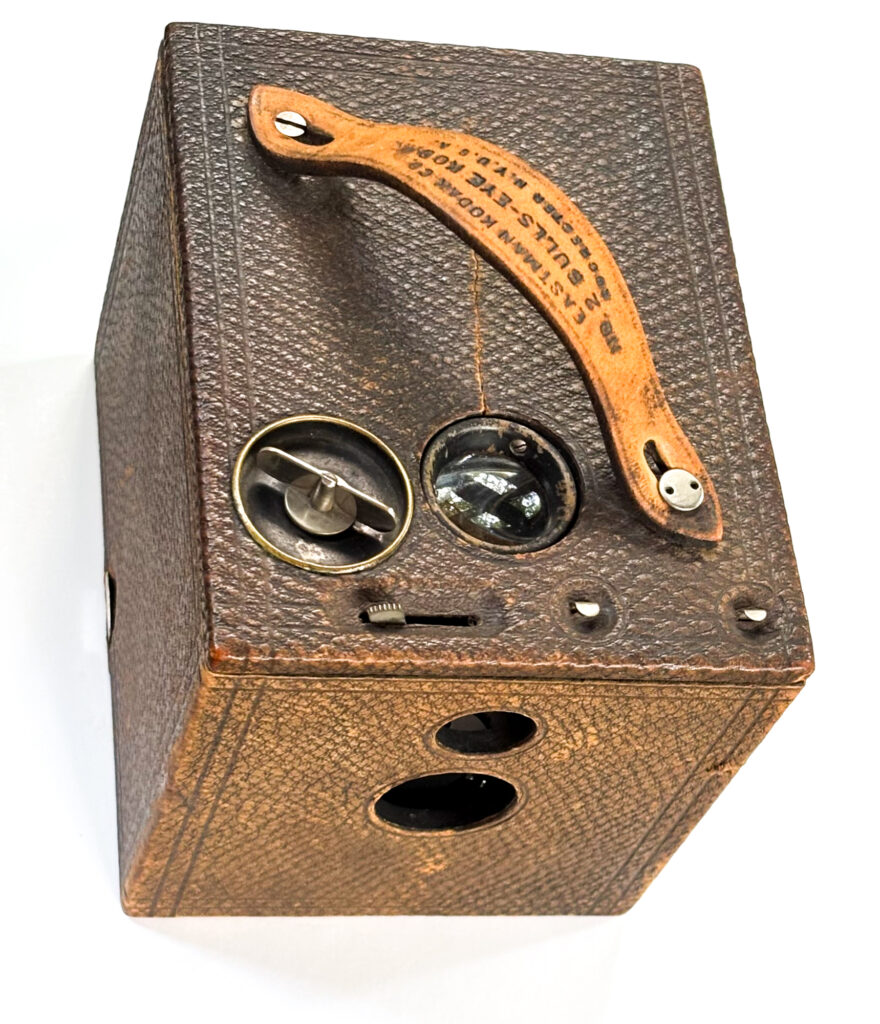
The landscape of late 19th-century photography was defined by a rapid transition from professional, plate-based systems to the accessible, roll-film "snapshot" culture that would eventually dominate the 20th century. At the heart of this revolution was the Kodak No. 2 Bulls-eye camera, a device that not only simplified the act of taking a picture but also introduced fundamental features still recognized by film enthusiasts today. Recent efforts to restore and utilize an 1898 Model D variant of this camera have highlighted the enduring quality of Victorian engineering and the innovative methods modern photographers use to bridge a century-wide gap in film formats. The No. 2 Bulls-eye, originally manufactured by the Boston Camera Manufacturing Company before George Eastman acquired the patents and the company in 1895, represents a pivotal moment in industrial design, marking the first successful implementation of the "red window" system for tracking exposures.
Historical Context and the Evolution of the Bulls-eye Series
The Bulls-eye No. 2 was introduced in 1892, a period when the Eastman Kodak Company was aggressively expanding its patent portfolio to secure a monopoly on amateur photography. The camera was a significant departure from the original 1888 Kodak, which required the entire unit to be returned to the factory for processing. The Bulls-eye utilized "cartridge film," allowing users to load and unload the camera in daylight—a convenience that fundamentally changed the market.
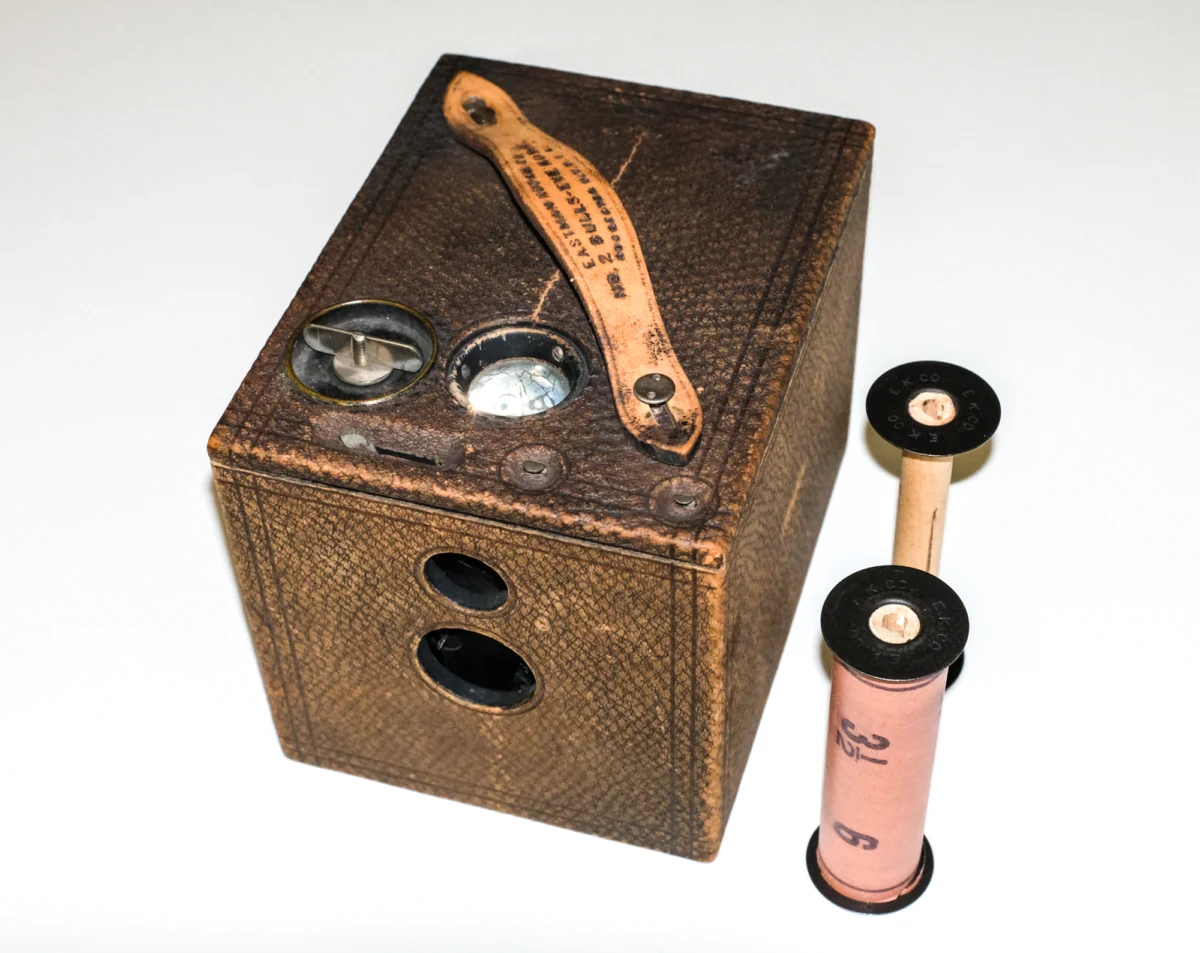
The Model D, specifically the iteration produced around 1898, arrived during the height of the box camera’s popularity. Constructed primarily of seasoned wood and wrapped in high-quality seal grain leather, the camera was designed to be both durable and aesthetically pleasing. Its nickel-plated hardware provided a striking contrast to the dark leather, signaling a premium product for the burgeoning middle-class hobbyist. During its production run from 1892 to 1913, the Bulls-eye No. 2 underwent several minor revisions, but the core mechanics remained focused on simplicity: a fixed-focus lens and a single-speed rotary shutter.
Technical Specifications of the 1898 Model D
The engineering of the 1898 Kodak No. 2 Model D is a study in minimalist optical design. The camera features a meniscus achromatic lens. In optical terms, a meniscus lens is a simple lens with two spherical curved surfaces, one convex and one concave. When paired with an achromatic design, it utilizes two different types of glass to limit the effects of chromatic and spherical aberration. Despite these corrections, the lens remains "uncoated," a factor that significantly influences the aesthetic of the resulting images by allowing for lower contrast and unique flare characteristics.
The aperture system on the Model D consists of a sliding metal plate with three distinct stops. While modern documentation is occasionally sparse, historical analysis suggests the widest aperture is approximately f/16, with the smaller stops intended for use in exceptionally bright conditions or for increasing depth of field. The Eastman rotary shutter is a marvel of clockwork simplicity, providing a single instantaneous speed estimated at 1/25th of a second. This slow shutter speed, by modern standards, requires a steady hand or a tripod, and it necessitates the use of lower-sensitivity films to avoid overexposure in daylight.
Originally, the No. 2 Bulls-eye was designed for 101 roll film. This format produced large, square 3.5 x 3.5-inch negatives. However, 101 film was discontinued by Kodak in the mid-1950s, rendering these cameras decorative pieces for decades unless modified. The 101 spool is significantly wider than the contemporary 120 format, which has become the standard for medium-format photography.
Modern Restoration and Adaptation Challenges
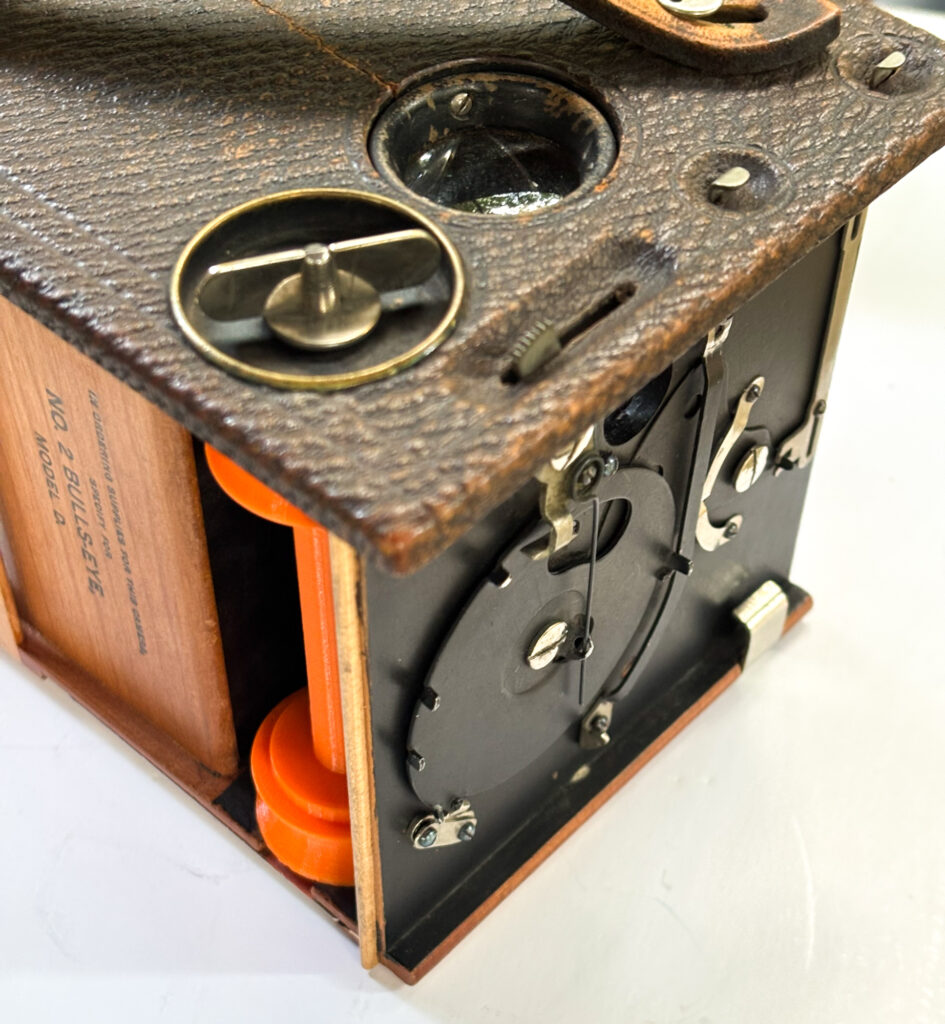
Bringing a 126-year-old camera back into a functional workflow requires a combination of historical research and modern technology. One of the primary obstacles is the disparity between the obsolete 101 film spools and modern 120 film. To resolve this, photographers have turned to 3D printing technology to create custom spool adapters. These adapters extend the length of the 120 spool to fit the internal chambers of the Bulls-eye.
The use of 120 film in a 101-format camera results in a shift in image dimensions. Instead of the original 3.5 x 3.5-inch square, the 120 film—which is narrower—yields a 2.5 x 3.5-inch rectangular frame. Furthermore, because the 120 film’s backing paper markings do not align with the original red window of the Bulls-eye, the window must be taped over to prevent light leaks. This necessitates a manual "turn-counting" method to advance the film. Based on the diameter of the take-up spool, photographers must calculate the exact number of rotations required to advance the film without overlapping frames, typically resulting in seven exposures per roll rather than the standard eight or twelve.
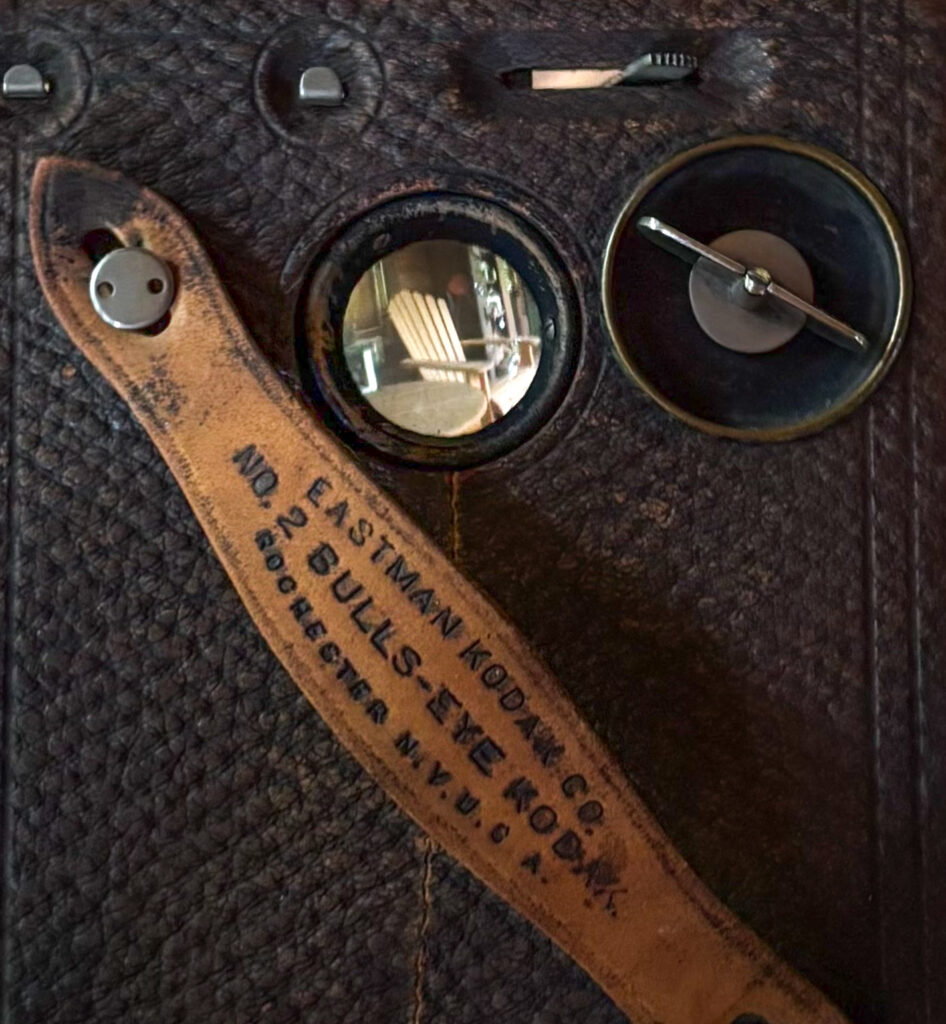
Restoration also frequently involves addressing the camera’s "brilliant" viewfinder. These viewfinders utilize a small internal mirror to reflect an image onto a ground glass or lens. Over a century, the silvering on these mirrors often oxidizes or "fogs," rendering the viewfinder useless. Modern solutions involve the use of adhesive acrylic craft mirrors, which can be cut to size and placed over the original glass to restore a bright, clear image for framing.
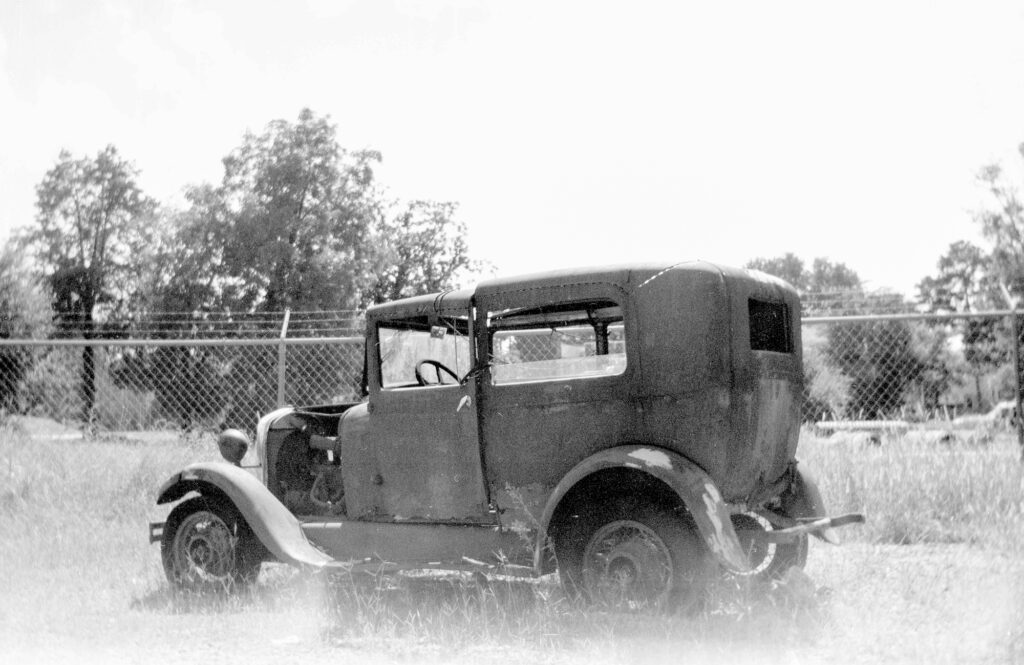
Field Analysis: Capturing History with History
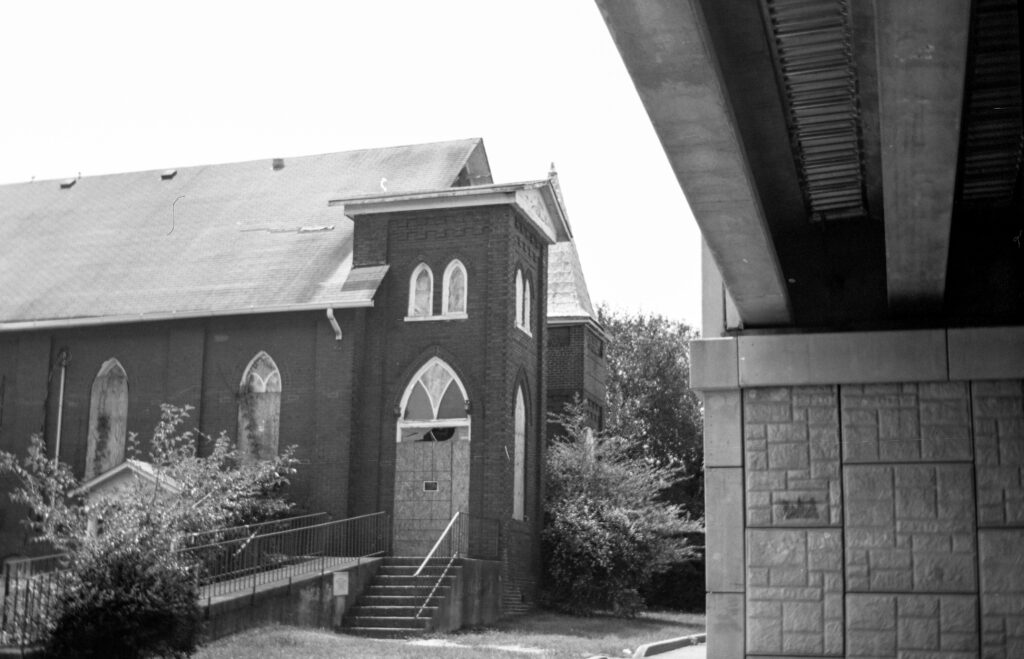
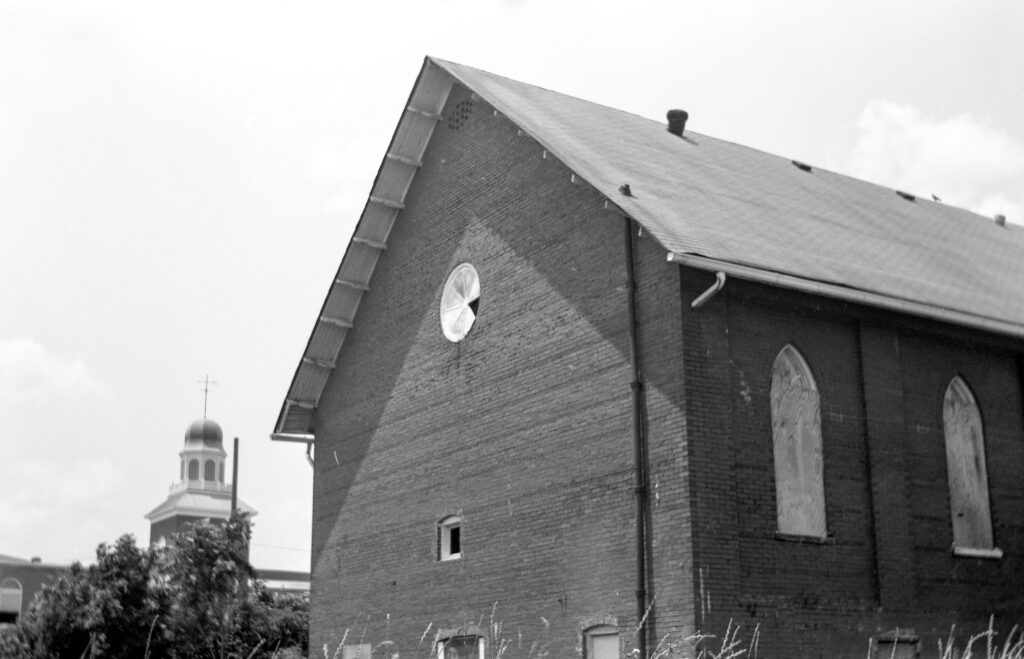
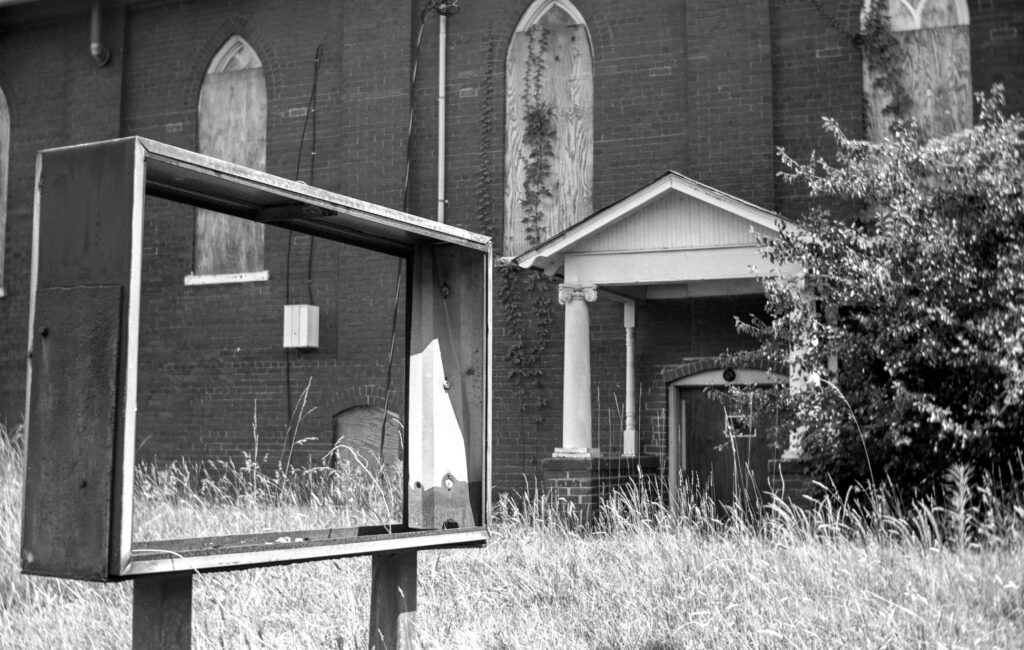
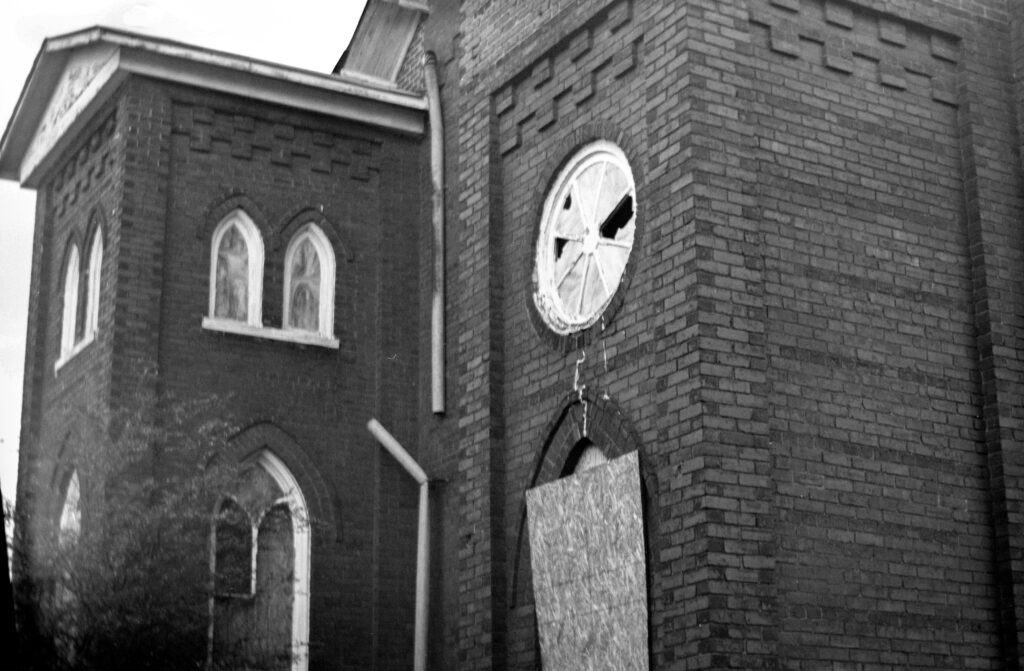
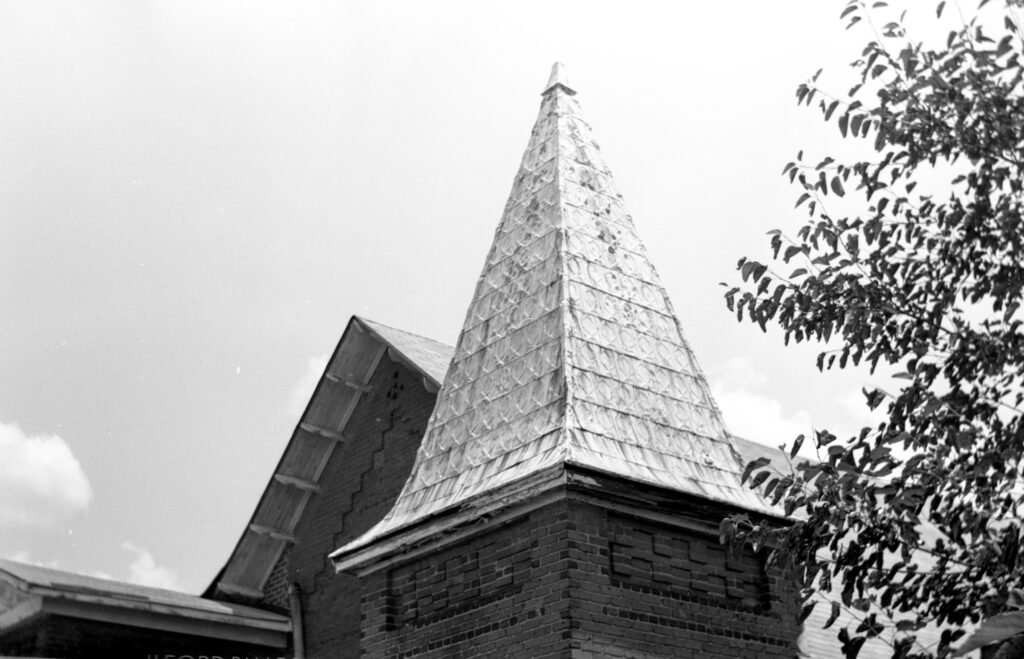
In a notable application of this restored technology, a No. 2 Model D was recently used to document an abandoned church in Griffin, Georgia. The significance of this location lies in its chronology; the church was completed in 1898, the same year the camera was manufactured. This alignment of subject and tool provides a unique perspective on architectural photography, capturing the structure through the same optical characteristics that would have been present when the building was new.
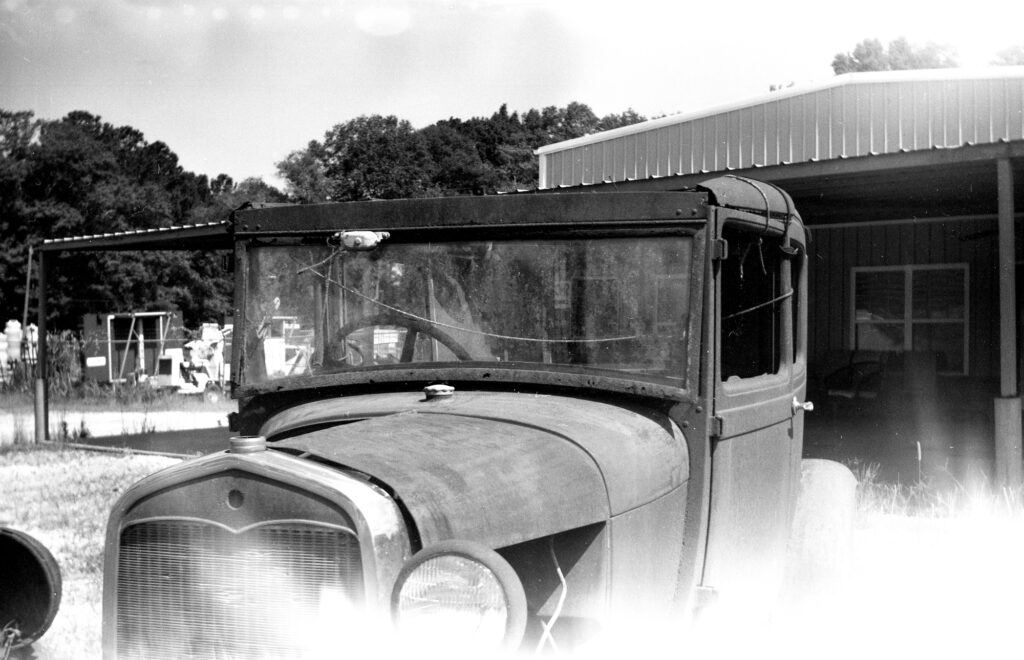
The choice of film plays a critical role in how these ancient lenses perform. Using Ilford Pan F 50, a slow, fine-grained black-and-white film, allows the photographer to compensate for the camera’s fixed 1/25th-second shutter speed in bright light. The resulting images demonstrate the characteristic "softness" of the meniscus lens, particularly at the edges of the frame. This vignetting and loss of sharpness toward the periphery are not defects but rather the inherent signature of 19th-century optics.
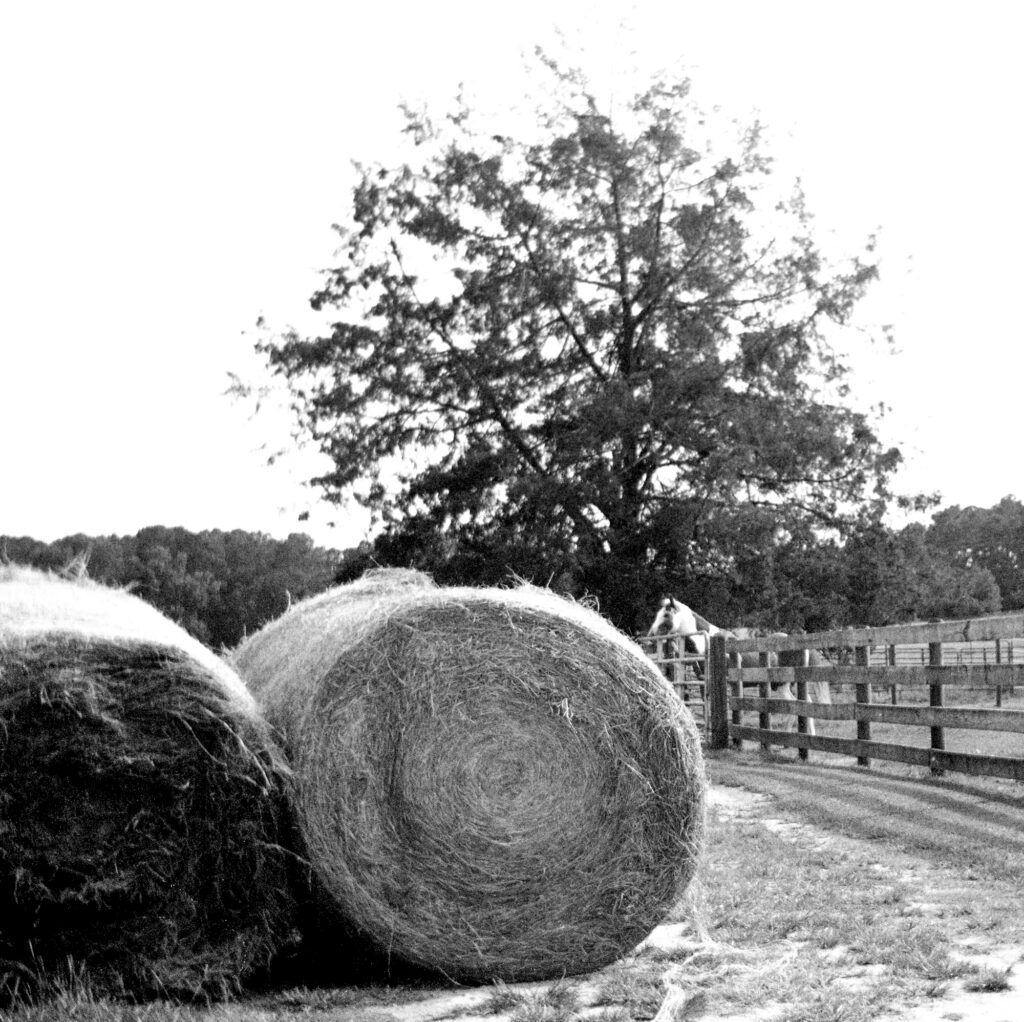
Further testing with various emulsions reveals the versatility of the Model D:

- Kodak Tri-X 400: This high-speed film often requires the use of the camera’s smaller aperture stops to avoid overexposure, but it provides a grittier, more journalistic feel.
- Catlabs Pro 320 and Holga 400 (Fomapan): These films often highlight the camera’s tendency for light leaks if the film is not wound tightly or if the 3D-printed adapters allow for slight shifts. These "artifacts" are often embraced by the analog community as part of the camera’s "soul."
- Kodak Gold 200: When used with color film, the uncoated lens produces a warm, nostalgic palette. The lack of modern anti-reflective coatings means that colors can appear exceptionally vibrant or "blown out" when the lens catches direct sunlight, a phenomenon that modern digital sensors struggle to replicate authentically.
The Broader Impact on Analog Preservation
The continued use of cameras like the Kodak No. 2 Bulls-eye Model D serves a dual purpose. First, it acts as a form of "living history," preserving the mechanical knowledge required to operate and maintain early industrial machinery. Second, it challenges the modern obsession with optical perfection. In an era where smartphone software artificially sharpens images and removes "imperfections," the raw, uncorrected output of a 126-year-old meniscus lens offers a tactile connection to the physical reality of light and chemistry.
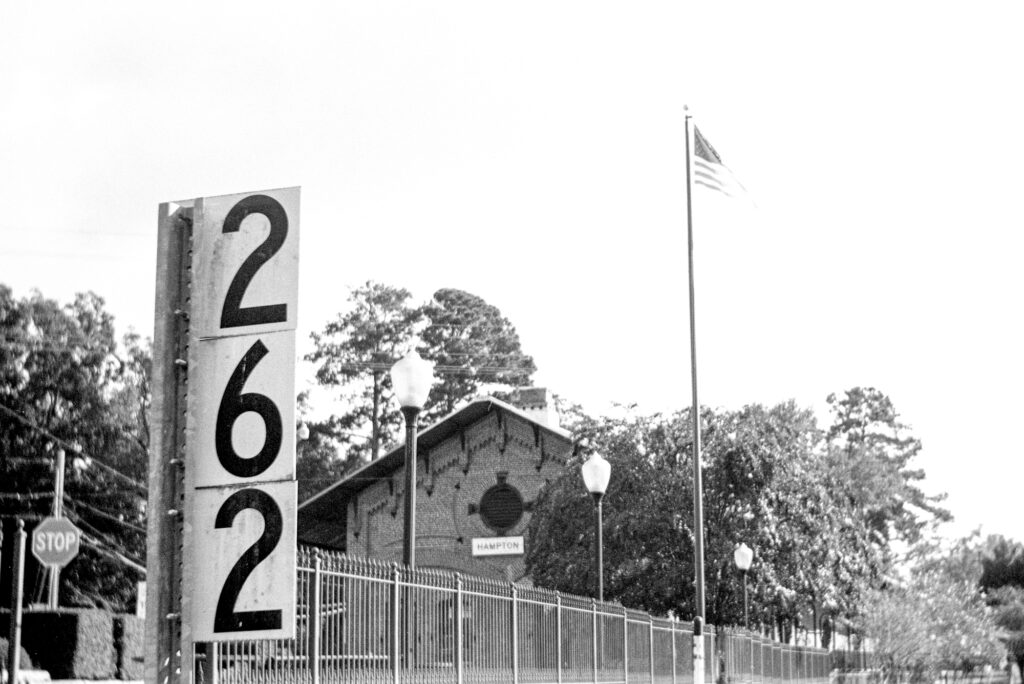
The resurgence of interest in these "ancient" cameras also fuels a niche market for 3D-printed components and film adapters, suggesting that as long as 120 and 35mm film remain in production, the legacy of George Eastman’s early inventions will continue to be documented. The No. 2 Bulls-eye is not merely a museum piece; it is a functional tool that, when handled with an understanding of its limitations, remains capable of producing evocative and historically resonant imagery. As more enthusiasts look toward the "ancient" era of photography, the bridge between 19th-century optics and 21st-century hobbyist culture continues to strengthen, ensuring that the first "red window" camera will not be forgotten.