The traditional creative process, long anchored by the romanticized concept of the "blank canvas," is undergoing a fundamental transformation as commercial marketing demands reach unprecedented levels. In the modern digital economy, starting a project from zero is increasingly viewed not as a badge of originality, but as a logistical and financial liability. As marketing teams are tasked with producing a high volume of assets across fragmented platforms—ranging from social media and email to display advertising and video—the integration of Artificial Intelligence (AI) with professional stock media is emerging as the primary solution for accelerating creative output without sacrificing quality.
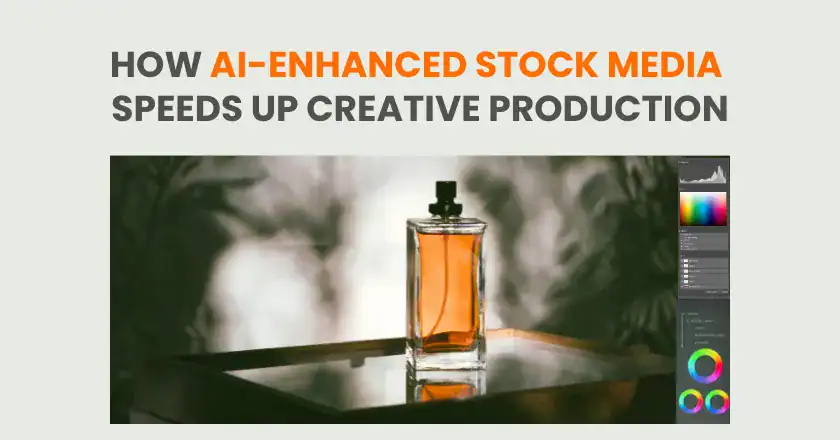
This shift marks a move away from purely generative AI, which creates images from text prompts, toward a transformative or "hybrid" model. In this new workflow, creators begin with high-quality, professionally shot stock assets and utilize AI-assisted tools to modify, scale, and localize them. By bypassing the initial stages of production, companies are reporting significant reductions in time-to-market and production costs, effectively redefining the role of the creative professional from a manual executor to a strategic director.
The Economic Burden of the Blank Canvas
For decades, the standard for high-tier marketing was the custom photo shoot or the bespoke illustration. However, the cost of "starting from zero" involves a complex chain of production: hiring talent, securing locations, managing equipment, and navigating lengthy post-production cycles. Industry data suggests that a single professional commercial shoot can cost anywhere from $5,000 to over $50,000, depending on the scope, and can take weeks to yield a final usable asset.
In the current landscape, a single campaign often requires dozens, if not hundreds, of variations. A hero image for a website must be adapted into vertical formats for Instagram Stories, square formats for feed posts, and various rectangular dimensions for programmatic display ads. When these tasks are performed manually, designers spend upwards of 60% of their time on repetitive production work—such as cropping, resizing, and background reconstruction—rather than on high-level art direction.
The economic pressure to reduce these "non-value-added" hours has made the blank canvas an expensive luxury. By utilizing AI-enhanced stock media, agencies are finding they can move from concept to final delivery in a fraction of the time, allowing them to allocate budgets toward strategy and testing rather than manual labor.
A Chronology of Efficiency: The Evolution of Visual Sourcing
To understand the impact of AI-enhanced stock media, it is necessary to view it within the historical context of creative production:
- The Physical Era (Pre-1990s): Stock photography existed as physical catalogs. Designers ordered transparencies via mail, a process that took days or weeks.
- The Digital Transition (1990s–2000s): The rise of the internet allowed for searchable digital databases. Platforms like Shutterstock revolutionized the industry by offering "microstock," making high-quality imagery affordable for small businesses and rapid digital use.
- The Integration Era (2010s): Stock libraries were integrated directly into design software like Adobe Creative Cloud, allowing for seamless drag-and-drop workflows.
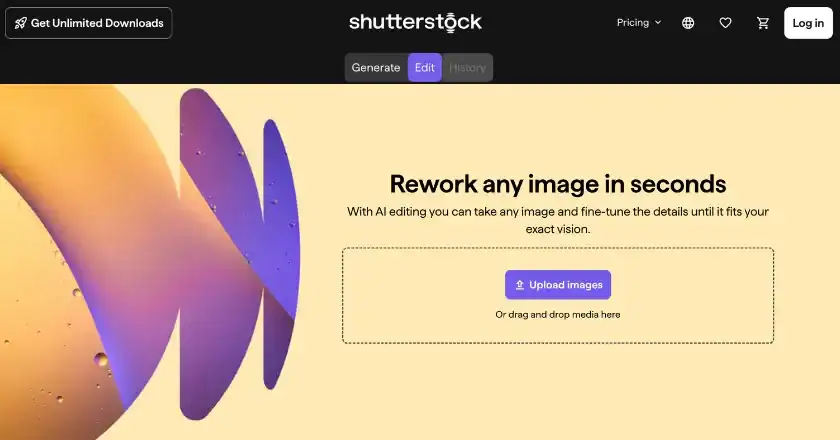
- The AI-Enhanced Era (2023–Present): The current phase, where stock assets are no longer "static" files but dynamic foundations. AI tools built directly into stock platforms allow users to expand backgrounds (outpainting), remove objects, and generate variations of an existing professional image.
This evolution shows a consistent trend: the narrowing of the gap between a creative idea and its technical execution.

The Technical Shift: Transformative AI vs. Generative AI
While generative AI models like Midjourney or DALL-E have captured public attention for their ability to create surreal imagery from scratch, the commercial sector is increasingly favoring transformative AI. This involves taking a "legally clean" professional asset and using AI to adapt it.
The primary advantage of this approach is technical consistency. Purely generative AI often struggles with "hallucinations"—anatomical errors, distorted text, or inconsistent lighting. Professional stock media provides a foundation of intentional lighting, correct anatomy, and high-resolution detail. AI tools then act as a "force multiplier," allowing a designer to take a horizontal photo of a team in an office and use generative expansion to create a vertical version that looks seamless.
Furthermore, "outpainting" and "inpainting" allow designers to change specific elements—such as the color of a subject’s shirt to match a brand’s palette or swapping a laptop for a tablet—without needing a new photo shoot. This modularity ensures that the core creative idea remains intact while the technical execution is automated.
Supporting Data: The Content Explosion and AI Adoption
Recent market research underscores the necessity of these tools. According to a 2023 report by Gartner, content demand is expected to grow by 5x to 20x over the next two years. Meanwhile, a McKinsey & Company analysis suggests that generative AI could increase productivity in marketing and sales by 15% to 45% of total work tasks.

Key statistics driving this trend include:
- Production Speed: Teams using AI-assisted stock tools report a 70% reduction in time spent on asset variation.
- Cost Efficiency: Replacing a single day of pick-up photography with AI-modified stock can save a mid-sized agency an average of $3,000 per project.
- Asset Volume: The average social media campaign now requires 30% more visual assets than it did in 2021 to satisfy algorithmic requirements for "freshness."
Statements and Industry Reactions
Industry leaders have voiced both optimism and caution regarding this shift. Paul Hennessy, CEO of Shutterstock, has emphasized that the goal of their AI integration is to "empower creators to do more with their time." During a recent earnings call, leadership noted that the integration of OpenAI’s technology into their library was designed to provide "ethically sourced" and "commercially viable" outputs, addressing a major concern for corporate legal departments.
Creative directors at major advertising firms have echoed these sentiments. "We aren’t looking to replace our photographers," says one New York-based Creative Lead. "We are looking to free them from the mundane. If I can use AI to turn one great shot into ten different localized ads, I can spend more money on the one great shot in the first place."
However, there is also a focus on the ethical implications. Unlike "open" AI models that scrape the internet without permission, platforms like Shutterstock have established contributor funds to compensate the original photographers whose work is used to train these models. This "clean" data approach is becoming a prerequisite for Fortune 500 companies wary of copyright infringement.

Performance Marketing and the Cost of Learning
One of the most significant applications of AI-enhanced stock media is in performance marketing, where "creative fatigue" is a constant threat. When an audience sees the same ad repeatedly, engagement drops. To combat this, marketers must constantly rotate visuals.
Historically, A/B testing was limited by the cost of creating variants. A team might only test two or three images because of budget constraints. With AI-enhanced stock, a team can generate 50 variations of a single concept—testing different backgrounds, subject placements, and color schemes—for nearly zero additional cost.
This creates a "feedback loop" where data informs creative. If the data shows that a rural background performs better than an urban one for a specific demographic, the team can immediately use AI to swap the backgrounds of their existing assets, optimizing the campaign in real-time. The objective is no longer just to produce content, but to reduce the cost of discovering what works.
Global Localization and Cultural Nuance
For international brands, the challenge of production is multiplied by the need for cultural relevance. A campaign designed for North America may not resonate in Southeast Asia or the Middle East. Clothing, architecture, and even the "vibe" of a workplace need to be localized.
Commissioning shoots in ten different countries is prohibitively expensive for most brands. However, by starting with a professional stock library that already contains diverse global imagery, and then using AI to maintain brand consistency (such as applying the same lighting filter or color grade across different images), global teams can create "locally native" content at a global scale. This modular approach ensures that the brand speaks the local language—both literally and visually—without a massive increase in overhead.
Broader Impact and Implications for the Creative Workforce
The long-term implication of AI-enhanced stock media is the "democratization of high-end design." Small businesses with limited budgets can now produce visual content that rivals the quality of major corporations. For the creative workforce, this represents a pivot in required skills.
The value of a designer is shifting away from technical proficiency in software like Photoshop and toward "creative curation" and "strategic oversight." The ability to direct an AI to achieve a specific brand aesthetic, to judge the emotional resonance of an image, and to maintain visual consistency across platforms is becoming more valuable than the ability to manually mask an image.
As AI continues to integrate with professional libraries, the "blank canvas" may eventually become a choice rather than a necessity. The most successful creative teams will be those who recognize that original ideas do not require original pixels from scratch—they require the vision to transform existing professional material into something new, fast, and effective. This hybrid future promises a world with less "busy work" and more room for the strategic thinking that defines true creativity.