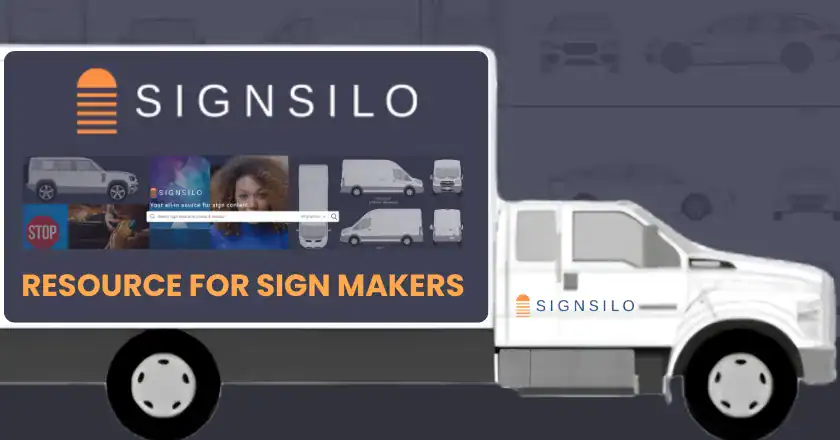
The vehicle graphics industry has undergone a radical transformation over the last decade, transitioning from a niche service for high-end enthusiasts to a multi-billion-dollar global market essential for corporate branding and fleet management. At the heart of this evolution is the critical need for precision, a demand that SignSilo is currently addressing through its comprehensive platform of vehicle templates and design resources. As digital printing technology allows for increasingly complex and vibrant designs, the margin for error in physical application has narrowed significantly. A single miscalculation in the placement of a logo or a failure to account for a vehicle’s door handle can lead to hundreds of dollars in wasted vinyl and hours of lost labor. By "unleashing" a massive library of high-accuracy vehicle templates, SignSilo is providing sign shops and independent designers with the tools necessary to eliminate these risks and streamline the production pipeline from initial concept to final installation.
The Critical Role of Accuracy in Modern Sign-Making
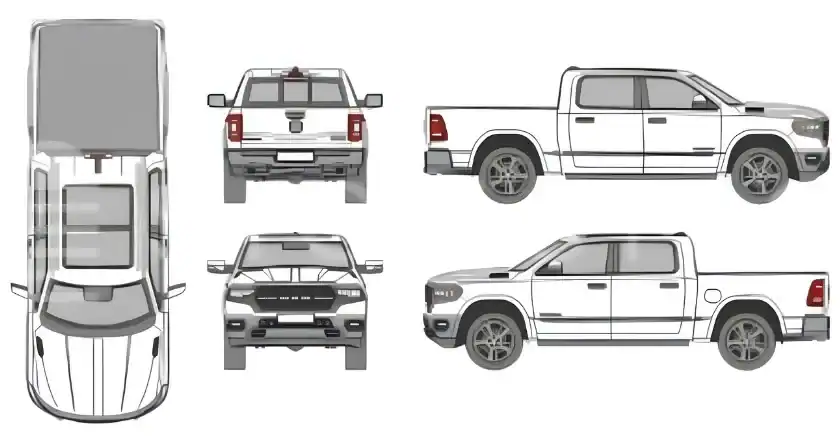
The technical challenge of vehicle wrapping lies in the translation of a two-dimensional design onto a complex three-dimensional surface. Unlike a stationary billboard or a flat storefront sign, a vehicle features compound curves, recessed areas, and various obstructions such as mirrors, hinges, and sensors. Designing for these surfaces requires more than just artistic flair; it demands mathematical precision.
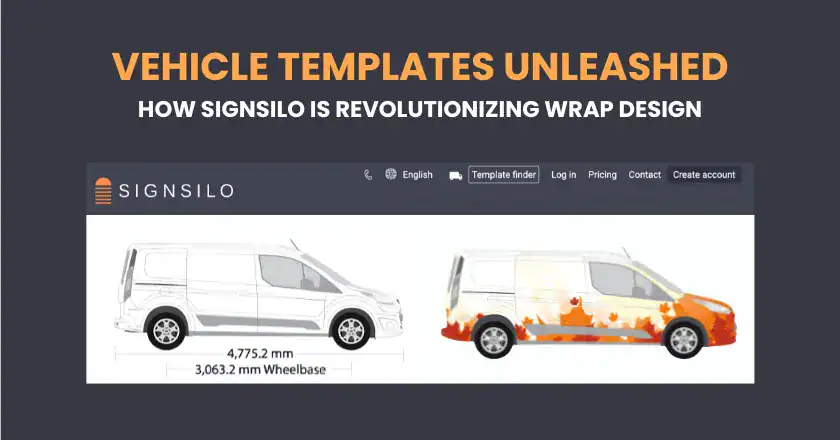
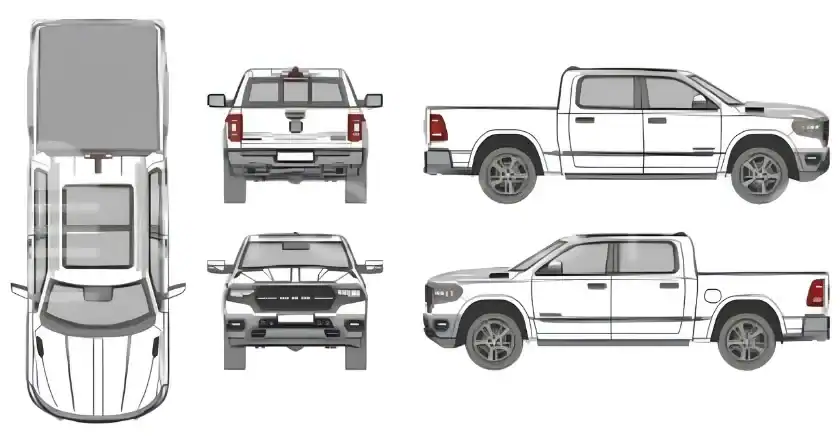
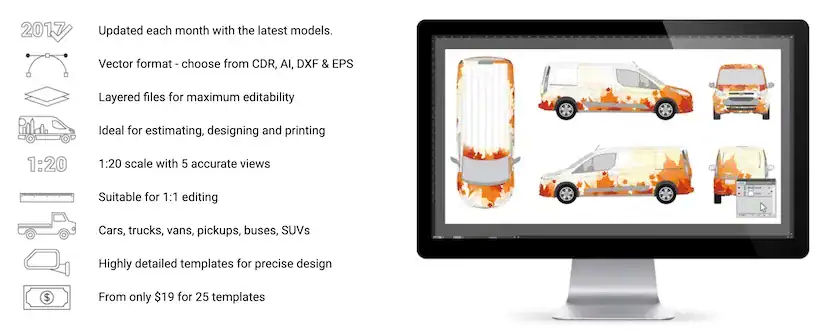
Industry standards have shifted toward the use of 1:10 scale vector outlines. These templates provide a blueprint that represents the vehicle’s dimensions with extreme fidelity. SignSilo’s library focuses on this high-precision format, ensuring that designers can work with confidence. When a designer places a graphic on a SignSilo template, they are seeing a geometrically accurate representation of the vehicle. This prevents the "stretching" effect often seen in amateur wraps, where a logo appears distorted once applied to a curved fender.
Furthermore, the economic implications of precision are substantial. In a professional setting, high-quality cast vinyl—the industry standard for full wraps—can cost between $15 and $25 per yard. A standard van wrap may require 20 to 30 yards of material. If a design is printed and found to be misaligned by even an inch, the entire panel must be discarded and reprinted. For a small-to-medium-sized sign shop, two or three such errors per month can represent the difference between profit and loss. SignSilo’s emphasis on "unleashed" accuracy is, therefore, not just a design convenience but a financial safeguard.
The Evolution of Design: From Physical Tracing to Digital Vectors
To understand the impact of SignSilo, one must look at the chronology of the vehicle graphics industry. In the 1980s and early 1990s, vehicle branding was largely limited to hand-painted lettering or simple cut-vinyl decals. Measuring a vehicle involved a tape measure, a ladder, and a notepad. Designers would manually sketch the placement of letters, often resulting in slight asymmetries that were accepted as part of the "hand-crafted" nature of the work.

The mid-1990s saw the introduction of wide-format inkjet printers, which allowed for the first full-color digital wraps. However, the software and template infrastructure lagged behind the hardware. Designers often relied on low-resolution photographs of vehicles, which lacked scale and failed to account for the curvature of the body panels. This "guesswork era" was characterized by long installation times as installers had to "make it work" on the shop floor.
By the 2010s, the demand for fleet branding skyrocketed. Companies realized that a wrapped vehicle could generate between 30,000 and 70,000 impressions per day, making it one of the most cost-effective forms of outdoor advertising. This surge in demand necessitated a more industrial approach to design. SignSilo emerged as a solution to this need for standardization. By aggregating thousands of vehicle models—from the latest electric delivery vans to heavy-duty construction equipment—into a single, searchable database, the platform moved the industry into a new era of digital efficiency.
Supporting Data: The Growing Market for Vehicle Wraps
Market analysis indicates that the global vehicle wrap market was valued at approximately $4.76 billion in 2021 and is projected to expand at a compound annual growth rate (CAGR) of 22.2% through 2030. This growth is driven by several factors:
- Small Business Expansion: Local service providers (plumbers, electricians, landscapers) increasingly view vehicle wraps as their primary marketing tool.
- E-commerce Logistics: The rise of "last-mile" delivery has resulted in massive fleets of delivery vans (such as the Amazon Mercedes-Benz Sprinter or the Ford Transit) that require uniform branding.
- Advancements in Material Science: Vinyl manufacturers like 3M and Avery Dennison have developed "repositionable" adhesives that make installation easier, provided the design is accurate.
SignSilo’s platform directly supports these market drivers by reducing the "barrier to entry" for designers. By providing affordable access to templates that would otherwise cost hundreds of dollars individually, SignSilo allows smaller boutique shops to compete with large national franchises.
A Comprehensive Ecosystem for the Graphics Professional
While vehicle templates are the flagship offering, SignSilo’s "unleashed" philosophy extends to a broader ecosystem of assets. Professional sign-making requires a cohesive set of elements: high-resolution imagery, legible typography, and clean vector icons.
The platform includes a curated library of stock photos specifically selected for their "wrap-ability." Unlike general stock photo sites, SignSilo’s imagery is vetted for high-resolution printing at large scales. A photo that looks clear on a 15-inch monitor may become pixelated when blown up to cover the side of a 14-foot box truck. SignSilo’s assets are designed to maintain integrity at these massive scales.
Additionally, the inclusion of specialized fonts and wrap-specific graphics (such as "splashes," "carbon fiber textures," and "racing stripes") allows designers to build complex layouts within the same environment where they source their vehicle blueprints. This integrated workflow is estimated to reduce the design phase of a project by as much as 40%, allowing shops to handle a higher volume of clients without increasing headcount.
Industry Reactions and Expert Analysis
Designers and shop owners have noted that the availability of high-quality templates has changed the client consultation process. "In the past, we had to explain to clients why the final product might look slightly different from the sketch on my screen," says Marcus Thorne, a veteran wrap installer based in Ohio. "With the templates provided by services like SignSilo, we can show the client a 1:10 scale mockup that is virtually identical to the finished vehicle. It builds trust and speeds up the approval process."
Industry analysts point out that SignSilo’s pricing model—offering subscription-based access to a vast library—reflects a broader trend in the "software as a service" (SaaS) sector. By moving away from per-template pricing, SignSilo encourages experimentation. A designer can download multiple versions of a vehicle (e.g., a standard wheelbase vs. an extended wheelbase) to ensure they have the exact match for the client’s fleet, without incurring additional costs.

Broader Implications and the Future of Wrap Design
The revolution led by SignSilo has implications beyond just aesthetic design. It touches on the efficiency of the global supply chain. As electric vehicles (EVs) become more prevalent, new manufacturers like Rivian, Lucid, and BYD are entering the market with unique body shapes. The speed at which SignSilo can digitize these new models into vector templates determines how quickly these new fleets can be branded and deployed.
Looking forward, the integration of Artificial Intelligence (AI) and Augmented Reality (AR) is expected to be the next frontier. There is significant potential for SignSilo’s templates to be used in AR applications, where a client can view a proposed wrap on their vehicle through a smartphone screen before a single inch of vinyl is printed.
In conclusion, SignSilo is doing more than just selling digital files; it is providing the infrastructure for a more professional, efficient, and profitable sign-making industry. By unleashing precise vehicle templates and a suite of supporting creative assets, the platform ensures that the high-stakes world of vehicle graphics is governed by accuracy rather than guesswork. As the market for mobile advertising continues to expand, the role of high-fidelity digital blueprints will only become more central to the success of branding professionals worldwide.