The close of the previous year was marked by comprehensive industry reflection, with detailed analyses of rental and purchase trends providing insight into market dynamics. As the new year commences, the focus invariably shifts towards future innovations and strategic objectives. LensRentals.com, a key player in equipment provision, has outlined its own ambitious goals for the coming year. Concurrently, an examination of recent product introductions in the photography and videography sectors reveals several pivotal areas poised for significant evolution in 2026. This forward-looking analysis identifies five critical developments expected to reshape the professional imaging landscape.
The Resurgence of Third-Party Lens Ecosystems
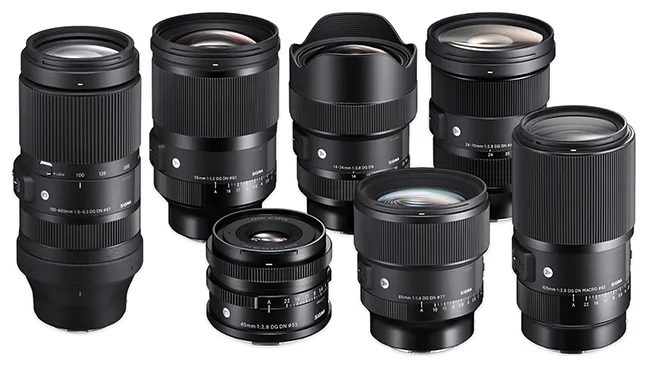
For professionals and enthusiasts deeply embedded in the photography and videography industry for over a decade, the pre-mirrorless era is often recalled with a distinct sense of abundance, particularly concerning lens options. Regardless of allegiance to Canon, Sony, or Nikon, photographers benefited from a vast selection of third-party lenses. Manufacturers such as Sigma, Tamron, and Tokina consistently offered compelling alternatives, frequently delivering exceptional optical performance across diverse focal lengths at more accessible price points than their first-party counterparts. This robust competition fostered innovation and provided consumers with greater flexibility and value. Historically, third-party manufacturers carved out significant market share by offering unique apertures, specialized focal lengths, or more budget-friendly alternatives that often rivaled or even surpassed the optical quality of first-party options.
However, the industry’s significant pivot towards mirrorless camera systems introduced a period of transition and constraint. The adoption of entirely new lens mounts – notably Sony’s E-mount, Canon’s RF mount, and Nikon’s Z mount – presented substantial development hurdles for third-party manufacturers. These new mounts often came with proprietary communication protocols, complex electronic interfacing, and, in some cases, stricter licensing policies or a more closed approach to third-party integration, slowing the pace at which external companies could design and bring compatible lenses to market. Sony’s E-mount, being the earliest and arguably most open in its early days, witnessed a comparatively swift influx of third-party glass from companies like Sigma, Tamron, and Samyang, establishing a vibrant ecosystem. In contrast, Canon’s RF and Nikon’s Z mounts initially saw a more restricted environment, with limited official support for third-party development, leading to a noticeable scarcity of non-first-party options for users of these burgeoning systems for several years post-launch. This chronology left many early adopters of RF and Z systems with fewer choices and often higher costs for essential lenses.
Recent developments, however, indicate a significant shift in this dynamic. Leading third-party manufacturers, including Sigma and Tamron, have now declared substantial commitments to developing lenses for the RF and Z series cameras. For instance, Sigma announced expanded support for the RF mount in late 2024, following earlier commitments to the Z mount. This strategic expansion is a critical turning point, promising to inject much-needed competition and variety into these ecosystems. Industry analysts suggest that this increased openness from camera manufacturers, possibly driven by competitive pressure from Sony’s established third-party ecosystem and growing consumer demand, is a welcome development. Statements from executives at Sigma and Tamron have previously underscored their intent to meet the strong market demand for expanding their mirrorless portfolios, emphasizing their dedication to innovation across all major platforms. This trend is expected to accelerate throughout 2026, with a more diverse range of lenses hitting the market.
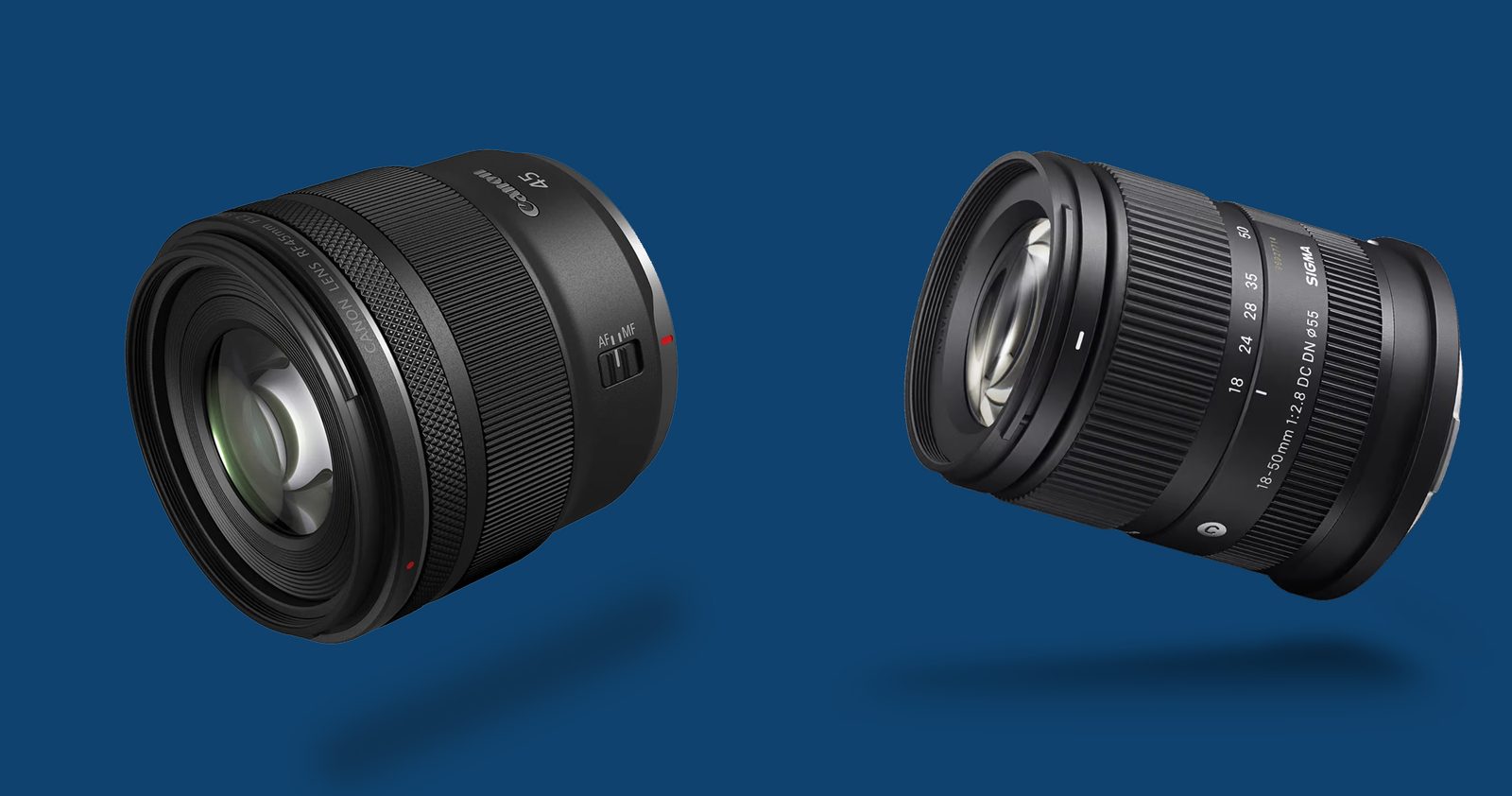
The implications of this resurgence are multifaceted. Firstly, it is anticipated to drive down the average cost of high-quality lenses, making professional-grade equipment more accessible and reducing the barrier to entry for aspiring creatives. Secondly, it will significantly broaden the creative toolkit available to photographers and videographers using Canon RF and Nikon Z systems, offering unique focal lengths, apertures, and specialized designs that might not be prioritized by first-party manufacturers. This increased competition is also likely to spur further innovation from the primary camera brands themselves, as they strive to maintain their competitive edge through advanced optical designs and features. Ultimately, a vibrant third-party lens market is crucial for the long-term health and growth of the mirrorless segment, empowering users with more choices and accelerating the adoption of these advanced camera systems. The forecast for 2026 is one of renewed dynamism in lens development, benefiting the entire imaging community.
The Advent of Fast, Affordable Prime Lenses
Approximately six months prior to this assessment, Canon executed a noteworthy and somewhat atypical market move by releasing an exceptionally fast f/1.2 prime lens, the Canon RF 45mm f/1.2 STM, priced remarkably under $500. This product introduction was nothing short of groundbreaking. Historically, lenses with such wide apertures, particularly f/1.2, have been the exclusive domain of premium, high-cost optics, often retailing for well over $1,000, and sometimes several thousands. For example, a Leica 50mm f/1.2 Noctilux-M can cost upwards of $10,000, and even Canon’s own EF 50mm f/1.2L USM, a DSLR lens, retailed for around $1,500 for many years. The conventional wisdom dictated that the optical challenges and manufacturing precision required for f/1.2 lenses – involving complex arrangements of large, high-precision glass elements, stringent aberration control, and robust aperture mechanisms to ensure sharpness and minimal distortion – inherently necessitated a premium price tag.
The concept of fast prime lenses is far from novel. Canon itself produced f/1.2 lenses as early as the 1980s for its SLR systems, such as the FD 50mm f/1.2. Leica has been at the forefront of ultra-fast optics, manufacturing f/1.2 lenses like the iconic 50mm f/1.2 Noctilux-M, since the 1960s, embodying the pinnacle of optical engineering. However, these lenses consistently commanded exorbitant prices, reflecting their status as pinnacle engineering achievements and their limited production volumes. Despite massive gains in manufacturing processes, advancements in optical design software (e.g., ray tracing simulations), and the reduction in production costs over the decades due to automation and material science, the affordability barrier for such fast lenses remained largely unbroken until recently.
The Canon RF 45mm f/1.2 STM represents a significant disruption to this established pricing paradigm. Its introduction suggests that modern manufacturing techniques, combined with potentially optimized optical formulas designed for mirrorless systems and the efficiencies of the STM (Stepping Motor) autofocus system, can now deliver professional-grade speed at a price point accessible to a much wider audience. Industry analysts widely regard this as a strategic move by Canon, effectively setting a new benchmark and compelling competitors to re-evaluate their own pricing strategies for fast optics. This move also aligns with a broader trend of democratizing advanced features that were once exclusive to top-tier equipment.
For 2026, the aspiration is to see this trend proliferate across all major camera brands. The democratization of ultra-shallow depth of field and superior low-light performance is a transformative development for photographers and videographers. Access to fast, affordable primes can significantly enhance creative possibilities, allowing for more distinctive portraiture with exquisite bokeh, compelling cinematic visuals in challenging lighting, and greater flexibility in capturing scenes without resorting to excessively high ISO settings, thereby maintaining image quality. This shift is not merely about cost reduction; it’s about expanding the creative toolkit for a broader demographic, fostering new artistic expressions, and potentially accelerating the adoption of mirrorless systems by demonstrating tangible value beyond technical specifications. The expectation is that other manufacturers will respond to this market signal, leading to a new wave of high-performance, budget-friendly prime lenses that redefine expectations for professional optical quality, thus enriching the entire imaging market.
From Generative AI to Workflow AI: A Paradigm Shift
The past few years have undeniably positioned Artificial Intelligence (AI) at the forefront of technological discourse, and the photography and videography sectors are no exception. While the transformative potential of AI is widely acknowledged, the dominant public perception has largely been shaped by generative AI models capable of producing art, corporate headshots, and synthetic videos from simple text prompts in mere seconds. This emphasis on generative capabilities has, at times, overshadowed the equally significant, albeit less glamorous, potential of AI to enhance professional workflows. The rapid rise of tools like DALL-E, Midjourney, and Stable Diffusion has sparked both excitement and considerable debate within creative communities, particularly concerning issues of artistic integrity, copyright, and job displacement.
Despite the undeniable marvel of generative AI, its applications for the day-to-day operations of a working professional in photography and videography remain somewhat niche and, in some cases, ethically contentious regarding originality and copyright. The industry, however, is keenly anticipating a re-framing of AI’s role in 2026, shifting the emphasis from creation to augmentation. The demand is growing for AI and automation solutions that directly address the inefficiencies and repetitive tasks inherent in professional workflows, thereby freeing up creatives to focus on higher-value artistic decisions.
Current AI implementations in photography software already offer glimpses of this potential, such as intelligent culling of images (e.g., Photo Mechanic’s smart selections), advanced noise reduction (e.g., Topaz AI, DxO DeepPRIME), and sophisticated content-aware fill functions in programs like Adobe Photoshop Lightroom. However, the market still exhibits a significant gap for more comprehensive, integrated AI-driven workflow tools. Professionals are increasingly seeking affordable studio management software empowered by AI to automate tasks such as sending invoice reminders, drafting personalized emails to potential clients, managing booking schedules, and even preliminary client communication. Data from recent industry surveys indicate that over 70% of professional photographers spend at least 10 hours per week on administrative tasks, a figure ripe for AI-driven reduction.
Beyond administrative tasks, the desire extends to AI tools that can streamline the image and video editing process itself. Imagine a "single-click" solution that intelligently identifies and removes extraneous elements like trash bins, telephone poles, or power lines from an image, or automatically color-grades video footage based on predefined stylistic preferences, maintaining consistency across a large batch of files. Furthermore, AI could be instrumental in organizing creative inspiration, cataloging mood boards, and consolidating diverse creative thoughts onto a single, client-ready presentation sheet, bridging the gap between concept and execution.
Leading photography software developers are increasingly recognizing this burgeoning demand for AI that augments, rather than replaces, human creativity. Industry surveys consistently indicate a strong preference among professionals for AI tools that streamline repetitive tasks, freeing up valuable time for more nuanced creative work and direct client engagement. The ethical imperative here is to ensure that AI serves as a powerful assistant, allowing creatives to dive deeper into the artistic process by handling the mundane, rather than encroaching upon the core creative decision-making. The goal for 2026 is to witness a robust expansion of such workflow-centric AI solutions, transforming how professionals manage their businesses and refine their craft, ultimately leading to greater efficiency and enhanced creative output, allowing more time for the actual art.

The Imperative for Improved Camera App Support
The advent of mirrorless camera systems was often accompanied by the promise of seamless integration with mobile devices through dedicated smartphone applications. The vision was compelling: users could review, edit, and publish their high-quality photos and videos directly from the convenience and speed of their phones, creating an interconnected ecosystem for modern content creation. This promise, however, has largely remained unfulfilled, with the reality of existing camera manufacturer apps falling far short of expectations, a frustration point for countless users since the early 2010s.
A widespread complaint among users across various brands is the pervasive unreliability of these applications. Experiences range from frequent app freezes and unexpected crashes to unresponsive interfaces and inconsistent connectivity. Whether attempting to transfer files, control camera settings remotely, or simply browse images, the process is often fraught with frustration. Despite continuous updates, many of these apps, including those from major players like Canon (e.g., Camera Connect) and Nikon (e.g., SnapBridge), have shown only marginal improvements in usability and functionality over several years. Even Fujifilm, often cited as having one of the comparatively "better" applications (e.g., Fujifilm Camera Remote), still presents users with significant usability hurdles, such as slow image previews or intermittent connection drops. User reviews on app stores frequently cite these issues, indicating a persistent problem across the industry.
The underlying technical challenges are substantial. Camera manufacturers must navigate a complex landscape of different mobile operating systems (iOS, Android), varying hardware specifications across numerous phone models, evolving wireless communication standards (Wi-Fi, Bluetooth), and stringent security protocols. However, the success of third-party mobile editing applications like Adobe Lightroom Mobile, Snapseed, and