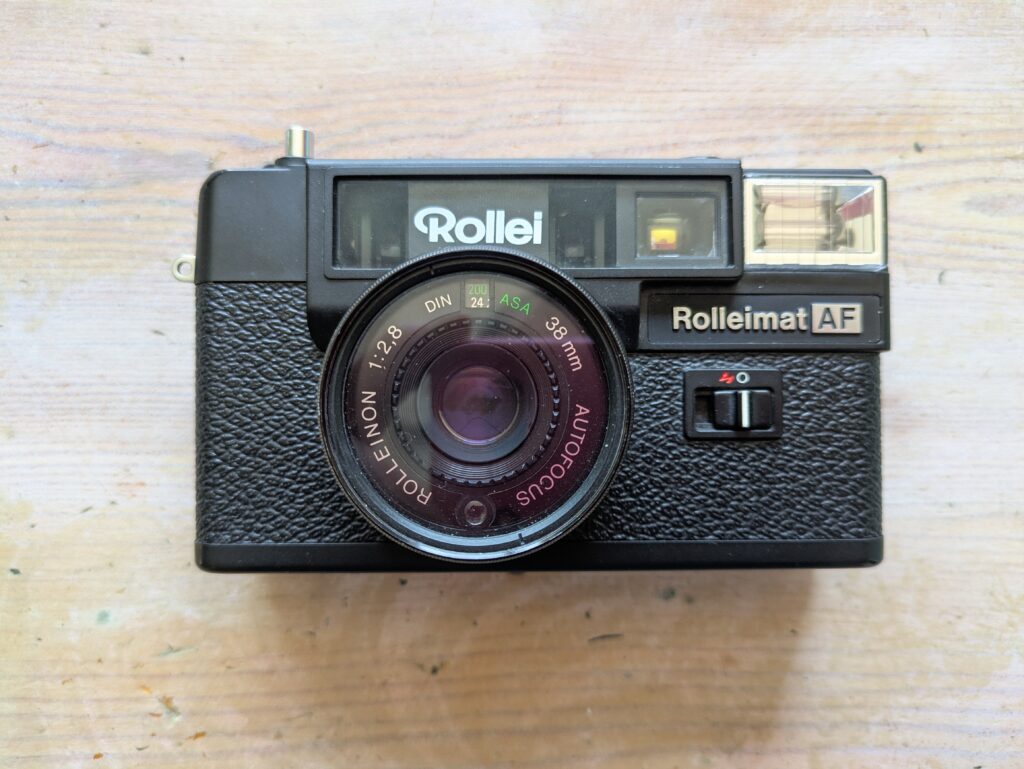
The Rolleimat AF represents a pivotal moment in the transition of the photographic industry from manual precision to electronic automation. Released during a volatile period for the legendary German manufacturer Rollei, this compact 35mm camera was the first under the Rollei brand to feature an autofocus system. Produced between 1980 and 1981, the Rolleimat AF was part of a broader industry shift that saw traditional optical companies grappling with the rapid rise of consumer electronics. With approximately 60,000 units manufactured during its brief production run, the camera remains a significant artifact for historians of photographic technology and a compelling case study in the longevity of early electronic hardware compared to contemporary entry-level film cameras.

Historical Context and the Rise of the Honeywell Visitronic System
To understand the significance of the Rolleimat AF, one must examine the state of the camera market in the late 1970s. For decades, focusing a camera required the user to either estimate distance or use a mechanical rangefinder or SLR prism. In 1977, the Honeywell Corporation revolutionized the industry by debuting the Visitronic "passive" autofocus system. This technology used a dual-window setup, similar to a traditional rangefinder, but replaced the human eye with a comparative electronic sensor.
While Konica was the first to market with the C35 AF in 1977, other manufacturers, including Rollei, soon followed. The Rolleimat AF utilized this Honeywell patent, marking Rollei’s attempt to capture the "point-and-shoot" consumer segment. This was a departure from the company’s heritage of high-end Twin Lens Reflex (TLR) cameras and the miniaturized precision of the Rollei 35. The Rolleimat AF was produced in Japan, likely by Nitto or another OEM partner, reflecting the globalization of camera manufacturing that defined the 1980s.
Technical Specifications and Architecture
The Rolleimat AF is housed in a primarily plastic chassis, a material choice that was becoming standard for the era to reduce both weight and production costs. Despite its consumer-grade build, the camera incorporates several sophisticated technical features that distinguish it from the "toy" cameras often sold in the modern market.
Optical Assembly
The camera is equipped with a 38mm f/2.8 lens, consisting of four glass elements arranged in three groups. This "Tessar-style" configuration provides a balance of sharpness and compact size. The 38mm focal length was the industry standard for compact cameras of the period, offering a slightly wide-angle perspective suitable for street photography and family snapshots.
Exposure and Metering
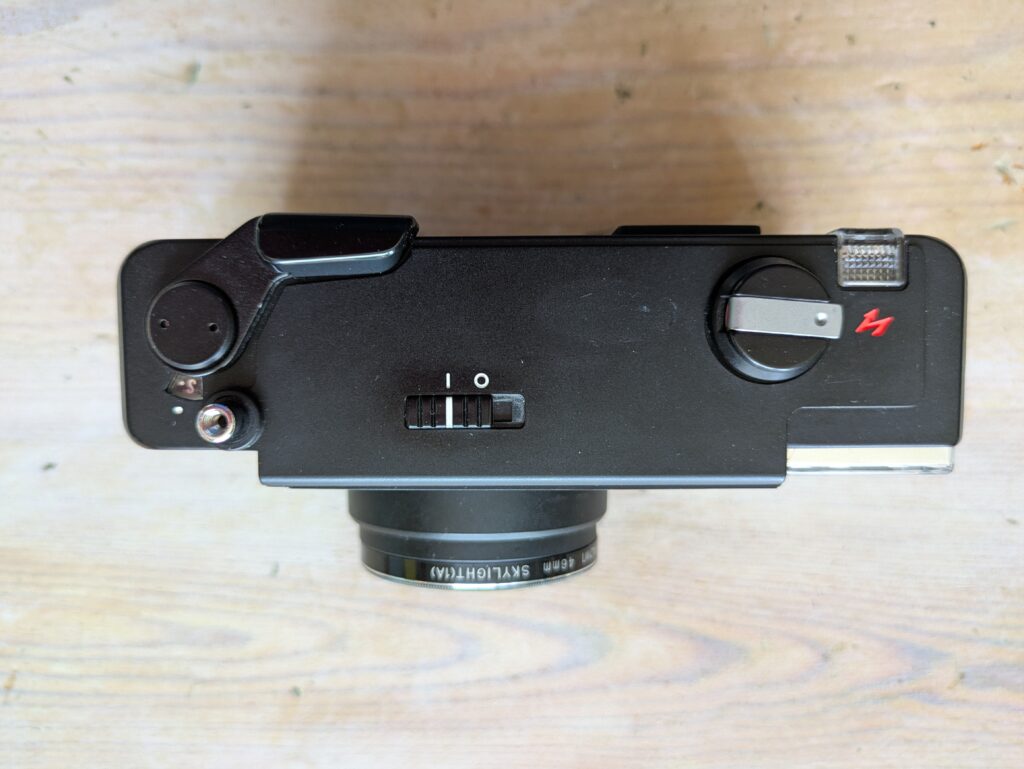
The Rolleimat AF features a fully programmed auto-exposure system. A Cadmium Sulfide (CdS) light meter cell is positioned inside the filter ring of the lens. This placement is a significant design advantage; it allows the camera to automatically compensate for any filters (such as a Skylight or ND filter) attached to the front of the lens without requiring manual adjustment from the user. The shutter speeds range from 1/8 of a second to 1/450 of a second, while the aperture varies from f/2.8 to f/17.
Power and Flash
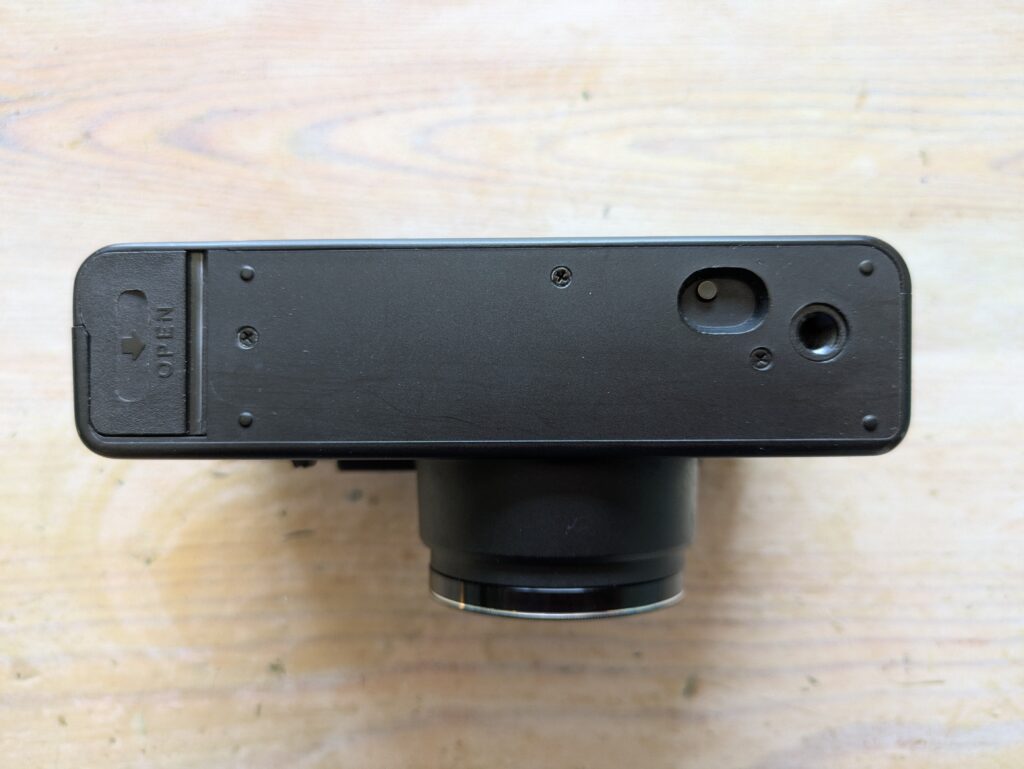
Unlike many modern compacts that rely on specialized lithium batteries, the Rolleimat AF is powered by two standard AA cells. These batteries operate the light meter, the autofocus motor, and the integrated electronic flash. The flash is controlled by a dedicated manual switch on the front of the body, giving the photographer total control over when to use artificial light—a feature often missing in contemporary "auto-flash" cameras.
The Mechanics of Early Autofocus: The Visitronic Process
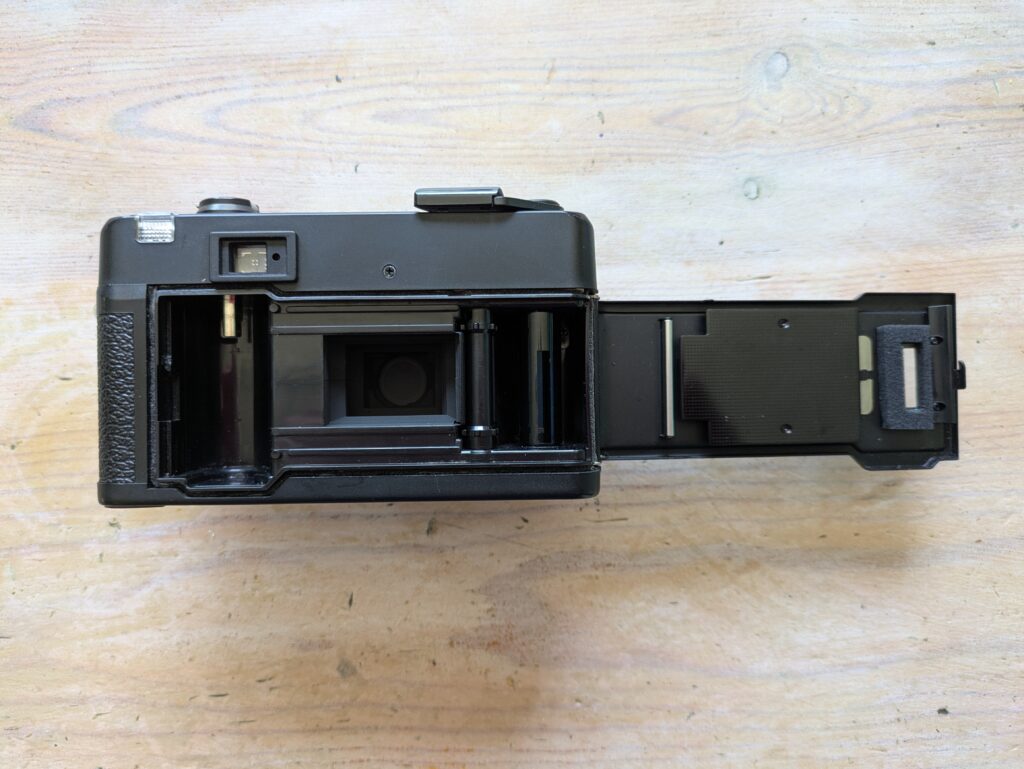
The autofocus mechanism in the Rolleimat AF operates on a principle of contrast detection. The system utilizes two windows on the front of the camera. Behind the left window (from the user’s perspective) sits a fixed mirror at a 45-degree angle. Behind the right window is a pivoting mirror linked to the shutter release button.
As the user depresses the shutter button, the right mirror pivots, scanning the scene. The light from both mirrors is directed onto a dual-sensor chip. The Visitronic system compares the patterns of light and shadow (contrast) from both mirrors. When the patterns match, the system determines that the images are aligned, indicating that focus has been achieved at that specific distance. At this point, a mechanical pin locks the lens into the corresponding focus position.
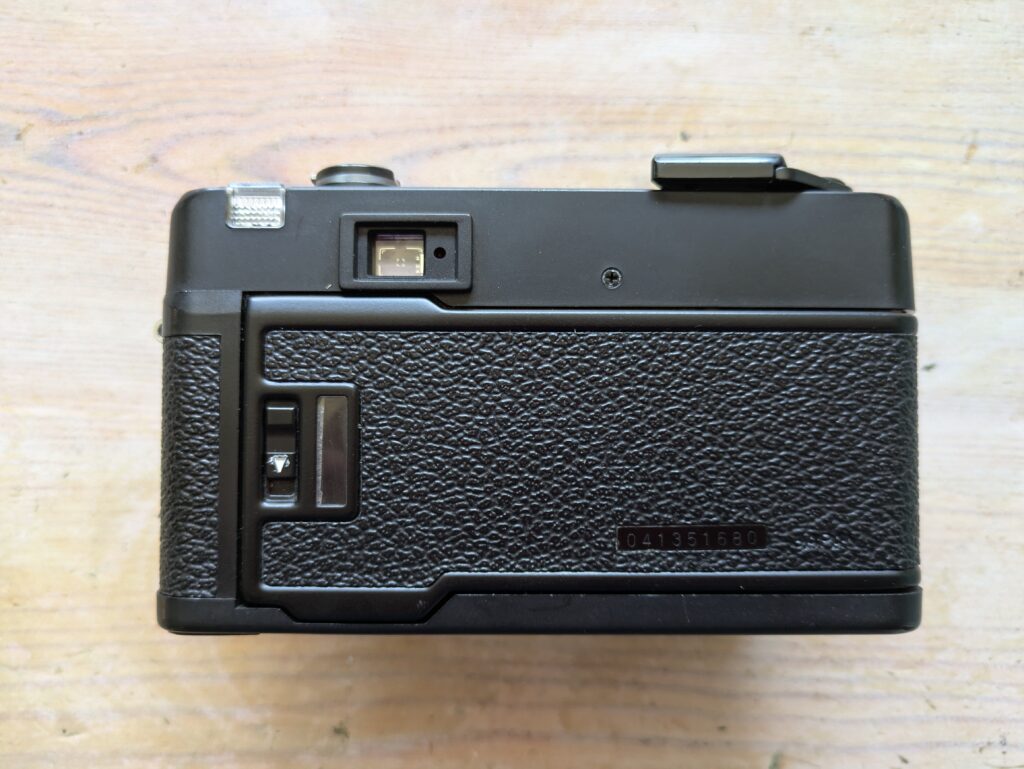
A unique feature of the Rolleimat AF is the focus indicator in the viewfinder. As the shutter button is pressed, a needle moves along a scale of icons representing a single person (close-up), a group (middle distance), and a mountain (infinity). This allows the user to verify that the autofocus has locked onto the intended subject before the shutter fires.
Case Study: Maintenance and the "Right to Repair"
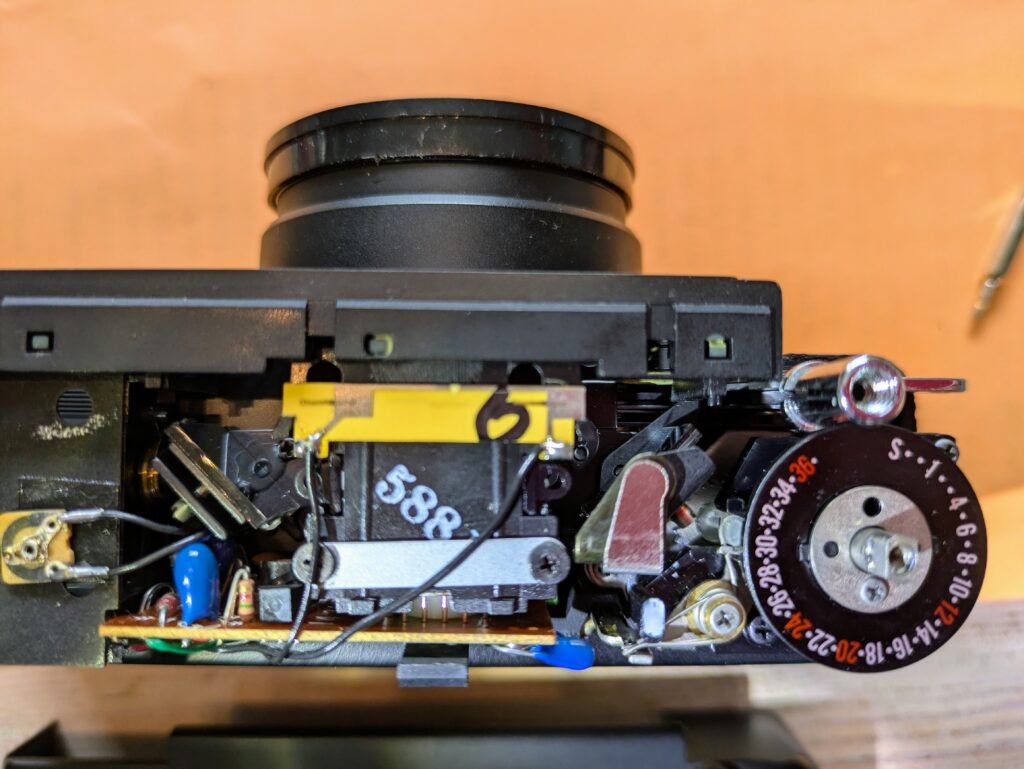
In a recent technical assessment of a near-mint Rolleimat AF acquired for £24.01, researchers found that while the electronic components often remain functional after 40 years, mechanical failures in the early AF systems are common. In this specific instance, the scanning mirror in the Visitronic system had dislodged due to the failure of a tensioning bracket.
The repair process highlighted the accessibility of 1980s hardware compared to modern integrated electronics. Upon removing the top plate, it was discovered that a 2mm ball bearing, which acted as the top pivot for the scanning mirror, had fallen out of place. By replacing the bearing and re-tensioning the copper spring plate, the autofocus functionality was fully restored. This modularity suggests that vintage cameras like the Rolleimat AF offer a level of sustainability and "repairability" that modern, sealed-unit plastic cameras cannot match.
Comparative Performance: Vintage vs. Modern "Reusable" Cameras
The modern film photography market has seen a resurgence of "new" 35mm cameras, often retailing for approximately $100 (£80-£100). However, a technical comparison reveals a significant performance gap between these new releases and vintage units like the Rolleimat AF.
- Lens Quality: Most modern "reusable" cameras feature single-element plastic lenses with a fixed aperture (usually f/10 or f/11) and a fixed shutter speed. In contrast, the Rolleimat AF offers a multi-element glass lens with a fast f/2.8 maximum aperture and variable shutter speeds.
- Focusing Capability: Modern entry-level cameras are "focus-free," relying on a deep depth of field to keep subjects sharp. This limits their ability to produce "bokeh" or blurred backgrounds. The Rolleimat’s active autofocus allows for sharp images at various distances, including close-ups.
- Value Proposition: At a secondary market price of approximately £25, the Rolleimat AF provides a more sophisticated photographic tool for a fraction of the cost of a modern "reusable" camera.
Chronology of the Rolleimat Series
The Rolleimat AF was part of a larger family of cameras intended to diversify Rollei’s portfolio:
- 1980: Launch of the Rolleimat F, a zone-focus camera with a built-in flash.
- 1980: Launch of the Rolleimat AF, introducing the Honeywell Visitronic system.
- 1981: Launch of the Rolleimat AFM, a version featuring a self-timer and minor cosmetic updates.
- Late 1981: Production of the Rolleimat series ceases as Rollei faces severe financial restructuring and a change in ownership.
Broader Implications for the Film Photography Industry
The enduring functionality of the Rolleimat AF underscores a critical trend in the film photography community: the preference for "golden era" electronics. While the 1980s were once dismissed as the era of "plastic fantastic" cameras, these devices are now being rediscovered for their optical excellence and functional ergonomics.

The Rolleimat AF also serves as a reminder of the limitations of early automation. Its ISO range is limited to 25–400, a reflection of the film speeds commonly available in 1980. Users wishing to use modern high-speed films like Portra 800 or Delta 3200 must manually compensate or use neutral density filters, which the camera’s internal CdS meter can fortunately handle.
Furthermore, the success of the Rolleimat AF in contemporary field tests—yielding sharp, well-exposed images on modern emulsions like Kodak Gold 200—proves that the "obsolescence" of 40-year-old technology is often exaggerated. As long as mechanical parts can be serviced and AA batteries remain a global standard, the Rolleimat AF remains a viable and superior alternative to the current crop of low-specification new cameras entering the market.

In conclusion, the Rolleimat AF is more than a vintage collectible; it is a testament to a period of intense innovation. It bridges the gap between the mechanical mastery of the mid-20th century and the digital revolution that would follow. For the modern enthusiast, it offers a high-performance entry point into film photography that challenges the necessity of expensive modern reissues.