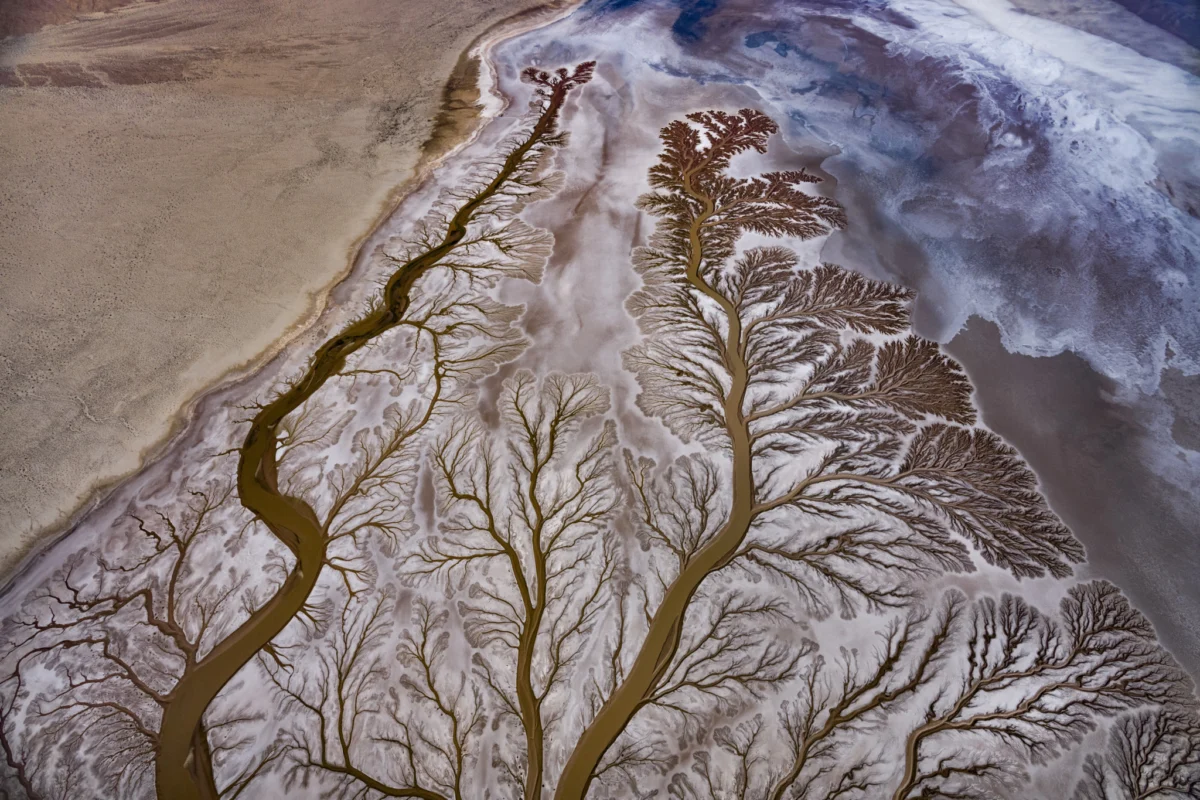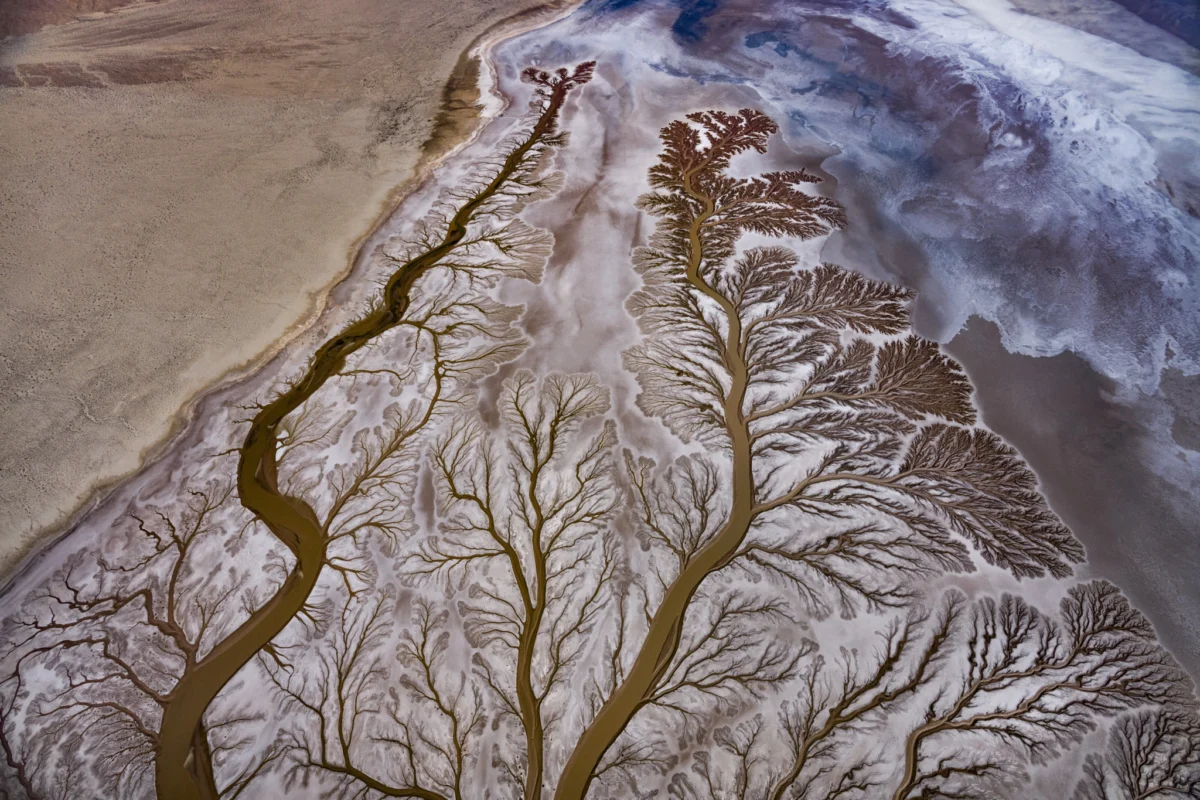
The profound human quest to understand our existence, to grapple with the fundamental questions of "What is a human being?" and "Why are we here?" often finds echoes in the natural world, in landscapes that inspire awe and contemplation. For photographer Paul Nicklen, this introspective journey took a dramatic turn when, from the cockpit of a two-seater plane, he first witnessed the Colorado River Delta. Thousands of miles from his Canadian Arctic upbringing, what he anticipated as mere "little fingers coming out of the river" transformed into a breathtaking panorama of sheer beauty. Spanning five miles, the scale of this landscape was so vast, so intricate, that it initially rendered him speechless, challenging his ability to capture its essence through photography. His mission, then, became a dual one: to create images of profound beauty and distinction, while simultaneously conveying a powerful message of life and renewal in a region that had long suffered from ecological decline.
This profound connection to the natural world began early in Nicklen’s life. At the age of nine, entrusted with operating a snowmobile alone, he embarked on a journey of exploration that would shape his perspective for a lifetime. This early independence allowed him an intimate connection with wild animals and their vast habitats, fostering a deep understanding of the interconnectedness of life. He describes this realization as "illuminating," a moment where he "fell in love" with the intricate weave of the great fabric of life. This deeply ingrained appreciation for ecological systems fueled his present endeavor in the Colorado River Delta.
A Canvas of Life and Loss: The Delta from Above
As Nicklen and his pilot, Rodrigo, adjusted their flight altitudes, ranging from 200 to 1,000 feet, the delta revealed itself as a living, three-dimensional canvas. Flying lower, the experience intensified, feeling akin to traversing a landscape of "poetry and art." The intricate patterns observed from above were reminiscent of the "tree of life," a "quilted mosaic of silt and sediment." These formations, described as "veins, capillaries, and branches woven intricately together," were visualized as the "lungs of the Earth." This artistic interpretation, however, was tinged with a poignant realization: "I was momentarily lost trying to figure out a way to turn these patterns of life into photographic moments that could live on people’s walls." This reflects the artist’s struggle to translate a profound ecological reality into a tangible, shareable experience.
The Shadow of Human Impact: A River Diverted
The "terrible beauty" Nicklen encountered is intrinsically linked to the grim narrative of the Colorado River’s modern history. Since the 1950s, the river’s journey, originating high in the Rocky Mountains and traversing over 1,500 miles through seven U.S. states—passing through alpine forests, red rock canyons, and desert floodplains—has been fundamentally altered. Its historical course ended with it emptying into the Sea of Cortez in northwest Mexico. However, due to extensive water diversions for agriculture and municipal use, the river has frequently failed to reach the sea, leaving its delta arid and ecologically compromised.
This ecological degradation is exacerbated by the region’s severe climate challenges. The area is currently experiencing the worst drought in 1,200 years, a factor that has amplified the impact of human activities. The story of the Colorado River is, therefore, a stark illustration of how human population growth and intensive industrialization have "denuded, drained, and decayed one of the natural world’s great waterways." The once-thriving ecosystem of the delta, vital for migratory birds and numerous species, had become a casualty of over-extraction and a changing climate.
A Glimmer of Hope: The Binational Restoration Effort
Despite the decades of ecological hardship, a significant shift has occurred, offering a beacon of hope. A few years ago, water began flowing into the delta once again, a direct result of an "unprecedented binational restoration effort." This ambitious undertaking involved a diverse coalition of stakeholders, including dedicated conservation groups, the governments of both the United States and Mexico, and local communities in the Mexicali Valley.
The initiative, often referred to as "Pulse Flow" or "Environmental Flows," was designed to mimic natural flood events, delivering a significant volume of water to the delta. This was not merely an aesthetic gesture; it was a scientifically grounded effort to rehydrate the parched delta lands, to restore vital habitats, and to allow the ecosystem to begin healing. The initial success of these environmental flows has provided tangible evidence that ecological recovery is possible, even in the face of severe environmental pressures.
Supporting Data and Chronology of Decline and Revival
The decline of the Colorado River’s delta is a well-documented phenomenon. By the mid-20th century, the construction of numerous dams and reservoirs, such as the Hoover Dam and Glen Canyon Dam, along with extensive irrigation projects, had dramatically reduced the river’s flow downstream. This led to a significant decrease in water reaching the Sea of Cortez, causing saltwater intrusion into freshwater aquifers and the collapse of riparian habitats.
- 1940s-1960s: Major dam construction and expansion of irrigation projects across the U.S. Southwest significantly alter the Colorado River’s flow regime.
- 1970s-2000s: Increasing recognition of the delta’s ecological degradation. Studies highlight the impact of reduced flows on biodiversity and the loss of vital wetland habitats. The river’s reach to the sea becomes increasingly sporadic.
- 2000s: Early discussions and pilot projects for environmental flows begin, involving collaborations between U.S. and Mexican water managers, scientists, and environmental organizations.
- 2012: The Minute 319 agreement between the U.S. and Mexico is signed, authorizing the first significant "pulse flow" of water to the delta for ecological purposes. This event marks a crucial turning point in binational conservation efforts.
- Subsequent Years: Further pulse flows are implemented, demonstrating positive ecological impacts, including the germination of native vegetation and the return of bird species. However, these flows are dependent on water availability and continued binational cooperation.
- Present Day: The ongoing drought continues to challenge water management. However, the success of the environmental flow experiments has solidified support for a more consistent approach to water allocation that includes ecological needs.
Expert Perspectives and Official Responses
The restoration efforts have been lauded by scientists and conservationists worldwide. Dr. Carlos de la Parra, a researcher with the Colegio de la Frontera Norte and a key figure in delta restoration efforts, has consistently emphasized the importance of binational cooperation. He has stated that "the Colorado River Delta is a shared treasure, and its recovery requires shared responsibility."
Official responses from both the U.S. Bureau of Reclamation and Mexico’s National Water Commission (CONAGUA) have acknowledged the success of the collaborative approach. These agencies have been instrumental in allocating the water necessary for the environmental flows, often navigating complex water rights agreements. The U.S. Department of the Interior has highlighted the delta’s restoration as a model for international environmental cooperation, underscoring the potential for such efforts to address transboundary environmental challenges.
Broader Implications: A Paradigm Shift in Water Management
The resurgence of the Colorado River Delta carries significant implications beyond its immediate ecological recovery. It signifies a potential paradigm shift in water management, moving from a purely consumptive model to one that integrates ecological necessities. The success of the pulse flow demonstrates that allocating a portion of river water for environmental purposes is not only feasible but can yield tangible ecological benefits.
The delta’s revival is crucial for biodiversity. It serves as a vital stopover point for migratory birds on the Pacific Flyway and provides habitat for a range of species, including the endangered Yuma clapper rail. The rehydration of the land also helps to stabilize soils, reducing dust storms that can impact air quality in both Mexico and the United States.
Furthermore, the binational collaboration itself serves as a powerful precedent. In a region where water scarcity is a growing concern and a potential source of international tension, the successful joint effort to restore the delta offers a model for cooperative problem-solving. It suggests that shared environmental challenges can foster partnerships that transcend political boundaries, leading to mutually beneficial outcomes.
The story of the Colorado River Delta is a powerful narrative of human impact and the potential for redemption through concerted, collaborative action. Paul Nicklen’s artistic endeavor to capture its "terrible beauty" serves as a poignant reminder of what has been lost and, crucially, what can be regained. The ongoing efforts underscore that with scientific understanding, political will, and community engagement, even heavily impacted ecosystems can begin to heal, offering a vital message of hope for the future of our planet.