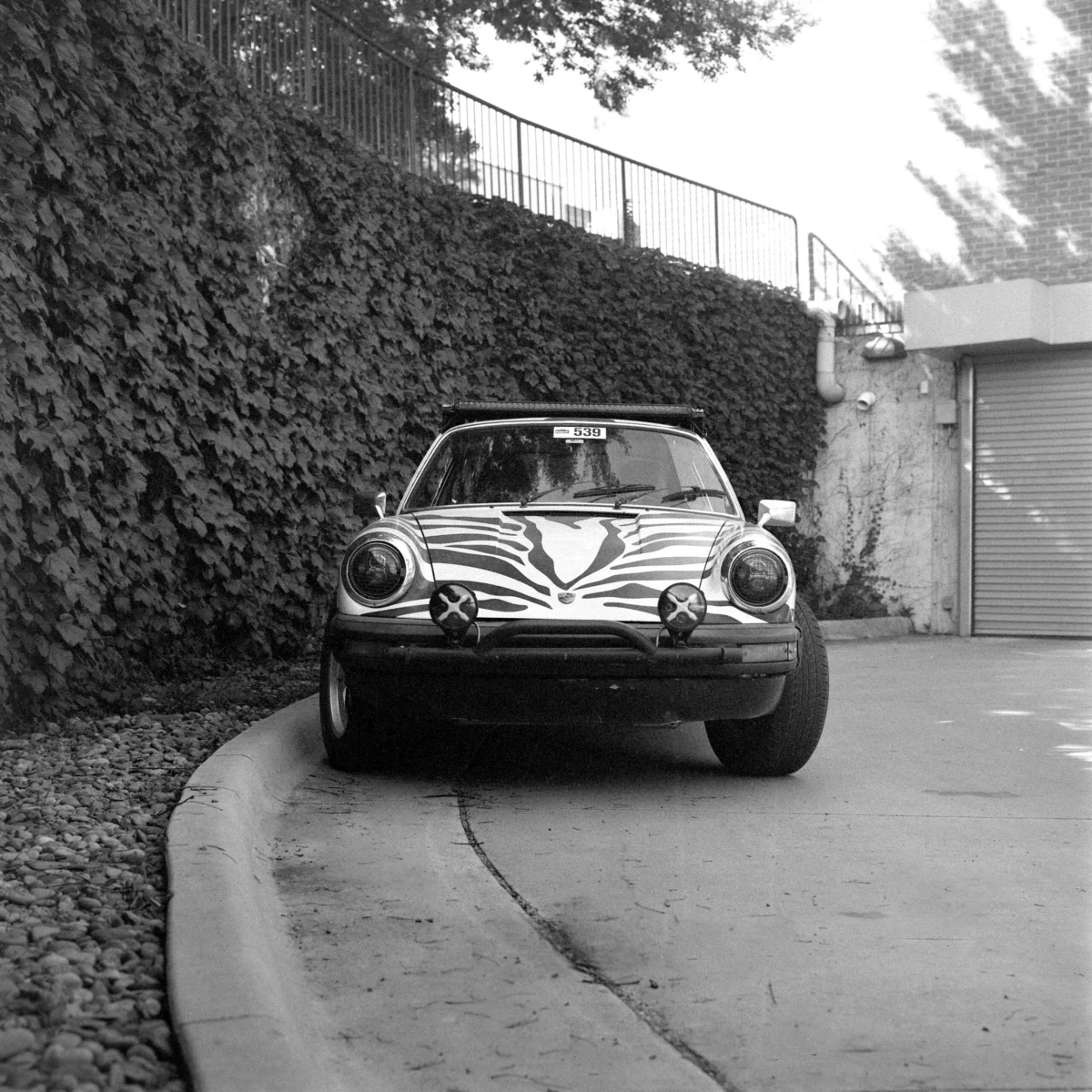
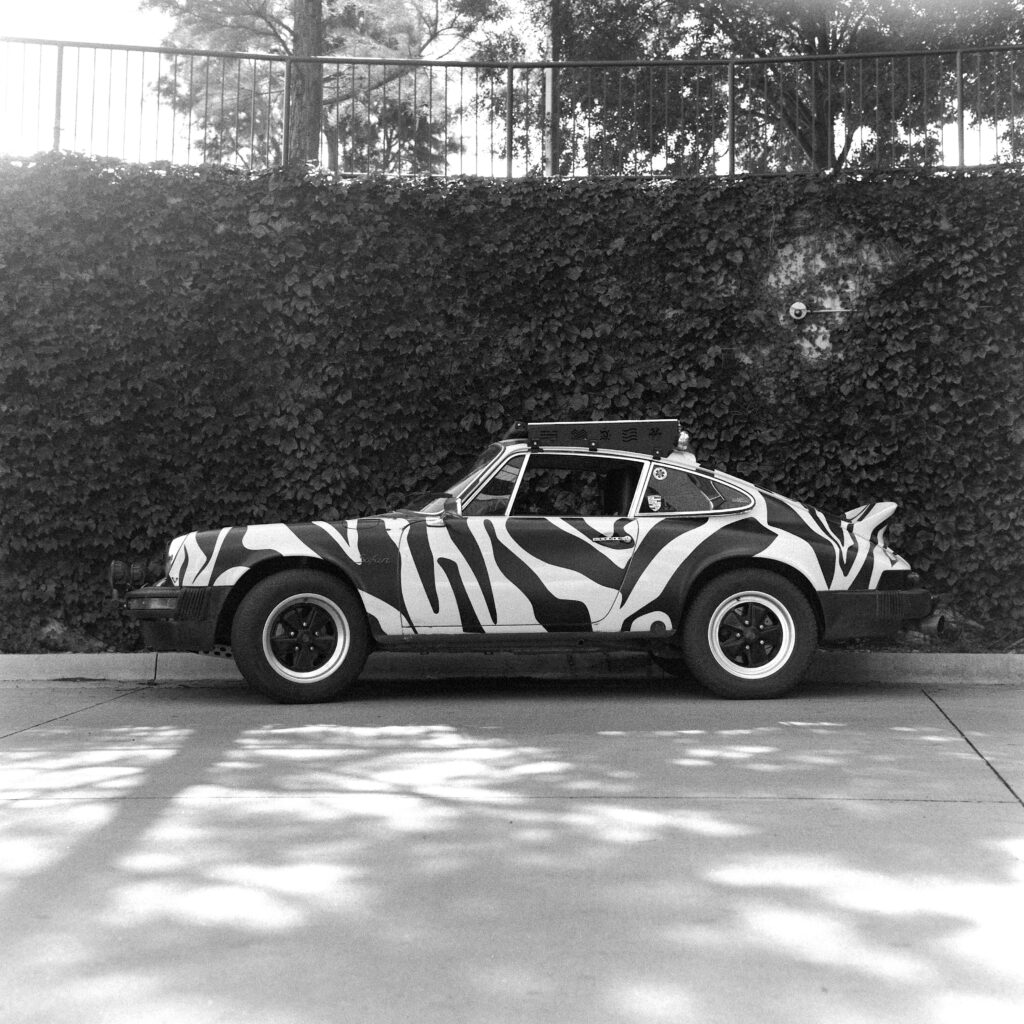
The convergence of high-end mechanical engineering and traditional chemical photography was recently highlighted through a technical documentation of a bespoke 1974 Porsche 911 Safari. This project, captured by photographer Tyler Longfellow, utilized the medium-format Rolleiflex 6003 SRC 1000 and Bergger Pancro 400 film to catalog the intricate details of a vehicle that represents a significant departure from traditional automotive restoration. The exercise serves as a case study in the synergy between two distinct yet philosophically aligned fields: the "restomod" automotive movement and the resurgence of analog imaging.
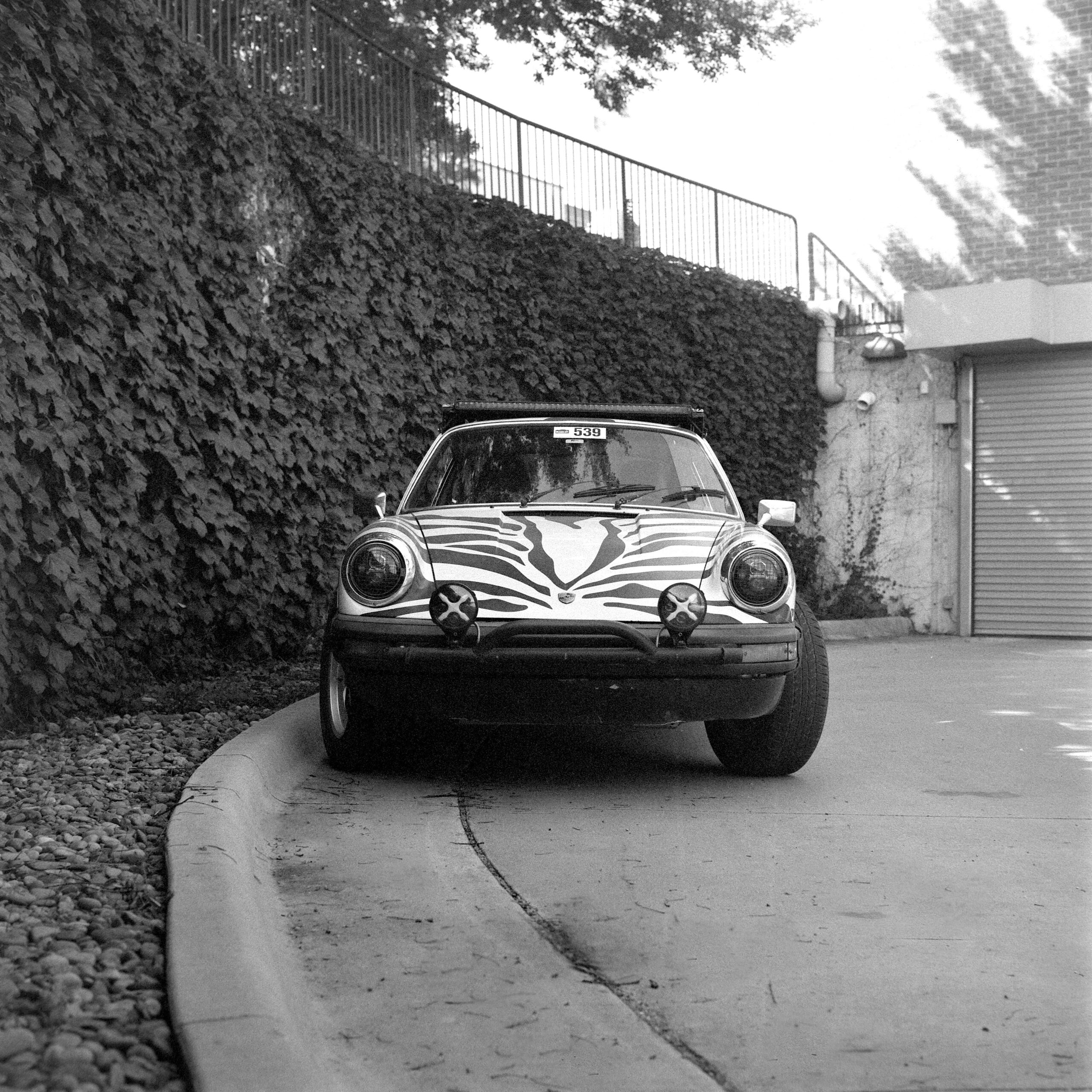
The Subject A 1974 Porsche 911 Safari Transformation
The vehicle at the center of the documentation is a 1974 Porsche 911, a model year that marks the beginning of the "G-Series" production run. While purists often seek to return these vehicles to their original factory specifications, the owner, identified as Austin, opted for a "Safari" build—a modification style inspired by the ruggedized 911s used in the East African Safari Rally during the 1970s.
The history of this specific chassis is one of recovery and radical redesign. According to project records, the vehicle was acquired in a state of extreme disrepair, described as being "literally in a box." Previous attempts at maintenance had been performed using non-standard materials, including household wire nuts, duct tape, and PVC plumbing pipes. This necessitated a complete teardown to the bare metal shell.
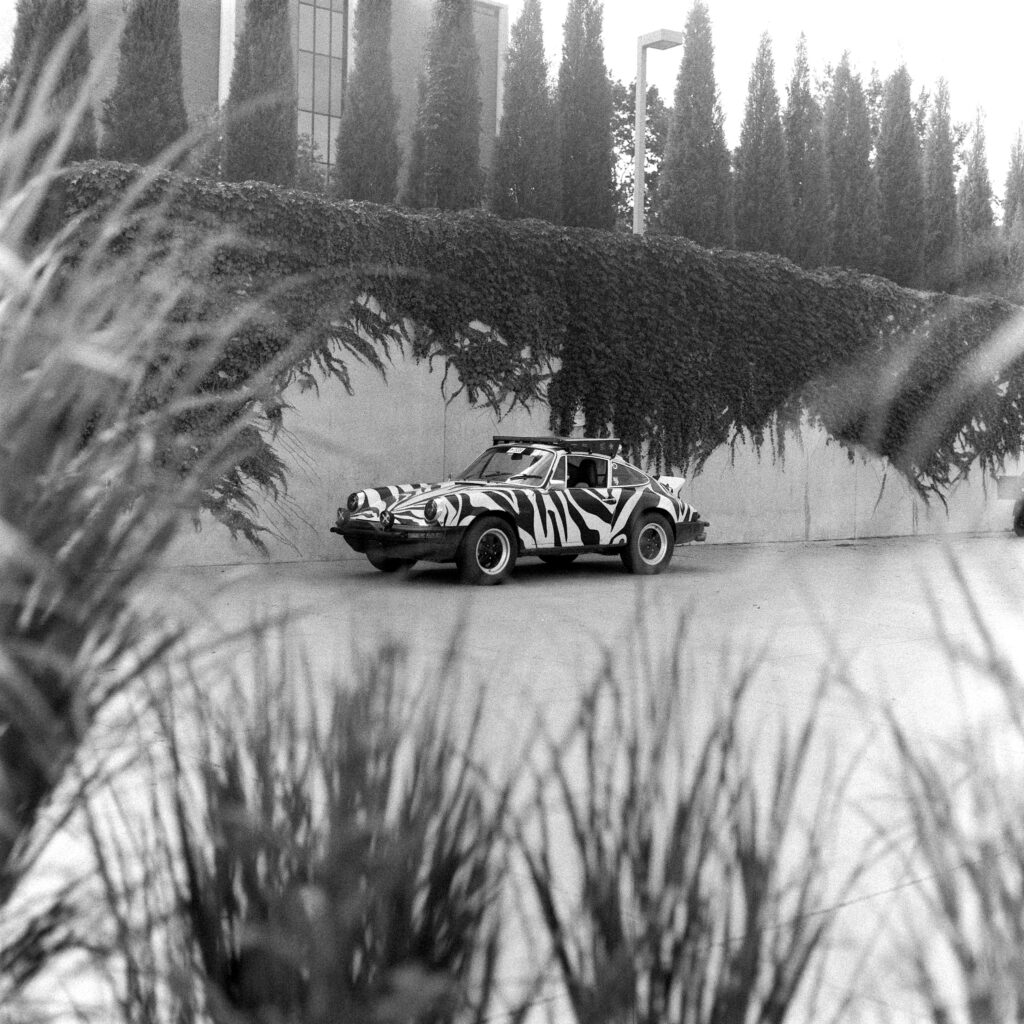
Rather than pursuing a concours-level restoration, the build focused on off-road capability and structural rigidity. The transition from a road-going sports car to an "all-terrain monster" involved significant chassis reinforcement. A key component of this was the installation of an "Urban Assault" kit from Elephant Racing, a firm specializing in performance suspension for vintage Porsches. This kit includes reinforced bushings, raised spindles, and heavy-duty torsion bars designed to withstand the stresses of off-road driving while maintaining the classic 911 handling characteristics.
Engineering Specifications and Modern Integrations
The powertrain of the 1974 model originally featured a 2.7-liter flat-six engine, which was historically prone to thermal issues due to its magnesium crankcase. In a move to improve both reliability and power, Austin swapped the original unit for a 3.0-liter engine from a later Super Carrera (SC) model. The 3.0-liter "SC" engine is widely regarded by enthusiasts as one of Porsche’s most durable powerplants, featuring an aluminum crankcase and a robust Bosch K-Jetronic fuel injection system.
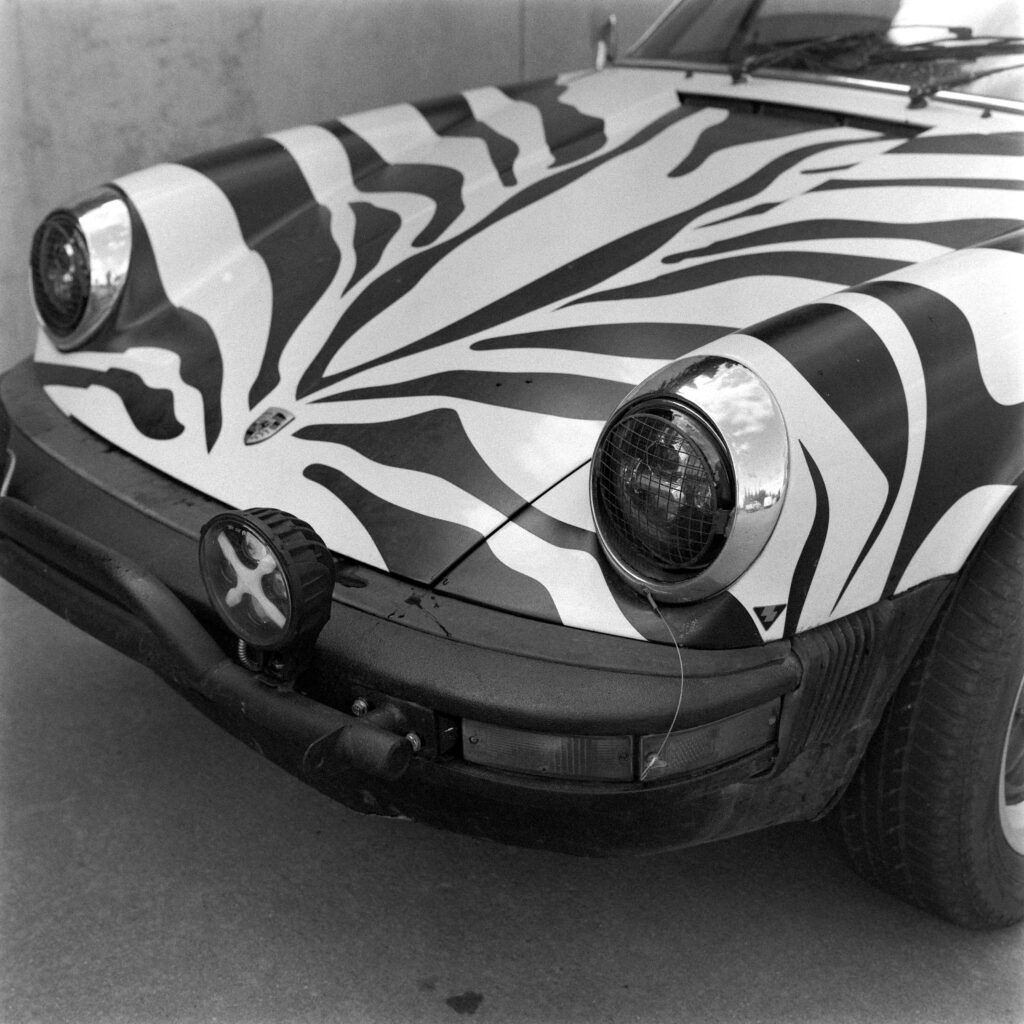
Safety and visibility were also prioritized to address the height disparity between the vintage 911 and modern SUVs. The vehicle’s electrical system was entirely replaced with a modern fuse box and wiring harness. Lighting upgrades include high-intensity LED headlights, daytime running lights, and a bespoke third brake light.
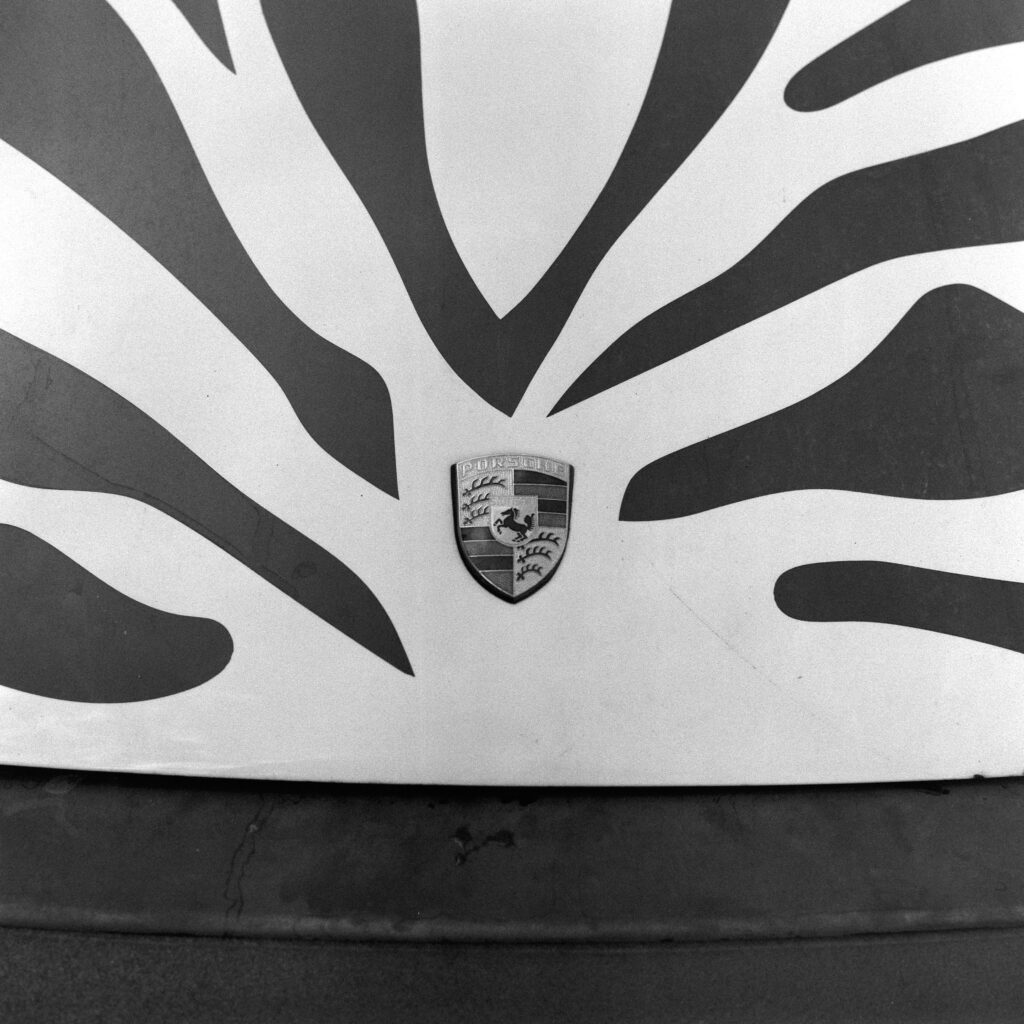
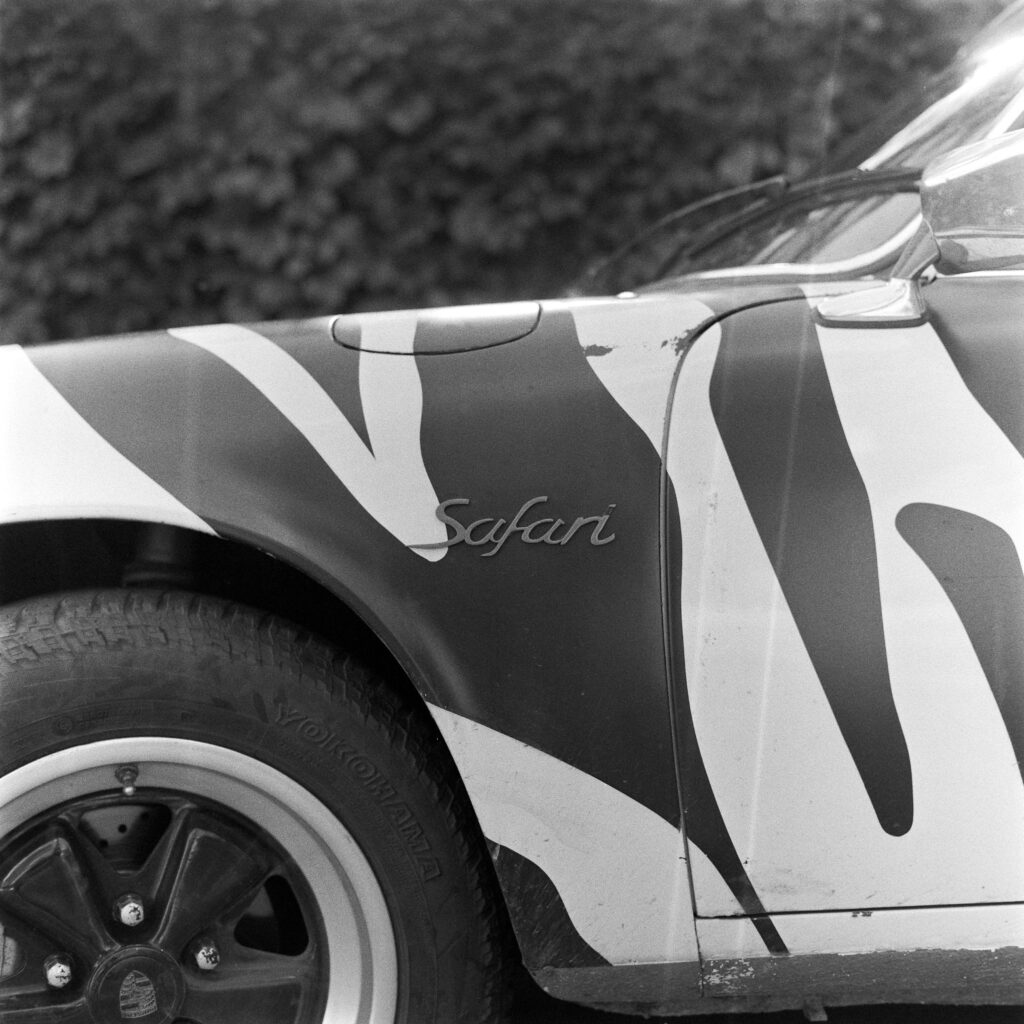
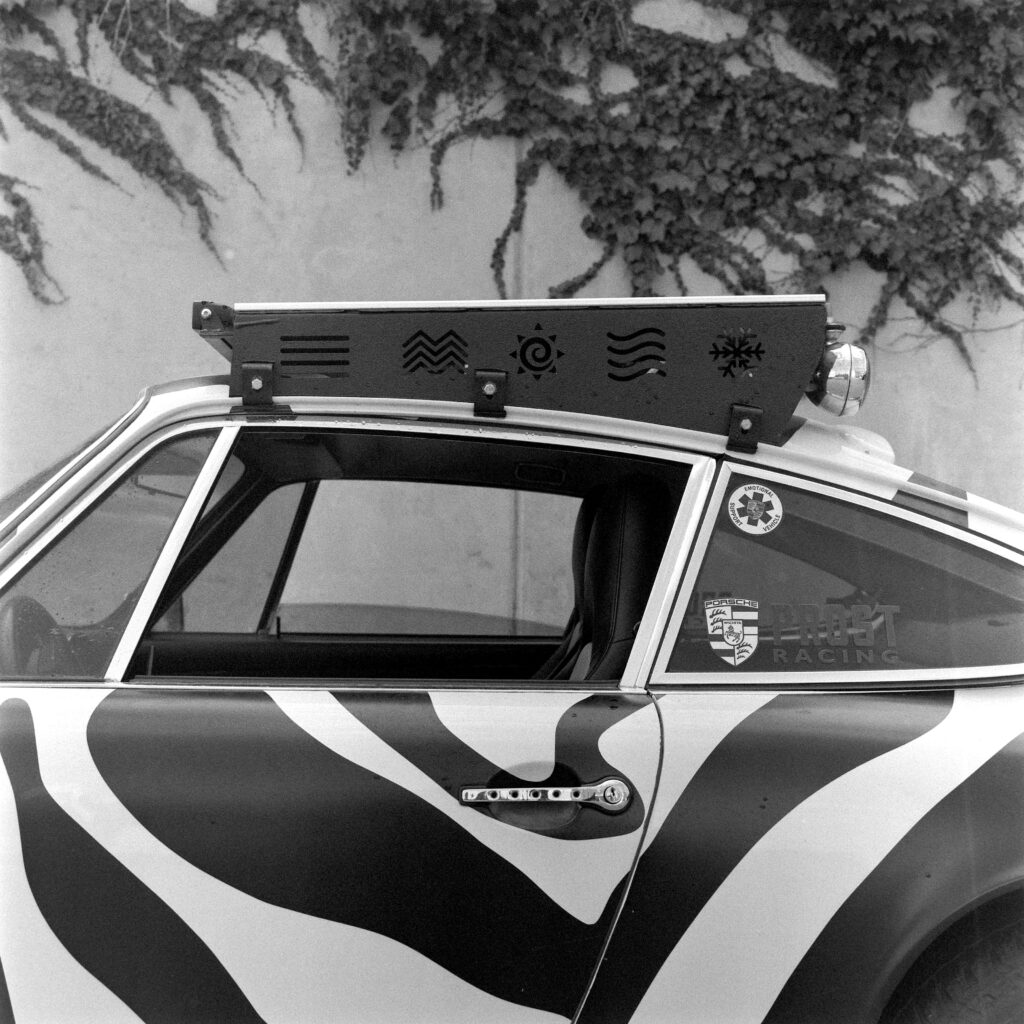
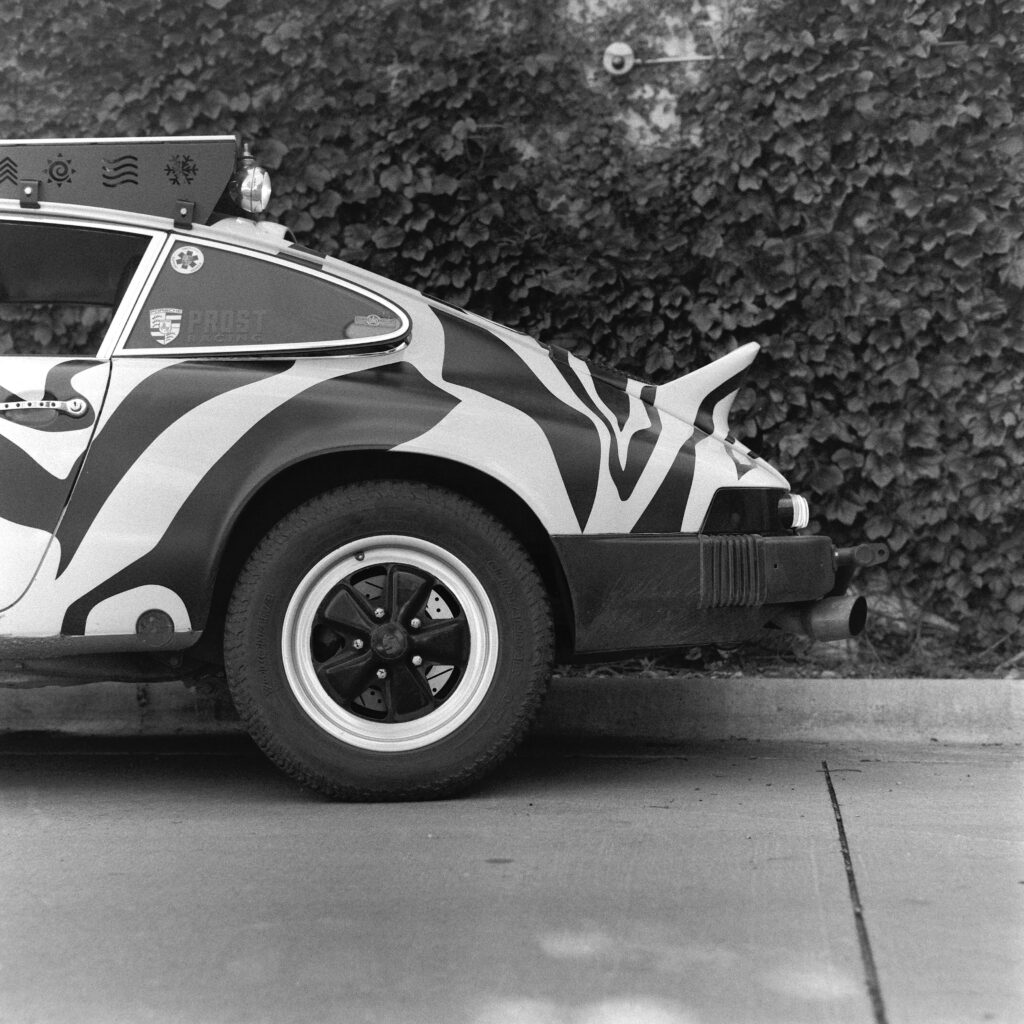
Further custom engineering is evident in the vehicle’s exterior accessories. Austin designed and fabricated a custom roof rack, featuring a unique wiring solution for the auxiliary lights. Utilizing a military-grade aircraft "cannon plug," the entire lighting array can be disconnected with a single twist, ensuring a waterproof seal without the need for cutting wires. The interior was similarly ruggedized; the original carpeting was removed in favor of a Rhino-lined floor for ease of cleaning, while the seating was upgraded to modern Porsche Cayman units to provide better support during off-road excursions. The car’s aesthetic is completed with a zebra-patterned livery and CNC-machined "Safari" badging.
The Photographic Medium Bergger Pancro 400 and the Rodinal Process
To document the gritty textures and high-contrast lines of the Safari build, the project utilized Bergger Pancro 400. Produced by the French company Bergger, Pancro 400 is a modern black-and-white film known for its unique dual-emulsion technology. It combines a silver bromide layer with a silver iodide layer, which allows for an exceptionally wide exposure latitude and a classic grain structure that mimics mid-century cinematic aesthetics.
The film choice was strategic. Shooting in the low-light conditions of early morning shadows required the 400-speed ISO to maintain handheld stability at wider apertures. However, the film’s latitude also allowed for continued use as the sun rose, preventing the need for neutral density filters.
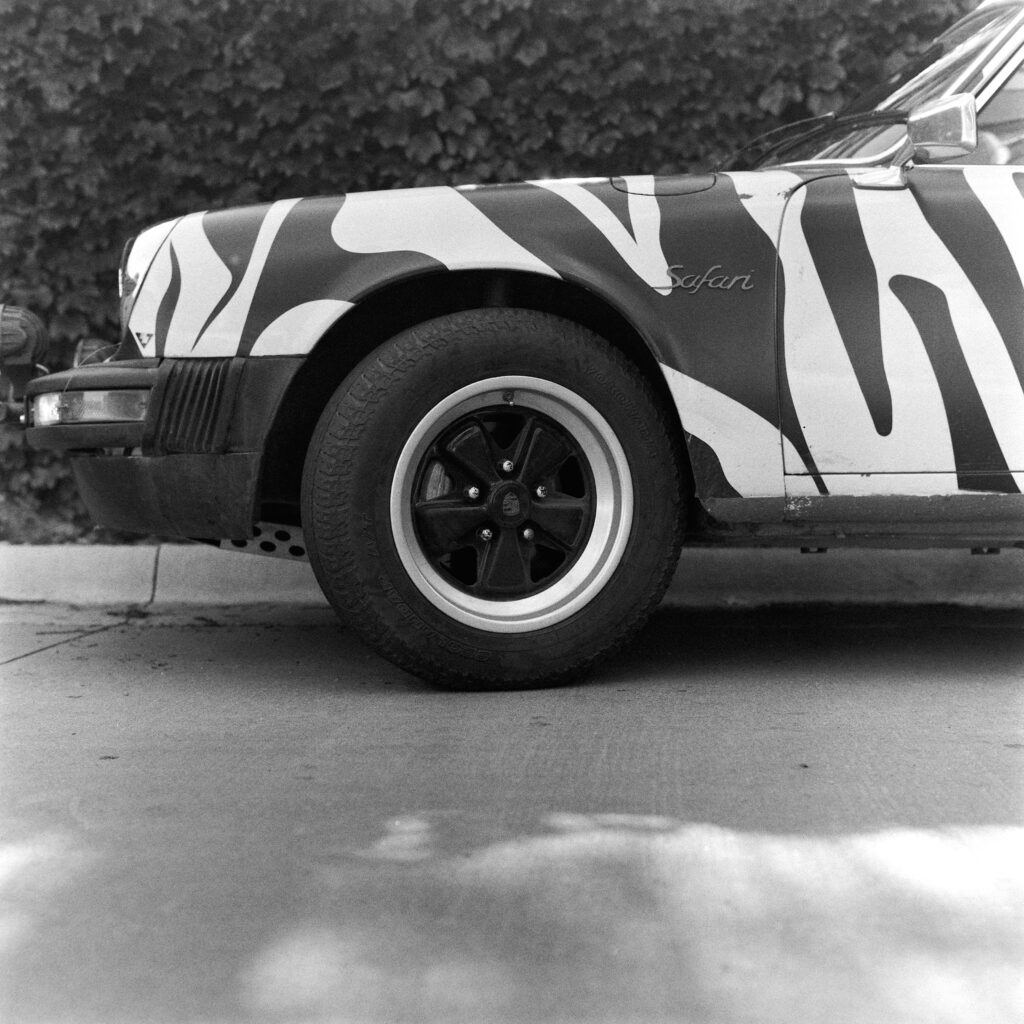
The development process utilized Rodinal, the oldest commercial chemical developer still in production, having been patented by Agfa in 1891. Known for its "acutance-enhancing" properties, Rodinal produces negatives with high edge contrast and distinct, sharp grain. When paired with a dual-emulsion film like Pancro 400, the result is a highly detailed negative capable of large-scale darkroom printing. This combination was specifically chosen to emphasize the mechanical textures of the 911—from the mesh-covered headlights to the embossed "Safari" engine cover.
Hardware Evaluation The Rolleiflex 6003 SRC 1000
The primary tool for the shoot was the Rolleiflex 6003 SRC 1000, a medium-format SLR system released in the late 1980s. Unlike the more famous Rolleiflex Twin Lens Reflex (TLR) cameras, the 6000 series features an electronic leaf shutter system and advanced integrated metering.
Technical advantages of the 6003 system identified during the project include:
- Integrated Light Metering: The built-in center-weighted meter provided accurate readings in the challenging morning light, eliminating the need for external handheld meters and speeding up the photographic workflow.
- Motorized Film Advance: The auto-advance feature allowed for rapid frame transitions, which was critical given the limited one-hour window for the shoot.
- Interchangeable Viewfinders: The photographer utilized both a prism finder for eye-level shots and a waist-level finder to capture lower-angle perspectives of the car’s lifted suspension and undercarriage.
- Zeiss Optics: The camera was equipped with an 80mm Zeiss Planar lens. Known for its high resolution and minimal distortion, the lens allowed for both wide-angle environmental portraits of the car against ivy-covered walls and macro-style detail shots of the CNC-machined badges and analog dashboard gauges.
The Operational Chronology of the Documentation
the documentation occurred during a concentrated one-hour session in the early morning. The timeline of the shoot was dictated by the movement of the sun and the specific lighting requirements of black-and-white film.
- 06:00 – 06:20 (Shadow Phase): Initial shots focused on the interior and engine bay. The 400-speed film allowed for handheld shooting at f/2.8 and f/4, capturing the analog gauges and the flat-six engine detail in soft, diffused light.
- 06:20 – 06:45 (Golden Hour Transition): As the light became more directional, the photographer transitioned to a Tiltall tripod to shoot at smaller apertures (f/8 and f/11). This was necessary to maximize the depth of field for profile shots of the zebra-striped exterior.
- 06:45 – 07:00 (Direct Light): The final frames were used to capture the "Safari" badges and the custom roof rack details. The split-prism focusing screen of the Rolleiflex was utilized for critical focus on the car’s sharpest edges.
Throughout the session, three rolls of 120 film were exposed, totaling 36 frames. The workflow was designed to mirror the "drive it, don’t store it" philosophy of the vehicle itself—prioritizing active use over static observation.
Broader Context The Cultural Resurgence of Mechanical Tactility
The pairing of a vintage Porsche and a film camera is reflective of a broader cultural trend toward "mechanical honesty." In an era dominated by digital automation and driver assistance systems, both the Safari 911 and the Rolleiflex 6003 represent a return to tactile, user-involved experiences.
The "Safari" movement in the Porsche community has gained significant traction over the last decade, popularized by builders like Leh Keen and companies like Singer. It challenges the traditional "garage queen" mentality, where vintage cars are kept in climate-controlled environments to preserve value. Austin’s build, which has been driven through Appalachian trails and to the summit of Pikes Peak, exemplifies the shift toward functional, high-performance vintage machinery.
Similarly, the use of Bergger film and Rodinal developer represents a rejection of the "clinical" perfection of digital sensors. The intentional choice of grain and chemical development provides a texture that digital filters struggle to replicate. The project demonstrates that while modern technology can improve reliability (as seen in the Porsche’s LED lighting and the Rolleiflex’s electronic metering), the core value of these machines lies in their analog roots.
Conclusion and Technical Legacy
The technical documentation of Austin’s 1974 Porsche 911 Safari serves as more than a simple photo gallery; it is a record of a vehicle designed for endurance and a photographic process designed for depth. The choice of Bergger Pancro 400 and the Rolleiflex 6003 SRC 1000 provided the necessary resolution to honor the extensive custom engineering involved in the build.
As the automotive world moves toward electrification and the photographic world toward AI-integration, projects of this nature preserve the legacy of precision engineering. The resulting negatives provide a permanent, physical record of a machine that was rescued from obscurity and transformed into a functional piece of modern-vintage art. The collaboration underscores a shared philosophy: that the highest purpose of a precision-engineered machine—whether it is a camera or a car—is to be put to work in the field.