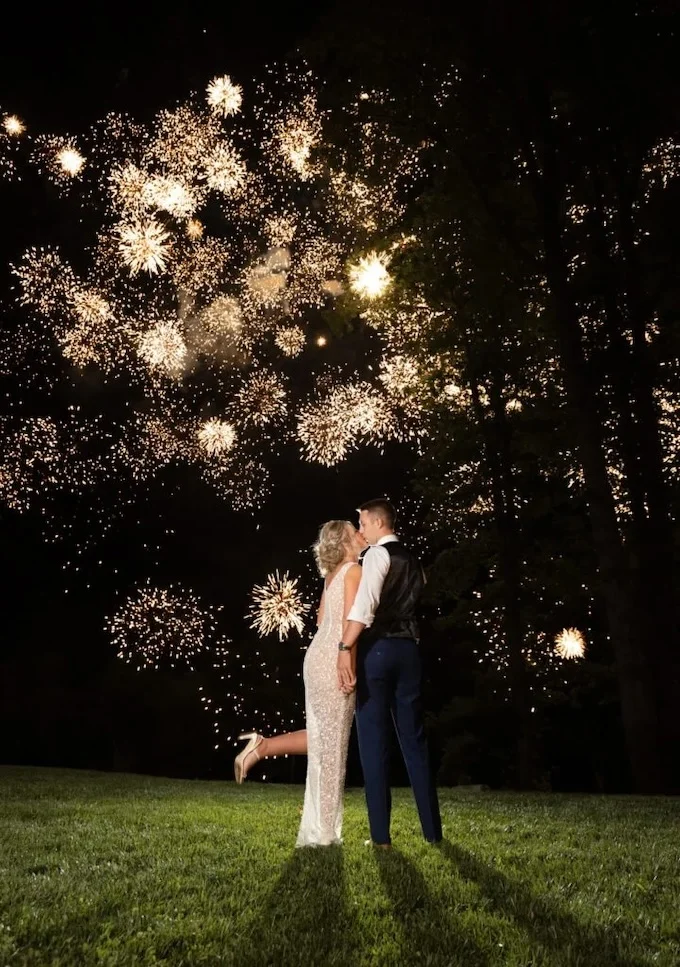
Fireworks are no longer confined to the Fourth of July. Their dazzling displays now illuminate theme parks, sporting events, and, increasingly, the celebratory backdrop of weddings. For photographers, this presents a unique and exciting opportunity to craft truly epic couples portraits against a canvas of explosive light. However, achieving these breathtaking shots requires more than just pointing a camera at the sky. It demands a strategic approach, combining traditional portraiture techniques with specialized firework photography knowledge. This article delves into the essential tips and creative ideas for photographers aiming to capture the flash and excitement of a grand finale during a couples session, ensuring their images are as memorable as the pyrotechnics themselves.

The images featured in this article are graciously provided by photographers from Wedding Maps and are used with their explicit permission.
Mastering the Moment: Strategies for Photographing Fireworks in Couples Portraits
The ephemeral nature of fireworks—often lasting a mere five to eight minutes—underscores the critical need for efficiency and meticulous planning. To successfully capture these fleeting spectacles alongside intimate couples portraits, photographers must be prepared. This involves understanding the technical nuances of low-light photography and the specific challenges posed by dynamic, high-contrast scenes.

Strategic Location Scouting: Finding the Perfect Vantage Point
When a wedding timeline includes a fireworks display, the photographer’s first priority is to ascertain the launch location as early as possible. This information, typically obtainable from the couple, wedding planner, or venue staff, is crucial for scouting potential shooting positions. The "best" angle is subjective and depends on the desired aesthetic. A wide-open area might be ideal for capturing the full expanse of the sky illuminated by fireworks, with the couple as silhouetted figures or engaged in the moment. Conversely, incorporating foreground elements like trees or architectural structures can add depth and frame the scene, creating a more layered and visually compelling composition. Thorough location scouting is not merely a preliminary step; it is foundational to successfully integrating the grandeur of fireworks with the intimacy of a couples portrait.
Maximizing Dynamic Range: The Power of RAW and Exposure Settings
Photographing fireworks presents a formidable lighting challenge: a dark ambient environment contrasted with intensely bright, transient bursts of light. To preserve detail in both the deep shadows and the brilliant highlights, it is imperative to shoot in RAW format. Unlike JPEGs, RAW files capture a far greater amount of image data, offering significantly more latitude for recovery during post-production. This flexibility is paramount when trying to balance the illumination of the subjects with the brilliance of the fireworks.

Understanding RAW vs. JPEG:
The uncompressed nature of RAW files allows photographers to meticulously adjust exposure, recover details in underexposed or overexposed areas, and fine-tune color balance without the significant loss of quality associated with the compression algorithms used in JPEG files. For dynamic scenes like fireworks, this difference is not just beneficial; it is essential for producing professional-grade images.
Optimal Exposure Settings for Fireworks:
A recommended starting point for exposure settings when photographing fireworks with couples involves a balance between capturing the ambient darkness and the explosive light.

- Aperture: An aperture between f/8 and f/11 is often ideal. This range provides a sufficient depth of field to keep both the couple and the fireworks relatively sharp, while also controlling the amount of light entering the lens.
- Shutter Speed: This is perhaps the most critical setting. A shutter speed between 5 to 10 seconds is typically necessary to allow enough light to capture the trails and full bloom of the fireworks. However, shorter exposures (2-5 seconds) can be used to capture individual bursts with more defined shapes. The exact duration will depend on the intensity and duration of the fireworks.
- ISO: Keeping the ISO as low as possible (e.g., ISO 100-400) is crucial to minimize digital noise, especially in the darker areas of the frame. However, in very low light conditions, a slight increase might be unavoidable to achieve a proper exposure.
Monitoring the camera’s histogram is indispensable. The histogram visually represents the distribution of tones in an image. Photographers should aim to avoid the data heavily clustering on the far right of the graph, which indicates blown-out highlights and lost detail in the fireworks. Conversely, an image with too much data clustered on the far left will appear too dark. The goal is a balanced histogram that captures the full dynamic range of the scene.
Harmonizing Colors: Managing White Balance for a Cohesive Look
Setting the correct white balance is vital for achieving a natural or artistically pleasing color rendition. For fireworks, starting with the "Tungsten" white balance preset can often yield good results, as it tends to compensate for the often cooler tones of artificial light, which can complement the vibrant, varied colors of fireworks. If supplemental lighting is used for the couple, such as a flash or continuous light, it’s advisable to gel the light source with a CTO (Color Temperature Orange) filter. In such cases, setting the camera’s white balance to around 3200 Kelvin and adjusting incrementally can help synchronize the color temperature of the artificial light with the camera’s perception, ensuring the couple’s skin tones appear natural against the fireworks’ glow. The ultimate adjustment will be dictated by the photographer’s creative vision.

Selecting the Right Lens: Balancing Perspective and Communication
The choice of lens for firework couples portraits is contingent on the desired field of view and the need for effective communication with the subjects. A wide-angle lens (e.g., 16-35mm) is excellent for encompassing both the couple and the expansive pyrotechnics, creating a sense of awe and grandeur. However, using a very wide lens can make it challenging to maintain intimate communication with the couple, especially if they are at a distance.
Alternatively, a zoom lens can offer versatility. If a tighter shot is desired, a zoom lens can effectively compress the scene, making the fireworks appear larger and more prominent within the frame. For wider shots where communication is paramount, a prime lens in the 24-50mm range might strike a better balance, offering a broad enough perspective without sacrificing the ability to interact with the couple. It is also a common practice to shoot slightly wider than initially intended and then crop in post-production if necessary, preserving the option to refine the composition later.

Embracing Long Exposure: Capturing the Dance of Light
To adequately capture the intricate patterns and light trails of fireworks, a slower shutter speed is essential. Long exposures, typically ranging from 5 to 10 seconds, allow the camera to record the movement of light across the sky, rendering the fireworks as streaks and swirls of color. Shorter exposures, in the 2-5 second range, will capture more distinct bursts but may reveal less of the fireworks’ ephemeral dance.
Crucially, any shoot involving long exposures necessitates the use of a sturdy tripod to eliminate camera shake, which would result in blurry images. To further minimize motion, employing a remote shutter release or the camera’s self-timer function (a two-second delay is usually sufficient) is highly recommended. This prevents any vibration from pressing the shutter button from affecting the final image.

Illuminating the Stars: Strategic Lighting for Your Subjects
While typically photographers focus solely on the fireworks themselves, in couples portraits, the subjects must be thoughtfully illuminated. This requires a deliberate approach to lighting that complements, rather than competes with, the pyrotechnics. The advantage here is that with careful planning, photographers can set up their lighting and fine-tune their camera settings before the fireworks begin.
The fundamental principle is to light the couple as one would for any other portrait session, then adjust to harmonize with the ambient light. A common technique involves positioning the primary light source (flash or continuous light) at approximately a 45-degree angle to the couple and slightly above, mimicking a natural light source. This creates dimension and shape. A backlight can be employed to separate the subjects from the background and add a subtle rim light. Tools like snoots or grids can be invaluable for controlling light spill, ensuring the light precisely illuminates the couple and does not distract from the fireworks. The specific lighting setup will ultimately depend on the photographer’s artistic direction and the desired mood.

The Precision of Manual Focus: Ensuring Sharp Subjects
Autofocus systems can struggle significantly in low-light conditions with fast-moving, bright subjects like fireworks. To guarantee that your couples remain sharp, switching to manual focus is non-negotiable. If the camera offers a live view function, use it to precisely focus on the couple. It can be beneficial to use autofocus briefly before the fireworks commence to establish a sharp point of focus, then immediately switch to manual focus and lock it. This ensures that as the fireworks erupt, the focus remains precisely where it needs to be.
The Art of the Composite: Layering for Perfection
Creating a composite image offers a powerful method for achieving a perfectly exposed couple and a spectacular fireworks display, especially when the timing of the fireworks is unpredictable or the window of opportunity is extremely limited. This technique relies heavily on the use of a tripod.

The process begins with capturing a pristine portrait of the couple, ensuring they are impeccably lit and posed. Following this, multiple exposures of the fireworks are taken. The key here is to maintain the camera in the exact same position throughout the entire sequence.
Post-Production Workflow: Lightroom and Photoshop:

- Lightroom: Begin by editing the image of the couple. Once the desired look is achieved, apply these edits to all the subsequent fireworks exposures using a batch edit function. This ensures color and tonal consistency across all the images that will form the composite.
- Photoshop: Import all the edited images into Photoshop, stacking them into a single document. The crucial step is to set the blend mode of the top layers to "Lighten." This blend mode allows only the brightest pixels (the fireworks) from each layer to show through. Subsequently, meticulous masking is employed to remove any unwanted elements from each layer, seamlessly integrating the fireworks with the couple’s portrait to create a single, cohesive, and dramatic image.
Sparkler Send-offs: A Luminous Wedding Tradition
While not technically grand fireworks displays, sparklers have become a beloved element in many weddings, particularly for grand exits. They offer a more intimate, yet equally magical, photographic opportunity for couples.
Opting for Larger Sparklers: Extending the Moment
When recommending sparklers for wedding photos, advise the couple to choose the larger, 36-inch variants over the smaller 10-inch ones. The extended burn time of larger sparklers provides a more generous window for photographers to pose the couple, capture multiple shots, and ensure everyone is well-positioned within the frame. This extended duration can transform a potentially rushed shot into a more relaxed and creative process.

Adjusting Settings for Sparkler Photography: ISO and Aperture
Sparklers are a relatively weak light source, necessitating careful camera settings. To capture them effectively, photographers will likely need to increase the ISO and utilize a wide aperture. The specific settings will depend on whether the subjects are moving or stationary.
- Moving Subjects: For dynamic shots, such as a sparkler exit where the couple is walking, a higher ISO (e.g., 800-3200 or higher) may be required to freeze the motion while maintaining a sufficiently fast shutter speed (e.g., 1/100s to 1/250s) to prevent motion blur. A wider aperture (e.g., f/1.8 to f/2.8) will maximize the available light.
- Static Subjects: If the couple is posing with sparklers, slower shutter speeds (e.g., 1/15s to 1/60s) can be used, allowing for lower ISO values and potentially narrower apertures for greater depth of field. However, a tripod is essential to prevent camera shake.
Here are some reference settings:

Moving Subjects:
- Aperture: f/1.8 – f/2.8
- Shutter Speed: 1/100s – 1/250s
- ISO: 800 – 3200+ (adjust as needed)
Static Subjects:

- Aperture: f/4 – f/8 (with tripod)
- Shutter Speed: 1/15s – 1/60s
- ISO: 200 – 800 (adjust as needed)
Safety First: The Essential Bucket of Water
Working with open flames, even small ones like sparklers, demands adherence to safety protocols. It is imperative to have a bucket of water readily accessible to safely extinguish used sparklers. This simple precaution prevents potential hazards and ensures a secure environment for everyone involved.
Conclusion: Illuminating Love Stories with Explosive Imagery
Photographing fireworks and sparklers at weddings offers a unique avenue for creating truly unforgettable couples portraits. By mastering the technical aspects of low-light photography, understanding composition, and employing creative post-production techniques, photographers can transform these dynamic events into breathtaking visual narratives. The key lies in meticulous planning, precise execution, and a keen artistic eye, ensuring that the brilliance of the fireworks serves as a spectacular backdrop to the enduring glow of love.

Further Inspiration
The following curated images offer a glimpse into the diverse and stunning possibilities of capturing couples portraits against a backdrop of fireworks and sparklers, providing valuable visual inspiration for photographers looking to elevate their craft.
- [Image 1: Katinov Photography]
- [Image 2: Mauricio Ureña]
- [Image 3: We the Light]
- [Image 4: Aidan Dockery]
- [Image 5: SMJ Photography]
- [Image 6: Andy Sidders Photography]
- [Image 7: Kevin Heslin]
The integration of these dramatic elements into wedding photography not only adds a layer of excitement but also allows for the creation of images that are both deeply personal and visually spectacular, becoming cherished heirlooms that tell the story of a couple’s extraordinary day.