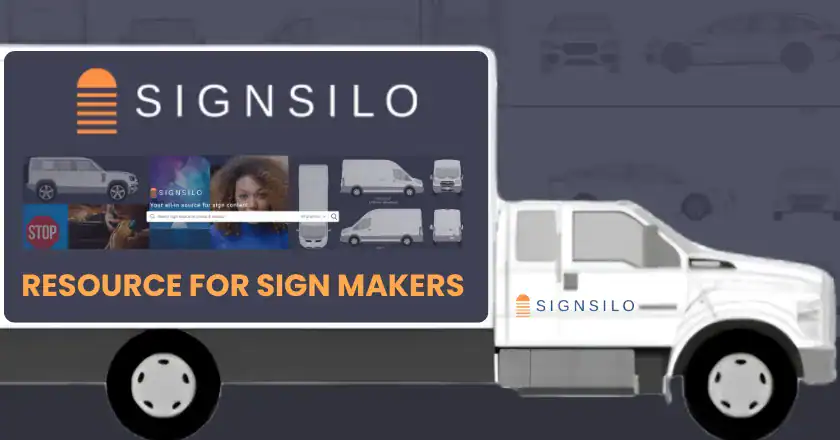
The global vehicle wrap market has transformed from a niche automotive customization hobby into a multi-billion-dollar industry, driven by advancements in digital printing and a surge in mobile advertising. In this high-stakes environment, where a single measurement error can lead to thousands of dollars in wasted material, the demand for precision-engineered design assets has never been higher. Art Station vehicle templates have emerged as a cornerstone of this professional landscape, providing the technical framework necessary for high-fidelity wrap design. By integrating these templates into a broader ecosystem of creative assets, SignSilo has positioned itself as a primary resource for sign shops and graphic designers who require both mathematical accuracy and creative versatility to remain competitive.
The Technical Evolution of Vehicle Wrap Design
The history of vehicle branding has moved through several distinct eras. In the mid-20th century, commercial branding was primarily a matter of hand-painted lettering and pinstriping. The 1980s and 1990s saw the rise of computer-aided design (CAD) and vinyl plotters, allowing for more complex logos and lettering. However, the true revolution occurred with the advent of wide-format digital printing, which enabled full-color, photographic-quality wraps that could cover an entire vehicle.
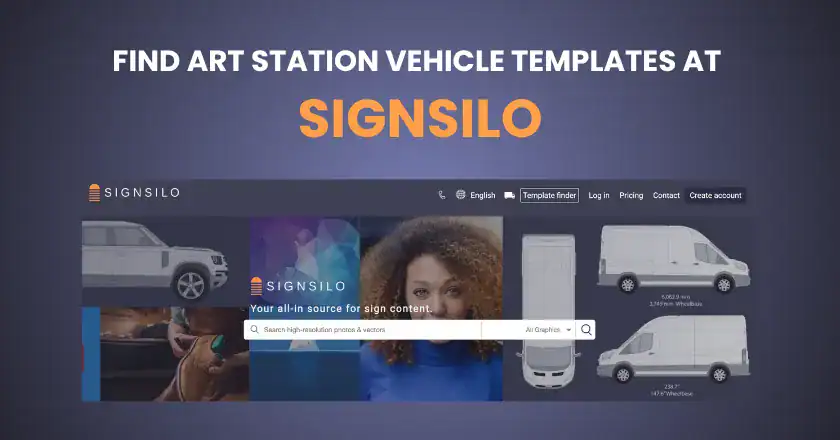
This transition necessitated a new level of design precision. Unlike a flat billboard, a vehicle is a complex three-dimensional object with compound curves, door handles, fuel ports, and intricate body lines. Art Station vehicle templates were developed to address this complexity. By providing 1:20 scale vector outlines of thousands of vehicle makes and models, these templates allow designers to create layouts that account for the physical realities of the car, truck, or van before a single inch of vinyl is printed.
The integration of these templates into SignSilo’s platform marks a significant shift in how design professionals manage their workflow. Rather than sourcing templates from one provider and creative assets—such as photography and fonts—from another, designers are increasingly moving toward centralized hubs that streamline the transition from concept to production.
Precision Engineering and Vector Accuracy
The primary value of Art Station templates lies in their vector-based architecture. Unlike raster images, which lose quality when resized, vector graphics are based on mathematical paths, allowing them to be scaled infinitely without pixelation. For a vehicle wrap designer, this is critical; a design created on a small laptop screen must be capable of being scaled up to cover a 53-foot semi-trailer.
Art Station templates typically offer:
- Multi-View Perspectives: Side, front, rear, and roof views to ensure a cohesive design across the entire vehicle.
- Layered Files: Separate layers for body lines, windows, and lights, which prevent design elements from being placed over non-wrap areas.
- Exact Scaling: Standardized 1:20 or 1:10 scaling that allows for easy conversion to full-size production files.
- Software Compatibility: Native support for industry-standard software including Adobe Illustrator, CorelDRAW, and FlexiSign.
By utilizing these templates, sign shops can significantly reduce "print-and-fit" errors. Industry data suggests that a single measurement mistake on a full commercial wrap can result in a loss of $500 to $1,500 in material costs alone, not including the labor time required for removal and re-installation.
SignSilo and the Shift to Asset Ecosystems
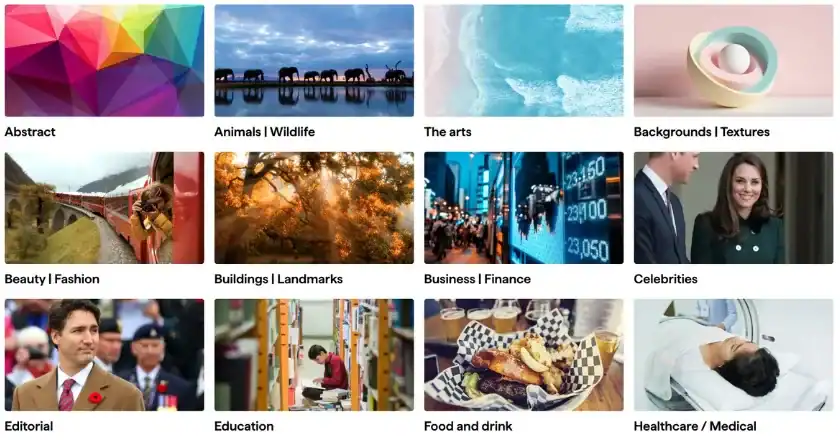
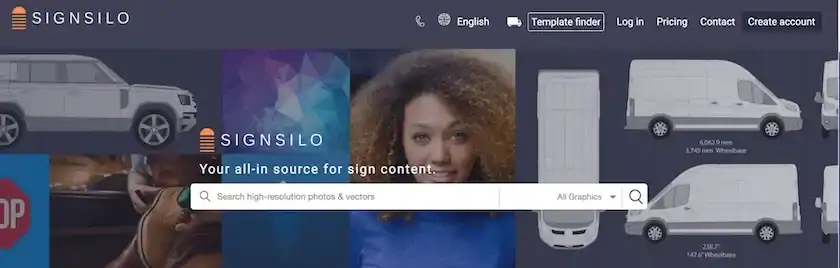
While Art Station provides the "skeleton" of the design, the "skin"—the visual content—requires a different set of resources. This is where SignSilo has disrupted the traditional market. The platform offers a library of over 11 million assets specifically curated for the sign and wrap industry.
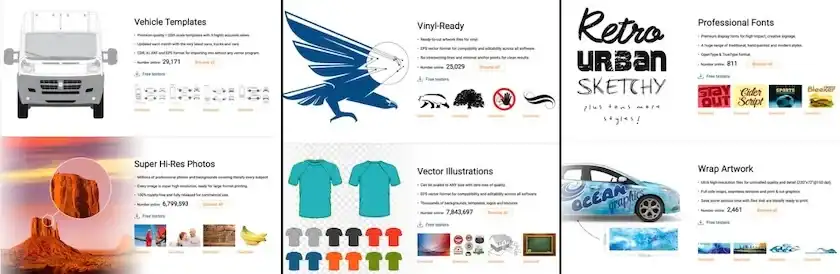
This ecosystem includes:

- High-Resolution Photography: Specialized images with the high DPI necessary for large-format printing.
- Vinyl-Ready Vectors: Illustrations designed with closed paths and minimal nodes, optimized for vinyl cutters and plotters.
- Wrap-Ready Artwork: Large-scale textures, patterns, and "distressed" effects that are currently trending in the automotive world.
- Specialty Fonts: Typography that remains legible at high speeds and from long distances.
- AI-Powered Tools: New generative resources that help designers brainstorm concepts and create unique textures rapidly.
The convergence of these tools allows for a "single-pane-of-glass" workflow. A designer can download a 2024 Ford Transit template, search for a high-resolution urban texture, select a bold industrial font, and finalize a client proof within a few hours.
Economic Implications for Sign Shops and Fleet Owners
The business model of sign making has shifted toward efficiency and recurring revenue. For small to medium-sized sign shops, the cost of individual asset acquisition can be prohibitive. Traditional stock photo sites often charge per-image fees that do not align with the high-volume needs of a wrap shop.
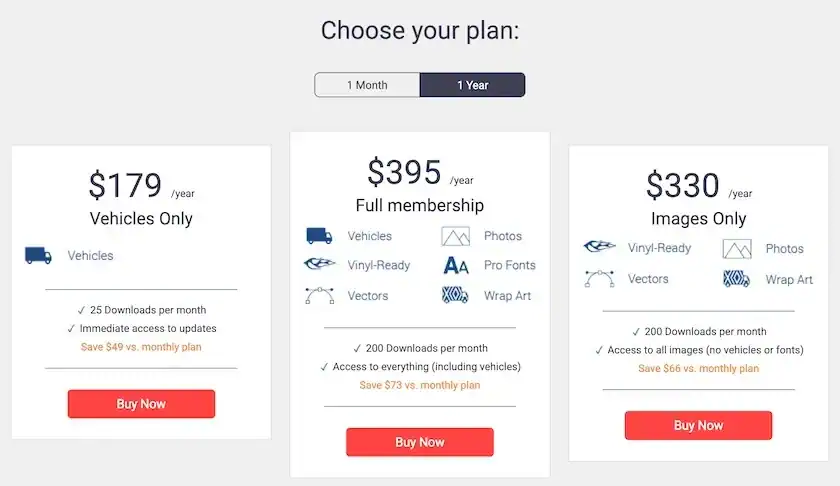
SignSilo’s membership model addresses this by offering monthly or annual subscriptions. This provides shop owners with predictable overhead costs. According to market analysis, shops that utilize subscription-based asset libraries report a 30% faster turnaround time on client proofs. Faster proofing leads to quicker approvals, which in turn increases the "throughput" of the installation bay—the most profitable area of any sign shop.
For fleet owners—companies managing dozens or hundreds of vehicles—the consistency provided by Art Station templates and SignSilo assets is vital. Branding must be identical across different vehicle types, from a compact courier car to a heavy-duty service truck. Using standardized templates ensures that logos and contact information are placed at the same height and relative position, regardless of the vehicle’s size.
The Professional Workflow: From Concept to Installation
The modern vehicle wrap process, as facilitated by these professional tools, follows a rigorous chronology:
- Discovery and Measurement: The designer identifies the exact vehicle year, make, model, and trim level. They then download the corresponding Art Station template from SignSilo.
- Conceptual Design: Using SignSilo’s library, the designer incorporates brand colors, high-res images, and vector graphics. The template’s layers allow them to mask out windows and hardware.
- Client Approval (The Mockup): The design is presented to the client on the template. Because the template is accurate, the client sees exactly how the graphics will interact with the vehicle’s body lines.
- Pre-Press and Tiling: Once approved, the design is scaled to 100%. The designer "tiles" the artwork into vertical panels (usually 50-60 inches wide) that match the width of the vinyl rolls.
- Printing and Lamination: The panels are printed on specialized "air-release" vinyl and covered with a UV-protective laminate.
- Installation: The installer uses the original template as a guide for panel placement, ensuring that the design aligns perfectly across door gaps and seams.
Industry Reactions and Market Trends
Industry experts note that the "wrap" industry is no longer just about aesthetics; it is about data-driven marketing. The Outdoor Advertising Association of America (OAAA) has noted that a single intra-city truck wrap can generate between 30,000 and 70,000 impressions per day. This makes vehicle wraps the most cost-effective form of advertising in terms of Cost Per Thousand (CPM) impressions.
In response to this, SignSilo has expanded its offerings to include "wrap kits"—pre-designed packages that can be adapted to various templates. This trend toward "semi-custom" design allows shops to offer professional-grade branding to small businesses that may not have the budget for a from-scratch custom design.
Furthermore, the rise of electric vehicles (EVs) has introduced new challenges for designers. EVs often have unique aerodynamic body shapes and different cooling vent placements than internal combustion vehicles. Art Station’s rapid release of templates for new EV models, such as the Tesla Cybertruck or the Rivian R1T, has been cited by installers as a key factor in their ability to service the growing green-energy fleet market.
Broader Impact and Future Outlook
The synergy between Art Station vehicle templates and SignSilo’s asset library represents the professionalization of the wrap industry. By moving away from "hand-measured" guesswork and toward a digital-first, template-based approach, the industry has achieved a level of reliability that rivals traditional automotive painting.
Looking forward, the integration of 3D mapping and augmented reality (AR) is expected to be the next frontier. There is significant speculation that SignSilo and similar platforms will eventually offer 3D-rotatable templates that allow designers to wrap a virtual model in real-time. However, for the foreseeable future, the 2D vector template remains the "gold standard" for the printing and production phase.
In conclusion, the combination of Art Station’s technical precision and SignSilo’s vast creative library provides a comprehensive solution for the modern sign professional. As the demand for mobile branding continues to grow, the ability to produce accurate, high-impact designs quickly and cost-effectively will remain the primary differentiator between struggling shops and industry leaders. By investing in these professional-grade tools, designers are not just buying templates; they are securing the accuracy and efficiency required to thrive in a competitive global market.