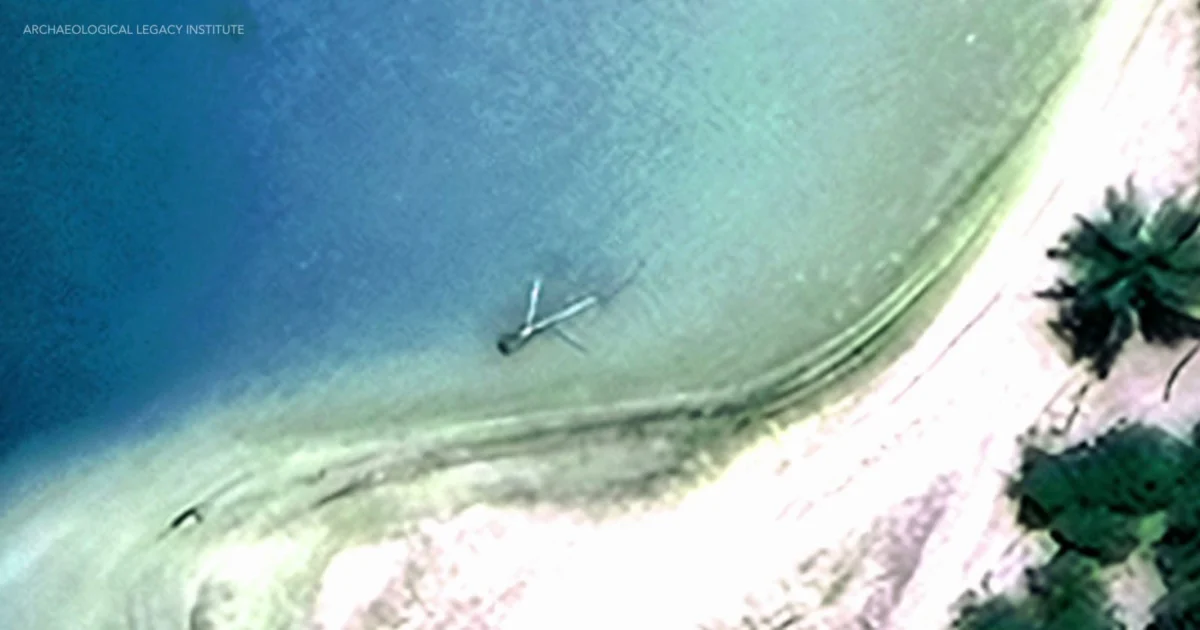
Nearly nine decades after Amelia Earhart vanished during her ambitious attempt to circumnavigate the globe, a new, highly anticipated expedition is underway, spearheaded by Purdue University. The mission aims to investigate a tantalizing satellite image from 2016 depicting an enigmatic object near Nikumaroro, a remote Pacific island believed by some researchers to be the final resting place of the legendary aviator and her navigator, Fred Noonan. This renewed effort represents a significant commitment to resolving one of the 20th century’s most enduring aviation mysteries, drawing on a confluence of historical accounts, archaeological finds, and modern imaging technology.
The disappearance of Amelia Earhart on July 2, 1937, while attempting to complete an unprecedented equatorial circumnavigation, remains an indelible chapter in aviation history and a subject of relentless fascination. Her Lockheed Model 10 Electra, carrying Earhart and navigator Fred Noonan, was last heard from near Howland Island in the central Pacific, sparking an immediate and extensive, yet ultimately fruitless, search. For 89 years, countless theories have emerged, ranging from a crash-landing at sea to capture by the Japanese, but none have provided definitive answers, leaving a void in the narrative of a woman who broke barriers and inspired millions.
The Nikumaroro Hypothesis: A Converging Body of Evidence
Among the numerous theories, the "Nikumaroro Hypothesis" has gained considerable traction over the decades. This theory posits that Earhart and Noonan, unable to locate Howland Island due to navigational challenges and dwindling fuel, managed to make an emergency landing on the reef surrounding Nikumaroro (then known as Gardner Island), an uninhabited atoll in the Phoenix Islands group, part of the Republic of Kiribati. The island, a mere speck in the vast expanse of the Pacific, lies approximately 350 nautical miles southeast of Howland Island – a distance potentially within the Electra’s gliding range if an emergency descent was initiated from a significant altitude.
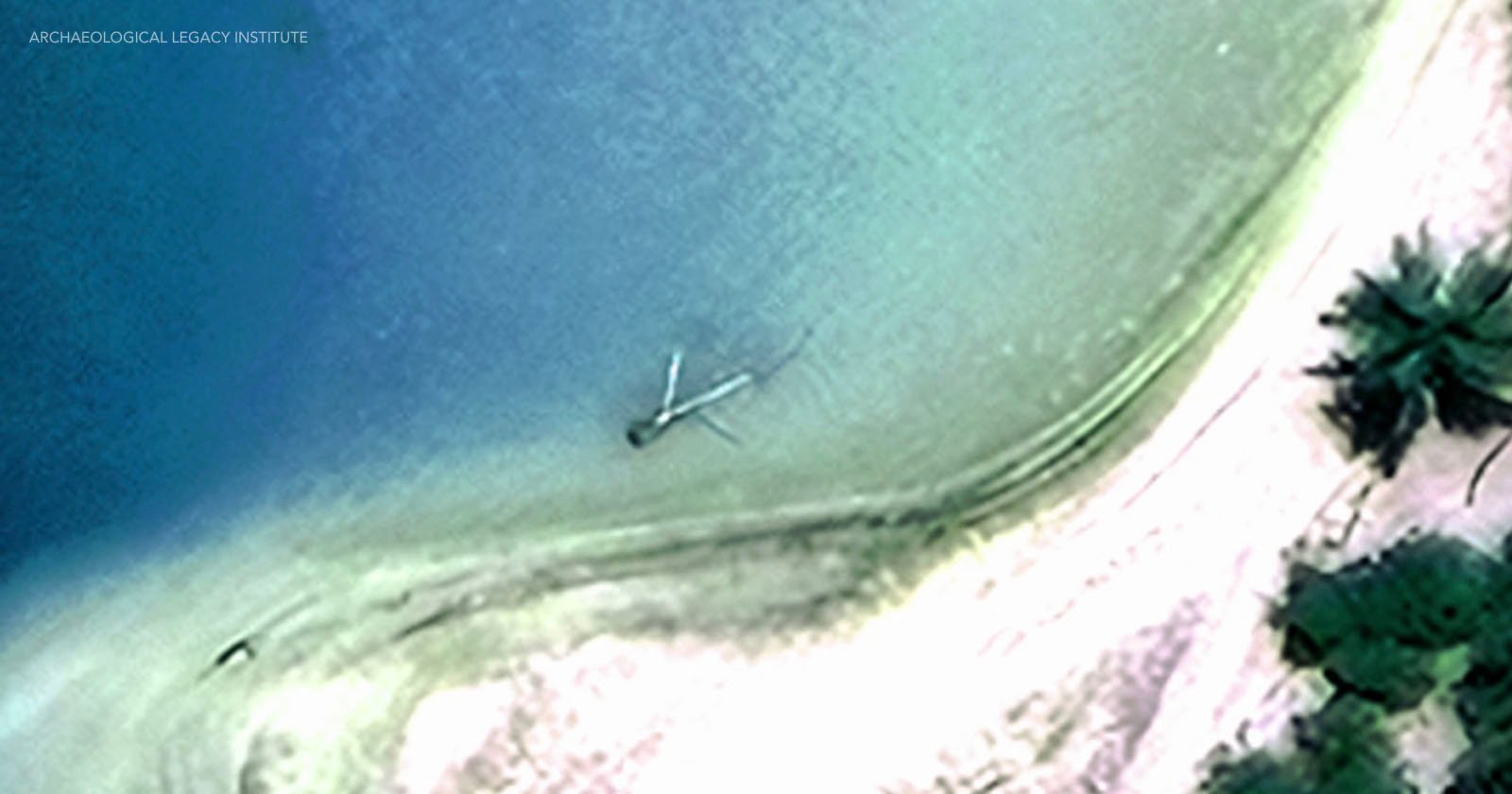
The current expedition, launched by Purdue University, where Earhart served as a career counselor for women in aviation, is primarily driven by a 2016 satellite photograph. This image, captured after a powerful storm had reportedly shifted the lagoon’s sands, revealed a long, distinct object partially submerged in the shallow waters adjacent to Nikumaroro’s shoreline. Dubbed the "Taraia object," its dimensions and form bear a striking resemblance to the fuselage of an aircraft, igniting a fresh wave of hope among those dedicated to the search. While skeptics suggest the object could be a natural formation, such as a fallen coconut tree or a rock outcrop, expedition leader Richard Pettigrew and his team are convinced of its potential significance.
"The evidence supporting the Nikumaroro Hypothesis remains compelling, and the only way to answer this question is to go to Nikumaroro, inspect the Taraia Object firsthand and follow the evidence wherever it leads," stated Pettigrew, underscoring the scientific imperative behind their arduous journey. His words reflect the deep-seated commitment to empirical investigation that characterizes this latest attempt.
Logistics of the Expedition and Technological Arsenal
The journey to Nikumaroro is an undertaking of considerable logistical complexity. Pettigrew and his crew embarked on October 7, facing a six-day voyage by boat across 830 nautical miles of open ocean from Tarawa, the capital of Kiribati. This remote locale underscores the isolation Earhart and Noonan would have faced, making any survival attempt extraordinarily challenging. The team plans to spend multiple days on the island, conducting a thorough investigation of the Taraia object and its surroundings.
Crucially, the expedition is equipped with advanced technology designed to penetrate the mysteries of both the surface and subsurface environments. Sonar technology will be deployed to map the lagoon’s floor, searching for larger debris fields or structural anomalies that might be indicative of a submerged aircraft. Magnetometers, instruments sensitive to metallic objects, will sweep the area to detect any remnants of the Lockheed Electra’s aluminum airframe or engine components hidden beneath sand or coral. This multi-pronged technological approach aims to provide a definitive answer regarding the Taraia object’s identity and to uncover any additional evidence that could confirm or refute the Nikumaroro Hypothesis.
A Tapestry of Historical Clues
The satellite photo is not an isolated piece of evidence but rather the latest thread in a rich tapestry of historical clues that have bolstered the Nikumaroro Hypothesis for decades. One of the most compelling pieces dates back to 1940, just three years after Earhart’s disappearance, when a British colonial officer, Gerald Gallagher, discovered human skull and bones on the island. While the actual skeletal remains have since been lost, a meticulous 2018 forensic analysis of the original bone measurements, led by Dr. Richard Jantz, a forensic anthropologist at the University of Tennessee, strongly suggested they belonged to a woman of Earhart’s stature and ethnic origin. This analysis, employing modern statistical techniques, provided a powerful, albeit circumstantial, link to the lost aviator.
Further archaeological excavations on Nikumaroro have unearthed a collection of artifacts dating to the 1930s, consistent with what a castaway might possess. These include a woman’s shoe, a compact case, a jar of freckle cream, and a medicine vial. While individually these items might seem insignificant, their collective presence on an otherwise uninhabited island, coinciding with the timeframe of Earhart’s disappearance and the discovery of human remains, paints a suggestive picture of prolonged human habitation consistent with the survival theory. These finds suggest that Earhart and Noonan may have survived for a period on the island, subsisting on what little resources it offered, before succumbing to the harsh environment.
Amelia Earhart: A Pioneer’s Enduring Legacy
To fully appreciate the significance of this expedition, one must understand the towering figure of Amelia Earhart herself. Born in Atchison, Kansas, in 1897, Earhart was a quintessential pioneer, challenging societal norms and pushing the boundaries of what was considered possible for women. Her fascination with aviation began in the early 1920s, leading her to become one of the first female pilots to achieve widespread recognition.
Her accomplishments were numerous and groundbreaking:
- 1928: Became the first woman to fly across the Atlantic (as a passenger, but garnered immense fame).
- 1932: Achieved her solo transatlantic flight, becoming the first woman to do so and only the second person after Charles Lindbergh. This feat cemented her status as a global icon.
- 1935: Became the first person to fly solo from Hawaii to California.
- 1937: Embarked on her most ambitious journey: an attempt to be the first woman to circumnavigate the world by plane.
Beyond her aerial feats, Earhart was a vocal advocate for women’s rights and opportunities, particularly in male-dominated fields. Her role at Purdue University, advising women on career paths, exemplifies her commitment to inspiring the next generation. Her disappearance at the height of her fame transformed her from a living legend into an eternal enigma, captivating the public imagination and solidifying her place as a symbol of courage, ambition, and the untamed spirit of exploration.
The Final Flight: A Detailed Chronology of the 1937 Attempt
Earhart’s final flight began on June 1, 1937, from Miami, Florida, with navigator Fred Noonan. Their meticulously planned route would take them eastward around the globe. After successfully completing the first leg, covering approximately 22,000 miles and reaching Lae, New Guinea, by June 29, they prepared for the most challenging segment: a 2,556-mile flight over the vast Pacific Ocean to Howland Island, a tiny, uninhabited landmass that served as a crucial refueling stop.
On July 2, 1937, at 00:00 GMT, Earhart and Noonan departed Lae. Their Lockheed Electra, modified for long-range flight with extra fuel tanks, was pushed to its limits. Navigating solely by celestial observation and dead reckoning, Noonan faced immense challenges. Howland Island, a mere two miles long and half a mile wide, was notoriously difficult to locate, especially with cloudy conditions and a potentially inaccurate compass.

Radio communications with the U.S. Coast Guard cutter Itasca, stationed near Howland Island, became increasingly fragmented and desperate as the Electra approached its estimated position. Earhart’s final transmissions indicated confusion about their location and diminishing fuel. Her last recorded message stated, "We are on the line 157 337. We are running north and south." This message, along with others, has been meticulously analyzed by researchers, some interpreting it as an indication that they were indeed flying over the general vicinity of Nikumaroro, hundreds of miles southeast of Howland. The subsequent silence marked the beginning of one of history’s most enduring mysteries.
Challenges and Past Disappointments
The quest for Amelia Earhart’s plane has been fraught with challenges and punctuated by numerous false hopes. The immense scale of the Pacific Ocean, the corrosive effects of saltwater, and the dynamic nature of underwater environments make definitive identification incredibly difficult. Previous expeditions, while well-intentioned and technologically advanced for their time, have often yielded ambiguous results or led to misinterpretations.
A recent example of this persistent challenge occurred in 2024, when a crew searching for Earhart’s plane became excited by images captured by an underwater drone. The sonar scans seemed to reveal the distinct outline of an airplane on the floor of the Pacific Ocean, sparking widespread media attention and renewed speculation. However, subsequent analysis by experts, including marine geologists and deep-sea imaging specialists, ultimately concluded that the formation was a natural geological feature – a large rock formation whose contours happened to mimic those of an aircraft. This incident serves as a stark reminder of the complexities inherent in such deep-sea archaeological endeavors and the need for rigorous verification of any potential discovery. The present expedition to Nikumaroro, focusing on a more accessible lagoon environment and equipped with refined investigative tools, seeks to avoid similar pitfalls through direct, on-site inspection.
The Significance of a Potential Discovery
Should the Purdue University expedition successfully identify the Taraia object as the wreckage of Earhart’s Lockheed Electra, or uncover other definitive evidence of her and Noonan’s fate on Nikumaroro, the implications would be profound. Such a discovery would not only solve an 89-year-old mystery but would also bring closure to a story that has resonated globally for generations.
For aviation history, it would provide crucial insights into the final moments of a pioneering flight, potentially offering lessons in navigation, survival, and the limits of early long-distance air travel. For women in aviation, it would reaffirm Earhart’s indomitable spirit and her legacy as a trailblazer, finally completing her narrative. Archaeologically, the discovery of the plane or conclusive evidence of her time on the island would represent a monumental achievement, shedding light on human resilience in extreme environments.
Beyond the historical and scientific ramifications, a resolution to the Earhart mystery would speak to the enduring human fascination with the unknown. It would be a testament to the power of persistence, scientific inquiry, and the unwavering dedication of researchers and enthusiasts who refuse to let historical enigmas remain unsolved. The world watches with bated breath as Richard Pettigrew and his team embark on this pivotal journey, hoping to finally write the final chapter in the extraordinary life and mysterious disappearance of Amelia Earhart.