Raja Ampat, an archipelago nestled off the northwest tip of West Papua’s Bird’s Head Peninsula, has long been revered globally as the ultimate sanctuary for marine biodiversity and an unparalleled destination for underwater photography. Often dubbed ‘The Last Paradise’, this remote Indonesian jewel presents an almost surreal panorama of verdant, jungle-clad islands rising dramatically from sapphire waters, concealing beneath their surface an astonishing tapestry of vibrant coral reefs and an aquatic ecosystem teeming with life. Its strategic location within the illustrious Coral Triangle, a region acknowledged as the global epicenter of marine biodiversity, underpins its extraordinary ecological significance.
Geographical and Ecological Significance: Heart of the Coral Triangle
Comprising over 1,500 islands, islets, and cays, Raja Ampat—meaning ‘Four Kings’—is predominantly defined by its four main islands: Waigeo, Batanta, Salawati, and Misool. This vast expanse of ocean and land forms a critical component of the Coral Triangle, a marine area covering 5.7 million square kilometers across six countries, including Indonesia, Malaysia, Papua New Guinea, the Philippines, Solomon Islands, and Timor-Leste. This region is not merely a hotspot; it is a veritable cradle of marine life, boasting more coral species (over 540 distinct types, representing 75% of the world’s known corals) and reef fish species (more than 1,000) than anywhere else on Earth. The sheer abundance extends beyond fish and coral, encompassing over 700 types of mollusks, as well as iconic megafauna like dugongs, saltwater crocodiles, and schooling manta rays. Such statistics firmly establish Raja Ampat as a mecca for scuba diving enthusiasts and underwater photographers alike, offering an almost unbelievable spectacle of wildlife that few places on the planet can rival. The continuous discovery of new species further underscores its unparalleled biological richness, highlighting its role as a living laboratory for marine science and a critical area for global marine conservation efforts.

The exceptional biodiversity of Raja Ampat is attributed to a unique confluence of oceanographic factors, including warm water temperatures, complex current patterns, and a vast network of shallow and deep-water habitats. This creates an ideal environment for coral growth and supports an intricate food web that sustains an astonishing variety of marine organisms. Studies by conservation organizations like Conservation International have consistently highlighted Raja Ampat’s unparalleled species richness, often referring to the area as the "species factory" of the Coral Triangle.
Planning an Expedition: Navigating to Paradise

Reaching this pristine marine wonderland requires dedication, reflecting its remote and untouched character. For international travelers, the journey typically involves multiple flights: an initial long-haul flight to major Indonesian hubs like Jakarta (CGK) or Denpasar (DPS) in Bali, followed by domestic connections to Sorong (Dominique Edward Osok Airport, SOQ) in West Papua. From Sorong, the final leg to the main entry point of Waisai, located on Waigeo Island, usually entails a two-hour ferry ride across the Dampier Strait. The entire journey, particularly for those coming from distant locations such as Australia, can involve several transfers and lengthy layovers, underscoring the remoteness of the destination. Once in Waisai, travelers have several options to explore the archipelago’s scattered dive sites.
Many experienced divers and underwater photographers advocate for liveaboard cruises. These floating hotels offer the distinct advantage of covering vast distances, allowing access to the most remote and biodiverse dive sites that would be impractical for day trips from land-based accommodations. Liveaboards are particularly recommended for those aiming to explore distant gems like Misool, an area renowned for its thriving biodiversity and healthy reef systems, an encouraging sign in an era of global coral decline. Conservation efforts in Misool, notably by the Misool Foundation, have been instrumental in establishing a 1,220 square kilometer no-take zone, demonstrating a successful model for marine protection that has allowed its ecosystems to flourish and fish populations to rebound. This pioneering approach is often cited as a benchmark for marine protected areas worldwide.

Alternatively, travelers can opt for stays in eco-friendly homestays or resorts on various islands. This option provides a more immersive cultural experience and allows for extensive exploration of local house reefs, often teeming with macro life and ideal for capturing serene split shots during sunrise or sunset. Regardless of the chosen accommodation, meticulous planning is essential, including securing necessary permits (the Raja Ampat Marine Park Entry Permit, or PIN, which contributes directly to conservation), arranging local transfers, and ensuring all camera equipment is adequately protected and insured for transit. The peak season for diving typically runs from October to April, offering calmer seas and optimal visibility, although diving is possible year-round.
The Underwater Photographer’s Paradise: Diverse Opportunities

Raja Ampat’s underwater realm offers an extraordinary spectrum of photographic opportunities, catering to both wide-angle and macro photography enthusiasts. The vibrant, healthy reef systems, characterized by colossal coral formations and kaleidoscopic colors, provide a natural backdrop for breathtaking wide-angle shots. Photographers equipped with wide-angle lenses, such as a 16-35mm or a fisheye, can capture expansive reefscapes, dynamic schooling fish (like batfish and barracuda), majestic manta rays gliding through cleaning stations, enigmatic wobbegong sharks resting on the seabed, and graceful sea turtles. The sheer scale and vitality of these reefs, some of which are centuries old, truly define a "coral cosmos." Close focus wide-angle (CFWA) opportunities are also abundant, allowing photographers to highlight specific coral formations or marine life within a broader context.
Beyond the grandeur of wide-angle scenes, Raja Ampat is equally celebrated for its staggering macro life. The intricate cracks and crevices of its reef systems conceal a miniature world of bizarre and beautiful critters. For macro photographers, a versatile lens like a 60mm is highly advisable for mid-range subjects, but a more powerful 90mm or 120mm macro lens is essential for capturing the minutiae of the smallest inhabitants. Additionally, an external diopter (wet lens) can prove invaluable for extreme close-ups of truly tiny subjects, maximizing magnification. Divers frequently encounter pygmy pipehorses, flamboyant mantis shrimps, expertly camouflaged leaf scorpionfish, various species of frogfish, a diverse array of cephalopods (octopuses, cuttlefish), ghost pipefish, and countless blennies and nudibranchs. The guidance of an experienced local dive guide is paramount to locating these masters of disguise, making pre-dive briefings about potential sightings crucial for selecting the appropriate camera setup.

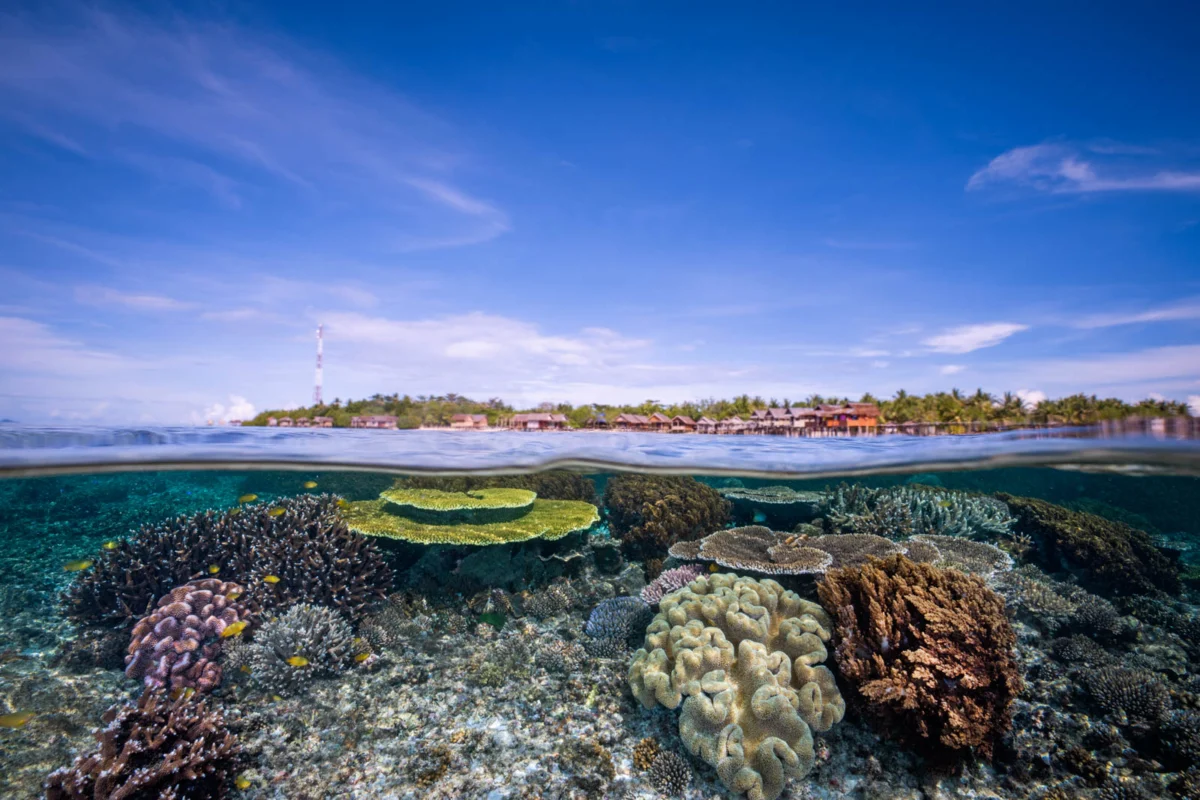
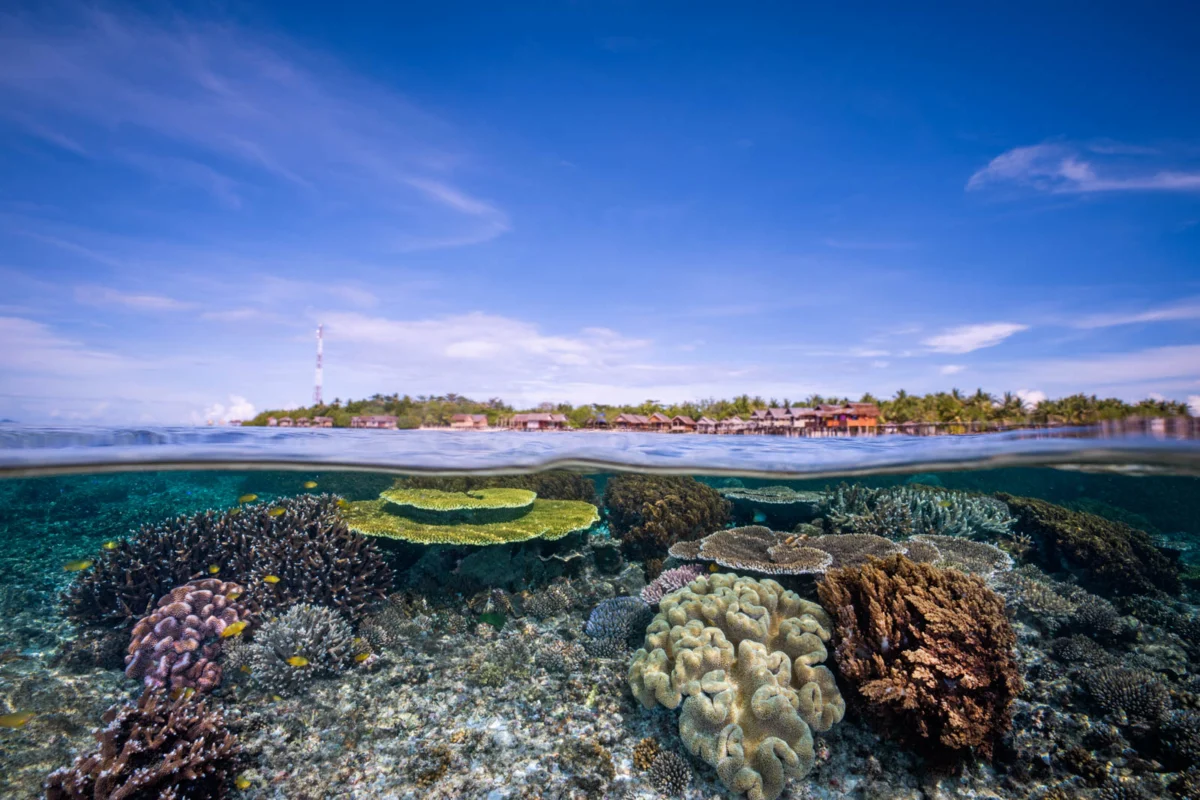
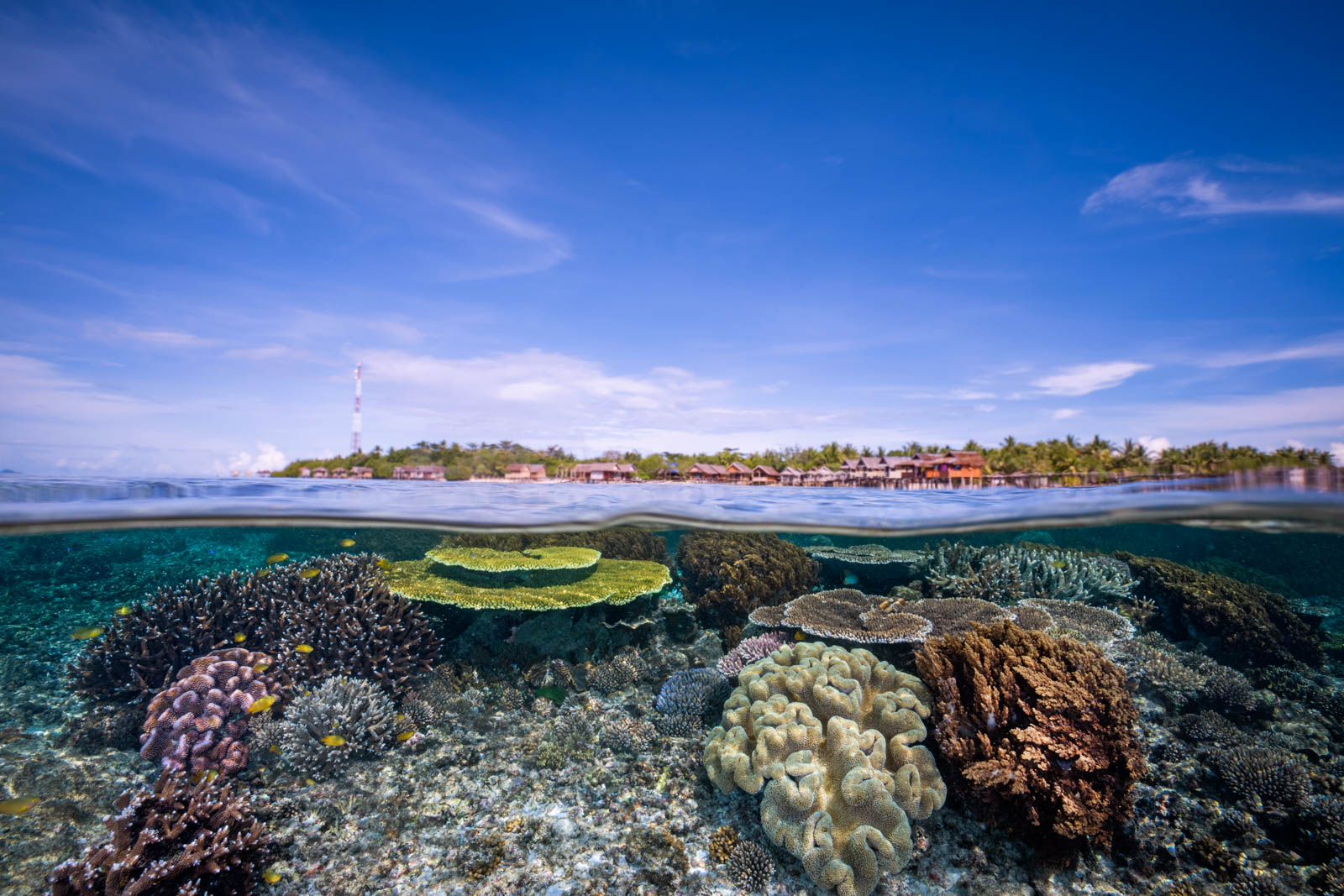
Furthermore, the unique topography of Raja Ampat, with its dramatic limestone karsts and crystal-clear shallow lagoons, offers exceptional opportunities for over-under or split shots. These captivating images, showcasing both the world above and below the waterline, are particularly rewarding during the golden hours of sunrise and sunset. Selecting a homestay with an accessible, thriving house reef provides photographers with constant access to ideal conditions for perfecting these challenging yet highly artistic shots, often requiring a large dome port and precise camera settings.
Navigating the Challenges: Currents and Visibility

While Raja Ampat’s rich biodiversity is its greatest asset, it also presents specific challenges for underwater photographers. The nutrient-rich waters, primarily driven by intricate systems of strong currents flowing through straits like the Dampier Strait, are the very reason for the abundance of marine life. These currents bring a constant supply of food, supporting the vibrant ecosystem. However, these same currents can significantly impact underwater visibility, sometimes leading to less-than-ideal conditions for wide-angle photography due to suspended particles. Mastering strobe positioning becomes critical in such scenarios to cut through backscatter and illuminate subjects effectively, ensuring clarity and color accuracy.
More significantly, these powerful currents can pose considerable physical demands, especially when maneuvering heavy underwater camera equipment. Divers must be prepared for drift dives where holding onto a reef hook or finding shelter behind a stable rock formation might be the primary focus, rather than actively composing shots. Experienced divers universally advise caution: if a dive guide describes currents as "strong" or "washing machine," it might be prudent to leave the camera behind for that particular dive. Safety always takes precedence, and struggling with gear in powerful currents can not only be dangerous but also risk damage to fragile coral if a diver loses control. Securing camera equipment to one’s BCD with robust lanyards is an absolute must, and comprehensive camera insurance is highly recommended, given the high value and delicate nature of specialized underwater photography gear.

Iconic Dive Sites: A Photographer’s Guide
Raja Ampat boasts an extensive network of world-class dive sites, each offering unique photographic prospects. Here are some of the most celebrated:

-
Melissa’s Garden: A jewel for coral enthusiasts, Melissa’s Garden is a wide-angle dream. Divers descend into an expansive underwater landscape dominated by colossal plate corals stretching into the blue, creating an almost architectural elegance. This site is ideal for capturing the grandeur of the reef, often graced by schooling batfish, barracuda, snappers, and a diverse array of smaller reef fish like lionfish and angelfish. The topography itself is a natural masterpiece, setting a perfect stage for vibrant reefscapes, particularly effective with wide-angle lenses to convey the vastness and density of the coral formations.
-
Batu Rufus: This hidden gem near the Fam Islands is an ecological marvel. The dive begins on the outer slopes, descending to approximately 25 meters, where encounters with pelagic species like manta rays and sharks are possible. However, the true photographic magic unfolds within the site’s crystal-clear emerald lagoon. Accessible via a dramatic swim-through lined with towering coral fans and majestic rock structures, the lagoon opens into a natural pool of wonders. In depths of only 5 meters, photographers can spend hours capturing the flourishing shallow reef systems with stunning natural light, making it an ideal location for freediving photography and exquisite split shots against the backdrop of the towering limestone karsts. The extraordinary visibility in the lagoon provides unparalleled conditions for capturing vibrant colors and intricate details without the need for artificial lighting.

-
Cape Kri: Perhaps the most renowned dive site in the region, Cape Kri holds a celebrated world record for the highest number of fish species identified on a single dive (374 species), a record set by ichthyologist Dr. Gerald Allen. This site is a testament to Raja Ampat’s unparalleled biodiversity. Due to its popularity and richness, divers often have the opportunity to visit multiple times, allowing for specialized photographic approaches: a wide-angle setup for capturing schooling barracuda, turtles, and various pelagic species along its sloping reefs (which plunge to 40 meters), and a dedicated macro setup for its saturated micro-ecosystems. Cape Kri is particularly famous for its pygmy seahorses, expertly camouflaged within the Muricella gorgonian fans, alongside an abundance of octopuses, flatworms, nudibranchs, and various shrimps. The strong intersecting currents here contribute to the rich nutrient flow, attracting a vast array of marine life.
-
Manta Ridge: Located between Mansuar and Airborei Islands, Manta Ridge is a prime location for encounters with majestic manta rays. This site functions as a cleaning station where mantas gather to have parasites removed by smaller fish. While encounters can sometimes be unpredictable, optimal conditions and tidal flows can lead to exhilarating dives where multiple mantas gracefully circle, providing incredible wide-angle photographic opportunities. It is crucial, however, to remain aware of the strong currents frequently present at this site, including potential down currents, and to maintain a respectful distance from these magnificent creatures and their cleaning stations, adhering to responsible diving guidelines to minimize disturbance.

-
Citrus Ridge: Situated near the Gam Islands, Citrus Ridge is another perennial favorite among underwater photographers, celebrated for its extraordinarily colorful reef systems, particularly its soft corals and sponges. This T-shaped dive site is a visual feast, making it a compelling location for wide-angle reef photography. Yet, it truly shines as a biodiversity hotspot for macro life. The vibrant coral backdrop enhances macro subjects, allowing photographers to meticulously search for rare bottom dwellers hidden amongst the rocks and crevices. From elusive wobbegongs and various shark species to turtles and schooling pelagics, Citrus Ridge offers a comprehensive display of Raja Ampat’s marine richness. Its macro offerings are virtually limitless, promising endless discoveries for the patient photographer, often revealing critters camouflaged perfectly against the kaleidoscope of colors.
Conclusion: Preserving Paradise for Future Lenses

Raja Ampat undeniably stands as a pinnacle for devoted ocean lovers and underwater photographers. The archipelago’s unparalleled diversity of marine life, from its majestic reef systems to its intricate macro critters, offers boundless photographic possibilities. The most challenging decision for a photographer here often boils down to choosing between a wide-angle or macro setup for any given dive, a testament to the equally compelling opportunities presented by both.
Beyond its photographic allure, Raja Ampat represents a critical success story in marine conservation. The ongoing efforts by local communities and international organizations to protect its fragile ecosystems are vital, especially in the face of global environmental challenges such as climate change and unsustainable fishing practices. Responsible tourism, adherence to marine park regulations, and a deep respect for the underwater environment are paramount to ensuring that this "Last Paradise" continues to thrive. Visitors are encouraged not only to capture its beauty through their lenses but also to contribute to its preservation by supporting local initiatives and practicing eco-conscious travel. Its intricate island structures and vibrant marine life promise an immersive experience that extends far beyond the lens, truly embodying the essence of island life and the wild heart of the ocean. The enduring legacy of Raja Ampat will depend on the collective commitment to safeguard this irreplaceable natural treasure.