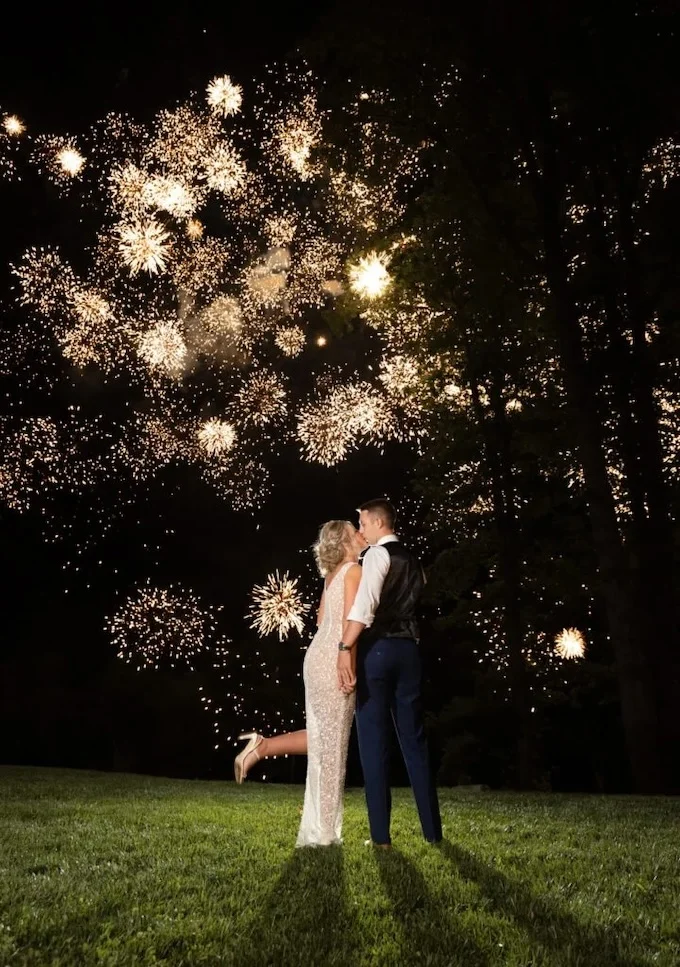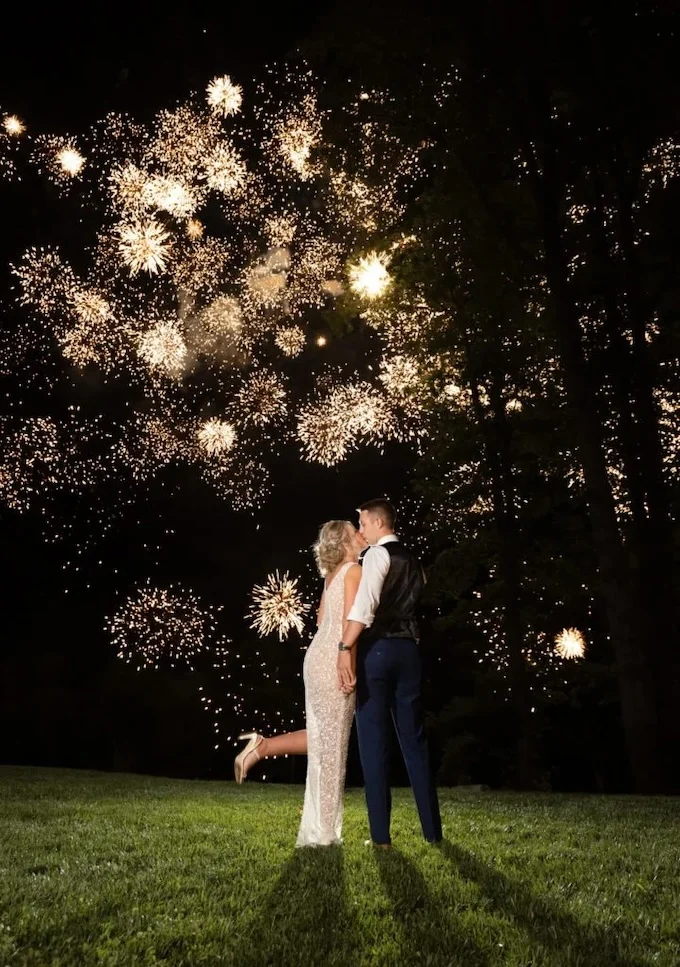
Fireworks, a quintessential element of celebrations ranging from national holidays to grand sporting events, are increasingly finding a place in the intimate setting of weddings. Beyond their inherent visual spectacle, fireworks offer photographers an unparalleled opportunity to create truly unique and epic couples portraits. However, achieving such striking imagery requires a meticulous blend of traditional portraiture skills and specialized techniques for capturing dynamic, fleeting light. This comprehensive guide delves into the essential strategies for photographers aiming to harness the explosive beauty of fireworks to elevate couples’ portraits, ensuring these once-in-a-lifetime moments are preserved with all the brilliance of a grand finale.

The ephemeral nature of fireworks, with displays often lasting a mere five to eight minutes, necessitates an efficient and well-rehearsed approach. Success hinges on meticulous planning, precise execution, and a deep understanding of photographic principles adapted for challenging low-light and high-contrast scenarios.
Strategic Location Scouting: The Foundation of Success
The cornerstone of any successful fireworks portrait session is the strategic selection of a vantage point. Photographers must proactively engage with the couple, wedding planners, and venue staff to ascertain the exact location and trajectory of the fireworks display well in advance. This information is crucial for scouting optimal shooting positions.

The "best" angle is subjective and depends on the desired aesthetic. An open area might be ideal for capturing the vast expanse of the sky illuminated by fireworks, with the couple as a silhouetted focal point. Conversely, incorporating foreground elements such as trees, architectural structures, or natural landscapes can add depth and context, framing the couple and the pyrotechnic display within a more layered composition. Effective scouting, therefore, is not merely about finding a clear view but about identifying a location that enhances the narrative and visual impact of the final images.
Mastering Dynamic Range: RAW Capture and Exposure Settings
Photographing fireworks presents a significant challenge due to the extreme disparity between ambient darkness and the intense brilliance of the pyrotechnics. To effectively manage this dynamic range and retain crucial detail in both the shadows of the scene and the highlights of the fireworks, photographers must prioritize shooting in RAW format.

RAW Files vs. JPEG: RAW files offer a substantially greater latitude for post-processing, allowing for the recovery of detail in both under- and overexposed areas. Unlike the compressed nature of JPEGs, RAW files capture the unprocessed data directly from the camera sensor, providing a more robust foundation for intricate edits. This flexibility is paramount when balancing the dark wedding venue or reception area with the explosive light of the fireworks.
Optimal Exposure Settings: A recommended starting point for exposure settings when photographing fireworks for couples portraits involves a low ISO (e.g., ISO 100-400) to minimize noise, a relatively small aperture (e.g., f/8-f/11) to ensure adequate depth of field for both the couple and the background, and a slow shutter speed (e.g., 5-15 seconds) to allow sufficient light to register on the sensor and capture the trails of the fireworks.

It is imperative to utilize the camera’s histogram to monitor exposure. The histogram provides a visual representation of the tonal distribution in an image. A healthy histogram for this scenario will show data distributed across the spectrum without excessive spikes at the far right, which would indicate blown-out highlights (lost detail in the fireworks), or a significant concentration at the far left, signifying pure black with no discernible detail. The goal is to achieve a balanced histogram that captures the brilliance of the fireworks without sacrificing the detail of the couple or the surrounding environment.
White Balance Management: Setting the Mood
Achieving an accurate and aesthetically pleasing white balance is critical. For fireworks, a "Tungsten" white balance setting (often around 3200 Kelvin) can provide a good starting point, as it compensates for the artificial light often present at evening events and can create a warm, inviting tone. If supplementary lighting is used for the couple, such as strobes or continuous lights, incorporating a CTO (Color Temperature Orange) gel on the light source and adjusting the camera’s white balance accordingly (e.g., to around 3200 Kelvin) can help synchronize the artificial light with the ambient or firework illumination. Photographers should be prepared to make fine adjustments based on their creative vision and the specific color palette of the fireworks.

Lens Selection: Framing the Grandeur
The choice of lens plays a pivotal role in composing fireworks portraits. A wide-angle lens (e.g., 24mm or wider on a full-frame camera) is often preferred for its ability to encompass both the couple and the expansive firework display, creating a sense of grandeur. However, photographers must consider the practicalities of communication with the couple during a dynamic shoot. Using a zoom lens for a wide shot can make it challenging to maintain a connection.
Alternatively, a zoom lens can be advantageous for tighter compositions, offering the ability to compress the scene and make the fireworks appear larger relative to the couple. A prime lens in the standard to wide-angle range can also be an excellent choice, offering superior image quality and a fixed focal length that encourages deliberate composition. It’s often advisable to shoot slightly wider than necessary and crop in post-production, providing flexibility in refining the composition.

The Art of Long Exposure: Capturing Motion and Light
To effectively capture the dynamic streaks and bursts of fireworks, long exposure techniques are indispensable. Shutter speeds ranging from 5 to 15 seconds are typically employed. Longer exposures (10-15 seconds) allow more fireworks to be captured within a single frame, creating denser trails of light and a more dramatic effect. Shorter exposures (5-10 seconds) might reveal more distinct bursts and individual firework elements.
Crucially, long exposures demand absolute camera stability. The use of a sturdy tripod is non-negotiable. Furthermore, employing a remote shutter release or the camera’s self-timer function (a 2-second delay is usually sufficient) will prevent any vibration from the act of pressing the shutter button, ensuring sharp images.

Illuminating the Subjects: Balancing Light
Unlike traditional fireworks photography where subjects are often secondary or omitted, couples portraits necessitate deliberate illumination of the subjects. The key is to achieve a harmonious balance between the ambient light from the fireworks and the artificial light used to illuminate the couple.
A common approach is to light the couple as one would for any portrait session, establishing a baseline exposure and flash power before the fireworks commence. Positioning the primary light source at approximately a 45-degree angle to the couple and slightly from above can create flattering modeling. The intensity and direction of this light should be carefully controlled to complement, rather than overpower, the fireworks.

Consider using modifiers like snoots or grids to precisely focus the light on the couple, preventing light spill onto the background and ensuring the fireworks remain the dominant luminous element. A backlight can also be employed to further define the couple’s silhouettes and add separation from the background. The specific lighting setup will, of course, be dictated by the photographer’s creative vision and the ambient conditions.
The Precision of Manual Focus
Autofocus systems can struggle in low-light conditions and with the rapidly changing light patterns of fireworks. Therefore, setting the lens to manual focus is essential. Photographers can use live view to achieve precise focus on the couple before the fireworks begin, and then lock it in manual mode. A final check to ensure the focus remains sharp on the couple throughout the exposure is advisable.

Composite Techniques: Layering for Perfection
For ultimate control and to overcome the inherent challenges of capturing both perfectly exposed subjects and dynamic fireworks in a single exposure, creating a composite image is a highly effective strategy. This involves a two-step process:
Step 1: Capturing the Couple’s Portrait: The first step is to capture a pristine portrait of the couple. This shot should be meticulously lit and posed, ensuring the couple is perfectly exposed and sharp. A tripod is essential for this phase to maintain consistency for later compositing.

Step 2: Capturing the Fireworks: Subsequently, multiple exposures of the fireworks are captured, ideally from the exact same camera position. This allows for the selection of the most visually appealing fireworks bursts and trails.
Post-Production Workflow:

- Lightroom: Begin by editing the primary portrait of the couple. Once satisfied with the adjustments, apply these same edits to all the captured fireworks images using Lightroom’s synchronization or batch editing features. This ensures a consistent look and feel across all elements of the composite.
- Photoshop: Import all edited images into Photoshop, stacking them within a single document. Set the blend mode of the fireworks layers to "Lighten." This blend mode selectively reveals the brightest pixels from each layer, effectively layering the fireworks bursts and trails. Layer masks can then be used to meticulously refine the composite, masking out any unwanted elements and seamlessly blending the couple’s portrait with the spectacular fireworks display.
Capturing the Sparkler Magic: An Extension of the Celebration
While not large-scale pyrotechnics, sparklers are a popular addition to wedding celebrations, particularly for grand exits. Photographing them requires a similar, yet slightly simplified, approach:
Prioritize Larger Sparklers: When advising couples, recommend opting for longer sparklers (e.g., 36-inch) over shorter ones (e.g., 10-inch). The extended burn time provides more opportunity for photographers to pose the couple and capture multiple shots, allowing for more dynamic compositions.

Adjusting ISO and Aperture for Light: Sparklers provide a localized light source. To capture them effectively, especially in dim conditions, photographers may need to increase the ISO and use a wide aperture (e.g., f/2.8-f/4) to gather sufficient light.
- Moving Subjects (e.g., Wedding Exit): For dynamic scenes like a wedding exit, a faster shutter speed (e.g., 1/60 sec or higher) might be necessary to freeze motion, combined with a higher ISO and wider aperture.
- Static Subjects (e.g., Posed Portraits): For posed portraits with sparklers, slower shutter speeds (e.g., 1-5 seconds) can be used to capture the light trails, along with adjustments to ISO and aperture.
Safety First: Handling fire requires caution. A bucket of water or sand should always be readily available to safely extinguish used sparklers, mitigating any fire hazards.

Conclusion: Igniting Unforgettable Memories
Photographing couples against the backdrop of fireworks is an art form that blends technical prowess with creative vision. By meticulously planning locations, mastering exposure and dynamic range, utilizing appropriate lenses and long exposure techniques, and employing deliberate lighting and focus strategies, photographers can create truly breathtaking images. Whether capturing the explosive grandeur of a professional fireworks display or the intimate glow of sparklers, the goal remains the same: to immortalize the joy and romance of a couple’s special day with a visual narrative that is as vibrant and unforgettable as the celebration itself. The inclusion of these spectacular elements elevates wedding photography from a mere documentation to an artistic creation, providing couples with cherished heirlooms that radiate with the magic of their wedding day.