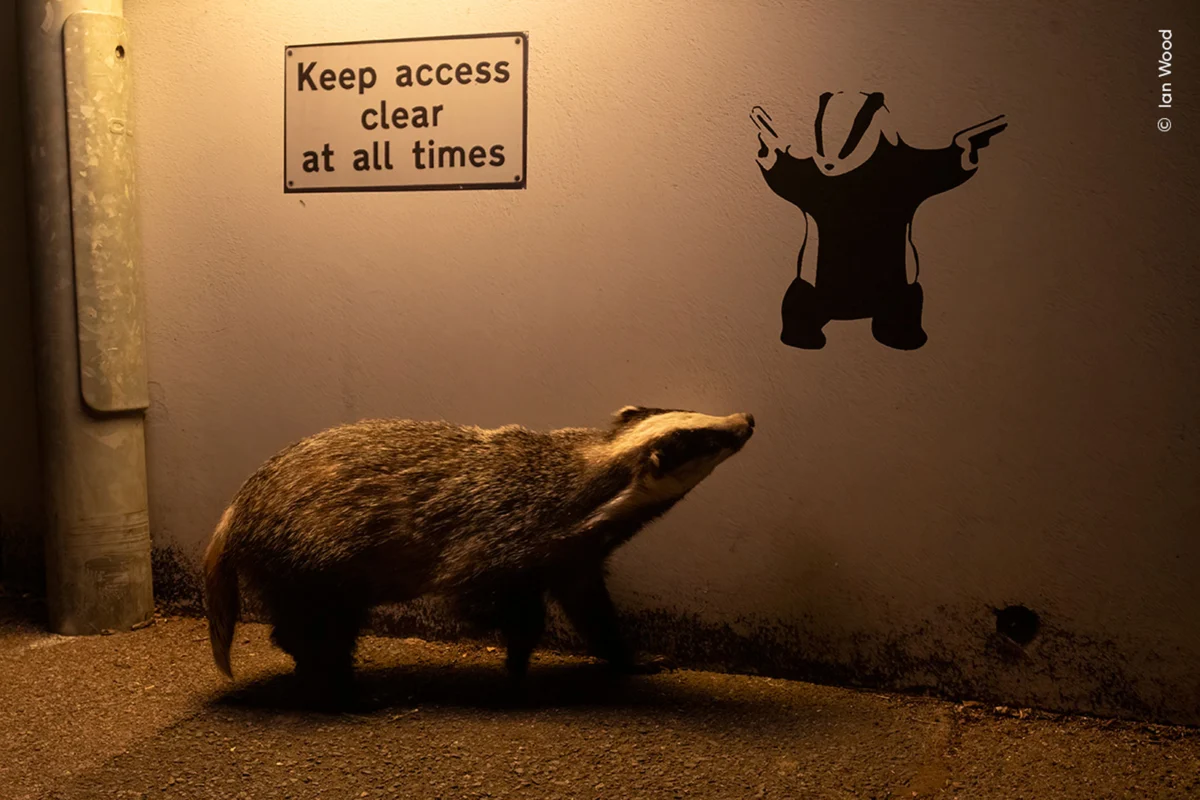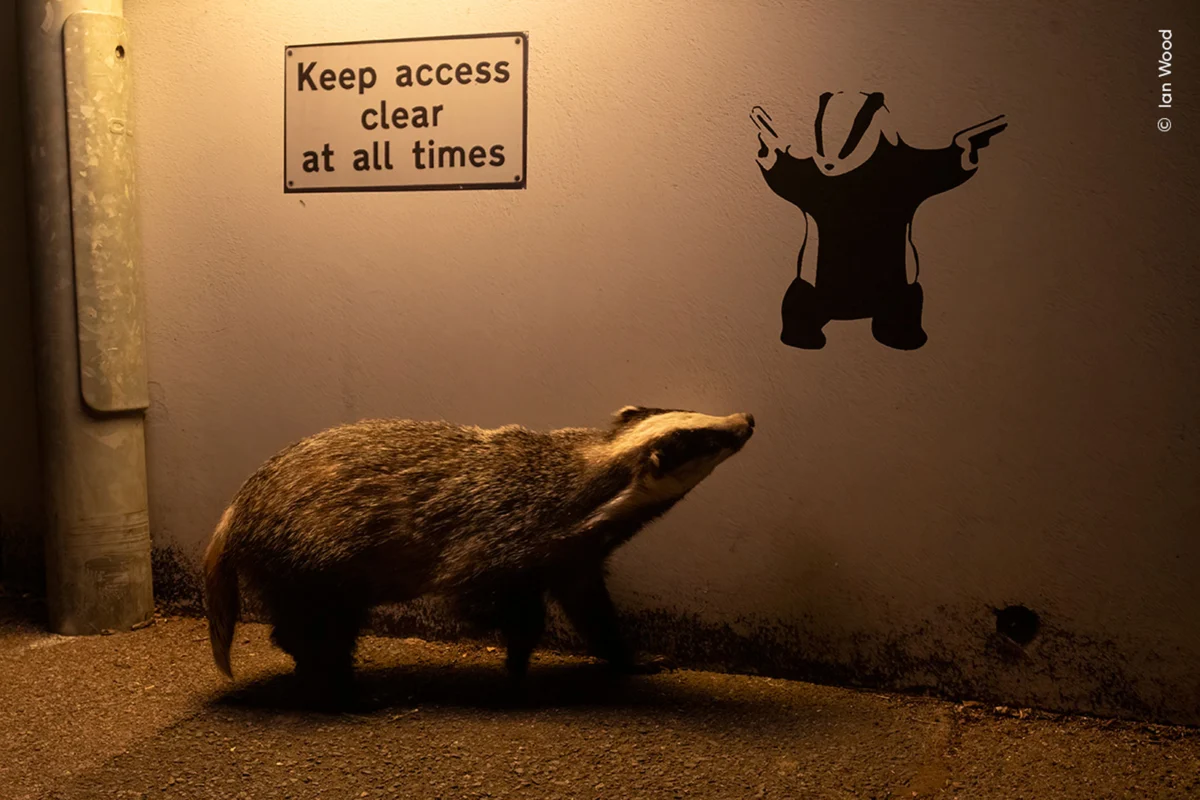
British photographer Ian Wood has been awarded the prestigious tenth edition of the Wildlife Photographer of the Year People’s Choice Award 2024 for his compelling photograph, "No Access." The winning image captures a Eurasian badger pausing its nocturnal amble in St Leonards-on-Sea, England, to glance at a piece of graffiti that eerily echoes its predicament in an increasingly human-dominated landscape. This perfectly timed shot, imbued with both charm and a subtle critique of human impact, resonated deeply with wildlife enthusiasts globally, securing the top honour from a record number of public votes.
The Winning Image: "No Access" – A Glimpse into Urban Wildlife
Ian Wood’s "No Access" is more than just a photograph; it is a narrative woven into a single frame. The image depicts a solitary Eurasian badger, illuminated solely by the ambient glow of a lamppost, making its way along a pavement beside a graffiti-laden wall. The badger’s gaze, directed upwards towards the familiar, stark "No Access" tag, creates a powerful, almost anthropomorphic moment of contemplation. This seemingly simple interaction between a wild creature and a human-made barrier encapsulates a complex dialogue about boundaries, encroachment, and the resilience of urban wildlife.
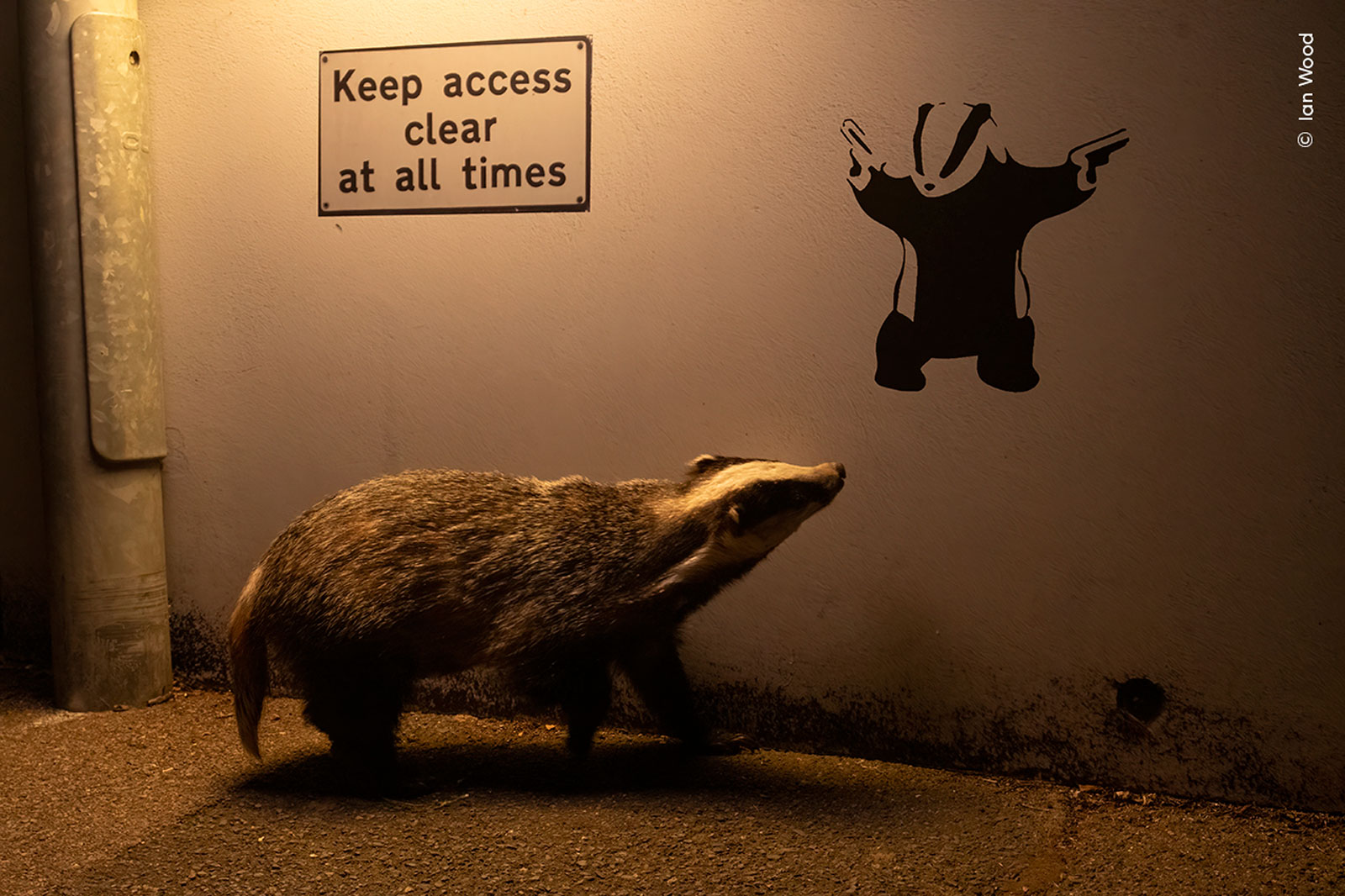
Wood’s photographic journey to capture this image began with keen observation. Residents of St Leonards-on-Sea had been leaving food scraps for foxes, an act that inadvertently attracted badgers from a nearby sett into the urban environment for foraging. Noticing a badger’s routine along this specific wall late one night, Wood strategically set up a small hide at the road’s edge. His patience was rewarded with this unique shot, where the low light conditions from a single lamppost perfectly accentuated the badger’s presence against the backdrop of human infrastructure. The resulting photograph is not only aesthetically striking but also profoundly thought-provoking, inviting viewers to ponder the diminishing wild spaces and the adaptability of animals forced to navigate our urban sprawl.
The People’s Choice Award: A Global Voice for Nature
The Wildlife Photographer of the Year People’s Choice Award, now in its tenth year, stands as a testament to the power of public engagement in conservation. This year’s competition saw an unprecedented level of participation, with over 76,000 votes cast by wildlife photography and nature enthusiasts from around the world. This record turnout underscores the growing global interest in wildlife and the critical issues facing natural habitats. The 25 nominated images, carefully selected from nearly 60,000 entries to the sixtieth Wildlife Photographer of the Year competition by an international judging panel and the Natural History Museum, London, represented a diverse array of captivating moments from the natural world.
The People’s Choice Award provides a unique platform, allowing the public to voice their preference and highlight images that resonate most deeply with them. Unlike the main competition, which is judged by a panel of experts, this award champions the democratic spirit, giving a global audience the opportunity to celebrate the photographs that best capture their imagination and evoke a sense of connection to nature. This year’s overwhelming response demonstrates the enduring appeal of wildlife photography as a medium for both artistic expression and environmental advocacy.

Official Endorsements and a Deeper Message
Dr. Douglas Gurr, Director of the Natural History Museum, lauded Wood’s achievement, stating, "Ian’s flawlessly timed image offers a unique glimpse of nature’s interaction with the human world, underscoring the importance of understanding urban wildlife." He further emphasized the photograph’s role as "a powerful reminder that local nature and wildlife, often just outside our homes, can inspire and captivate us." Gurr’s remarks highlight the Museum’s mission to connect people with the natural world and foster an appreciation for biodiversity, even in unexpected urban settings. The image serves as a potent educational tool, encouraging urban dwellers to acknowledge and protect the wildlife that shares their environment.
However, beyond the initial joy and humility expressed by Ian Wood upon receiving the award, lies a more somber and urgent message. Wood himself acknowledged the "beautifully overwhelming" outpouring of "badger love" but quickly pivoted to what he terms "a darker side to this image." Living in rural Dorset, a region deeply impacted by agricultural practices and conservation policies, Wood is actively engaged in re-wilding efforts to enhance local habitats. His personal experience has made him a staunch advocate for badgers, and his photograph, he hopes, will serve as a powerful statement against the ongoing badger cull in England.
The Controversial Badger Cull: A Critical Context
The badger cull, a contentious government policy primarily aimed at controlling bovine tuberculosis (bTB) in cattle, has been a subject of intense debate and scientific scrutiny in the United Kingdom for decades. The policy involves the selective killing of badgers, believed by some to be a significant vector for transmitting bTB to livestock. Proponents of the cull, largely within the agricultural sector and government, argue that it is a necessary measure to protect cattle herds, reduce economic losses for farmers, and ensure food security. They point to evidence suggesting a correlation between badger populations and bTB outbreaks, advocating for population control as a key strategy in disease management.
Conversely, a substantial body of scientific research and numerous conservation and animal welfare organizations vehemently oppose the cull. Critics argue that the scientific evidence for its effectiveness is inconclusive, with some studies suggesting limited impact on bTB prevalence and potential for "perturbation effects" – where culling can disperse badger populations, potentially spreading the disease further. Ethical concerns about the inhumane methods of culling and the indiscriminate killing of healthy badgers are also central to the opposition. Conservationists emphasize that badgers are a protected species under the Protection of Badgers Act 1992 and highlight their ecological importance. They advocate for alternative, non-lethal strategies such as cattle vaccination, improved biosecurity on farms, and badger vaccination as more humane and potentially more effective long-term solutions.
Ian Wood’s fear that "unless the cull is stopped, we’ll only see badgers in urban settings in several parts of England" speaks to a profound concern shared by many environmentalists. As rural habitats become less hospitable or badgers are actively culled, these adaptable creatures may increasingly seek refuge and sustenance in urban areas, leading to a shift in their distribution and potentially new challenges for human-wildlife coexistence. Wood’s hope is that "No Access" will "raise awareness of the damaging effect of the badger cull and help push for change," transforming his award-winning image into a catalyst for policy re-evaluation and greater public understanding of badger conservation.
Beyond the Winner: Celebrating Highly Commended Images
While "No Access" captured the top honour, the four "Highly Commended" images also captivated the hearts of wildlife lovers, each telling its own compelling story from across the globe. These images demonstrate the incredible diversity of the natural world and the exceptional skill of the photographers who capture it.
"Earth and Sky" by Francisco Negroni transported viewers to the dramatic landscapes of Chile. Negroni’s unforgettable capture features a magnificent double lenticular cloud, spectacularly illuminated at nightfall by the fiery lava emanating from the Villarrica volcano. This image is a testament to the raw, untamed power of geological forces and atmospheric phenomena, showcasing the planet’s dynamic and awe-inspiring beauty.
"Edge of Night" by Jess Findlay offered a glimpse into the secretive world of a nocturnal predator. This action shot perfectly freezes a ghostly barn owl as it exits through the hayloft window of a derelict barn, embarking on its nightly hunt. The image’s ethereal quality, combined with the sense of movement and purpose, highlights the adaptability of wildlife in human-modified landscapes and the delicate balance of the food chain.
"Whiteout" by Michel d’Oultremont depicted a stoat perfectly camouflaged against a snowy landscape in Belgium. The stoat is captured sitting upright, observing its territory, its fur blending seamlessly with the pristine white environment. This photograph not only celebrates the stoat’s remarkable adaptation to its environment but also conveys a sense of solitude and vigilance in harsh winter conditions.

"Spiked" by David Northall presented a raw and visceral scene of survival. This intriguing capture shows a bloodied, yet determined, honey badger returning to finish off a Cape porcupine, which had bravely tried to defend itself earlier. Northall’s image is a powerful portrayal of the brutal realities of predator-prey interactions in the wild, showcasing the tenacity and resilience required for survival in nature’s unforgiving arena.
These highly commended images, alongside Wood’s winning entry, collectively underscore the mission of the Wildlife Photographer of the Year competition: to shine a light on inspiring and impactful stories from the natural world, fostering a global community of advocates for our planet.
Exhibition and the Future of Wildlife Photography
All five celebrated images – Ian Wood’s "No Access" and the four "Highly Commended" photographs – are currently on display. They can be viewed both online and on the interactive voting screens within the flagship exhibition at the Natural History Museum, London. The exhibition, a global beacon for wildlife photography, will continue to inspire visitors until June 29, 2025, offering an extended opportunity for the public to engage with these powerful visual narratives.

The Wildlife Photographer of the Year competition, developed and produced by the Natural History Museum, London, is more than just an annual contest. It is a vital platform that harnesses photography’s unique emotive power to connect people with nature, transcending geographical and cultural barriers. By showcasing the extraordinary beauty, complexity, and fragility of life on Earth, the competition aims to educate, provoke thought, and ultimately galvanize action towards conservation. The competition is open to amateur and professional photographers of all ages from around the world, ensuring a constant influx of fresh perspectives and urgent stories.
As the 60th edition continues to inspire, the judging process for the sixty-first competition is already underway, with an international panel of experts meticulously evaluating new submissions. The winners of this next iteration will be announced at the annual awards ceremony, a much-anticipated event held at the Natural History Museum, London, in October 2025. Through these continuous cycles of discovery and recognition, the Wildlife Photographer of the Year remains at the forefront of global conservation efforts, using the universal language of photography to champion the natural world.