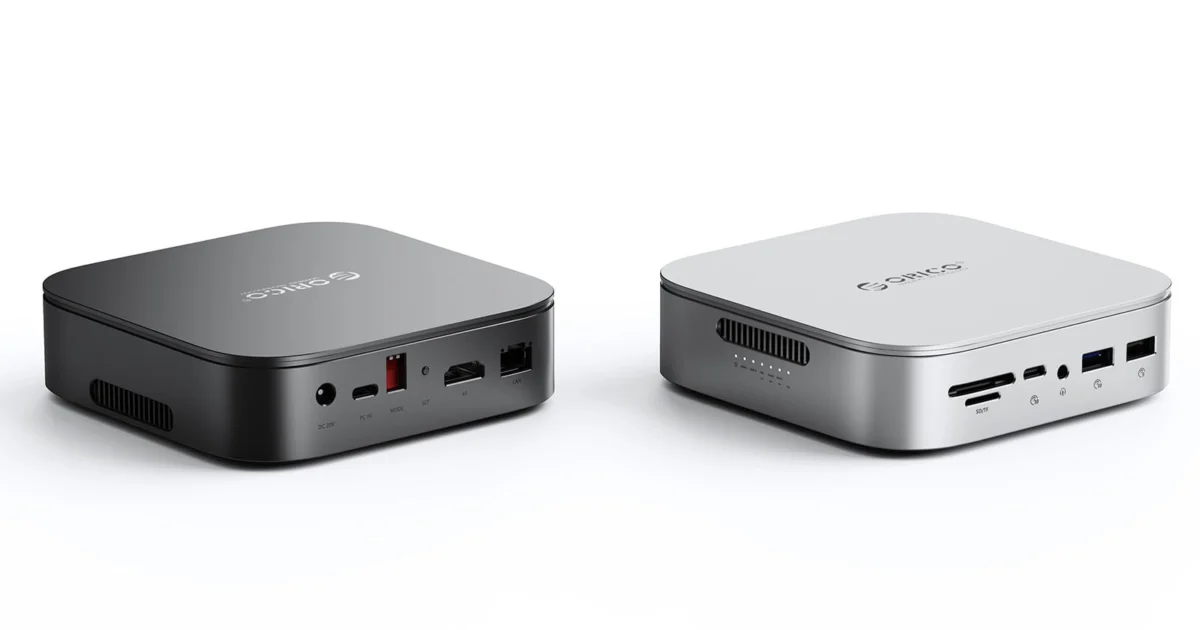
Orico has officially introduced its new MiniRaid Docking Station, a multifaceted peripheral designed to serve both as a robust data backup solution and a comprehensive connectivity hub for desktop computers. This innovative device integrates dual M.2 SSD bays with hardware RAID capabilities, an active cooling system, and an extensive array of ports, positioning it as an essential expansion for users seeking enhanced storage, improved data redundancy, and versatile connectivity in a compact form factor. The launch of the MiniRaid comes at a time when desktop setups, particularly those utilizing compact machines like the Mac mini, are increasingly demanding streamlined accessories that offer high functionality without cluttering valuable desk space.
The MiniRaid Docking Station distinguishes itself with a sleek, modern aesthetic, echoing a design philosophy similar to that seen in premium desktop accessories. While it draws comparisons to earlier multi-function docks, such as Sabrent’s 2022 offering, Orico’s approach prioritizes accessibility and integration, opting for 10 Gbps USB connectivity over the higher-bandwidth, but typically more expensive, Thunderbolt standard. This strategic choice enables Orico to deliver a powerful feature set at a more competitive price point, broadening its appeal to a wider consumer base that may not require the extreme speeds or daisy-chaining capabilities of Thunderbolt. The device is immediately available for purchase directly from Orico for $120, offered in both silver and a space gray finish, designed to complement contemporary desktop aesthetics, notably fitting neatly beneath or atop a Mac mini for a cohesive setup.
Core Functionality: Dual SSD Storage and Hardware RAID
At the heart of the Orico MiniRaid lies its dual M.2 SSD bays, providing users with significant flexibility in expanding their storage capacity. The device supports a range of M.2 form factors, including 2280, 2260, 2242, and 2230, accommodating the most common M.2 NVMe and SATA SSDs available on the market. This broad compatibility ensures that users can utilize their preferred drives, from high-performance NVMe units for demanding tasks to cost-effective SATA options for general storage. A notable user-friendly feature is the tool-free installation mechanism for SSDs, allowing for quick and effortless drive swapping or upgrades, which is particularly beneficial for professionals who frequently manage large datasets or switch between projects.
The integration of hardware RAID is a critical differentiator for the MiniRaid. Unlike software RAID, which relies on the host system’s CPU for processing, hardware RAID offloads these tasks to a dedicated controller within the device. This not only frees up system resources but also often results in more consistent performance and greater stability. The MiniRaid offers four distinct RAID modes:
- RAID 0 (Striping): This mode combines the storage capacity of both SSDs into a single logical volume, distributing data across both drives. The primary benefit of RAID 0 is a significant increase in read and write speeds, as data can be accessed from or written to both drives simultaneously. It is ideal for applications requiring maximum performance, such as video editing, large file transfers, or gaming, where speed is paramount, and data redundancy is not a primary concern. However, if one drive fails, all data in the array is lost.
- RAID 1 (Mirroring): In this configuration, data is simultaneously written to both SSDs, creating an exact copy (mirror) of the data on each drive. While this halves the usable storage capacity (e.g., two 4TB SSDs yield 4TB of usable space), it provides robust data redundancy. If one drive fails, the data remains intact on the other drive, offering critical protection against data loss. This mode is highly recommended for storing valuable documents, photos, and critical project files where data integrity and availability are essential.
- PM (Port Multiplier/Individual): Often referred to as JBOD (Just a Bunch Of Disks) or individual disk mode, PM allows each SSD to be recognized as a separate, independent drive. This offers the greatest flexibility for users who prefer to manage their drives individually, perhaps dedicating one SSD for backups and another for active project files, or simply adding more storage without the complexities of RAID.
- Clone: This mode enables a direct, sector-by-sector duplication of one SSD’s content to the other. It is particularly useful for creating an exact bootable backup of an operating system drive or for migrating data from an old SSD to a new one, ensuring all data, including partitions and system files, are perfectly replicated.
The availability of these hardware RAID options significantly enhances the MiniRaid’s utility, catering to diverse user needs from high-performance computing to critical data protection. For creative professionals, the ability to switch between RAID 0 for active projects and RAID 1 for archiving offers a powerful and flexible workflow solution.
Connectivity: A Comprehensive Docking Solution
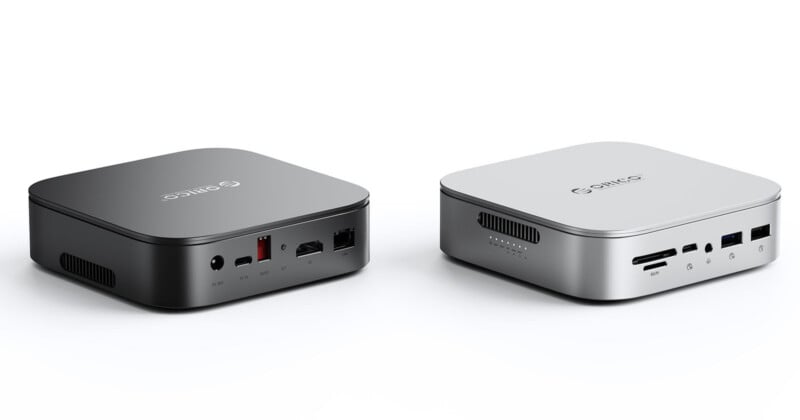
Beyond its advanced storage capabilities, the Orico MiniRaid truly shines as a versatile docking station, offering a broad spectrum of ports that dramatically expand the connectivity options of any host computer, particularly those with limited native ports. The selection of ports is strategically placed for both convenience and functionality:
-
Front Panel:
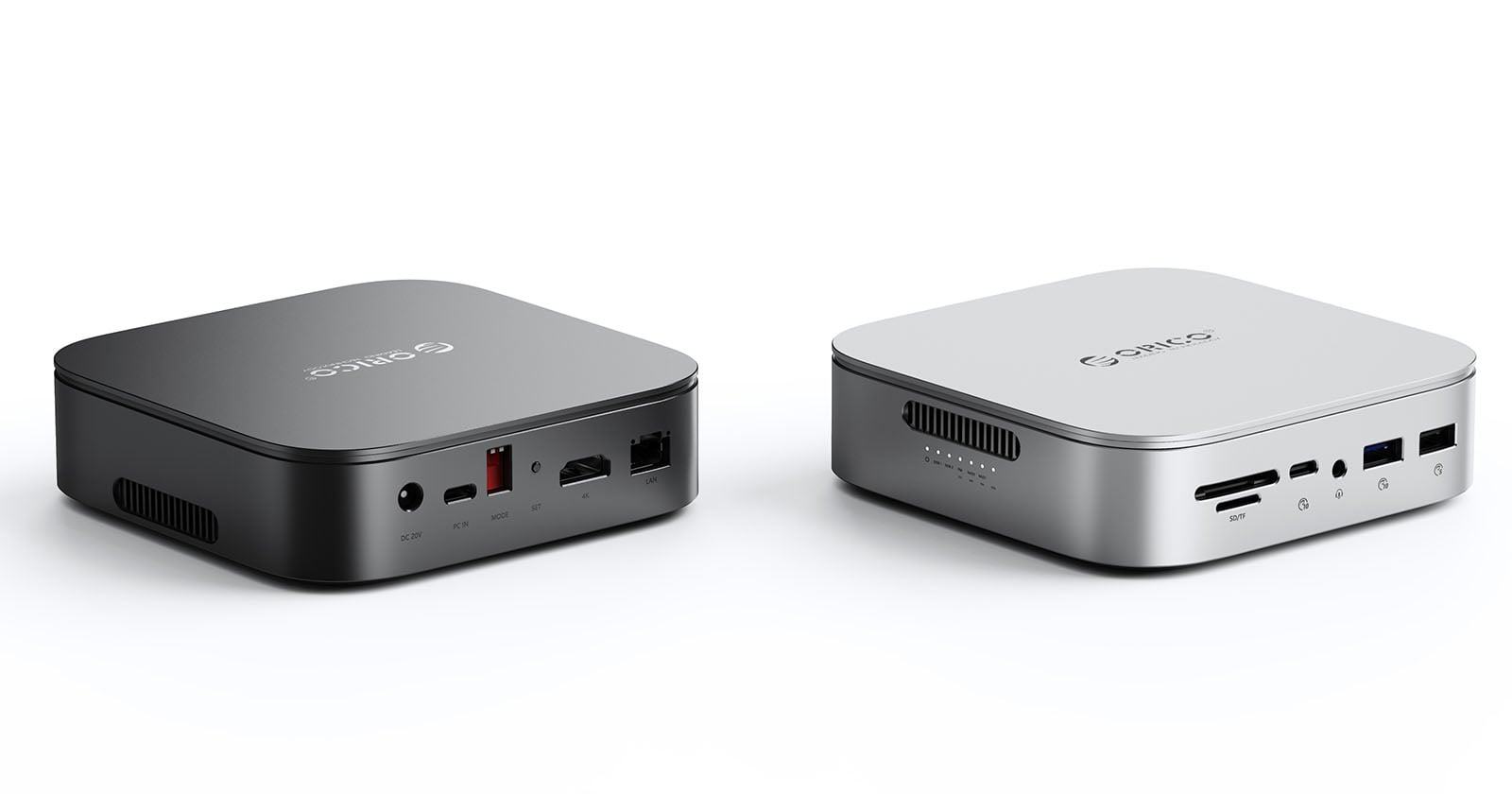
- SD and microSD Card Readers: Essential for photographers, videographers, and content creators, these readers provide quick access to memory cards from cameras, drones, and other devices, streamlining data ingestion workflows. The speed of these readers, while not explicitly detailed, is expected to be consistent with modern UHS-I or potentially UHS-II standards, ensuring efficient transfers of high-resolution media.
- 3.5mm Headphone Port: A convenient audio output for connecting headphones or speakers, simplifying cable management for desktop users.
- USB-C Port (Front): A versatile port for connecting modern USB-C peripherals, external drives, or charging smaller devices.
- Two USB-A Ports (Front): These provide compatibility with a vast ecosystem of legacy USB devices, such as keyboards, mice, flash drives, and external hard drives, ensuring backward compatibility.
-
Rear Panel:
- 1,000 Mbps Ethernet Port: Provides a stable, high-speed wired network connection, which is crucial for large data transfers, online gaming, and professional environments where reliable internet access is paramount and often preferred over wireless solutions.
- HDMI 2.0 Port: This allows users to connect an external display, supporting resolutions up to 4K at 60Hz. This is particularly valuable for compact desktops like the Mac mini, which might only have a limited number of display outputs, turning the MiniRaid into a complete workstation hub.
- USB-C Port with 60W Power Delivery: This powerful port serves a dual purpose: it acts as the primary uplink to the host computer for data transfer and simultaneously delivers up to 60 watts of power. This means laptops and other compatible devices can be charged directly through the dock, reducing cable clutter and the need for separate power adapters.
The aggregated connectivity transforms a minimalistic computer setup into a highly functional workstation, addressing the common limitations of modern compact computers that often sacrifice port variety for a smaller footprint.
Thermal Management and Design Philosophy
Given its compact dimensions—just 1.18 inches tall and five inches wide by five inches long—effective thermal management is paramount for the Orico MiniRaid, especially when housing high-performance M.2 SSDs that can generate significant heat under load. Orico has implemented a sophisticated cooling solution that goes beyond passive dissipation:
- Integrated Fan: A temperature-controlled fan is built directly into the unit. This fan automatically activates when internal temperatures reach approximately 50 degrees Celsius, actively drawing heat away from the SSDs and internal components. This active cooling is critical for preventing thermal throttling, which can significantly degrade SSD performance during sustained data transfers or intensive RAID operations, and for prolonging the lifespan of the drives. While Orico has not yet provided details on the fan’s noise level, this is a key consideration for users in quiet office or home environments.
- Thermal Pads: These pads facilitate efficient heat transfer from the SSDs to the enclosure.
- Aluminum Alloy Case: The entire enclosure is constructed from an aluminum alloy, which acts as a large heatsink, rapidly dissipating heat generated internally to the ambient air.
This combination of active and passive cooling measures ensures that the MiniRaid can sustain optimal performance even under demanding workloads, a crucial aspect for any high-performance external storage solution.
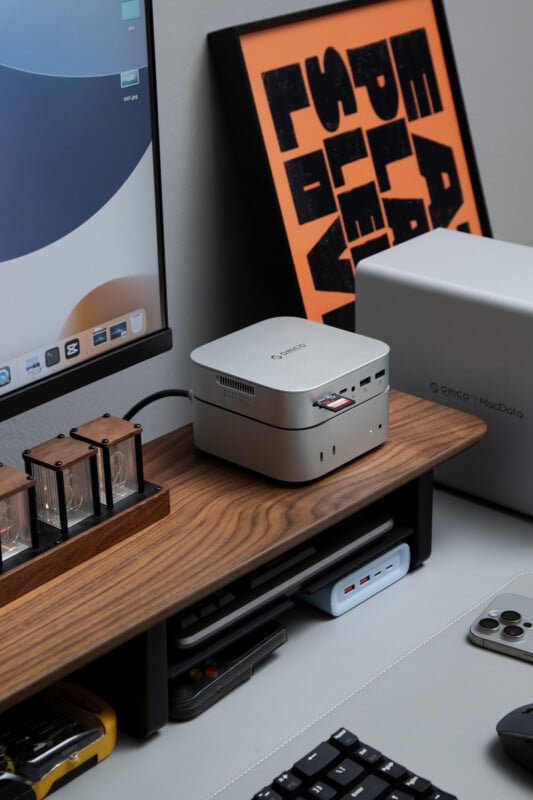
The design of the MiniRaid also reflects a clear understanding of modern desktop aesthetics and user preferences. Its minimalist, square footprint and premium metallic finishes are deliberately chosen to integrate seamlessly with devices like the Mac mini. The intention is for the MiniRaid to sit neatly on top of the Mac mini, creating a unified, stacked setup that is both aesthetically pleasing and highly functional, minimizing cable mess and maximizing desk efficiency. This design philosophy aligns with a broader industry trend towards creating desktop accessories that are not just functional but also enhance the overall look and feel of a workspace.
Market Positioning and Competitive Landscape
Orico, a well-established Chinese manufacturer of computer peripherals, has built a reputation for delivering reliable and cost-effective storage solutions and accessories. The MiniRaid Docking Station is a testament to their continued focus on innovation and value. In a market populated by numerous docking stations and external drive enclosures, the MiniRaid carves out a niche by combining hardware RAID capabilities with a comprehensive port array and active cooling at an accessible price point.
Competitors in the external storage and docking station market include brands like Sabrent (as previously mentioned), CalDigit, Anker, and StarTech, among others. While many offer high-speed docks or multi-bay enclosures, few integrate hardware RAID, comprehensive port selection, and active cooling in such a compact and aesthetically cohesive package, especially for $120. Thunderbolt docks, while offering superior bandwidth, typically start at significantly higher price points, often exceeding $200-$300, making them a less accessible option for many users. The Orico MiniRaid targets a sweet spot for users who require more than basic external storage but do not need the absolute bleeding edge of Thunderbolt performance, prioritizing a balance of features, performance, and cost.
The MiniRaid is particularly well-suited for:
- Creative Professionals: Photographers, videographers, and graphic designers can benefit from the high-speed RAID 0 for active projects, RAID 1 for secure backups, and the integrated card readers for efficient media ingestion. The HDMI port also allows for multi-monitor setups.
- Home Office Users: Those working from home can leverage the dock to expand their laptop’s or mini PC’s connectivity, adding stable Ethernet, external displays, and ample storage for documents and media.
- Tech Enthusiasts: Individuals looking to optimize their compact desktop setups with robust external storage and expanded I/O without investing in a larger, more expensive workstation.
The increasing prevalence of thin-and-light laptops and compact desktop PCs, which often come with limited internal storage and fewer ports, has fueled a growing demand for versatile external peripherals. The Orico MiniRaid addresses this demand directly, offering a solution that enhances both storage capacity and connectivity in a single, elegantly designed unit. The transition from traditional hard disk drives (HDDs) to solid-state drives (SSDs) for external storage is also a key trend, driven by SSDs’ superior speed, durability, and compact size, making the M.2 SSD-centric design of the MiniRaid highly relevant to current market trajectories.
Availability and Final Considerations
The Orico MiniRaid Docking Station is currently available for purchase for $120 directly through Orico’s official channels. It comes in two color options: silver and a finish akin to Apple’s space gray, ensuring it blends seamlessly with a wide range of modern computing equipment. It is important for prospective buyers to note that the $120 price point is for the enclosure and docking station functionality only; M.2 SSDs must be purchased separately. Users should factor the cost of their desired SSDs into the total investment, which will vary based on capacity and type (NVMe or SATA).
In conclusion, the Orico MiniRaid Docking Station represents a compelling proposition for users seeking to enhance their desktop experience. By intelligently combining dual M.2 SSD hardware RAID capabilities with a comprehensive array of connectivity ports and an active thermal management system, all within a compact and aesthetically pleasing design, Orico has delivered a peripheral that addresses critical needs for storage expansion, data protection, and workstation versatility. Its strategic use of 10 Gbps USB offers a balanced solution that is both highly functional and economically accessible, making it a noteworthy addition to the evolving landscape of desktop computing accessories.