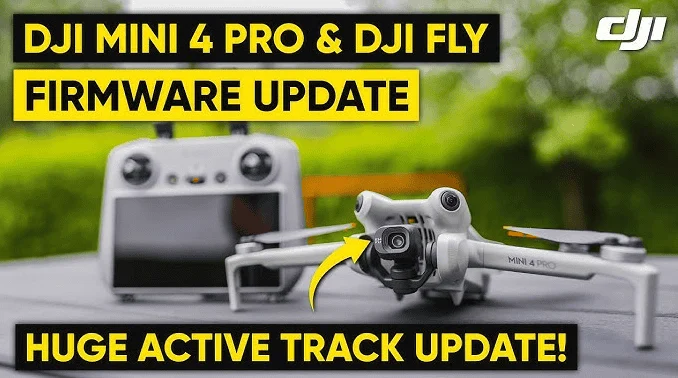
The release of the latest firmware update for the DJI Mini 4 Pro represents a significant milestone in the evolution of ultra-lightweight drones, solidifying its position as a professional-grade tool within a consumer-friendly frame. As the flagship of DJI’s sub-250-gram category, the Mini 4 Pro has undergone several iterations of software refinement since its global launch. This most recent update is not merely a routine maintenance patch; it introduces sophisticated features previously reserved for higher-tier models like the Mavic 3 series, while simultaneously addressing critical regulatory compliance and flight safety protocols. By integrating advanced obstacle sensing visualizations and expanded hardware compatibility, DJI is effectively extending the operational lifecycle and utility of the Mini 4 Pro for both hobbyists and commercial operators.
The Evolution of the DJI Mini Series: Contextual Background
To understand the impact of the current DJI Mini 4 Pro update, one must look at the trajectory of the Mini series. When the original Mavic Mini debuted in 2019, its primary selling point was the 249-gram weight, which allowed it to bypass registration requirements in many jurisdictions. However, that portability came at the cost of limited sensors and basic camera features. Over the subsequent four years, the series evolved through the Mini 2, Mini 3, and Mini 3 Pro, each adding 4K capabilities, tri-directional obstacle sensing, and vertical shooting.
The Mini 4 Pro, released in late 2023, was the first in the series to offer omnidirectional obstacle sensing and 4K/60fps HDR video. This latest firmware cycle is designed to refine these hardware capabilities. Industry analysts suggest that DJI’s strategy is to bridge the gap between "toy" drones and professional cinematography tools. By providing consistent software support, DJI ensures that the hardware remains competitive against newer entrants in the market, such as the Autel EVO Nano series and Potensic Atom.
Comprehensive Analysis of New Features and Enhancements
The most substantial addition in the recent firmware update is the integration of "Vision Assist." This feature provides pilots with a 360-degree visual representation of their surroundings through the DJI Fly app interface. Unlike traditional obstacle sensors that merely beep or show proximity bars, Vision Assist allows the pilot to see the view from the obstacle sensors themselves. This is particularly useful when navigating tight spaces or performing complex maneuvers where the primary camera is focused on a subject rather than the flight path.
Furthermore, the update enhances the "ActiveTrack 360" functionality. This system allows for more fluid subject tracking, enabling the drone to orbit, follow, or lead a subject with greater precision. The software update introduces a more intuitive touch-wheel interface on the RC 2 controller, allowing pilots to dictate the exact path the drone should take while maintaining a lock on the target. This level of automation reduces the cognitive load on the pilot, making professional-looking cinematic shots accessible to those without years of flight experience.
Another critical inclusion is the support for DJI Goggles 3 and the DJI RC Motion 3 controller. This addition effectively transforms the Mini 4 Pro into a "cinewhoop" hybrid, allowing for an immersive first-person view (FPV) experience. While the Mini 4 Pro is not a racing drone, the ability to fly with goggles provides a level of precision and immersion that is highly valued in real estate photography and inspection work.
Technical Specifications and Firmware Chronology
The technical rollout of the firmware follows a structured timeline to ensure stability across different regions. The current version, often referred to by its build number (e.g., v01.00.0400 or later), requires a simultaneous update of the DJI Fly App to version 1.13.0 or higher.
Below is a chronology of the major enhancements delivered through the recent firmware cycles:
- Q4 2023: Initial launch firmware establishing omnidirectional sensing and D-Log M color profile support.
- Q1 2024: Introduction of Vision Assist and enhanced "Auto" mode for night shots, improving noise reduction algorithms in low-light environments.
- Q2 2024: Expanded compatibility with the Goggles 3 ecosystem and Remote ID optimizations for the North American market.
- Q3 2024/Early 2025: Refinement of the "Return to Home" (RTH) logic, allowing the drone to calculate more efficient flight paths around obstacles during signal loss.
The update also optimizes the Intelligent Flight Battery management system. By refining the discharge algorithms and power consumption during high-wind resistance scenarios, users have reported a marginal but noticeable increase in effective flight time, pushing the real-world usage closer to the advertised 34-minute (standard battery) or 45-minute (Plus battery) marks.
Regulatory Compliance and Global Safety Standards
A primary driver for frequent firmware updates is the rapidly changing landscape of international drone regulations. In the United States, the Federal Aviation Administration (FAA) requires Remote ID compliance for most drones. The Mini 4 Pro update ensures that the Remote ID broadcast is stable and meets current broadcast requirements, preventing potential legal issues for operators.
In Europe, the Mini 4 Pro was one of the first drones to be shipped with a C0 label under the EASA (European Union Aviation Safety Agency) regulations. However, recent updates have provided users with the option to apply for a C1 classification, which, while subject to different operational rules, allows for greater flexibility in certain flight altitudes. The firmware plays a crucial role in locking or unlocking these software-defined altitude limits based on the user’s regional GPS coordinates and selected regulatory category.
Procedural Guide: Executing the Firmware Update
For operators to successfully implement these changes, a specific protocol must be followed to avoid "bricking" the device or causing flight instabilities. DJI recommends the following procedure:
- Battery Preparation: Ensure that the drone, the remote controller, and the smartphone (if using an RC-N2) are charged to at least 75%. Firmware updates are processor-intensive and can drain power quickly.
- Network Stability: Use a stable Wi-Fi connection. The total update package, including the drone firmware and the controller resource files, can exceed 1GB in size.
- The Update Process: Most users will perform the update via the DJI Fly App. Upon powering on the drone and controller, a prompt will appear on the screen. It is vital not to power off either device during the progress bar movement.
- Post-Update Calibration: Following a major firmware overhaul, it is considered best practice to recalibrate the Inertial Measurement Unit (IMU) and the compass. This ensures that the new software logic is perfectly synchronized with the hardware sensors.
- DJI Assistant 2 Option: For professional users who encounter errors via the mobile app, the "DJI Assistant 2 (Consumer Drone Series)" software for PC or Mac provides a more robust environment for flashing firmware via a USB-C connection.
Market Implications and Stakeholder Reactions
The response from the professional drone community has been largely positive. Commercial pilots have noted that the addition of Vision Assist makes the Mini 4 Pro a viable backup for larger drones like the Mavic 3 Pro or the Inspire 3, especially in urban environments where the low weight of the Mini 4 Pro reduces the risk of serious injury or property damage.
"The Mini 4 Pro was already a powerhouse, but these updates make it feel like a different machine," says a representative from a leading aerial cinematography firm. "The ability to use the Goggles 3 for precise inspections in tight industrial spaces, combined with the 10-bit D-Log M color profile, means we can use this 249-gram drone for high-end production work without a significant drop in quality."
However, some users have expressed concerns regarding the increasing complexity of the software. As more features are added, the "Mini" experience moves further away from the "plug-and-play" simplicity that originally defined the series. Despite this, the consensus remains that the benefits of enhanced safety and imaging capabilities far outweigh the learning curve associated with the new features.
Broader Impact on the Drone Industry
The continuous improvement of the DJI Mini 4 Pro through firmware updates highlights a shift in the drone industry toward software-defined capabilities. Manufacturers are realizing that hardware cycles are slowing down, and the best way to maintain market share is to provide "evergreen" software that keeps older hardware feeling fresh.
This trend also puts pressure on competitors to match DJI’s software ecosystem. If a drone manufacturer cannot provide consistent updates that include meaningful features like 360-degree obstacle visualization or regulatory compliance patches, they risk losing the professional-consumer ("prosumer") demographic.
Furthermore, the emphasis on safety features like Vision Assist and improved RTH logic is a proactive move by DJI to appease global regulators. By demonstrating that drones can be made safer through software, the industry may avoid more restrictive "no-fly" legislation in the future.
Conclusion
The DJI Mini 4 Pro firmware update is a testament to the brand’s commitment to innovation and user safety. By transforming a sub-250-gram drone into a feature-rich platform that rivals its larger counterparts, DJI has redefined the expectations for the ultra-lightweight category. Whether it is through the immersive possibilities of FPV flight, the safety-focused Vision Assist, or the precision of ActiveTrack 360, the Mini 4 Pro continues to set the benchmark for what is possible in modern aerial photography. As long as operators maintain their equipment through these regular updates, the Mini 4 Pro will likely remain a dominant force in the skies for years to come.