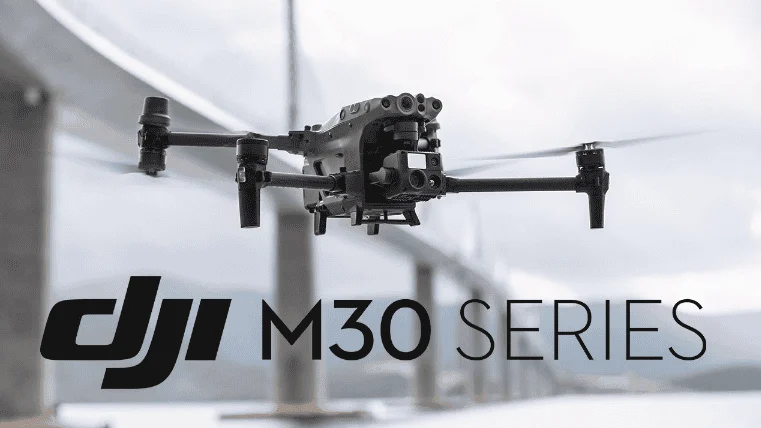
The DJI Matrice 30 (M30) series has reached a pivotal milestone in industrial drone operations through the successful integration and certification of the PRS-M30 parachute recovery system, developed by Aerial Vehicle Safety Solutions (AVSS). This technological advancement fundamentally alters the operational landscape for commercial drone pilots, allowing the enterprise-grade aircraft to fly over crowds and populated areas with a significantly reduced risk profile. By combining DJI’s robust airframe with AVSS’s specialized safety hardware, the M30 series now meets the rigorous safety requirements demanded by civil aviation authorities worldwide, including the Federal Aviation Administration (FAA) in the United States and the European Union Aviation Safety Agency (EASA). This development is not merely a hardware upgrade but a strategic shift that enables public safety agencies, infrastructure inspectors, and emergency responders to deploy unmanned aerial vehicles (UAVs) in environments that were previously restricted due to safety concerns and regulatory barriers.
The Regulatory Context: Overcoming Flight Over People (FOP) Restrictions
For years, the commercial drone industry has been constrained by strict regulations regarding "Flight Over People" (FOP). Under the FAA’s Part 107 regulations, flying a drone directly over human beings who are not directly involved in the operation was largely prohibited unless the operator obtained a specific waiver or the drone met stringent safety categories. These categories—ranging from Category 1 to Category 4—require proof that the drone will not cause a certain level of kinetic energy impact in the event of a failure.
The DJI M30, while highly capable, possesses a takeoff weight and rotor velocity that naturally place it outside the simplest "Category 1" classification. To operate in complex urban environments or over large public gatherings, the aircraft required a verified safety intervention system. The integration of the PRS-M30 parachute system addresses this by providing a redundant safety mechanism that complies with the ASTM F3322-18 standard. This international standard specifies the requirements for the design, manufacturing, and testing of deployable parachute systems for UAS, requiring 45 successful test deployments in various failure scenarios. By meeting these standards, the M30 equipped with an AVSS parachute provides the documented reliability necessary for civil aviation authorities to grant operational authorizations for flight over assemblies of people.
Technical Analysis of the AVSS PRS-M30 Parachute System
The PRS-M30 is a purpose-built safety solution designed specifically for the geometry and flight dynamics of the DJI Matrice 30. The system is comprised of several critical components: the parachute pod, the electronic trigger system, and the Flight Termination System (FTS).
The FTS is arguably the most critical element of the integration. In the event of a malfunction, the FTS immediately cuts power to the drone’s motors. This serves two purposes: it prevents the parachute lines from becoming entangled in spinning propellers and ensures that the drone does not continue to fly under power into a structure or person while the parachute is deploying. The trigger system utilizes autonomous sensors that monitor the drone’s altitude and orientation in real-time. If the system detects a "critical failure state"—such as an uncontrolled roll, a sudden drop in altitude, or a motor failure—it deploys the parachute in milliseconds without requiring manual input from the pilot.
The parachute itself is designed to reduce the kinetic energy of the falling M30 to levels that are considered non-lethal and significantly less damaging to property. This "soft landing" capability is the cornerstone of the safety case presented to regulators, transforming a potential high-velocity impact into a controlled descent.
The DJI Matrice 30: A Specialized Industrial Platform
The effectiveness of the parachute integration is amplified by the inherent capabilities of the DJI M30. Unlike consumer-grade drones, the M30 is an enterprise workhorse designed for high-stakes missions. Its technical specifications provide a stable foundation for the added safety hardware:
- Omnidirectional Sensing and Positioning: The M30 features dual-vision and ToF (Time of Flight) sensors on all six sides of the aircraft. This 360-degree obstacle avoidance system works in tandem with the parachute; while the parachute handles catastrophic mechanical failures, the sensors prevent collisions with buildings, trees, or poles in crowded urban environments.
- Advanced Redundancy: The M30 is built with redundancy in its flight control systems, including dual IMUs, barometers, and antennas. This "fail-safe" philosophy ensures that the drone can often correct minor issues before the parachute is even needed.
- Environmental Resilience: With an IP55 rating, the M30 can operate in heavy rain and high winds (up to 15 m/s). The AVSS parachute system is similarly ruggedized to ensure that even in adverse weather—where mechanical stress is highest—the safety system remains operational.
- Multi-Sensor Payload: The M30T (thermal) variant includes a 48 MP zoom camera, a 12 MP wide camera, and a 640×512 radiometric thermal camera. This allow operators to monitor crowds or inspect assets from a safe distance, but the ability to fly directly over the area ensures the best possible angles for data collection.
Chronology of Integration and Market Adoption
The journey toward making the DJI M30 safe for flight over crowds followed a meticulous development timeline. Following the release of the M30 series in early 2022, industrial users immediately identified the need for a safety solution that would satisfy the evolving EASA and FAA frameworks.
In late 2022, AVSS began the rigorous testing process for the PRS-M30. This involved hundreds of hours of laboratory testing and field deployments to ensure the FTS would not interfere with the M30’s sophisticated O3 Enterprise transmission system. By 2023, the first batches of the PRS-M30 were delivered to early adopters in the public safety sector.
By 2024, the integration became a standard recommendation for DJI’s enterprise partners. The synergy between DJI’s hardware and AVSS’s safety modules has since been validated through various "Letters of Acceptance" from the FAA, which list the M30/AVSS combination as a compliant means of meeting safety requirements for specific high-risk operations.
Strategic Implications for Public Safety and Infrastructure
The ability to fly over crowds significantly expands the ROI (Return on Investment) for organizations utilizing the DJI M30. The implications are profound across several sectors:
Law Enforcement and Event Management
Police departments can now use the M30 to monitor large-scale public events, such as marathons, protests, or festivals. Previously, pilots had to maintain a perimeter around the crowd, often losing the "bird’s eye view" necessary to identify specific incidents. With a parachute-equipped M30, law enforcement can hover directly over key intersections or gathering points, providing real-time situational awareness that can prevent stampedes or identify criminal activity.
Search and Rescue (SAR)
In disaster response scenarios, such as flooding or earthquakes, survivors often gather in clearings or on rooftops. SAR teams can now fly directly over these groups to deliver supplies, provide thermal assessments of health, or communicate via loudspeakers without the fear that a mechanical glitch will result in the drone falling onto the very people they are trying to save.
Urban Infrastructure Inspection
Inspecting bridges, cellular towers, and high-rise facades in dense cities like New York, London, or Jakarta often requires flying over sidewalks and busy streets. The PRS-M30 integration allows utility companies to conduct these inspections during business hours rather than waiting for late-night windows when the streets are empty, thereby reducing labor costs and increasing operational efficiency.
Analysis of the Broader Impact on the Drone Industry
The successful deployment of the DJI M30 over crowds represents a maturing of the drone industry. It signals a move away from the "hobbyist" origins of the technology toward a highly regulated, professionalized aviation sector. This shift is characterized by a "safety-first" culture that mirrors traditional manned aviation.
Furthermore, this development puts pressure on other manufacturers to provide similar integrated safety solutions. As regulators become accustomed to the presence of parachute-equipped drones in public spaces, it may soon become a mandatory requirement for any drone over a certain weight class operating in urban environments. This sets a high bar for entry, favoring established players like DJI and AVSS who have the capital and engineering depth to complete the rigorous certification processes.
The economic impact is also noteworthy. By enabling more complex missions, the M30 with a parachute system reduces the need for expensive manned helicopter flights, which are not only more costly but also carry a higher risk of fatal accidents in urban settings. The "drone-as-first-responder" (DFR) programs being adopted by various cities are the direct beneficiaries of this technology, as it allows drones to be stationed on rooftops and dispatched across the city, flying over traffic and people to reach an emergency scene in seconds.
Conclusion
The integration of the AVSS PRS-M30 parachute system into the DJI Matrice 30 series is a transformative development that bridges the gap between technical capability and regulatory compliance. By addressing the primary safety concern—the risk of kinetic impact during a failure—this combination unlocks the full potential of the M30 for missions in the heart of our most populated cities. As the industry continues to evolve, the M30 stands as a testament to the power of strategic partnerships in solving the complex challenges of modern aerial robotics. For operators, it provides the peace of mind that their missions are protected by the highest standards of safety engineering; for the public, it ensures that the benefits of drone technology do not come at the expense of personal safety. The DJI M30 is no longer just an eye in the sky; with the PRS-M30, it is a safe, reliable, and indispensable tool for the modern age.