The persistent challenge for photographers, regardless of their technical proficiency, often lies in bridging the gap between a technically sound image and one that resonates deeply with viewers. While proper exposure, sharp focus, and balanced composition form the bedrock of good photography, many images still convey a sense of being unfinished or lacking a definitive visual punch. This subtle yet critical difference frequently hinges on the application of nuanced finishing touches in post-processing. Skylum’s Luminar Neo, a prominent player in the AI-powered photo editing software market, addresses this need with its "Color Harmony" feature, a sophisticated tool designed to refine tone, contrast, and color balance with precision, effectively transforming decent shots into stunning visual narratives.
Contextualizing the ‘Unfinished’ Image in Digital Photography
The journey of an image from sensor to final display is a complex one, increasingly reliant on the capabilities of post-processing software. For decades, photographers have wrestled with the intricacies of color grading, tonal adjustments, and overall image cohesion. Before the digital age, these adjustments were made in the darkroom, requiring extensive chemical knowledge and artistic intuition. The advent of digital photography and powerful software like Adobe Photoshop and Lightroom democratized these processes, making advanced editing accessible to a broader audience. However, the sheer volume of options and the complexity of traditional tools often left photographers overwhelmed, leading to images that were technically correct but emotionally sterile. The concept of an "unfinished" image in the digital era often refers to a photograph that lacks a cohesive aesthetic, a deliberate mood, or a clear visual direction that elevates it beyond a mere record of a scene. This is where tools like Color Harmony become crucial, offering a bridge between technical competence and artistic expression.

The Evolution of Post-Processing and AI’s Transformative Role
The landscape of photo editing has seen rapid evolution, particularly with the integration of Artificial Intelligence (AI). Traditional editing workflows often involved painstaking manual adjustments, layer by layer, slider by slider. AI has begun to streamline these processes, offering intelligent automation that can analyze images and suggest or apply complex edits with remarkable efficiency. Skylum has positioned Luminar Neo at the forefront of this AI revolution, aiming to empower photographers with tools that simplify complex tasks without sacrificing creative control. The introduction of features like Sky AI, Structure AI, and Portrait AI demonstrated Skylum’s commitment to leveraging machine learning for impactful, time-saving edits. Color Harmony, while perhaps less overtly "AI" in its naming than other features, embodies this philosophy by providing an intuitive interface for highly complex color interactions, making sophisticated color grading accessible to a wider user base. This shift not only accelerates the editing process but also encourages photographers to experiment with color theory in a more practical, real-time manner.
Unpacking Color Harmony: A Deep Dive into Nuance
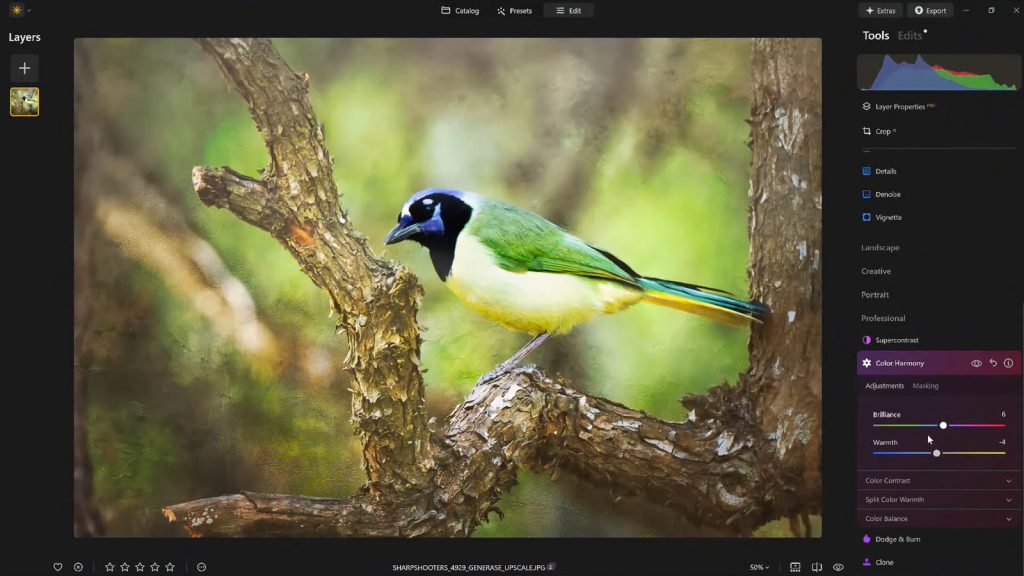
Nestled within Luminar Neo’s Professional Tools section, Color Harmony is an integrated suite of controls that allows for granular adjustments across several critical aspects of an image’s color and tonal profile. It distinguishes itself by focusing on the interaction between colors rather than broad, often destructive, saturation or hue shifts. This nuanced approach is vital for maintaining the integrity of an image while enhancing its visual appeal.

-
Brilliance: Unlike a standard saturation slider that uniformly boosts all colors, Brilliance intelligently increases or decreases the vibrancy of colors while striving to preserve natural detail and avoid oversaturation artifacts. A slight boost can imbue colors with a richer, more luminous quality, akin to how light subtly enhances pigments. Conversely, gentle reduction can soften overly aggressive hues, creating a more subdued or vintage aesthetic. This control is paramount in achieving a sophisticated look that avoids the garishness often associated with heavy-handed color adjustments. Industry data suggests that a significant percentage of amateur photographers struggle with over-saturating images, leading to unnatural results. Brilliance offers a targeted solution to this common pitfall.
-
Warmth: This control allows for the adjustment of the overall color temperature of an image, moving it towards a warmer, golden glow or a cooler, bluer cast. The strategic application of warmth or coolness can profoundly impact the emotional tone of a photograph. A landscape captured at sunset might benefit from a slight increase in warmth to amplify the golden hour’s natural ambiance, while a dramatic portrait could gain gravitas from a subtle cooling effect. The key, as emphasized by Skylum’s Director of Education, Vanelli, is to align the warmth with the intended emotional narrative, ensuring that the adjustment enhances, rather than dictates, the mood.
-
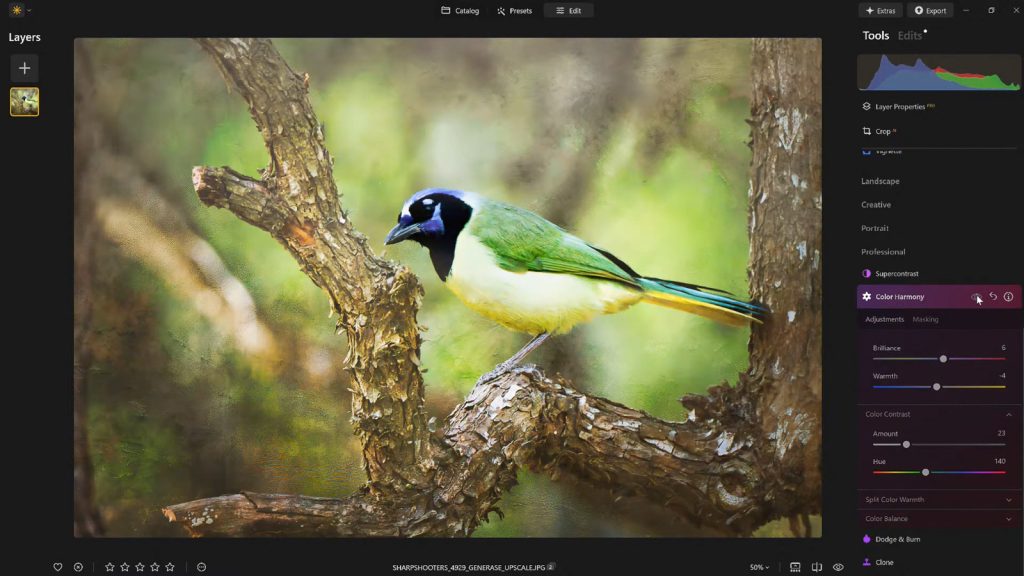
Color Contrast: This slider manipulates the visual tension between different color ranges, particularly accentuating the distinction between highlights and shadows. By increasing color contrast, elements within an image can gain a heightened sense of separation and depth, making the composition feel more dynamic and three-dimensional. This is especially effective in scenes with varied color palettes, where it can make subjects pop without resorting to heavy sharpening or local contrast adjustments. It’s a subtle but powerful tool for guiding the viewer’s eye and adding visual interest, a technique frequently employed by professional retouchers to give images a polished, editorial feel.
-
Split Warmth: Offering a more advanced level of control, Split Warmth allows photographers to independently adjust the warm and cool tones within specific areas of an image. This capability is invaluable for managing complex lighting scenarios, such as mixed lighting conditions where warm incandescent light might clash with cooler ambient light. It can also be used creatively to introduce deliberate color separation, for example, making foreground elements warmer and background elements cooler to enhance depth or create a specific artistic effect. While not always necessary for every image, its availability provides an extra layer of finesse for challenging compositions or stylistic grading.

-
Color Balance: Perhaps the most sophisticated component of Color Harmony, Color Balance provides independent control over the color tones in shadows, midtones, and highlights. This tri-tonal control allows for extremely targeted adjustments, enabling photographers to fine-tune the atmospheric qualities of their images. Shifting the midtones slightly towards a specific hue can subtly alter the overall feel of a landscape, making it more inviting or ethereal. In portraiture, precise color balancing in the highlights and shadows can ensure accurate skin tones and a harmonious overall palette. This granular control is essential for achieving consistent color grading across an entire series of photographs, a hallmark of professional workflow and brand identity. Skylum representatives note that this level of control, traditionally found in more complex software, has been streamlined in Luminar Neo to be more intuitive, reflecting user feedback for greater creative agency.
Beyond Color: The Strategic Application of Vignettes
Once the intricate work of color adjustments is complete, photographers often seek methods to subtly guide the viewer’s eye towards the primary subject. Vignetting, a technique with historical roots in analog photography, serves precisely this purpose. By gently darkening the edges of an image and, conversely, introducing a touch of "Inner Light" in the center, a vignette creates a natural visual spotlight. This effect draws attention inward, enhancing focus and reinforcing the composition without the need for complex masking or local adjustments. When applied judiciously, a vignette can add depth and atmosphere, contributing to the overall storytelling without overtly announcing its presence. It’s a quiet but profoundly effective compositional tool that complements the detailed work done with Color Harmony, ensuring the viewer’s experience is directed and immersive.
Efficiency and Consistency: The Power of Presets
In professional photography, consistency is paramount. Whether working on a client project, a personal series, or maintaining a distinct artistic style, the ability to replicate a specific look efficiently is invaluable. After investing time and effort into perfecting an image with Color Harmony and other tools, Luminar Neo allows photographers to save their custom adjustments as a preset. This workflow not only guarantees a consistent editing style across multiple images but also offers a significant advantage for iterative refinement. Reapplying a saved preset to other images within a series provides a quick baseline, drastically reducing editing time. Furthermore, the ability to revisit and refine a preset after a break is crucial. Photographers often find that after stepping away from an image, they can identify areas where an edit might have been pushed too far. With a saved preset, the effect can be reapplied at a reduced strength (e.g., 70-80%), preserving the core aesthetic while softening any over-editing, thus fostering a more reflective and controlled post-processing workflow. This feature aligns with industry demands for efficiency, especially for photographers handling large volumes of work.
Industry Perspective and Market Implications
Luminar Neo’s Color Harmony feature, along with its broader suite of AI tools, positions Skylum as a significant innovator in the competitive photo editing software market. While established giants like Adobe Lightroom and Photoshop offer comprehensive toolsets, Skylum’s strategy focuses on AI-driven simplification and creative enhancement. Industry analysts frequently point to the growing demand for software that combines powerful capabilities with user-friendly interfaces, especially as photography becomes more accessible to a wider demographic. Features like Color Harmony address this demand by demystifying complex color grading techniques, making them approachable for advanced amateurs and professionals alike.
The implication for the photography industry is multi-faceted. Firstly, it lowers the barrier to entry for achieving professional-level finishing touches, allowing more photographers to produce high-quality work. Secondly, it frees up valuable time for seasoned professionals, enabling them to focus more on their creative vision, client interaction, and shooting rather than tedious manual adjustments. Thirdly, it intensifies competition among software developers, driving further innovation in AI and user experience. As the market for visual content continues to expand rapidly, tools that can efficiently and effectively enhance images will remain critical.
Expert Insight and Skylum’s Vision
Vanelli, the Director of Education at Skylum and a recognized expert in visual arts, frequently highlights the philosophical underpinnings of Luminar Neo’s development. His background, transitioning from a martial arts champion to an educator in visual arts, reflects a dedication to precision and mastery. He emphasizes that tools like Color Harmony are not about automation for automation’s sake, but about providing photographers with intelligent assistance that augments their creative control. "What sets apart a truly compelling image often isn’t a dramatic change—it’s a handful of carefully considered enhancements," Vanelli states. This philosophy underscores Skylum’s commitment to delivering tools that add depth, emotion, and cohesion without over-processing. His educational content, including articles and the "Luminar Coffee Break" show, consistently demonstrates practical applications of these tools, further solidifying Skylum’s role not just as a software provider but also as an educational resource for the photographic community.
Conclusion: Redefining the Finished Photograph
In an era where visual content dominates, the ability to produce images that stand out is more critical than ever. Luminar Neo’s Color Harmony feature represents a significant stride in achieving this goal, offering a sophisticated yet intuitive approach to color grading and tonal refinement. Combined with complementary tools like vignetting and the efficiency of custom presets, it empowers photographers to move beyond technically correct images to create truly compelling visual stories. For photographers seeking to imbue their work with professional polish, depth, and emotion without succumbing to the pitfalls of over-editing, these finishing tools offer a balanced blend of control and creative freedom. The ongoing development of such features by companies like Skylum suggests a future where advanced photo editing becomes even more intuitive and powerful, continually redefining what constitutes a "finished" photograph.