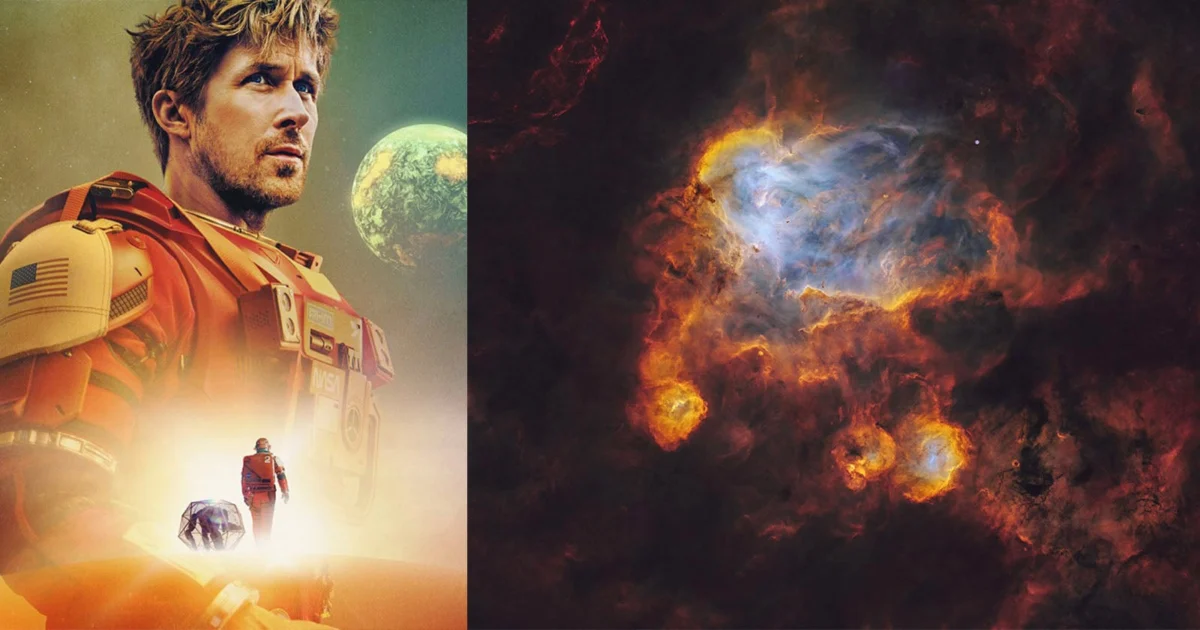
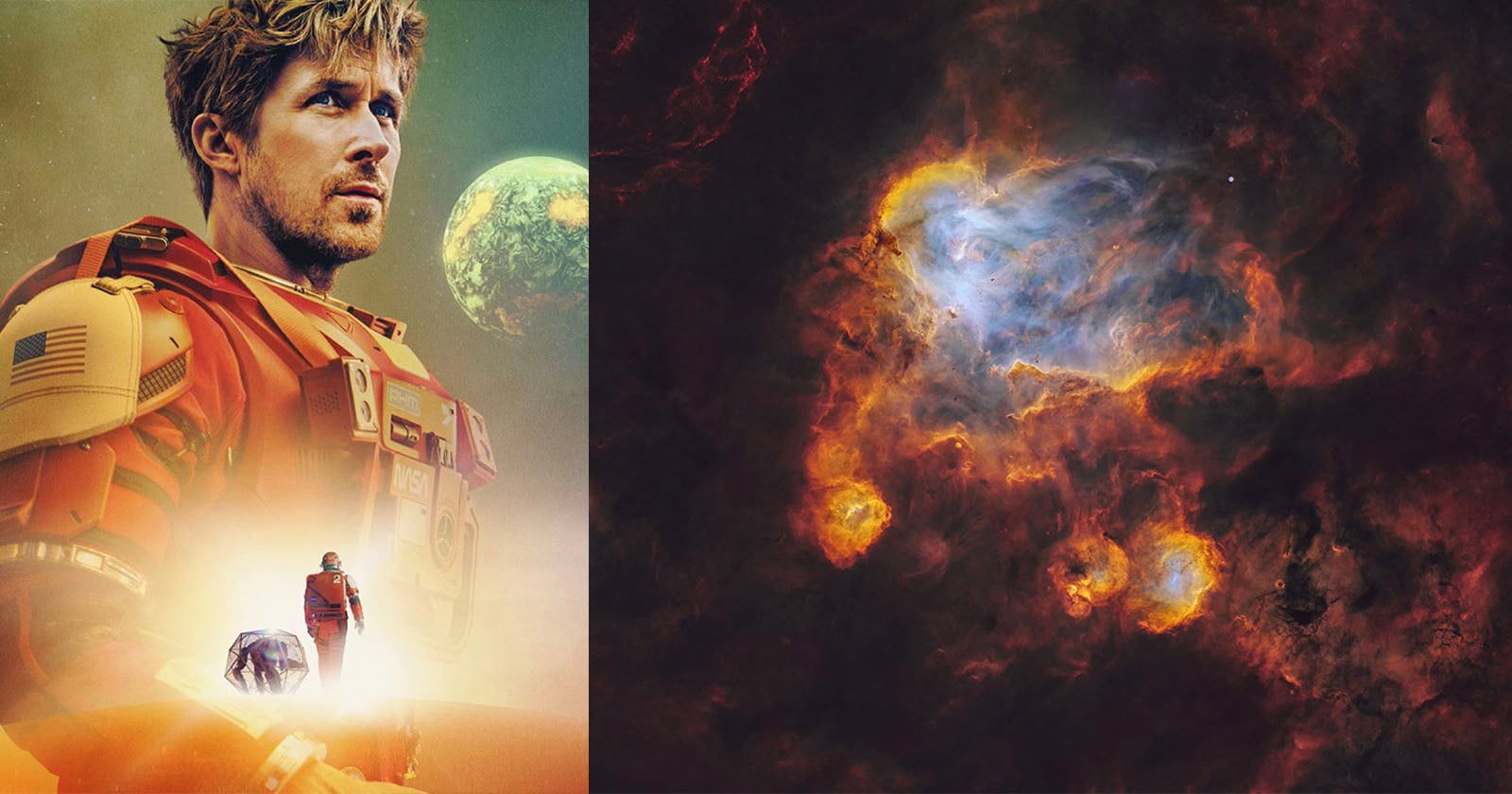
Brisbane, Australia – In a remarkable testament to the intersection of art, science, and cinematic storytelling, astrophotographer Rod Prazeres has achieved a lifelong dream, seeing his breathtaking images of distant galaxies and nebulae grace cinema screens worldwide. His exquisite deep space photography forms a pivotal visual backdrop during the end credits of the highly anticipated science fiction epic, Project Hail Mary, starring Academy Award nominee Ryan Gosling. This significant collaboration not only highlights Prazeres’s exceptional talent but also underscores a growing appreciation within the film industry for authentic scientific imagery.
The film, based on Andy Weir’s best-selling novel of the same name and directed by the acclaimed duo Phil Lord and Christopher Miller, plunges audiences into a gripping narrative of survival and discovery. Gosling portrays Dr. Ryland Grace, an astronaut who awakens on a spacecraft with amnesia, tasked with a mission critical to saving humanity. While the main narrative captivates with its suspense and scientific intrigue, it is the film’s denouement, particularly its end credits, that offers a profound visual extension of its cosmic themes. As the final names scroll, Prazeres’s meticulously captured celestial vistas — swirling nebulae, vibrant star-forming regions, and the ethereal glow of distant cosmic structures — provide a mesmerizing and authentic visual coda, inviting viewers to linger in the wonder of the universe depicted on screen.
From Backyard Hobbyist to Hollywood Contributor: A Rapid Ascent
Rod Prazeres’s journey into the intricate world of astrophotography began relatively recently, in July 2023. What started as a burgeoning passion quickly evolved into a dedicated pursuit, transforming his backyard in Brisbane, Australia, into a personal observatory. Within a remarkably short span of three years, his dedication to capturing the cosmos through his lens garnered unexpected attention from the pinnacle of the entertainment industry.
The initial contact came as a surprise: an Instagram message from a Los Angeles-based production company. "It all started with an unexpected Instagram message from a production company in Los Angeles," Prazeres recounted. "They were working on a sci-fi film and asked if I’d be open to licensing some of my work for a sequence." This unexpected overture left the photographer in a state of disbelief. "I remember thinking, ‘this can’t be real’," Prazeres shared on his website, rpastro.square.site. The confidentiality surrounding the production meant that Prazeres had to keep the exciting development under wraps for several months. "When something like this is still moving, you don’t want to speak too early," he explained, navigating the delicate balance of excitement and professional discretion.
The initial discussions hinted at his images being used in a different sequence within the film. However, as production progressed, the creative direction evolved, ultimately leading to his stunning deep space photographs being selected for the end credits. This placement proved to be a perfect fit, providing a contemplative and visually rich experience for audiences as they reflect on the film’s cosmic narrative. Prazeres’s work serves as a powerful reminder of the universe’s grandeur, echoing the film’s themes of exploration and humanity’s place within the vastness of space.
The Art and Science Behind the Lens: Capturing the Unseen Universe
Prazeres’s astrophotography is a meticulous blend of scientific rigor and artistic vision. He explained to PetaPixel that many of the images featured in Project Hail Mary were captured from his suburban backyard, a detail that adds another layer of awe to his achievement. "This is part of what makes the whole thing feel so surreal to me," he noted. "There’s something pretty amazing about photographing deep space from suburban skies and then seeing that work on a cinema screen." This feat challenges the common misconception that professional-grade astrophotography requires remote, dark-sky locations, showcasing what is possible with dedication and the right techniques even amidst light pollution.
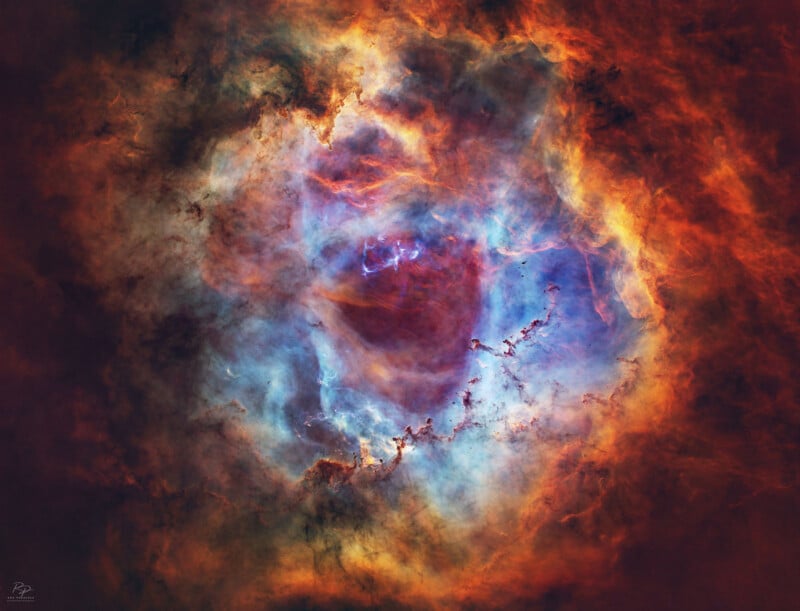
The technical process behind these captivating images is complex and time-consuming, requiring significant patience and precision. Prazeres utilizes a motorized mount that precisely tracks the sky, counteracting Earth’s rotation to keep celestial objects perfectly framed and steady during long exposures. This fundamental technique is crucial for preventing star trails and ensuring sharp details of distant, faint objects.
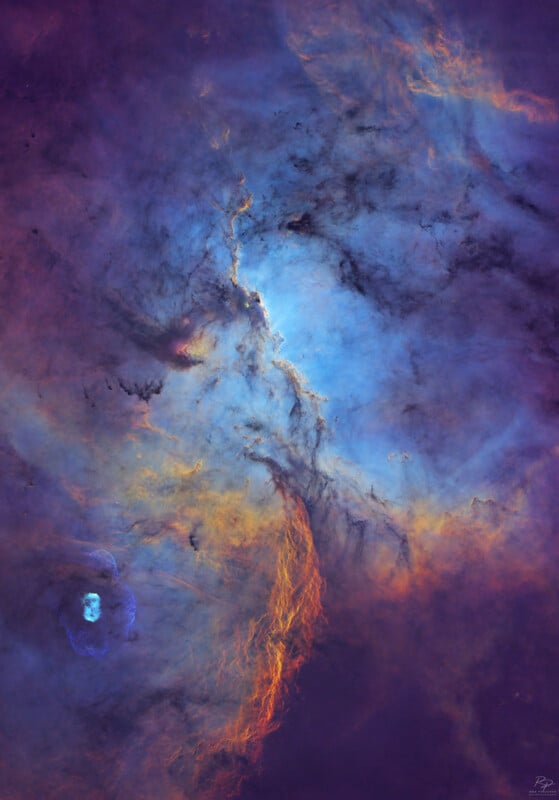
His methodology involves capturing hundreds of long exposures, often lasting between five and ten minutes each, over multiple nights. To reveal structures otherwise imperceptible to the naked eye or standard photography, he employs specialized narrowband filters, such as Hydrogen alpha and Oxygen III. These filters isolate specific wavelengths of light emitted by gases within nebulae, allowing for the capture of intricate details and vibrant colors that define these cosmic nurseries. The result is an image built from layers of light that tells a story of cosmic processes happening millions of light-years away.
A Commitment to Authenticity in a Digital Age
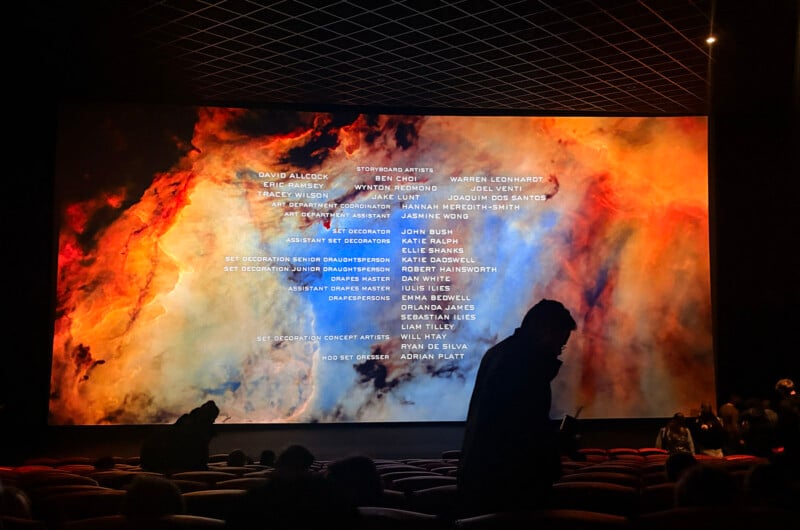
One of the most compelling aspects of Prazeres’s contribution to Project Hail Mary is the production team’s explicit desire for authentic, real astronomical data. In an era increasingly dominated by artificial intelligence (AI) and computer-generated imagery (CGI), this commitment to genuine scientific photography stands out. Prazeres recounted a particularly validating moment: "At one point they even asked how I capture these images, which was one of those moments that made it feel very real, very fast."
This inquiry highlighted the production team’s genuine interest in the veracity of his work. "It meant a lot to know they were genuinely excited to use real astronomical data and real structures from the night sky, rather than generating something from scratch," Prazeres stated. He sees this as a victory not just for himself but for the entire astrophotography community, validating the immense effort and technical skill required to produce such images. It sends a powerful message that authenticity still holds immense value in high-budget cinematic productions, especially when depicting the wonders of the universe.
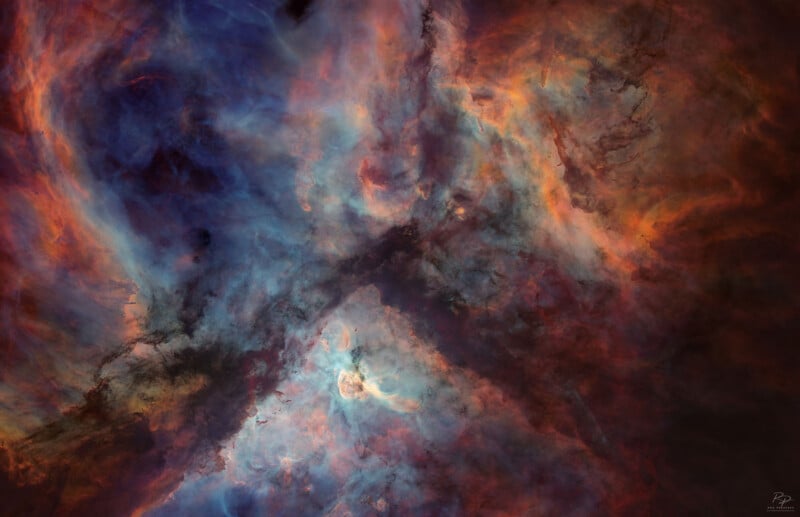
For the film’s end credits, Prazeres delivered "starless" versions of his images. This artistic choice ensured that the brilliant stars within the frames did not "compete for attention" with the scrolling credits, allowing the ethereal nebulae and galactic structures to serve as a softer, yet equally profound, backdrop. He clarified that "The underlying structures and color are still built from real captured data," reinforcing that no generative AI "of any kind" was used in the creation or processing of these final cinematic assets.
The Meticulous Process: From Raw Data to Cosmic Art
The raw data collected through long exposures is just the beginning. Prazeres’s post-processing workflow is as critical as the capture itself. Individual frames undergo rigorous calibration to correct for sensor noise, dust shadows on the camera sensor, and various optical artifacts introduced by the telescope and camera system. Following calibration, these frames are precisely aligned and stacked. This stacking process is paramount in astrophotography, as it dramatically reduces noise and enhances the signal from faint celestial objects, effectively allowing the hidden structures of the distant universe to emerge from the darkness.
This painstaking process reveals the faint, intricate structures of nebulae and galaxies that are otherwise almost entirely lost in the raw data. The vibrant colors and delicate wisps of cosmic gas and dust seen in his final images are not fabricated but are carefully extracted and enhanced representations of real light captured from billions of miles away. It’s a testament to the scientific precision and artistic interpretation that defines modern astrophotography.

Broader Implications and the Community Impact
The inclusion of Prazeres’s work in Project Hail Mary carries significant implications beyond his personal achievement. For the broader astrophotography community, it represents a moment of elevated recognition and validation. It showcases the artistic merit and scientific accuracy of amateur and semi-professional astrophotographers, proving that their work can meet the exacting standards of Hollywood. This exposure can inspire a new generation of enthusiasts to look up at the night sky and engage with the wonders of the cosmos, potentially fostering greater interest in astronomy and STEM fields.
Moreover, in a world grappling with the ethical and creative implications of generative AI, the film’s choice to use real astronomical data sends a powerful message. It reinforces the irreplaceable value of human observation, scientific data collection, and artistic interpretation. It highlights that while AI can create impressive visuals, the genuine connection to reality, the painstaking effort, and the inherent awe inspired by actual cosmic phenomena offer a unique and profound experience that simulated imagery often struggles to replicate.
A Vision for the Future
Rod Prazeres’s unexpected journey from backyard enthusiast to cinematic contributor underscores the democratizing power of modern technology and the internet. Platforms like Instagram have become unexpected conduits for talent discovery, connecting artists with global opportunities. For Prazeres, this experience is likely to be a springboard, opening new avenues for his work and expanding his reach within both the scientific and artistic communities.
Audiences eager to witness these cosmic marvels can do so by staying through the end credits of Project Hail Mary. For those who wish to bring a piece of the universe into their homes, prints of the photos featured in the film are available for purchase on his website, rpastro.square.site/s/stories/phm. Further examples of his stunning work can be explored on his Instagram account, @deepskyjourney, and his primary website, rpastro.square.site. Prazeres’s achievement serves as a vivid reminder that the universe, in all its spectacular glory, is not only a subject of scientific inquiry but also an endless source of artistic inspiration, capable of transcending the boundaries of traditional media and reaching audiences on a global cinematic scale.
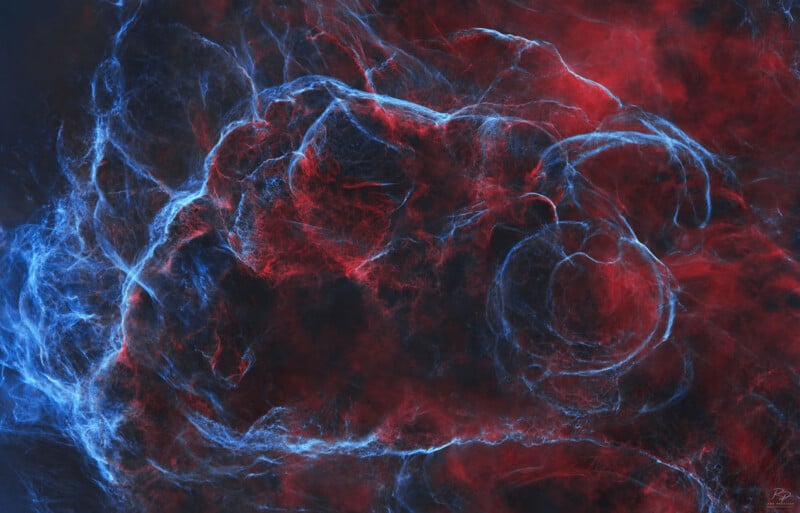
Image credits: Photographs by Rod Prazeres