The intersection of analog photography and domestic transitions has long served as a focal point for archival preservation, a phenomenon recently exemplified by the documentation of a fourteen-year-old canine’s final days through the lens of a Rolleiflex 2.8F. This specific instance of bereavement, occurring within the context of international travel and family obligation, highlights the profound psychological impact of pet loss and the role of traditional photographic processes in the mourning ritual. The event centers on the death of Milo, a long-term domestic companion, whose passing coincided with the conclusion of a family excursion to Europe. The case underscores a broader societal trend toward the "humanization" of pets and the increasing utilization of high-fidelity analog mediums to capture the "soulful" essence of non-human family members during their terminal decline.
Chronology of Events and the Intersection of Family Caretaking
The timeline leading to this specific loss is marked by a series of domestic challenges and rescheduled commitments. Originally planned for the previous year, a spring vacation to Europe was delayed following a medical emergency involving a 96-year-old family matriarch. This previous event had also been documented via analog photography, specifically using a Rolleiflex 2.8F, establishing a pattern of using medium-format equipment to navigate periods of family instability.
By the spring of the current year, the trip was finally undertaken, despite the declining health of Milo, the family’s senior dog. Over the month preceding the departure, the animal had exhibited a gradual failure of physical faculties, leading the owners to consider a second postponement. However, under the assurance of experienced caregivers who remained at the residence with Milo and a younger dog, Ollie, the family proceeded with their itinerary.
The animal’s physiological decline accelerated during the family’s return flight to John F. Kennedy International Airport (JFK). Reports indicate that the canine passed away peacefully while the owners were in transit from the airport to their residence. Upon arrival, the owners found the animal’s body still warm, suggesting the expiration occurred mere minutes before their return. This timing highlights a common narrative in pet bereavement: the occurrence of death during a brief window of absence or immediately upon the owner’s return, a phenomenon often discussed in veterinary behavioral circles but lacking definitive clinical explanation.
Technical Analysis of the Final Portraiture
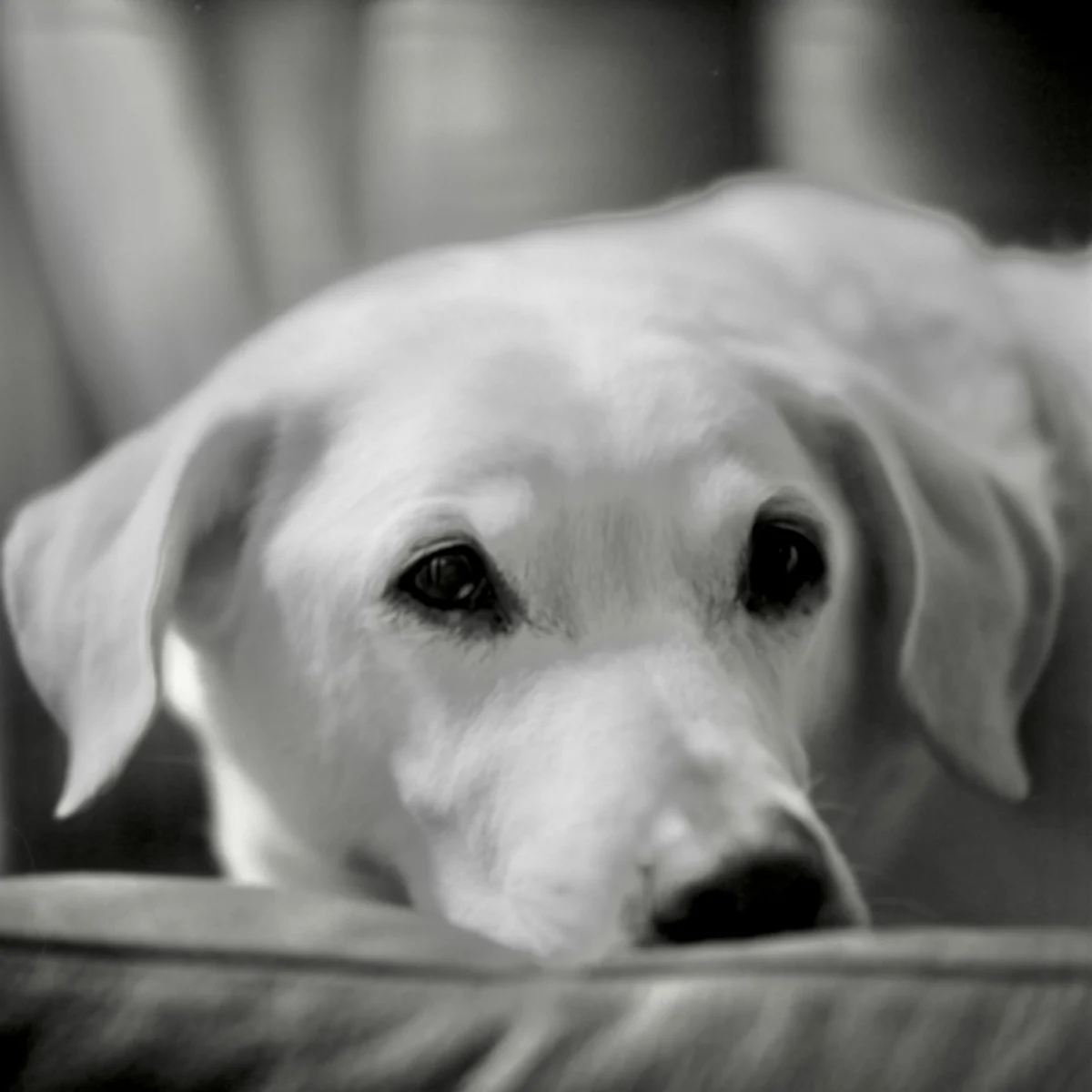
In anticipation of the animal’s limited lifespan, the photographer—an experienced practitioner in analog methods—captured a series of portraits on the eve of the European departure. These images remained latent on a roll of Kodak Tri-X 400 film, housed within a darkroom drawer until the morning following the animal’s death.
The technical specifications of the resulting "final portrait" provide insight into the deliberate nature of this documentation. The photographer utilized a Rolleiflex 2.8F, a twin-lens reflex (TLR) camera renowned for its Zeiss Planar or Schneider Xenotar lenses, which are capable of producing exceptional detail and smooth tonal transitions. To achieve an intimate perspective, a Rolleinar II Close-Up Adaptor was employed. This accessory allows the TLR to focus at significantly closer distances than the standard minimum, creating a shallower depth of field and a "dreamy" aesthetic that isolates the subject from the background.
The film was processed using a rotary method with Pyrocat PMK (Pyrogallol-Metol-Kodalk) developer. In the realm of fine-art photography, Pyrocat PMK is valued for its ability to produce a "tanning" or "staining" effect on the negative, which enhances edge acutance and provides a unique highlight separation. This choice of chemistry suggests a desire for archival permanence and a specific tonal range that digital sensors often struggle to replicate. The final output, a 10×10 inch darkroom print, represents a tangible artifact of the animal’s life, transitioning from a living presence to a curated memory.
Supporting Data: The Magnitude of Pet Bereavement
The emotional weight of this event is supported by contemporary research into the "human-animal bond." According to the American Pet Products Association (APPA), approximately 66% of U.S. households own a pet, with a significant majority viewing these animals as integral family members. Clinical studies in the field of psychology have identified that the grief experienced following the death of a pet can be "qualitatively different" from the loss of a human relative, yet no less profound.

Psychologists often categorize pet loss under "disenfranchised grief"—grief that is not always fully acknowledged or validated by society. However, the intensity of this mourning is linked to the role of pets as "attachment figures" who provide unconditional support and consistent presence in the domestic sphere. For a dog like Milo, who lived fourteen years, his life spanned the developmental stages of the family’s children, effectively serving as a chronological marker for over a decade of family history.
Data from the Veterinary Diagnostic Laboratory indicates that the average lifespan of a medium-sized dog ranges from 10 to 13 years, placing Milo’s 14-year tenure at the upper end of the biological spectrum. The transition from "puppy rambunctiousness" to the "relaxed posture" of old age, as documented in the family’s photographic archives, mirrors the aging process of the human household, creating a parallel narrative of decline and maturity.
Sociological Context and the Evolution of Domestic Documentation
The practice of photographing pets has evolved from casual snapshots to a more formalized genre of domestic art. In the case of Milo, the archive includes images of the animal in various roles: a "concerned brother" watching over children at a pool, and a participant in holiday rituals adorned with ribbons or seasonal attire.
The shift toward using professional-grade analog equipment for these final moments reflects a broader movement in the "Slow Photography" community. Unlike digital photography, which allows for infinite, often disposable, captures, analog photography requires a deliberate expenditure of resources and time. Each frame on a roll of 120mm film represents a conscious decision. The act of sitting for a portrait—where the animal "instinctively knew what was expected"—becomes a collaborative act between the owner and the pet, a final shared task before the end of life.
Institutional and Community Responses to the Loss
Within the photography community, specifically platforms like 35mmc, the sharing of such personal narratives serves a dual purpose: it provides a technical case study for other practitioners and offers a space for communal mourning. Reactions from the photographic community often focus on the "soulful expression" captured in the final frames, noting how the medium format’s rendering of the eyes and fur creates a sense of presence that transcends the flat nature of a digital screen.
Furthermore, the creation of a physical darkroom print is viewed by many as a necessary step in the grieving process. In an era of digital volatility, where thousands of images may reside on a cloud server without ever being viewed, the 10×10 inch print serves as a permanent memorial. It is an object that occupies physical space in the home, much like the animal did for fourteen years.
Broader Implications and Analysis
The death of a long-lived pet and the subsequent documentation of that loss highlight several key implications for modern domestic life:
- The Role of Technology in Grief: Analog technology, despite its perceived obsolescence, provides a tactile and ritualistic framework for processing loss. The delay between "taking" the photo, "developing" the film, and "making" the print allows for a staggered engagement with grief.
- The Archival Value of the Pet: As pets increasingly occupy the role of "surrogate children" or "constant companions" in modern urban environments, their archival legacy becomes as important to the family history as that of human ancestors.
- The Unpredictability of End-of-Life Care: The timing of Milo’s death—occurring while the family was in transit—illustrates the difficulty of managing terminal care alongside other life responsibilities. It highlights the importance of support networks (the friends who cared for the dogs) in navigating the finality of a pet’s life.
In conclusion, the passing of Milo is not merely a private domestic event but a case study in the power of photography to anchor memory. The "dreamiest frame" on a roll of Tri-X 400, captured on the eve of a final departure, stands as a testament to a fourteen-year relationship. As the 10×10 inch print finds its place in the home, it ensures that the animal’s unruffled, soulful expression remains a constant in the family’s visual landscape, bridging the gap between the presence of the living and the permanence of the recorded image.