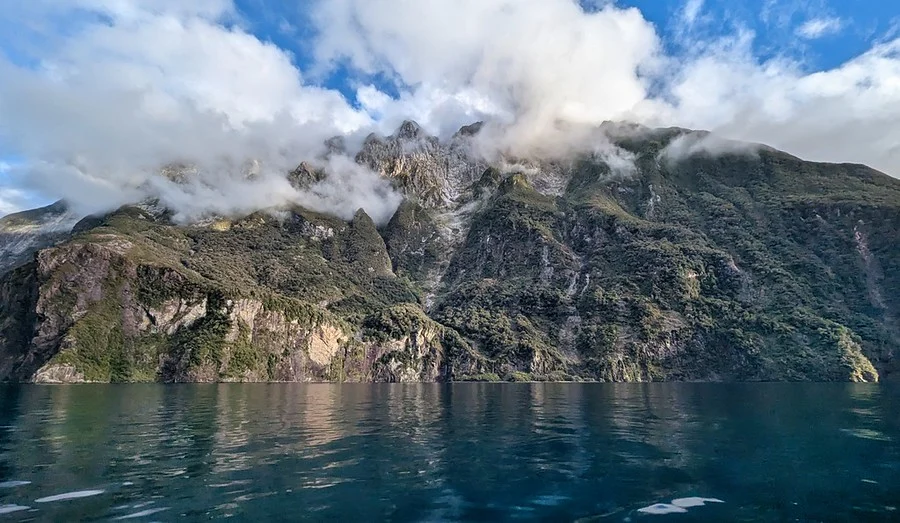
The dramatic entrance to Milford Sound, known to the Māori people as Piopiotahi, presents a breathtaking spectacle as one navigates from the open ocean into the sheltered embrace of this iconic New Zealand fjord. The provided image captures a quintessential moment of this transition, showcasing the sheer, verdant cliffs that plunge into the deep, dark waters, a testament to the immense geological forces that shaped this natural wonder over millennia. This article delves into the significance of such iconic natural landscapes, their ecological importance, and the growing global recognition of their value, contextualizing the visual representation of Milford Sound within a broader framework of natural heritage and conservation.
The Majestic Gateway: A Visual Introduction
The photograph, as described, offers a glimpse into the awe-inspiring panorama that greets visitors approaching Milford Sound. This particular "chunk of the scene" is not merely a picturesque view but represents the initial immersion into a unique and powerful environment. The sheer scale of the cliffs, often shrouded in mist or adorned with cascading waterfalls, immediately conveys a sense of raw, untamed nature. The juxtaposition of the deep, still waters of the fjord against the towering, ancient rock faces creates a profound visual impact, a prelude to the deeper exploration of this UNESCO World Heritage site. Such vistas serve as powerful reminders of Earth’s geological history, with Milford Sound itself being a product of glacial carving, a process that began millions of years ago. The U-shaped valleys, steep-sided fiords, and hanging valleys characteristic of this region are all hallmarks of extensive glaciation.
Milford Sound: A Geological and Ecological Marvel
Milford Sound is one of the most famous of New Zealand’s 15 fiords, stretching approximately 16 kilometers inland from the Tasman Sea. Its dramatic landscape is characterized by sheer cliffs rising thousands of feet from the water’s edge, many adorned with spectacular waterfalls, the most famous being Stirling Falls and Bowen Falls. The depth of the fjord, reaching up to 530 meters, is also a notable feature, creating a unique marine environment. The two layers of water—a freshwater layer on top, fed by rainfall and river runoff, and a darker, saltier layer below—support a diverse array of marine life, including seals, dolphins, and penguins. The upper layer’s tannin content, derived from the dense rainforest vegetation that carpets the surrounding mountains, gives the water its distinctive dark hue.
The surrounding Fiordland National Park, which encompasses Milford Sound, is a UNESCO World Heritage Site, recognized for its outstanding universal value. This designation underscores the global significance of the area’s natural beauty, ecological processes, and geological formations. The park is home to a rich biodiversity, with many endemic species. The dense temperate rainforests are a critical habitat for native birds, including the kiwi, the takahe, and the kea. The marine ecosystem within the fiord supports a variety of fish, crustaceans, and marine mammals, some of which are rarely seen elsewhere. The unique underwater visibility conditions, due to the dark freshwater layer, allow for the presence of deep-water corals and black-coral gardens at depths much shallower than typically found, creating an underwater spectacle accessible to divers and snorkelers.
The Journey Through Time: Formation and Human Interaction
The geological narrative of Milford Sound is one of immense time and powerful natural forces. The creation of the fiords began during the Pleistocene epoch, with massive glaciers carving through the landscape over several ice ages. As the glaciers retreated, the valleys they had carved were flooded by the sea, forming the fiords we see today. This process of glacial erosion has sculpted the dramatic, sheer cliffs and deep waterways that define Milford Sound. The Māori people have a deep spiritual and historical connection to Piopiotahi, with legends recounting its formation by the demigod Tāne Mahuta. For centuries, Māori have navigated and utilized the fiord for its resources, their presence deeply interwoven with the natural environment.
European exploration of Milford Sound began in the late 18th and early 19th centuries. Captain James Cook sighted the entrance in 1770 but did not enter. It was later explored by Lieutenant John Grono in 1812 and Captain William Downie in 1826. The sound gained prominence through the explorations of Richard Henry, who established a bird sanctuary on Resolution Island and explored the fiords extensively in the late 19th century. However, it was the development of tourism in the 20th century that brought Milford Sound to global attention. The construction of the Homer Tunnel, completed in 1954, finally provided road access, transforming it from a remote destination accessible primarily by sea or air into a more attainable tourist attraction.
Tourism and Conservation: A Delicate Balance
Milford Sound is a cornerstone of New Zealand’s tourism industry, attracting hundreds of thousands of visitors annually. The primary attractions include scenic boat cruises that navigate the length of the fiord, offering close-up views of waterfalls and wildlife. Kayaking, hiking, and scenic flights are also popular activities. The economic benefits of this tourism are substantial, contributing significantly to the regional and national economy. However, the sheer volume of visitors also presents challenges for conservation.
Maintaining the pristine nature of Milford Sound and its surrounding ecosystem is a paramount concern. The Department of Conservation (DOC), the New Zealand government agency responsible for managing natural and historic resources, plays a crucial role in this endeavor. DOC implements various management strategies to mitigate the impacts of tourism, including visitor management plans, pollution control measures, and biosecurity protocols to prevent the introduction of invasive species. Efforts are also focused on protecting the unique flora and fauna from the pressures of human activity. Balancing the economic imperatives of tourism with the ecological imperative of conservation requires ongoing vigilance and adaptive management strategies.
Global Recognition and Future Implications
The visual appeal of locations like Milford Sound, as captured in photographs and shared globally, plays a significant role in raising awareness about the importance of preserving natural landscapes. The designation of Milford Sound as a UNESCO World Heritage Site is a recognition of its global value, placing a responsibility on New Zealand to protect it for future generations. This international spotlight also fosters a sense of shared stewardship, encouraging global dialogue on conservation and sustainable tourism.
The ongoing impacts of climate change pose a significant threat to such natural wonders. Rising sea levels, changes in rainfall patterns, and increased extreme weather events could all affect the delicate ecosystems of Milford Sound. For instance, changes in rainfall could impact the freshwater layer, altering the marine environment. Warmer temperatures could affect the temperate rainforests and the species that inhabit them. Therefore, the long-term preservation of Milford Sound is intrinsically linked to global efforts to address climate change.
Furthermore, the increasing popularity of destinations like Milford Sound highlights the growing trend of ecotourism and the desire of travelers to connect with nature. This trend, while economically beneficial, necessitates a commitment to responsible travel practices. Educating visitors about the fragility of these environments and encouraging them to tread lightly is crucial. The photographic representation of Milford Sound, as featured in the "Daily Photo," serves not just as an aesthetic offering but as an invitation to appreciate and protect these irreplaceable natural treasures. The continued visual documentation and dissemination of such scenes are vital for fostering a global appreciation for the natural world and for galvanizing support for its conservation. The ongoing narrative of Milford Sound is not just about its visual grandeur but about the complex interplay of geology, ecology, human history, and the critical need for its ongoing protection in an ever-changing world.