Fireworks are no longer confined to holiday celebrations. Their dazzling displays are now a popular and surprisingly common addition to the ambiance of theme parks, sporting events, and, most notably, weddings. For photographers, fireworks offer a unique and dramatic backdrop, presenting an exceptional opportunity to create truly epic couples portraits. However, harnessing this explosive spectacle requires more than just pointing a camera; it demands careful planning, technical expertise, and a keen eye for composition, building upon the foundational skills needed for exceptional couples photography. This comprehensive guide delves into the essential tips and creative ideas for capturing the brilliance of fireworks during a couples’ session, ensuring your photographs explode with the same flash and excitement as a grand finale.

The limited timeframe for photographing fireworks, often a mere five to eight minutes, necessitates efficiency and meticulous preparation. Photographers must scout locations, understand their equipment, and have a clear vision before the first spark ignites. This article, featuring images provided with permission by photographers from Wedding Maps, offers a roadmap to achieving breathtaking results.
Strategic Location Scouting: The Foundation of an Epic Shot
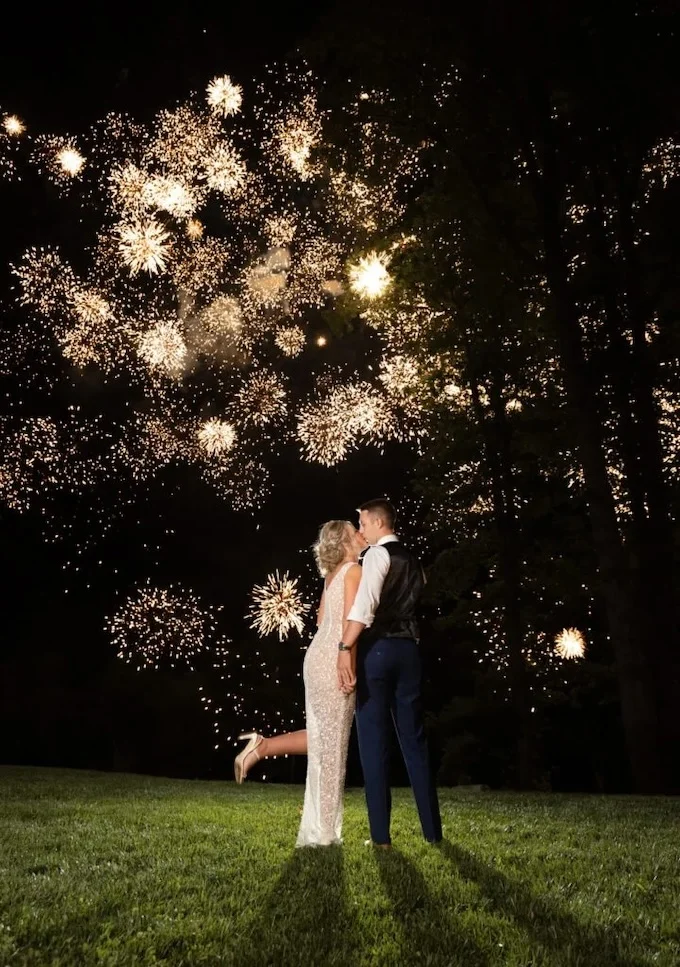
The crucial first step in any successful fireworks photography session is securing the ideal vantage point. When a wedding timeline includes fireworks, prompt communication with the couple, wedding planner, and venue staff is paramount to identify the precise launch area and potential viewing angles. This early scouting allows photographers to explore various perspectives, from expansive wide shots that capture the couple dwarfed by a sky ablaze with color to more intimate framing that utilizes foreground elements like trees or architecture to add depth and context. The "best" angle is subjective, depending on the desired aesthetic. A wide-open space might be perfect for showcasing the full panorama of the fireworks, while a location with natural or man-made frames can create a more artistic and contained composition. Thorough location scouting is not just about finding a good view; it’s about understanding how to integrate the ephemeral beauty of fireworks with the enduring connection of a couple.

Mastering Dynamic Range: The RAW Advantage and Exposure Essentials
Photographing fireworks presents a significant lighting challenge: the juxtaposition of near-dark ambient conditions with the intense, fleeting brilliance of pyrotechnics. To effectively capture both the subtle details of the couple and the vibrant bursts in the sky, photographers must prioritize maximizing dynamic range. This begins with the fundamental decision to shoot in RAW format.
RAW Files vs. JPEG: Unlike compressed JPEG files, RAW files retain a significantly greater amount of image data, offering unparalleled flexibility in post-production. This allows for the recovery of details in both the deepest shadows and the brightest highlights, crucial for balancing the exposure between the dark environment and the luminous fireworks. Opting for JPEGs at this stage can lead to irreversible loss of detail, rendering the final images flat and uninspired.

Exposure Settings: A Starting Point: While specific settings will vary based on camera model, lighting conditions, and creative intent, a recommended starting point for aperture priority mode (Av) or manual mode (M) is as follows:
- Aperture: f/8 to f/11. This range provides a good balance of depth of field, ensuring both the couple and the fireworks are reasonably sharp, while also allowing sufficient light to enter the lens.
- Shutter Speed: 5 to 10 seconds. This extended exposure time is essential for capturing the trails and colors of the fireworks as they streak across the sky.
- ISO: 100 to 400. Keeping the ISO as low as possible minimizes digital noise, especially important in low-light conditions.
Crucially, photographers should constantly monitor their camera’s histogram. This graphical representation of tonal distribution is invaluable for preventing clipped highlights (data pushed too far to the right, indicating blown-out whites) and crushed blacks (data pushed too far to the left, indicating pure black with no discernible detail). The goal is to achieve a balanced histogram, ensuring detail is preserved across the entire tonal range.

Fine-Tuning White Balance for Authentic Color
The inherent colors of fireworks can be dramatically affected by ambient light and camera white balance settings. A common and effective starting point for white balance when photographing fireworks is the "Tungsten" preset. This setting often counteracts the yellowish or orangish cast of artificial lights and can render the vibrant colors of fireworks more accurately. If additional lighting is being used to illuminate the couple, such as a flash with a CTO (Color Temperature Orange) gel, adjusting the white balance to approximately 3200 Kelvin may be necessary. This allows for seamless integration of the artificial light with the fireworks’ illumination, creating a cohesive and visually appealing image. Experimentation is key; photographers should adjust the Kelvin value until the colors of both the fireworks and the couple appear true to their vision.
Lens Selection: Wide-Angle Grandeur vs. Telephoto Compression
The choice of lens plays a significant role in the final composition and the perceived scale of the fireworks.

-
Wide-Angle Lenses: These lenses, typically ranging from 14mm to 35mm, are excellent for capturing the grandeur of the fireworks display in its entirety, along with the couple in the foreground. They offer a broad field of view, allowing for sweeping vistas of the sky and ensuring the couple is integrated into the larger scene. A potential challenge with wide-angle lenses is maintaining communication with the couple if they are at a distance, which can be mitigated by using a zoom lens that allows for adjustments without moving. However, for truly epic, expansive shots, a prime wide-angle lens is often preferred. It’s also worth noting that a wide shot can always be cropped slightly in post-production if necessary, preserving the flexibility to refine the composition.
-
Zoom Lenses: While they can make communication difficult if the couple is far away, zoom lenses can be advantageous for tighter shots. When zoomed in, they can effectively compress the scene, making the fireworks appear larger and more prominent relative to the couple. This can create a dramatic and impactful portrait, especially if the couple is positioned closer to the camera.

Ultimately, the "right" lens depends on the desired composition and the shooting environment.
The Art of Long Exposure: Capturing Trails of Light
To effectively capture the dynamic beauty of fireworks, a slow shutter speed is indispensable. Long exposures, typically ranging from 5 to 10 seconds, allow the camera’s sensor to collect light over an extended period, resulting in the visible trails and streaks of light that define a firework’s trajectory. Shorter exposures, in the 2-5 second range, will capture less of this ephemeral motion and may appear more like individual bursts.

The extended exposure time inherently introduces the risk of camera shake, which can lead to blurry and unusable images. To combat this, a sturdy tripod is an absolute necessity. Furthermore, using a remote shutter release, a cable release, or the camera’s self-timer (a 2-second delay is usually sufficient) will further minimize any vibrations caused by pressing the shutter button, ensuring sharp and pristine long-exposure shots.
Illuminating the Subjects: Beyond the Pyrotechnics
When photographing fireworks as a standalone subject, the focus is typically on the spectacle itself, with any human subjects often relegated to the background or excluded entirely. However, in couples portraits, the subjects are the stars, and their illumination must be deliberate and well-executed. The advantage of shooting a wedding with fireworks is that the display is usually scheduled, allowing photographers time to set up their lighting and fine-tune exposure settings beforehand.

The fundamental principle is to light the couple as if fireworks were not present, then integrate the ambient light from the pyrotechnics. A common and effective lighting setup involves placing a light source (flash or continuous light) at a 45-degree angle to the couple, positioned slightly above and facing them. This creates natural-looking shadows and highlights. A backlight can be added to further define their silhouettes against the dramatic sky. To control light spill and ensure the light remains focused on the couple, modifiers such as snoots or grids are highly recommended. The specific lighting plan will ultimately be guided by the photographer’s creative vision and the desired mood of the portrait.
The Unwavering Focus: Embracing Manual Focus
Autofocus systems can often struggle in the low-light, high-contrast conditions presented by fireworks. The rapidly changing light and movement can cause the autofocus to hunt erratically, resulting in missed shots and out-of-focus subjects. To guarantee sharp portraits, photographers must switch to manual focus. Utilizing the camera’s live view function, photographers can meticulously focus on the couple. It’s advisable to pre-focus before the fireworks begin, perhaps using autofocus initially, and then locking the focus in manual mode. This ensures that the focus remains precisely on the couple throughout the entire duration of the fireworks display.

The Art of the Composite: Building a Masterpiece in Post-Production
For photographers seeking ultimate control and the ability to create a truly dramatic and impactful image, compositing offers a powerful solution. This technique involves combining multiple exposures into a single, cohesive photograph. The process begins with a sharp, well-lit, and perfectly posed portrait of the couple, captured using a tripod. Following this, multiple exposures of the fireworks themselves are taken from the exact same camera position.
Lightroom Workflow: The initial editing phase takes place in Lightroom (or any preferred photo editing software). It is crucial to apply the same edits to all images intended for the composite to ensure color and tonal consistency. A streamlined approach involves editing the portrait of the couple first, then applying those edits to the fireworks shots using batch editing.

Photoshop Integration: The edited images are then imported into Photoshop and stacked into a single document. By setting the blend mode of the fireworks layers to "Lighten," the brightest parts of each layer—the fireworks themselves—will become visible. Layer masks are then employed to selectively reveal or conceal parts of each layer, allowing the photographer to meticulously blend the fireworks into the couple’s portrait, creating a seamless and awe-inspiring final image.
Beyond Fireworks: Capturing the Sparkle of Sparklers
While technically not fireworks, sparklers are a popular and visually engaging element often incorporated into wedding photography, particularly for grand exits. Their management requires a slightly different, yet equally crucial, set of considerations.

The Advantage of Larger Sparklers
When advising couples on sparkler choices for photography, photographers should strongly recommend the larger 36-inch sparklers over their smaller 10-inch counterparts. The extended burn time of larger sparklers provides a more generous window for posing, capturing multiple shots, and allowing guests to participate in the sparkler exit without feeling rushed. This increased duration significantly enhances the photographic opportunities and the overall experience.
Optimizing Settings for Dim Light and Movement
Sparklers are a relatively weak light source. To compensate, photographers often need to increase their ISO and utilize a wide aperture. The specific settings will depend on whether the subjects are moving or stationary.

For Moving Subjects (e.g., Grand Exit):
- ISO: Elevated to capture sufficient light and freeze motion.
- Aperture: Wide open (e.g., f/1.8 – f/2.8) to maximize light intake.
- Shutter Speed: A faster shutter speed (e.g., 1/60 sec or higher) is necessary to prevent motion blur and capture the movement of the sparklers and the couple.
For Static Subjects (e.g., Posed Portrait):

- ISO: Can often be kept lower.
- Aperture: A slightly narrower aperture might be used for increased depth of field, but prioritize light.
- Shutter Speed: Lower shutter speeds (e.g., 1/15 sec – 1/30 sec) can be used to capture more of the sparkler’s light trails, especially if the couple remains still.
In both scenarios, experimentation and monitoring the histogram are vital for achieving balanced exposures.
Safety First: The Essential Safety Bucket
Handling sparklers involves open flames, making safety a paramount concern. Photographers must ensure a large bucket of water is readily accessible. This serves as a safe and immediate receptacle for used sparklers, preventing potential fire hazards and ensuring a secure environment for the couple and guests.

Conclusion: Igniting Your Couples’ Photography with Explosive Creativity
Photographing couples against a backdrop of fireworks or the delicate glow of sparklers offers a unique opportunity to create truly memorable and visually stunning portraits. By meticulously planning, mastering technical settings, and embracing creative post-production techniques, photographers can transform these fleeting moments into timeless works of art. The tips and strategies outlined in this guide provide a solid foundation for any photographer looking to elevate their couples’ portraiture by incorporating the dazzling spectacle of pyrotechnics, ensuring that every click of the shutter captures the flash, the excitement, and the enduring love of the couple. The resulting images, filled with the magic of a grand finale, will undoubtedly become cherished keepsakes for years to come.