The intricate world of visual arts, encompassing both photography and videography, fundamentally relies on the deliberate manipulation of light. Far from being a mere technicality, lighting serves as the cornerstone of creative expression, dictating mood, sculpting form, and guiding the viewer’s eye. Industry experts and leading educators consistently emphasize that proficiency in lighting transcends the acquisition of expensive equipment; it hinges instead on a profound understanding and skillful application of three core principles: Intensity, Quality, and Direction. These universal tenets are crucial not only when employing sophisticated studio strobes or high-powered LEDs but also when harnessing the ever-changing dynamics of natural light, transforming a simple capture into a meticulously crafted image.
The Evolution and Enduring Relevance of Lighting Principles
The systematic study and application of lighting in visual media have evolved significantly since the dawn of photography and cinema. Early photographic studios, often reliant on skylights and reflectors, intuitively began to grasp how light shaped subjects. As artificial light sources became available, from early carbon arcs and flash powder to incandescent bulbs and eventually sophisticated electronic flashes and LEDs, the ability to control light grew exponentially. This technological progression necessitated a structured approach to understanding how these new tools could be wielded for artistic and narrative purposes.
The principles of Intensity, Quality, and Direction emerged as fundamental categories for analyzing and teaching effective lighting. This framework allows practitioners to deconstruct complex lighting setups, understand their impact, and intentionally design scenes that evoke specific emotions or convey particular messages. Today, these principles form the bedrock of curricula in film schools, photography academies, and digital media programs worldwide, underscoring their timeless importance in an era of rapidly advancing camera and lighting technology. While gear continues to evolve, the underlying physics and artistic implications of how light interacts with a subject remain constant, making these three principles an indispensable toolkit for any visual artist.
Intensity of Light: The Illuminative Volume Control
Intensity, often conceptualized as the "volume knob" of a light source, refers to the sheer quantity of light reaching a subject. This principle directly influences the exposure settings of a camera, determining the overall brightness or darkness of an image or video frame. On modern artificial light sources, intensity is typically controlled via physical dials, digital interfaces, or remote applications, allowing for precise adjustments. When working with natural light, photographers and videographers manage intensity through various methods, including the use of Neutral Density (ND) filters to reduce light transmission without altering color, or by adjusting camera settings such as ISO sensitivity and aperture.
While seemingly the most straightforward of the three principles, intensity plays a critical role beyond mere exposure. It profoundly impacts the dynamic range of a scene – the ratio between the brightest and darkest areas – and influences the overall mood. A high-intensity light can create a brightly lit, high-key image often associated with optimism or clarity, while carefully controlled lower intensity, combined with precise falloff, can contribute to dramatic, low-key imagery evoking mystery or introspection. For instance, in portraiture, controlling intensity allows a photographer to balance ambient light with a flash, ensuring the subject is properly exposed without washing out the background or vice versa. In cinematography, managing intensity across multiple light sources is crucial for establishing depth and guiding the viewer’s attention, preventing overexposure in highlights or loss of detail in shadows, which are critical for professional-grade productions.
Quality of Light: Shaping Character and Emotion
The quality of light is arguably the most nuanced and creatively impactful of the three principles, encompassing a broad spectrum of characteristics that define how light interacts with and describes a subject. It delves into aspects such as the hardness or softness of light, its color temperature, and its specular properties. These variables collectively dictate the nature of shadows, highlights, and transitions, fundamentally shaping the perceived texture, form, and emotional resonance of a visual.
Hard vs. Soft Light: A primary distinction within light quality is between hard and soft light. Hard light originates from a relatively small light source in proportion to the subject’s size and distance (e.g., direct sunlight, a bare flash bulb). It produces sharp, well-defined shadows, high contrast, and emphasizes texture and detail. This quality is often employed for dramatic effects, to create a sense of grittiness, or to highlight sculptural forms. Conversely, soft light emanates from a large light source relative to the subject (e.g., an overcast sky, a large softbox). It generates gradual transitions between light and shadow, producing diffused, less defined shadows and lower contrast. Soft light is widely favored for its flattering qualities in portraiture, its ability to smooth skin tones, and for creating a gentler, more ethereal mood. The perceived "size" of the light source is key; moving a small light closer to a subject effectively increases its relative size, thereby softening the light.
Color Temperature: Another critical aspect of light quality is its color temperature, measured in Kelvin (K). This refers to the color cast of the light source, ranging from warm (reddish-orange, lower Kelvin values like 2000K for candlelight) to cool (bluish, higher Kelvin values like 7000K for an overcast sky). Daylight is typically around 5500K-5600K. Controlling color temperature is vital for achieving accurate skin tones, establishing a specific mood (e.g., warm for intimacy, cool for clinical or futuristic), and ensuring consistent white balance across a series of shots. Modern LED lights often offer tunable white light, allowing precise adjustment of color temperature, while RGB LEDs provide an even broader spectrum for creative color washes and effects.
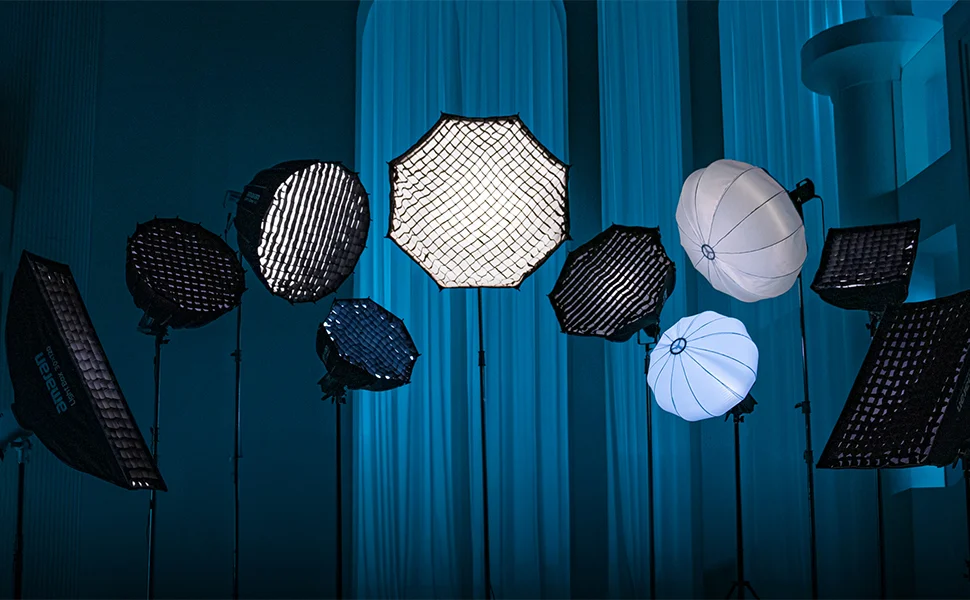
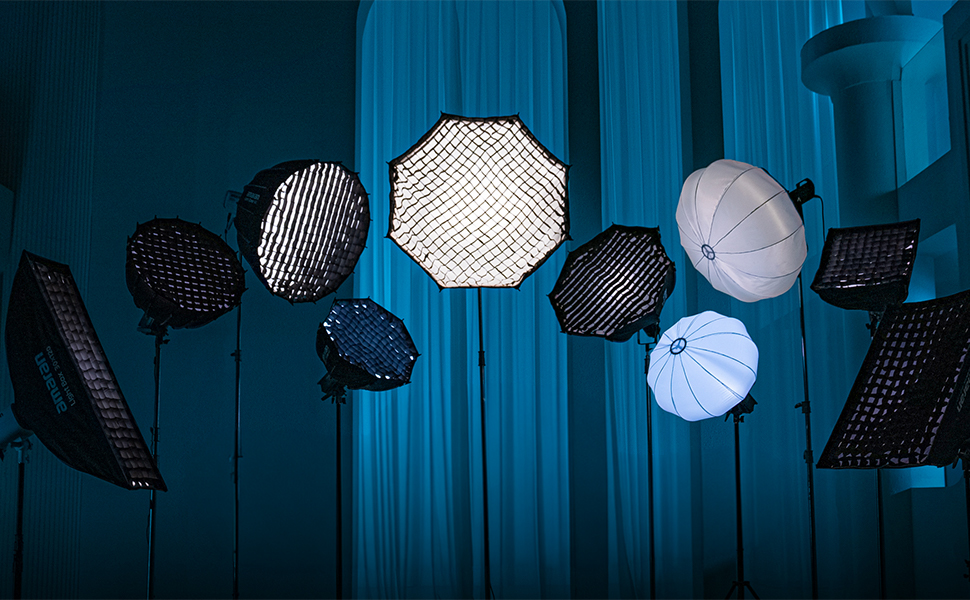
Specularity and Diffusion: The interaction of light with various modifiers further defines its quality. Highly reflective surfaces, like silver umbrellas or metallic reflectors, produce more specular light, characterized by punchy highlights and increased contrast. Diffused modifiers, such as softboxes, scrims, or white umbrellas, scatter light more broadly, reducing specularity and creating softer, more even illumination. The choice of modifier—from parabolic reflectors known for their unique blend of focused output and soft falloff to octaboxes designed for broad, wrap-around light—is a subject of continuous discussion and personal preference among professionals. The precise design and internal baffling of a softbox, for example, can significantly alter its light output, leading to strong opinions and brand loyalty within the industry. The consistent challenge for manufacturers is to balance efficiency, durability, and the specific aesthetic qualities demanded by discerning visual artists.
Direction of Light: Sculpting Form and Narrative Depth
The direction of light, referring to the spatial relationship between the light source, the subject, and the camera, is arguably the most powerful tool for creating a sense of depth, dimension, and narrative impact. It dictates how shadows fall, how highlights are formed, and how the three-dimensional form of a subject is revealed or concealed on a two-dimensional plane. While often guided by established "rules" for naturalism, intentional deviation from these norms can yield striking and highly effective results.
Naturalistic vs. Intentional Direction: In most natural settings, light originates from above (e.g., the sun, overhead indoor lighting). Mimicking this overhead placement often creates a sense of normalcy and realism, as it aligns with our everyday perception of the world. However, placing light from unusual directions—such as directly from below (often called "monster lighting") or intensely from the side—can produce unsettling, dramatic, or highly stylized effects. For instance, bottom lighting, while typically avoided for its "uncanny valley" effect, can be incredibly potent in horror films or theatrical productions to evoke fear or discomfort.
Classic Lighting Patterns and Their Effects:
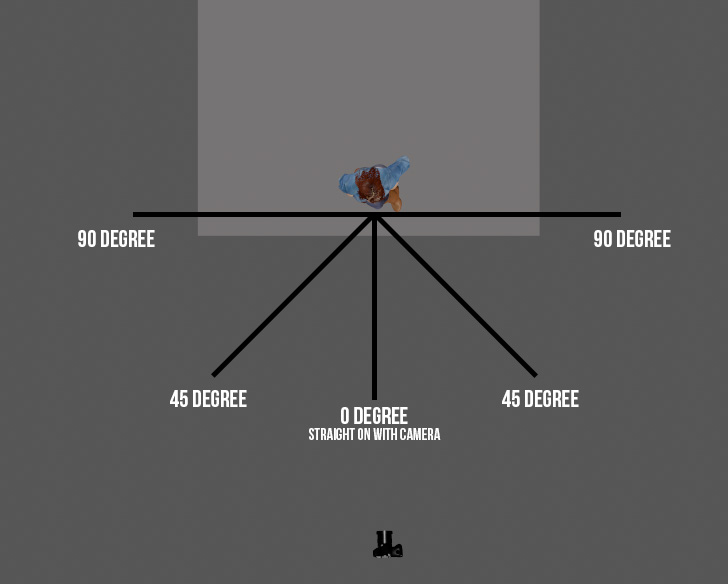
- Frontal Lighting: Positioned directly in front of the subject, near the camera axis. This flattens features, reduces shadows, and provides even illumination. Often used for passport photos or news interviews where detail is prioritized over dimension.
- Side Lighting: Positioned to the side of the subject, often at 90 degrees to the camera. This emphasizes texture, creates strong shadows, and dramatically sculpts the face, enhancing three-dimensionality. It’s excellent for dramatic portraits or showing form.
- Rembrandt Lighting: A specific form of side lighting where a small triangle of light appears on the shadow side of the face, beneath the eye. It creates a mood of intimacy and drama, often associated with fine art portraiture.
- Butterfly Lighting (Paramount Lighting): Positioned directly in front and slightly above the subject, creating a butterfly-shaped shadow under the nose. It’s flattering for many facial types, emphasizing cheekbones and creating a glamorous look.
- Rim Lighting (Kicker or Hair Light): Positioned behind and to the side of the subject, often used to create a glowing outline that separates the subject from the background, adding depth and dimension.
- Top Lighting: Directly above the subject, casting strong shadows in eye sockets and under the chin. Can be dramatic or harsh depending on context.
- Bottom Lighting: From below the subject, creating eerie, unnatural shadows. Used specifically for dramatic or horror effects.
Technical Communication of Direction: In professional lighting breakdowns, especially in film and video production, the direction of light is frequently described in terms of degrees relative to the subject and camera axis. This precise nomenclature allows for accurate replication of complex lighting setups. For example, a "key light at 45 degrees" typically refers to a light source positioned 45 degrees to the left or right of the camera, relative to the subject. This two-dimensional placement, combined with vertical positioning (overhead, straight on, or from below), translates the setup into a three-dimensional understanding, crucial for collaborative production environments. The choice of direction is not arbitrary; it is a conscious decision that defines the visual narrative, highlights key features, and contributes significantly to the overall aesthetic and emotional impact of the final image.
Broader Implications and Future Outlook
The mastery of Intensity, Quality, and Direction of light holds profound implications across the entire spectrum of visual media. For aspiring photographers and videographers, a solid grasp of these principles is the gateway to professional competence, enabling them to move beyond mere technical proficiency to true artistic expression. For seasoned professionals, it provides a refined toolkit for tackling diverse creative challenges, from intricate product photography that highlights every detail to sweeping cinematic sequences that convey complex emotional arcs.
In the commercial realm, effective lighting directly translates to enhanced brand perception and consumer engagement. A well-lit product image or advertisement can significantly influence purchasing decisions, while compelling visual content can drive viewership and audience retention in media. The ability to manipulate light intentionally allows creators to sculpt narratives, evoke specific feelings, and ultimately communicate more effectively with their audience.
As lighting technology continues its rapid advancement—with increasingly powerful, portable, and color-accurate LED systems, sophisticated light-shaping tools, and integrated control systems—the foundational understanding of these three principles becomes even more critical. These tools merely facilitate the application; the artistic vision and technical understanding of how light behaves remain paramount. The enduring relevance of Intensity, Quality, and Direction ensures that these principles will continue to be the bedrock upon which all compelling visual storytelling is built, guiding creators in transforming photons into powerful narratives.