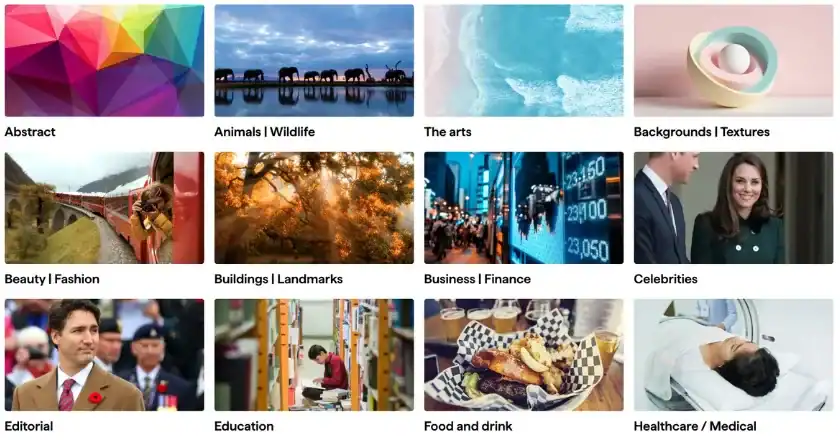
As the global digital economy approaches the mid-point of the decade, the criteria for successful online engagement have undergone a fundamental shift, moving away from mere functionality toward high-fidelity visual storytelling. For enterprises planning a website relaunch in 2026, the selection of imagery has transitioned from a secondary design consideration to a primary driver of consumer trust and commercial conversion. In an era defined by the ubiquity of generative artificial intelligence and the expectation of instantaneous load times, the quality, authenticity, and strategic placement of stock photography now serve as the baseline for digital credibility.
The 2026 digital landscape is characterized by a "visual-first" consumer psychology. Industry data from late 2025 suggests that the average user forms a definitive opinion about a brand’s reliability within 50 milliseconds of a page loading. This split-second judgment is almost entirely predicated on visual aesthetics rather than textual content. Consequently, the role of professional stock imagery has expanded. It is no longer just about "filling space"; it is about providing an immediate, non-verbal proof of value.

The Evolution of Visual Expectations: Context and Chronology
To understand why stock images are vital for a 2026 relaunch, one must look at the technological trajectory of the last five years. Between 2021 and 2023, the digital space was saturated with "minimalist" designs that often felt sterile. By 2024, the rise of accessible generative AI led to a flood of hyper-stylized but often "uncanny" or unrealistic visuals, which eventually triggered a consumer backlash.
Entering 2026, market analysts have observed a "Return to Authenticity" trend. Users are increasingly skeptical of overly polished or obviously synthetic AI-generated faces. This has revitalized the professional stock photography market, particularly for libraries that offer high-resolution, ethically sourced, and "human-centric" content. Modern stock providers have integrated AI not to replace the photographer, but to enhance searchability and customization, allowing brands to find images that feel bespoke without the prohibitive costs of a custom shoot.
Data-Driven Impact: Visuals as Conversion Catalysts
The correlation between high-quality imagery and bottom-line results is backed by rigorous empirical evidence. According to a 2025 study by the Global Digital Marketing Institute, websites that replaced generic or low-resolution imagery with high-fidelity, contextually relevant stock photos saw an average increase in "Time on Page" by 27% and a boost in conversion rates by up to 18%.

Furthermore, the "Hero Image"—the large banner at the top of a webpage—has become the single most important asset for reducing bounce rates. Data indicates that when a hero image clearly depicts the solution a customer is seeking, the likelihood of that customer scrolling further increases by 40%. In contrast, abstract or irrelevant visuals lead to immediate cognitive dissonance, signaling to the user that they may have landed on a generic or untrustworthy site.
Identifying and Avoiding the "Relaunch Ruiners"
Despite the clear benefits of professional imagery, many organizations undermine their relaunch efforts by falling into common visual traps. Digital strategists highlight four specific mistakes that can neutralize the impact of a new website:
1. The Generic Visual Paradox
Using abstract cityscapes or vague technology "blueprints" often feels safe to corporate stakeholders, but to the modern user, it signals a lack of brand identity. In 2026, specificity is the currency of trust. If a company provides logistics solutions, the imagery should depict realistic logistical environments—not just a generic "handshake" over a globe.

2. Inconsistency Across User Interfaces (UI)
A website relaunch often involves multiple pages, from landing pages to deep-link blog posts. A common error is maintaining high standards for the homepage while allowing the quality to dip on secondary pages. Inconsistency creates a "fragmented brand" perception, which can be fatal for high-ticket B2B services where trust is built over a long user journey.
3. The Persistence of Visual Cliches
The "staged meeting" or the "laughing woman with a salad" have become cultural punchlines. Today’s visually savvy audience can spot a "stock cliche" instantly. Forward-thinking brands in 2026 are opting for "candid-style" stock photography that captures motion, genuine emotion, and diverse, real-world settings.
4. Technical Misalignment
As search engines like Google continue to prioritize "Core Web Vitals," the technical optimization of images is as important as their artistic quality. Using outdated file formats or uncompressed assets can slow down a site, leading to SEO penalties. Professional stock platforms now typically provide assets in modern formats like WebP or AVIF, ensuring that high quality does not come at the cost of performance.

The Economic Case: Stock vs. Custom Photography
For many Chief Marketing Officers (CMOs) planning a 2026 relaunch, the debate often centers on "Stock vs. Custom." While bespoke photography offers total exclusivity, the logistical and financial realities often favor a strategic stock approach.
Cost Efficiency: A professional corporate photoshoot in a major metropolitan area can cost between $5,000 and $25,000 when accounting for photographers, models, location permits, and post-production. A premium stock subscription, such as those offered by Shutterstock, provides access to millions of assets for a fraction of that cost.
Scalability and Speed: A website relaunch often requires hundreds of assets for various screen sizes, social media headers, and internal pages. Coordinating a custom shoot for this volume of content is a months-long endeavor. Stock libraries allow design teams to iterate in real-time, downloading and testing visuals instantly to meet aggressive relaunch deadlines.

Global Diversity: For brands operating in multiple territories, stock libraries provide a level of geographic and demographic diversity that would be impossible to replicate in a single custom shoot. This allows for "localized" visual experiences, where users in different regions see themselves reflected in the brand’s imagery.
The Integration of AI and Human Creativity
A significant development for 2026 is the synergy between stock libraries and AI-assisted design. Leading providers have introduced tools that allow users to take a high-quality stock photo and use AI to expand the background, change the color palette to match brand guidelines, or swap out elements within the frame.
"We are seeing a shift where stock imagery is the ‘raw material’ for creative expression," says a senior UI designer at a leading New York agency. "We don’t just take the photo as-is; we use the AI tools provided by the stock agency to tailor it. This gives us a ‘custom feel’ with ‘stock speed.’"

Strategic Selection: A Timeline for Relaunch Success
To ensure that imagery effectively supports a 2026 website relaunch, organizations should follow a structured chronology:
- Phase 1: Visual Audit (T-minus 6 months): Evaluate existing assets. Identify which images feel dated or low-resolution. Establish a "Visual Style Guide" that defines lighting, mood, and color requirements.
- Phase 2: Library Selection (T-minus 4 months): Choose a stock provider that offers not just volume, but legal security. In 2026, licensing transparency is critical to avoid copyright litigation, particularly with the complexities of AI-generated content.
- Phase 3: Curation and Testing (T-minus 3 months): Select "candidate" images and test them with focus groups or through A/B testing on existing landing pages. Monitor metrics like "Heatmaps" to see where users are looking.
- Phase 4: Technical Optimization (T-minus 1 month): Ensure all selected assets are optimized for mobile-first indexing and meet the latest accessibility standards (e.g., descriptive Alt-text for screen readers).
Broader Implications and Future Outlook
The emphasis on high-quality stock imagery for 2026 relaunches reflects a broader movement toward "Digital Integrity." As the internet becomes increasingly crowded with synthetic content, the ability of a brand to present a polished, professional, and human-centric visual identity will be its primary competitive advantage.
Experts predict that by 2027, the "visual standard" will rise even higher, with 8K resolution and interactive "shoppable" images becoming the norm. For now, the successful relaunch of a website in 2026 depends on a brand’s ability to leverage the vast, high-quality resources of professional stock agencies to build a bridge of trust with their audience. By avoiding generic cliches and focusing on authentic, technically optimized visuals, businesses can ensure their new digital home is not just a cosmetic upgrade, but a powerful engine for conversion and long-term brand loyalty.