A comprehensive analysis of customer purchasing patterns from Lensrentals for 2025 reveals distinct preferences and strategic investments by photographers and videographers, offering a vital counterpoint to the previously released rental data. While rental statistics illuminate short-term project needs and emerging technologies, purchase data provides a clearer picture of long-term commitment, essential gear acquisition, and enduring brand loyalty within the professional imaging sector. This annual report serves as a critical benchmark for manufacturers, content creators, and industry observers to understand where professionals are choosing to allocate their capital.
The methodology behind Lensrentals’ insights is unique, stemming from its dual role as a leading rental provider and a platform for equipment sales, notably through its "Keeper program." This program allows customers to purchase rented gear, often with rental costs applied towards the final price, transforming temporary usage into permanent ownership. This model provides an unparalleled window into which items, after hands-on evaluation, users deem essential enough for outright acquisition. The 2025 purchase data, compiled from a vast inventory and extensive customer base, therefore reflects not just aspirational interest but confirmed value and utility in real-world production environments.
The Landscape of Essential Acquisitions: Memory, Power, and Protection Dominate
Upon examining the "Top Photography & Videography Purchases for 2025" list, a clear pattern emerges: the dominance of complementary products and essential consumables. Out of the top twenty purchased items, a significant proportion comprises memory cards, camera batteries, and protective filters. This trend underscores a fundamental truth in professional production: reliable infrastructure and preparedness are paramount.
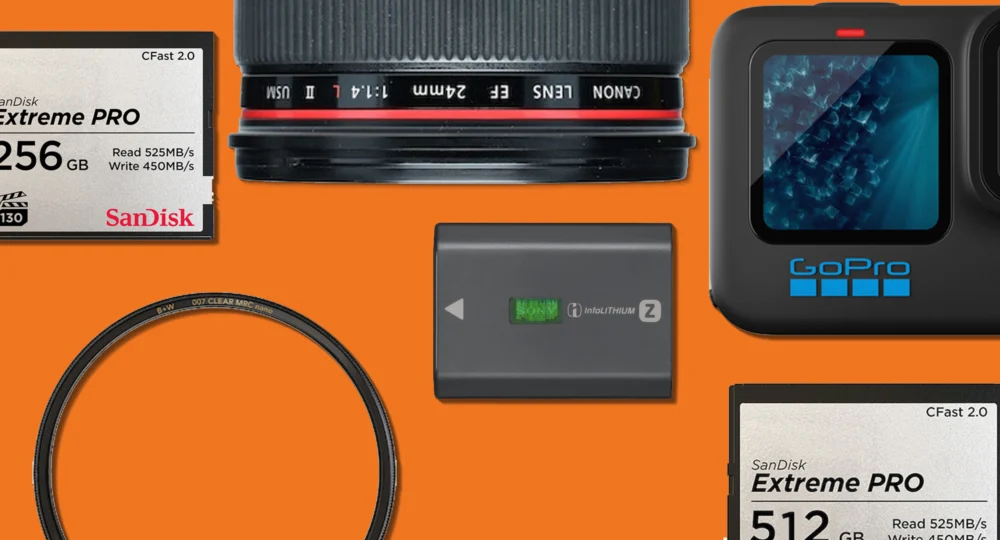
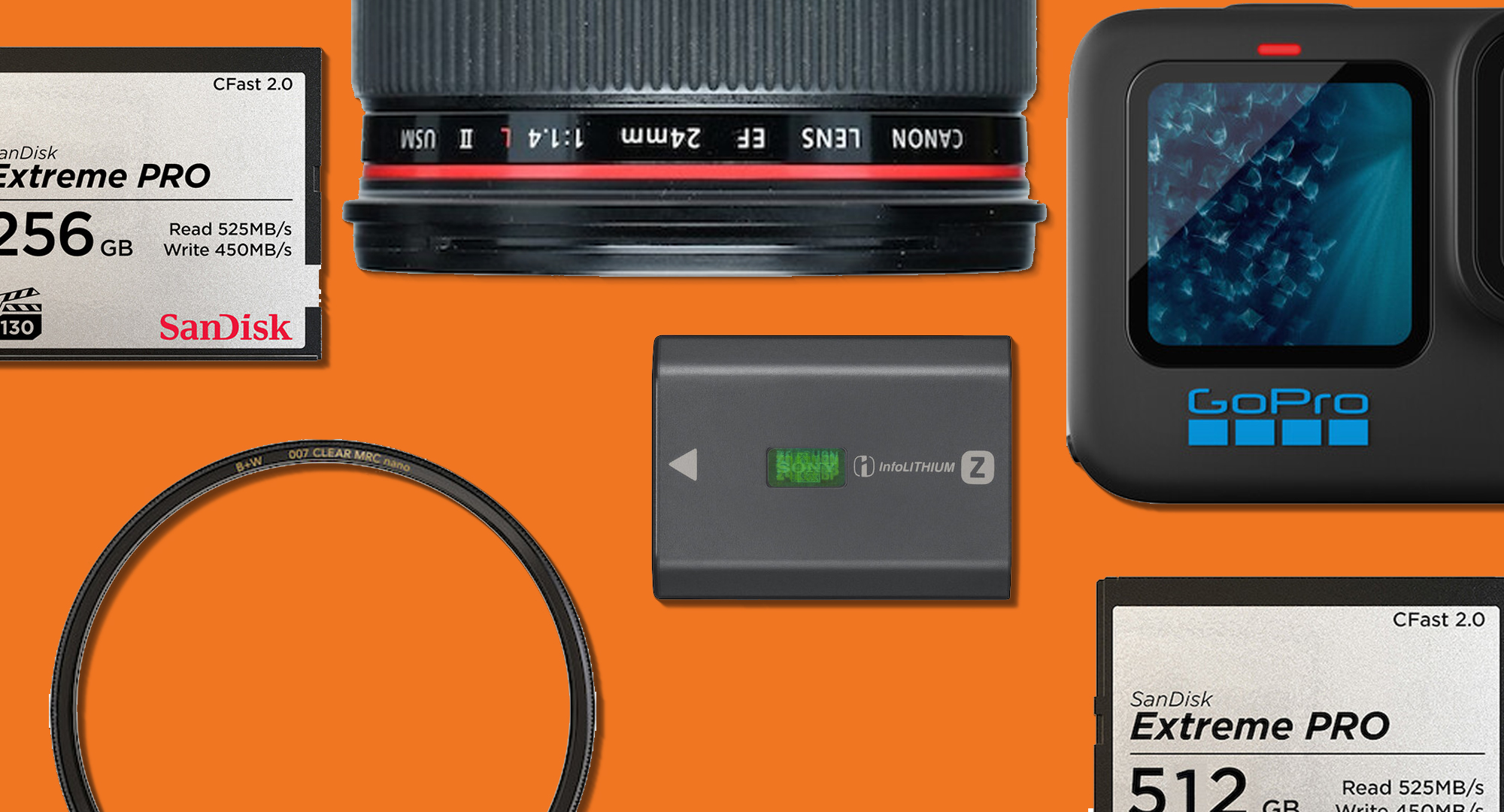
Leading the list at number one is the SanDisk 256GB Extreme PRO 525MB/s CFast 2.0 card, followed closely by its 512GB counterpart at number eight. The consistent high ranking of CFast cards highlights the increasing demands of modern video workflows, particularly for cameras recording in high-bitrate 4K, 6K, and even 8K resolutions. These cards offer the speed and reliability necessary for capturing uncompressed or minimally compressed footage without dropped frames, making them indispensable for professional videographers. The decision to purchase rather than rent these items is logical; memory cards are highly personal, often requiring specific formatting and containing sensitive project data. Professionals typically prefer to own their storage media to ensure data integrity and immediate availability.
Batteries also feature prominently, with the Sony NP-FZ100 Battery and Sony NP-FW50 Battery ranking fourth and fifth, respectively. The GoPro AABAT-001 Battery for HERO5 / HERO6 / HERO7 and the GoPro Dual Battery Charger with Battery also appear, alongside the Canon LP-E6 Battery, Hawk-Woods DV-F590 L-Series Battery, and Anton Bauer Dionic XT90 V-Mount Battery. This diverse array of power sources reflects the multifaceted needs of today’s creators, from mirrorless camera users to those running cinema cameras or action cameras. The purchase of multiple batteries is a standard operational practice, ensuring continuous power during long shoots and mitigating downtime. The reliability of power is a non-negotiable aspect of any professional setup, and owning a dedicated supply offers peace of mind and operational efficiency.
Protection for valuable optics is another key purchasing driver, evidenced by the strong showing of B+W 77mm XS-Pro Clear MRC-Nano 007 Filter, B+W 82mm XS-Pro Clear MRC-Nano 007 Filter, and B+W 72mm XS-Pro Clear MRC-Nano 007 Filter at positions three, six, and eleven. These clear filters primarily serve to protect the front element of expensive lenses from dust, scratches, and impact without compromising image quality. Given the high cost of professional lenses, this preventative measure is a wise long-term investment for any owner, making them perennial purchase items rather than rental accessories.
Wireless transmission components also indicate a growing trend in set efficiency. The Teradek Wireless Antenna for Bolt 500/1000 Tx & Rx, 3000 Rx ranks second, demonstrating the widespread adoption of wireless video monitoring on professional film and television sets. This allows directors, cinematographers, and other crew members to view real-time footage remotely, streamlining workflows and facilitating immediate feedback—a capability that has become a staple for modern productions.
High-Value Investments: Workhorse Lenses and Versatile Tools
Beyond the essential consumables, the list also highlights significant investments in high-value core equipment, particularly lenses. The Canon EF 24-70mm f/2.8L II stands out as the most purchased high-value item, ranking seventh overall. This lens has long been considered a "workhorse" zoom for Canon users, renowned for its versatility, optical quality, and robust build. Its consistent popularity as a purchase item, even as Canon pivots towards its RF mirrorless system, suggests several factors: the continued prevalence of EF-mount DSLRs and cinema cameras in the field, its adaptability via adapters to RF bodies, and the increasing affordability of EF lenses in the secondary market, presenting a compelling value proposition for high-quality glass.
Other notable lens purchases include the Canon 70-200mm f/2.8L IS III (13th), Canon RF 28-70mm f/2L (14th), Canon 35mm f/1.4L II (15th), and Canon RF 70-200mm f/2.8L IS (20th). This mix of EF and RF lenses indicates a dual-platform strategy among professionals. While many are embracing the future with RF-mount glass, the proven performance and value of EF lenses continue to make them attractive long-term acquisitions. The presence of the RF 28-70mm f/2L, a relatively new and optically ambitious lens, signals a strong commitment by early adopters to Canon’s mirrorless ecosystem.
The GoPro HERO11 Black at position twelve underscores the niche but strong market for action cameras. These compact, durable devices are often purchased for specialized applications, personal use, or as supplementary cameras on larger productions, reflecting their specific utility where larger cameras are impractical. Similarly, the DJI RS 2 Gimbal Stabilizer (18th) illustrates the critical role of stabilization in modern videography, enabling dynamic and smooth camera movements that are now expected in professional content.
Brand Market Share by Revenue: Canon Maintains Lead, DJI Surges
The "Brand Purchase Market Share for 2025 by Revenue" table reveals fascinating shifts and confirmations of industry trends. Canon maintains its leading position, commanding 23.55% of the purchase market share. This enduring dominance, a slight increase from 22.99% in 2024, reinforces Canon’s strong brand loyalty and the widespread adoption of its equipment across photography and videography segments. The robust ecosystem of Canon lenses, cameras, and accessories continues to be a primary choice for long-term investment.
In contrast, Sony experienced a notable decline, dropping to 16.60% in 2025 from 21.60% in 2024 and 28.83% in 2023. This significant five-percentage-point decrease year-over-year raises questions about purchasing behaviors for Sony gear. While Sony cameras are highly popular in rental markets due to their rapid innovation cycle and cutting-edge features, this data suggests that customers might be more inclined to rent the latest Sony models to try them out or for specific projects, but perhaps choose other brands for outright, long-term ownership. This could be influenced by a variety of factors, including perceived value, system maturity, or the availability of a broader range of third-party lenses and accessories for competing systems.
Perhaps the most striking development is the ascent of DJI, which secured the third-most-popular customer purchase position with 9.95% market share, slightly down from 10.04% in 2024 but a substantial increase from 7.22% in 2023. DJI’s rise above traditional camera manufacturers like Nikon and Fujifilm highlights the expanding definition of "photography and videography equipment." DJI’s ecosystem, encompassing drones, gimbals, action cameras, and professional lighting solutions, appeals to a broad spectrum of content creators, from independent filmmakers to social media influencers and drone pilots. This signifies a broader industry shift where integrated solutions and specialized tools are increasingly valuable investments.
Nikon shows modest growth, reaching 4.90% in 2025, up from 4.69% in 2024, indicating a steady, albeit slower, adoption of its Z-mount mirrorless system for purchases. Other brands like Blackmagic (3.43%), Leica (3.25%), and Fujifilm (3.24%) also show marginal gains, reflecting their strong appeal within specific niches, such as cinema production (Blackmagic), premium photography (Leica), and hybrid stills/video (Fujifilm). The consistent performance of Aputure (3.01%) and SmallHD (2.83%) further underscores the importance of dedicated lighting and monitoring solutions as integral parts of a professional kit. Teradek, with a significant jump to 2.83% from 0.92% in 2024, clearly demonstrates the growing investment in reliable wireless transmission technology, aligning with its strong showing in the top individual purchases.
Top New Product Purchases: Innovation and Efficiency
The final table, "Top New Photography & Videography Products by Purchase Numbers 2025," offers a forward-looking perspective on where new investments are being made. These items, introduced into Lensrentals’ inventory in 2025, represent the cutting edge of adoption.
Once again, Teradek leads the charge with the Teradek 6G V Antenna for Bolt 6 and Bolt 4K, occupying the top spot. This reinforces the earlier observation about the critical nature of wireless video transmission in modern production. The adoption of 6G technology points to a demand for even faster, more robust, and interference-resistant wireless solutions for increasingly complex sets and larger data streams.
Aputure products dominate this list, with the Aputure amaran T2C RGB LED 2-foot Tube Light (2nd), Aputure amaran COB 200x S Bi-Color LED Monolight (3rd), Aputure Light Box 45×45 (14th), and Aputure STORM 1200x Tunable White LED Monolight (17th) all featuring prominently. This overwhelming presence signifies Aputure’s significant impact on the lighting market, providing versatile, high-performance, and increasingly affordable LED solutions that are being rapidly adopted for permanent integration into professional lighting kits. The popularity of tube lights and bi-color monolights reflects the growing need for adaptable lighting setups for both cinematic and still photography applications.
Other notable new product purchases include essential grip and support equipment. The Matthews Snap-In 5/8" Pin (5th), Peak Design PL-S-3 Standard Plate (6th), and Manfrotto 290 Xtra Tripod/MH804 Head Kit (7th) underscore that foundational tools remain crucial investments. Similarly, high-end fluid heads like the Sachtler 0405 FSB-6T Fluid Head (11th) and Sachtler 0705 FSB-8T Fluid Head (20th) highlight continued investment in robust, professional-grade camera support systems for video production.
The presence of the 7artisans 50mm f/1.05 Photoelectric for L-Mount (9th) and Sony FE 400-800mm f/6.3-8 G OSS (19th) shows a divergence in specialized lens purchases. The 7artisans lens, a manual, ultra-fast prime, caters to a niche of cinematographers and photographers seeking unique optical characteristics and creative control. The Sony telephoto zoom, on the other hand, represents a significant investment in specialized long-range optics for wildlife, sports, or documentary work.
Broader Implications and Industry Outlook
The 2025 purchase data from Lensrentals paints a nuanced picture of the professional photography and videography industry. It highlights several key trends:
- The Enduring Value of Essentials: Core accessories like memory cards, batteries, and protective filters are not just necessities but high-volume purchase items, reflecting their constant use and personal nature.
- Strategic Lens Investments: Professionals are making calculated decisions on lenses, balancing the value of proven EF-mount glass with the embrace of new RF-mount technology. The "workhorse" zooms and versatile primes remain foundational.
- The Rise of Ecosystems and Specialized Tools: DJI’s strong performance underscores the growing importance of integrated systems beyond traditional camera bodies and lenses. Lighting (Aputure) and wireless transmission (Teradek) are now considered indispensable investments.
- Rental as a Gateway to Purchase: The "Keeper program" mechanism demonstrates how rental experiences directly influence long-term purchasing decisions, allowing professionals to thoroughly test gear before committing to ownership. This model provides valuable market validation for products.
- Adaptation to Evolving Workflows: The prominence of high-speed memory, robust power solutions, and wireless transmission reflects the increasing demands for efficiency and flexibility in modern production environments, driven by higher resolutions, faster turnaround times, and collaborative workflows.
In conclusion, while rental data often signals what’s new and in demand for specific projects, Lensrentals’ 2025 purchase data reveals what professionals truly value as permanent fixtures in their kits. It underscores a strategic approach to gear acquisition, prioritizing reliability, versatility, and efficiency, while also embracing specialized tools and emerging technologies that enhance overall production capabilities. This information is invaluable for understanding the long-term investment strategies of the industry and forecasting future market directions.