Raja Ampat, an archipelago celebrated globally as the ultimate destination for underwater photography, continues to captivate enthusiasts and conservationists alike with its unparalleled marine biodiversity and breathtaking landscapes. Situated off the northwest tip of the Bird’s Head Peninsula in West Papua, Indonesia, this remote region presents an almost unbelievable spectacle of jungle-covered karst islands, vibrant coral reefs, and a density of marine wildlife that scientists describe as among the highest on Earth.
Ecological Grandeur: The Heart of the Coral Triangle
Often referred to as ‘The Last Paradise’, Raja Ampat is an intricate network of over 1,500 islands, cays, and shoals, encompassing the four main islands of Waigeo, Batanta, Salawati, and Misool. Its strategic location within the Coral Triangle, a vast marine region spanning six countries in the Indo-Pacific, is the primary driver of its extraordinary ecological richness. The Coral Triangle is recognized as the global epicenter of marine biodiversity, a title Raja Ampat proudly upholds. Scientific surveys consistently reveal that this diverse and abundant utopia harbors over 75% of the world’s known coral species and an astonishing array of marine life, cementing its status as the undisputed mecca for scuba diving and underwater photography.

The region’s prolific tropical waters boast an impressive repertoire of over 1,700 species of reef fish, far exceeding even the Great Barrier Reef. More than 540 different species of hard coral, representing 90% of all hard corals found in the Coral Triangle, create intricate underwater cities. Over 700 types of mollusks, alongside charismatic megafauna such as dugongs, various shark species including the endemic wobbegong, and schooling manta rays, call these waters home. While the mention of crocodiles might raise an eyebrow, these are typically saltwater crocodiles inhabiting mangrove areas, adding to the region’s wild allure without posing a significant threat to divers in designated areas. This sheer abundance promises an experience that truly blows the salt-covered mind out of the water.
The Journey to Paradise: A Testament to Remote Beauty

Reaching this pristine salty wonderland is, by design, not a simple endeavor. Its remoteness has historically served as a natural barrier, aiding in the preservation of its delicate ecosystems. For international travelers, the journey typically involves multiple flights. From major international hubs, travelers usually fly into Jakarta (CGK) or Bali (DPS) in Indonesia, followed by a domestic flight to Sorong (SOQ) in West Papua. From Sorong, the final leg to Waisai, the capital of Raja Ampat, involves a slow and often steamy two-hour ferry ride, or a faster speedboat transfer. Upon arrival in Waisai, further boat transfers or a pothole-peppered car journey may be required to reach specific resorts or liveaboard embarkation points. This multi-leg journey, while challenging, is often considered part of the adventure, underscoring the exclusivity and preserved nature of the destination.
Once in Raja Ampat, visitors have several options for experiencing its underwater marvels. Day trips to neighboring island dive sites offer flexibility, though they limit the scope of exploration. Alternatively, land-based homestays and resorts on various islands provide a more localized experience, often with access to stunning house reefs. However, for serious underwater photographers and divers seeking to maximize their coverage of this vast and expansive region, booking a liveaboard is the preferred itinerary. Liveaboards offer the advantage of mobility, allowing access to the most remote and pristine dive sites across the archipelago, including the highly coveted Misool region. Misool, in particular, stands out as one of the few places globally where marine biodiversity is actively improving, a direct result of stringent local conservation efforts and effective marine protected area management. Post-liveaboard, many opt to decompress and enjoy the tranquil beauty of a homestay on a chosen island, savoring the pristine house reefs at a more relaxed pace.

Underwater Photography: A Spectrum of Opportunities
Raja Ampat presents an unparalleled canvas for underwater photographers, catering to a diverse range of interests from expansive wide-angle reefscapes to intricate macro life. The region’s vibrant coral cosmos sets the perfect scene for wide-angle photographs. Divers can expect to capture stunning images of schooling batfish, barracuda, and snappers swirling around vibrant coral formations. Encounters with majestic manta rays, unique wobbegong sharks, and various species of sea turtles are common. For these shots, a wide-angle lens such as a 16-35mm is highly recommended to encompass the grand scale of the reef systems and the schooling fish. Opportunities for Close Focus Wide Angle (CFWA) shots are also abundant, allowing photographers to highlight specific coral formations or marine life while still capturing the broader environment.

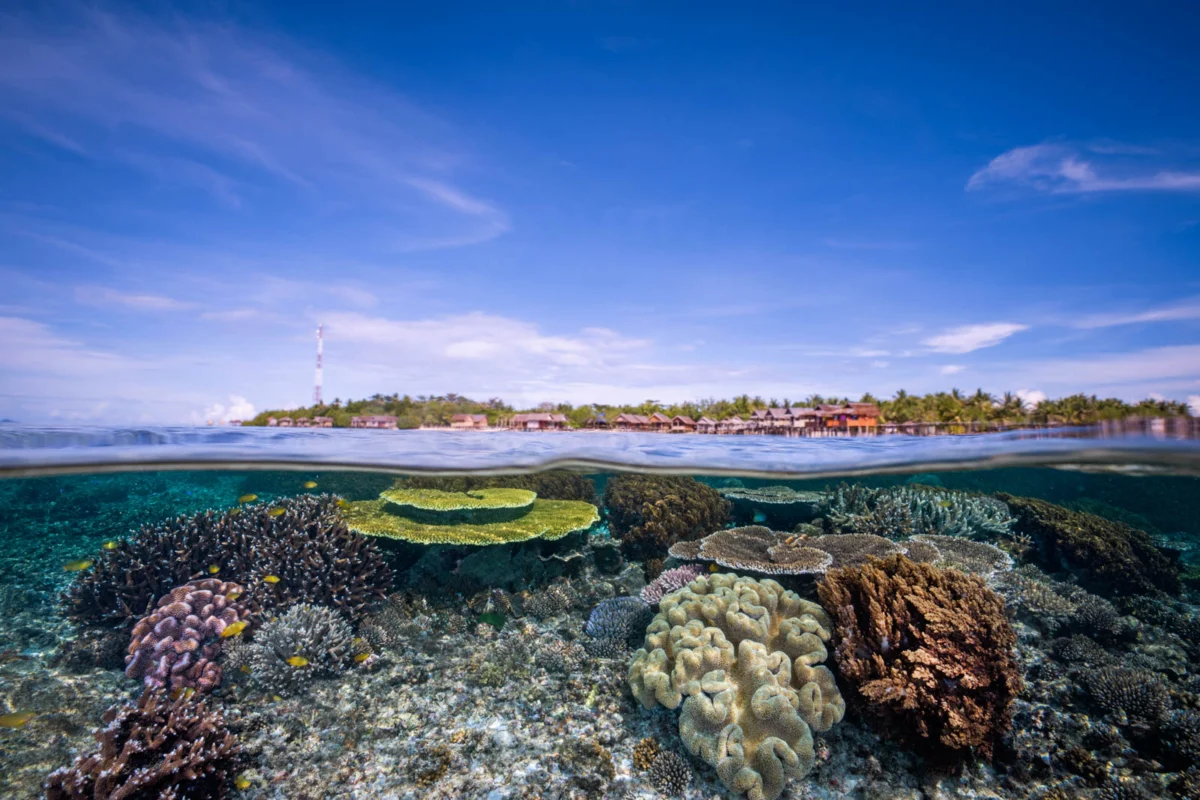
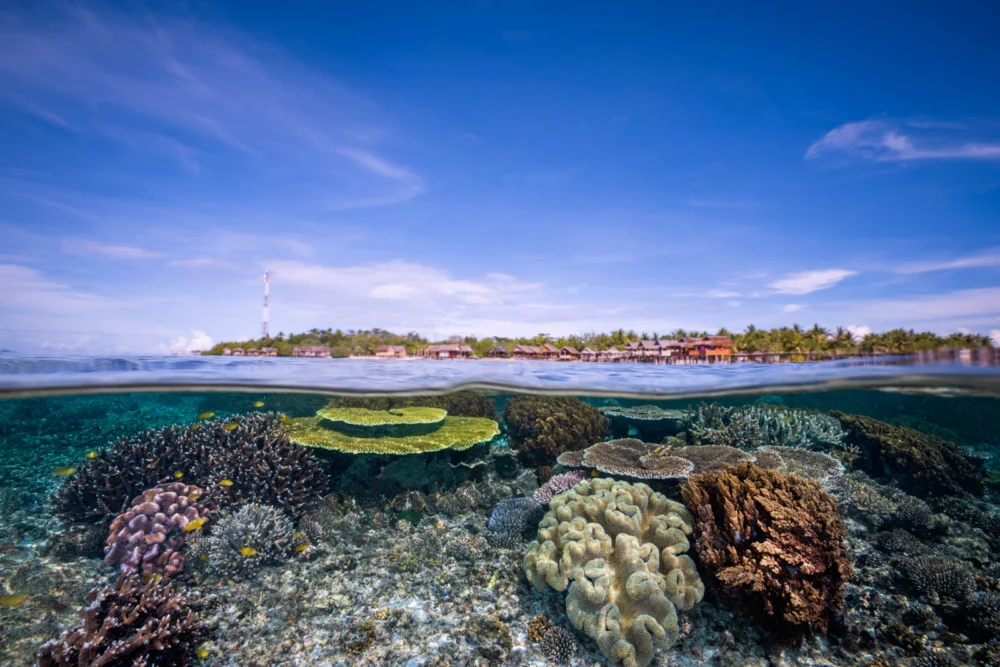
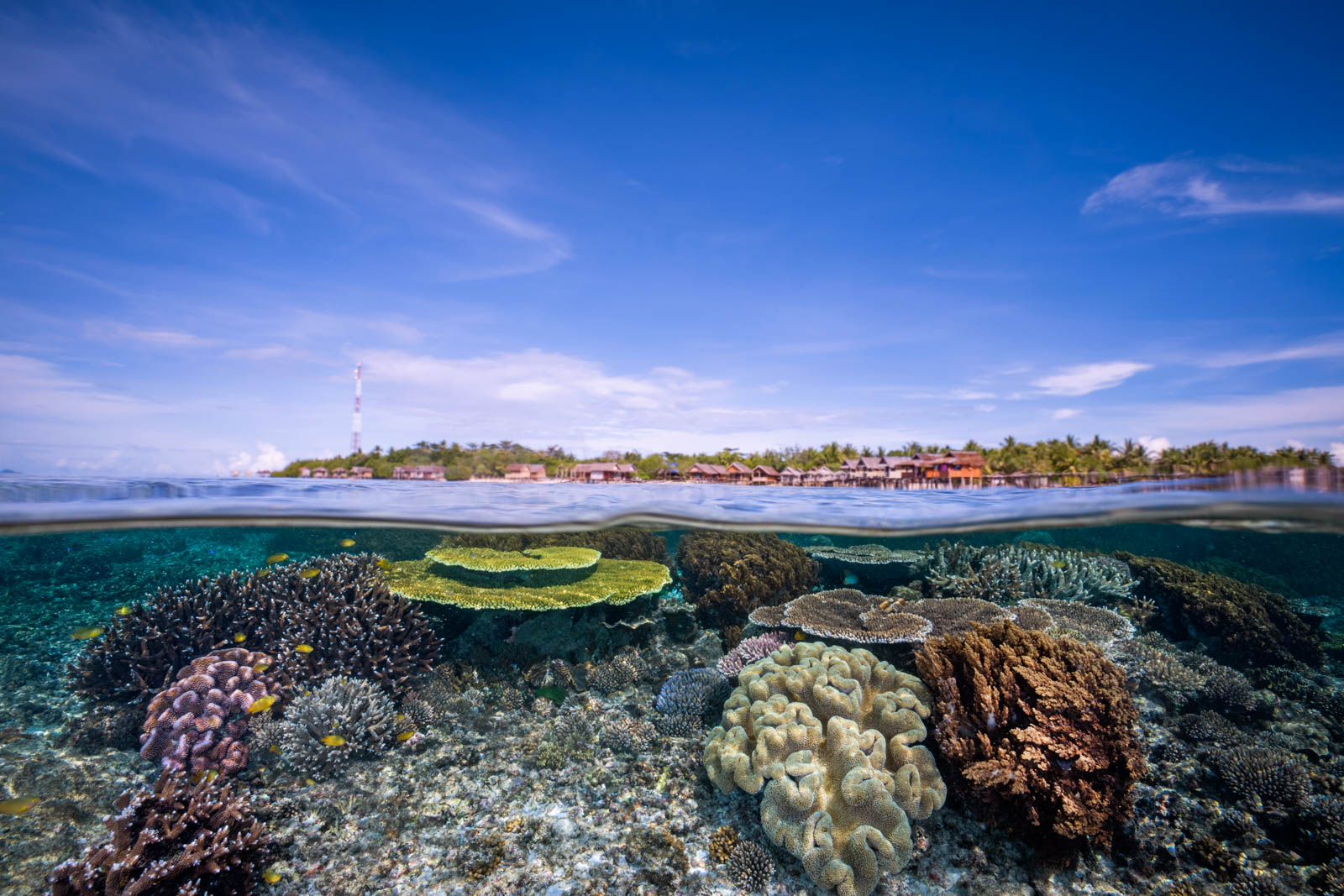
Beyond the expansive underwater vistas, Raja Ampat is also an ideal setting for captivating split shots, where both the underwater and above-water worlds are captured in a single frame. The dramatic karst islands, lush jungle, and serene turquoise waters create a picturesque backdrop for these over-under compositions. Many island house reefs offer easily accessible shallow areas perfect for perfecting split shot techniques. When selecting a homestay, photographers are advised to prioritize those with pristine house reefs, ensuring 24-hour access to a choreographed coral backdrop, maximizing time in the water. The region’s breathtaking sunrises and sunsets further enhance the potential for dramatic lighting in these unique photographs.
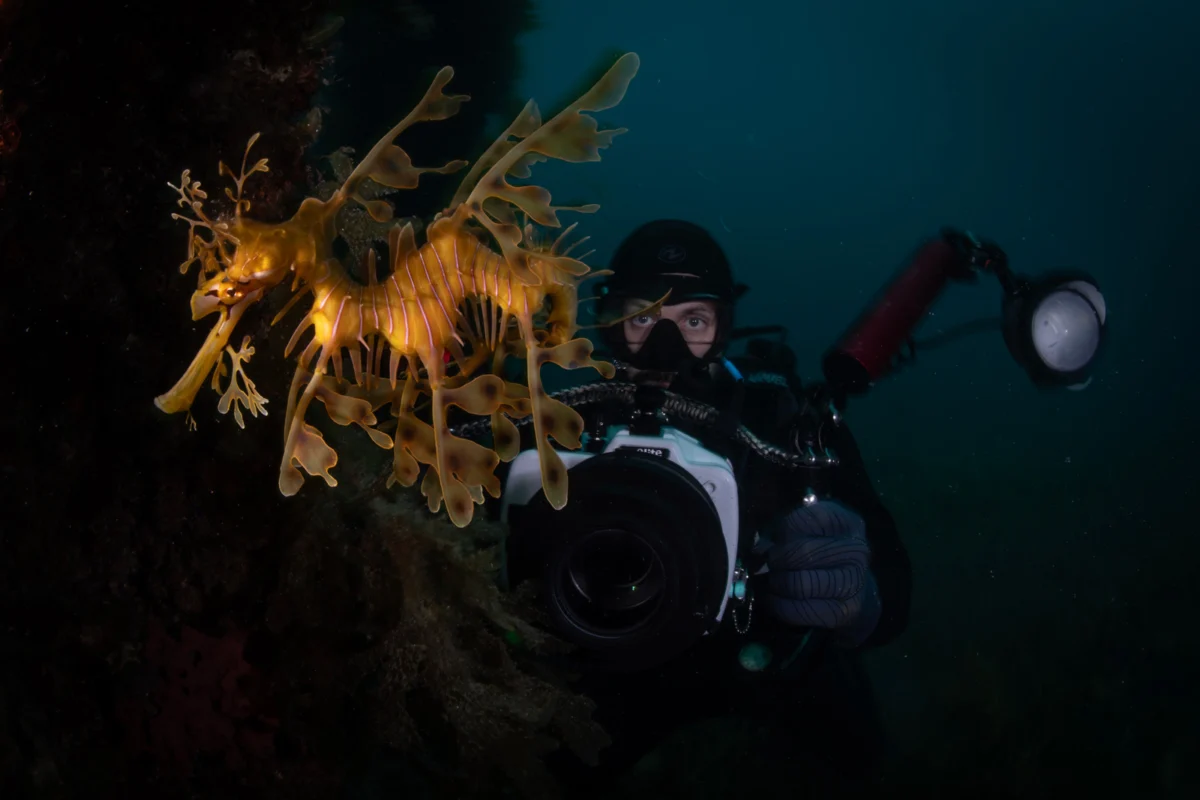
However, a significant draw to Raja Ampat, especially for dedicated photographers, gravitates towards the weird and wonderful macro critters hiding in the cracks and crevices of its breathtaking reef systems. For macro photography, a mid-range macro lens like a 60mm is a good starting point, but it is absolutely essential to pack something with a little more punch, such as a 90mm or 120mm lens, to capture the truly minute subjects. Furthermore, an external diopter (or wet macro lens) is highly recommended for those incredibly tiny critters. Photographers will encounter pygmy pipehorses, mantis shrimps with their striking eyes, masterfully camouflaged leaf scorpionfish, various species of frogfish, an astonishing diversity of cephalopods including octopuses and cuttlefish, ghost pipefish, garden eels, blennies, and countless soft coral denizens. Before each dive, it is crucial to interrogate the dive guide about expected sightings, allowing photographers to select the optimal camera setup for the specific dive, whether it’s wide-angle or macro.

Navigating the Challenges of a Pristine Environment
Raja Ampat’s rich diversity, while a blessing, also presents unique challenges for underwater photographers. The nutrient-rich waters, a direct result of strong currents, are the lifeblood of its vibrant ecosystems but can sometimes lead to less-than-desirable visibility. Capturing those wide-angle stunners requires precise strobe positioning to minimize backscatter and maintain clarity in these conditions. Photographers must have their strobe positioning down to an absolute tee to effectively illuminate subjects and bring out the true colors of the reef.

These nutrient-rich waters are a product of an incredibly intricate system of strong currents that flow through the Dampier Straits and other channels. While these currents are a main contributing factor to the masses of marine life, they can also be a significant burden when handling heavy underwater photography equipment. Divers and photographers must be prepared for dives where the primary focus is on holding on for dear life, seeking shelter behind any available boulder. If a dive guide warns of "strong" currents before a dive, it might be prudent to consider leaving the camera behind. Attempting to photograph in extreme currents can be futile, as photographers may spend the entire 60 minutes struggling to maintain position, with only one hand free. Furthermore, the risk of equipment damage or loss is significantly elevated. It is paramount that cameras are securely attached at all times, and a reliable insurance policy for underwater gear is an absolute necessity for any trip to Raja Ampat.
Conservation and Sustainable Tourism

The extraordinary biodiversity of Raja Ampat is not merely a natural phenomenon but also a testament to ongoing conservation efforts. The region is largely managed as a Marine Protected Area (MPA), with significant involvement from local communities and international conservation organizations. This collaborative approach aims to protect the fragile ecosystems from threats such as illegal fishing, destructive practices, and the burgeoning impacts of climate change. The sustainable management of tourism, particularly diving, plays a crucial role in funding these conservation initiatives and providing alternative livelihoods for local populations. The continued health of sites like Misool, where biodiversity is improving, serves as a powerful example of successful conservation. Visitors are encouraged to engage with local communities respectfully, support eco-friendly operators, and adhere to strict diving guidelines to minimize their impact on this delicate environment.
Selected Dive Sites: A Photographer’s Dream

Raja Ampat offers an array of iconic dive sites, each promising unique photographic opportunities.
-
Melissa’s Garden: A true coral enthusiast’s dream, this wide-angle site plunges divers into a mesmerizing landscape of coral plates stretching as far as the eye can see. The elegance and refined beauty of its topography set the stage for perfect wide-angle shots, capturing schooling batfish, barracuda, snappers, lionfish, and angelfish amidst an explosion of color. The sheer scale of healthy coral here is awe-inspiring.

-
Batu Rufus: This hidden gem near the Fam Islands is a crystal-clear emerald lagoon enclosed by towering limestone formations. The dive begins on the outer skirts with sloping reefs descending to about 25 meters, offering potential sightings of mantas and sharks. However, the true photographic magic unfolds in the shallow waters of the lagoon. The entrance leads through a large swim-through, lined with towering coral fans and majestic rock structures, akin to an underwater red carpet. Beyond, the lagoon opens into a natural pool of wonders with startling visibility, where photographers can spend hours in just 5 meters of water, capturing flourishing reef systems with natural light. This site is particularly ideal for freediving photographers and stunning split shots featuring the dramatic limestone structures above and below the waterline.
-
Cape Kri: Perhaps the most well-known dive site in the region, Cape Kri once held the world record for the highest number of species spotted on a single dive, a testament to its incredible marine density. As one of the more popular sites, it often allows for multiple dives, offering the flexibility to alternate between wide-angle and macro setups. With sloping reefs dropping to a staggering 40 meters, stunning coral gardens, and strong intersecting currents, it provides fantastic wide-angle opportunities with schooling barracuda, turtles, mantas, and various pelagic species. Yet, it also excels as a macro dive site, saturated with exotic tiny critters. The abundance of Muricella gorgonian fans makes it a prime location for spotting pygmy seahorses, masters of camouflage. Octopus, flatworms, an array of nudibranchs, shrimps, and other fascinating macro subjects also abound.

-
Manta Ridge: Located between Mansuar and Airborei Islands, Manta Ridge is a renowned hotspot for schooling manta rays. While it can be a hit-or-miss experience, with some dives yielding no sightings, favorable conditions can result in exhilarating encounters where mantas gracefully glide from every direction. Photographers must be acutely aware of the incredibly strong currents often present at this site and respect the presence of potentially dangerous down currents, prioritizing safety over photography.
-
Citrus Ridge: Another serious fan favorite, Citrus Ridge near the Gam Islands is celebrated for one of the most colorful reef systems in the region. Its vibrant palette makes it an irresistible location for wide-angle photography, capturing the kaleidoscopic beauty of the reef. However, this site is also a biodiversity hotspot for macro life, offering endless opportunities for underwater detective work. The colorful backdrop enhances macro subjects, providing a stunning canvas for capturing wobbegongs, various shark species, turtles, schooling pelagics, and a macro life diversity that is truly beyond words.

Conclusion: A Photographer’s Paradise with a Purpose
Raja Ampat offers boundless photographic possibilities for eager and devoted ocean lovers. The immersion in true island life, with its perfectly manicured reefs, an abundance of ocean creatures, and infinite archipelago structures to enjoy during surface intervals, creates an unforgettable experience. The primary challenge for any photographer will be the delightful dilemma of choosing between a wide-angle or macro setup for each dive, as opportunities for both are equally strong. It’s important to commit to a decision and accept that some opportunities on the other end of the spectrum might be missed. Above all, visitors are reminded to respect the powerful ocean currents, the fragile underwater ecosystems, and to embrace the privilege of experiencing this last remaining paradise. The continued health and accessibility of Raja Ampat depend on every visitor’s commitment to responsible tourism and conservation, ensuring its wonders can be captured and admired for generations to come.