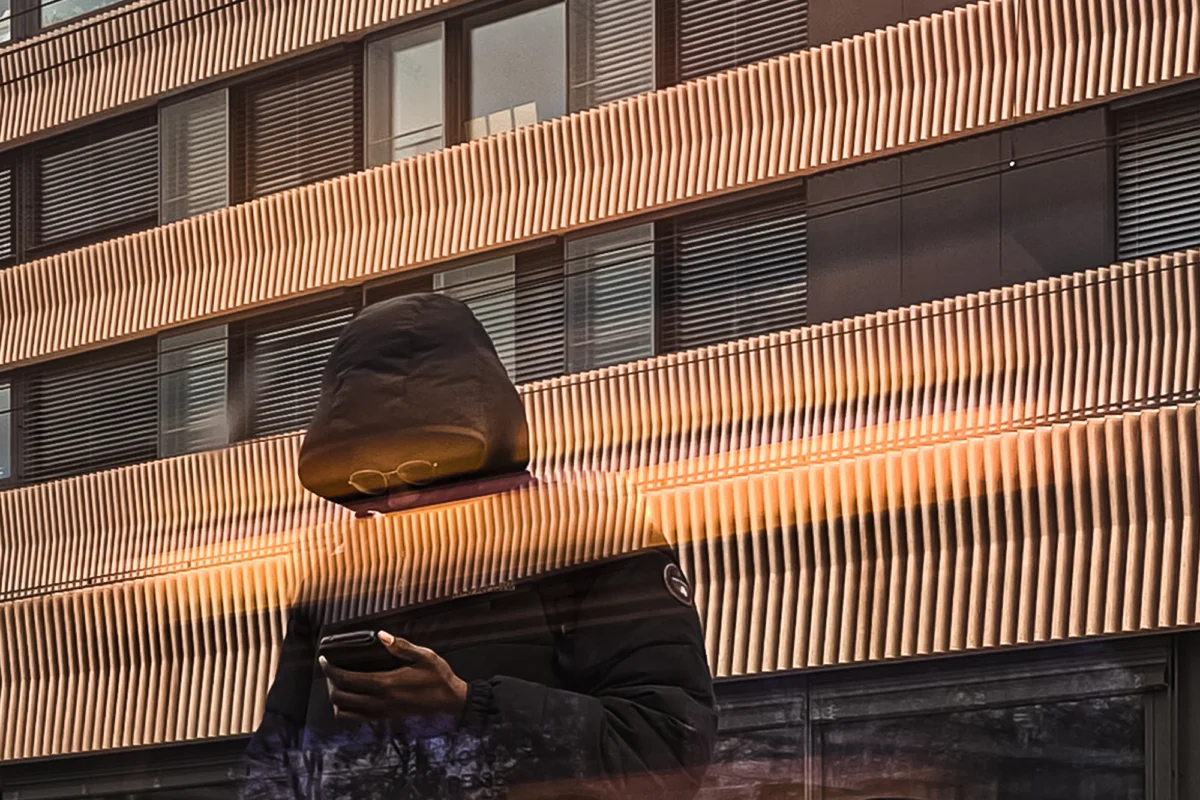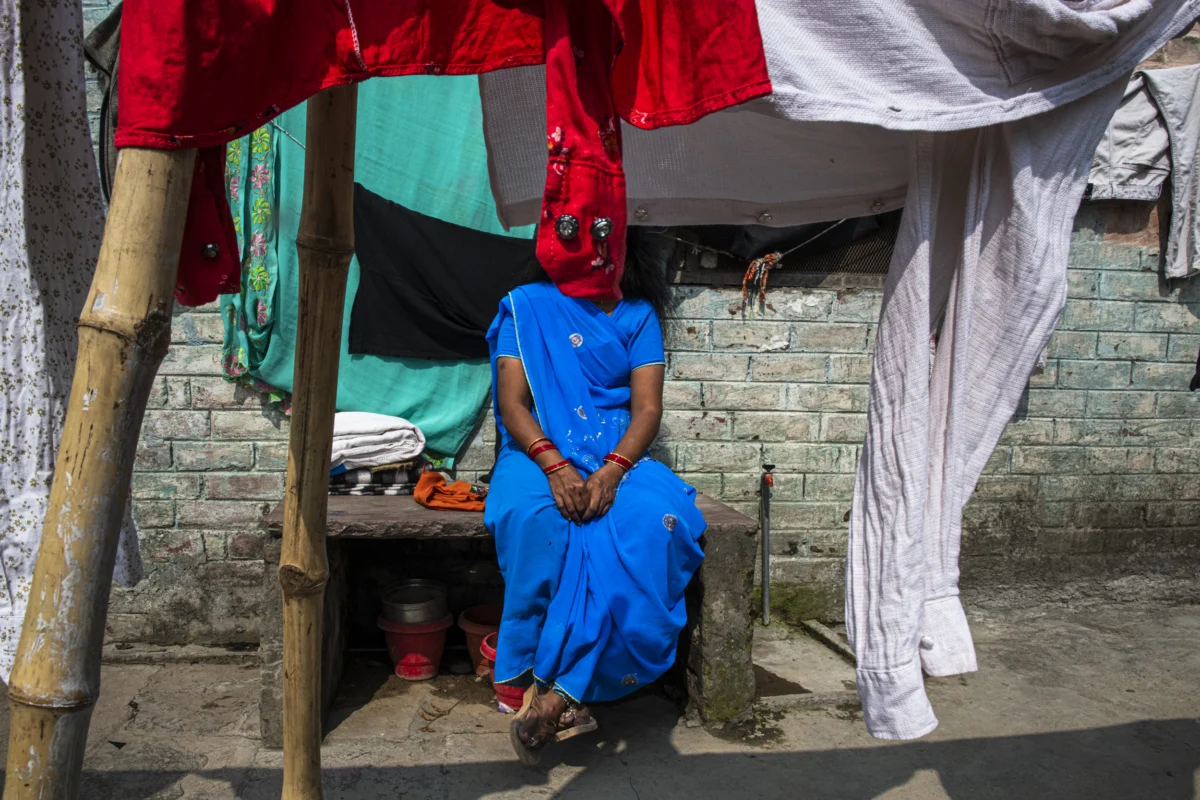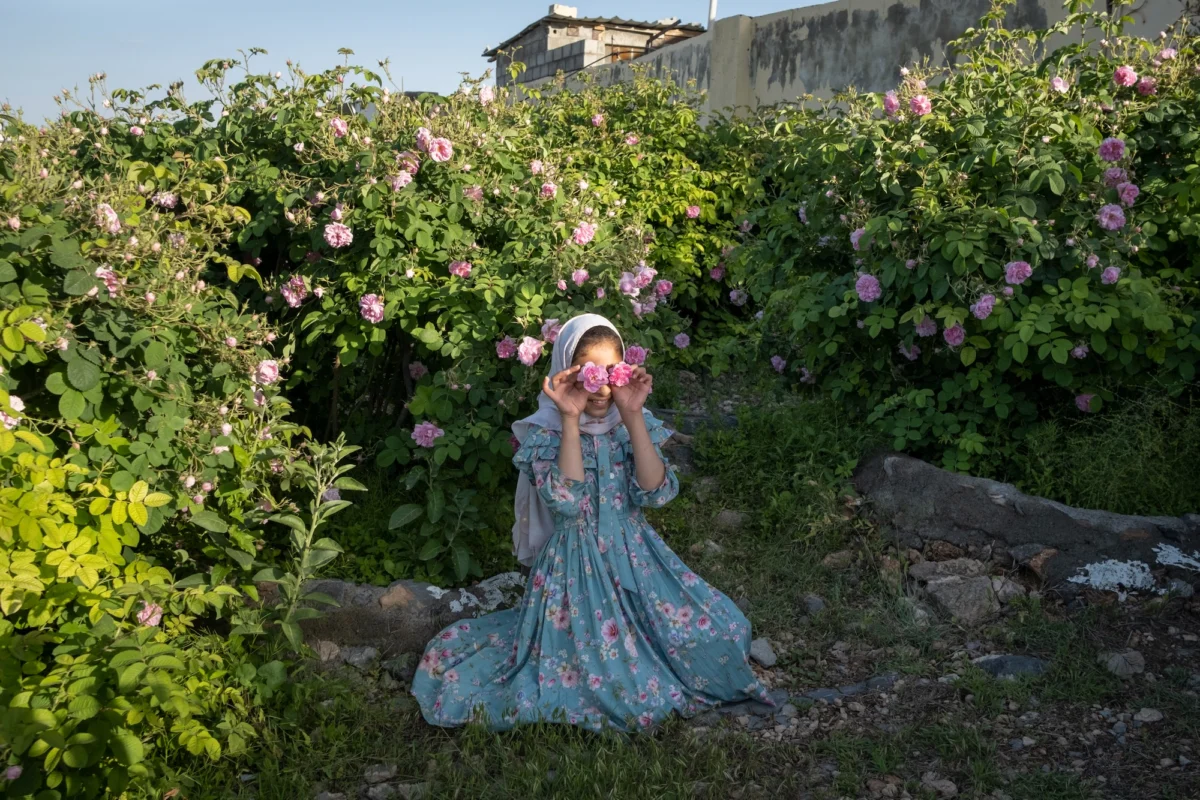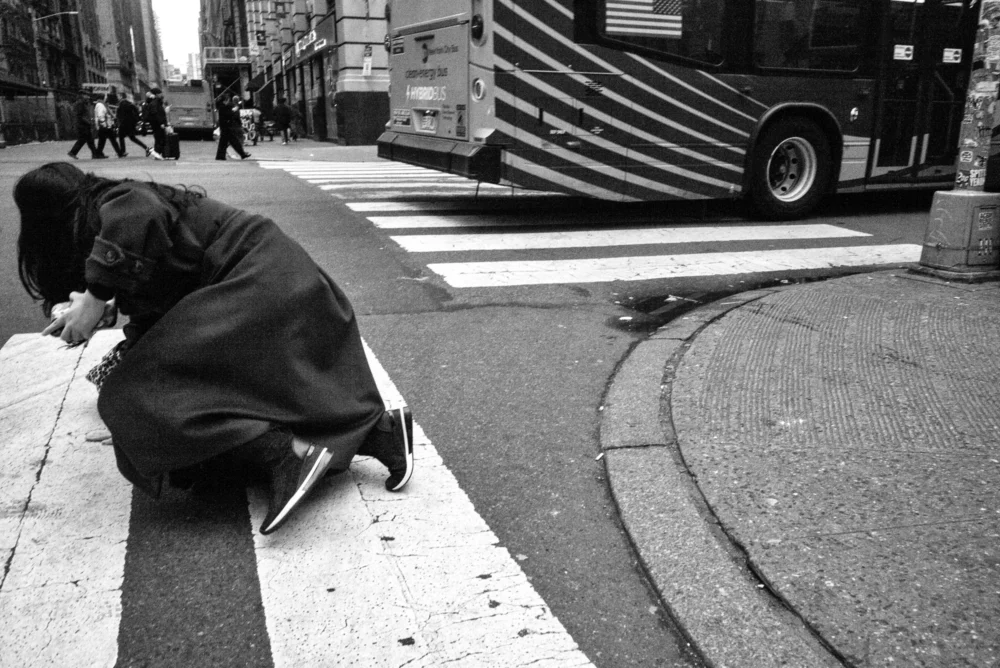
Brooklyn-based photographer, writer, and musician Reuben Radding is igniting a vital conversation within the realm of street photography, challenging conventional perceptions and pushing the boundaries of the genre. With a career marked by award-winning imagery, acclaimed exhibitions, and a deep engagement with photography education, Radding’s work, particularly his recent photobook Heavenly Arms, offers a profound meditation on human connection and the artistic process itself. His approach, which he describes as an improvisation guided by the human spirit and a blend of street photography with personal documentary, seeks to transcend rigid genre definitions, positioning him as a photographer dedicated to the fundamental work of an artist.
A Legacy of Evolution in Street Photography
The evolution of street photography is a narrative of shifting perspectives. From its nascent stages in the late 19th century, pioneered by figures like Eugène Atget, who meticulously documented Parisian life, the genre has moved beyond mere candid documentation to embrace a more interpretive and creative depiction of the quotidian. Radding’s work embodies this progression, harmonizing elements of direct observation with a deeply personal and introspective lens. His significant contributions have been recognized since the early 2010s, culminating in an MFA in Interdisciplinary Arts from Goddard Community College in 2019, where he also received Third Place in the Lenscratch Student Awards. His dedication to the craft extends to his role as an educator, a position he has held since 2013. He has imparted his knowledge at prestigious institutions such as the New York Institute of Photography (2014-present) and the International Center of Photography (2022-present), alongside numerous workshops, lectures, and speaking engagements.

Heavenly Arms: A Decadal Meditation on Interconnectedness
Radding’s artistic vision is powerfully distilled in his debut photobook, Heavenly Arms, published in 2024 by Red Hook Editions. This seminal work, comprising 63 black-and-white photographs curated from a decade of shooting in New York City and beyond, earned the 2nd Place Prize in the International Photography Awards (IPA) 2025, Book Category. The collection is characterized as a "meditation on human interconnectedness, conflict, and the musicality of American life."
The title and the profound sentiment behind it are articulated by Radding himself in the book’s Afterword: "Over the 10 years’ time that I spent making this work I have walked through long stretches of not knowing. I did not always understand exactly what I was making, but I always believed, as Jack Kerouac suggested, ‘something that you feel will find its own form.’ This book contains many of my feelings and observations about human connection—the ways we celebrate it or try to get it, the ways we yearn for it or reject it, and also the absence of it. Everywhere I turn I see the one ultimate problem facing our world, the lie that says we’re separate. Because of my photography and the way I practice it, I feel connected to the essence in ways I never could previously achieve. The heavenly arms of the earthly human spirit are all around me, holding me back and beckoning to me, tossing me around in the wildness of life, and gathering me back in, in sweet, sweet protection. I surrender. I offer myself in all vulnerability to its care and indifference. I do not control much of anything and I don’t believe I should. I accept not knowing, and I accept the certainty of death. I take each day as a waking dream of freedom."
This deeply personal reflection underscores Radding’s intent to move beyond mere visual representation, aiming instead to explore the existential and emotional underpinnings of human experience through his photographic practice. The release of Heavenly Arms has been met with critical acclaim, solidifying Radding’s position as a significant voice in contemporary photography.

Deconstructing Genre: The Photographer as Artist
Radding’s reluctance to be confined by the label of "street photographer" is a deliberate choice rooted in his artistic philosophy. While his environment and methods are undeniably linked to the genre, he asserts that his primary identity is that of a photographer dedicated to the broader artistic endeavor. "It doesn’t really matter to me," Radding states when asked about how viewers perceive his work versus his own classification. "I’ve learned from experience that people come to the work in myriad pathways and how they arrive at it will give them a particular perception, or a partial one, and they bring along preconceptions that can’t be accounted for. I have little to no control over this."
He further elaborates on the limitations of categorization: "I don’t mind if people call me a street photographer, but when I used to think of myself this way I risked unconsciously limiting my practice to what I thought that meant. This is contrary to my values and inhibits my growth, so I prefer to just think of myself as a photographer. Categories are just marketing." This perspective challenges the industry’s tendency to pigeonhole artists, advocating instead for a more fluid and expansive understanding of creative practice. By embracing this broader definition, Radding allows his work to evolve organically, unburdened by the expectations of a specific genre.
The Poetics of Black and White: Beyond Mimicry
The discussion around color versus black-and-white photography is a perennial topic in photographic circles. Radding offers a nuanced perspective on this debate, emphasizing that the choice of palette is a reduction of reality, not a direct replication. "I cannot speak for anyone but myself, so I can’t tell you why others make their choices," he explains. "I will say though that while we do see life in color, photographs are not life. They are not reality. Even color photographs are a massive reduction of that reality. Reality is three-dimensional, doesn’t have edges, and includes food for our non-sighted senses, like sound and smell. Reality is also in motion. Photographs are frozen fragments of that continuum of time. A black and white photo is just one more step of reduction."

His personal preference for monochrome stems from a desire to move away from the superficial resemblance to reality. "I discovered early on that when my photos looked too much like reality they annoyed me. They felt less magical and alive. Reality is not where I wish to live. Reality is disappointing. I want to live in that magical space that activates possibility, imagination and memory." This inclination echoes a historical shift in art photography, where black and white was once considered the sole domain of serious artistic expression, a notion that has since been challenged and expanded. Radding views these stylistic debates as potential orthodoxies that can stifle artistic growth. "What seems to have happened is that we have collectively traded in one stupid orthodoxy for another. I have no use for orthodoxies. All they do is limit growth and keep us stuck in a cycle of distraction from the things that really matter."
He advocates for moving beyond these binary discussions to focus on the deeper emotional and thematic content of images. "Let’s start by taking away the ‘vs.’ in your question. Everything is available and not everything is binary. There’s great work in color and there’s great work in black & white. Some people even combine them! It’s time we looked past palate and asked ourselves about the feelings and forms within the images, and what they have to say about deeper human concerns." His experience curating a show in Brooklyn further reinforced this point, demonstrating the distinctiveness of individual black-and-white palettes and challenging the assumption of uniformity within monochrome photography.
Overcoming Obstacles: Cultivating Artistic Voice
As an educator, Radding identifies several significant hurdles that contemporary photographers face in their artistic evolution. A primary concern is the lack of sustained effort and the prevalent desire for shortcuts. "One problem that I can’t help students with is that a lot of people just don’t work hard enough," he observes. "To really grow into finding yourself as a photographer takes a lot of shooting. Street photography will take as much as you’re willing to give it, and just casually dipping in and out of it and treating it like a part time hobby will not yield the same growth and learning as going hard at it." The immediacy of digital culture, he notes, fosters an impatience for results and a search for easy answers, which is antithetical to the demanding nature of photography. "Everybody’s in a hurry nowadays. They want results and they want to know exactly where they’ll get them from. They want shortcuts. This kind of photography laughs at that. You have to take an incredible amount of bad pictures to not only find the good ones, but to find out what YOUR good ones are, and what makes them yours."

Beyond the issue of diligence, Radding points to the stifling effect of imitation, the pressure to conform, and limiting belief systems. He encourages students to move away from terms like "capturing," which reinforces a focus on objective description. Instead, he promotes the idea of "activating powers of the medium to create questions, or problems, or impossibilities that are only visible in a picture: transformations of reality."
Perhaps his most potent critique is directed at the overemphasis on "storytelling" in photography. "99% of the time when someone describes a photo or even a series of them as telling a story, or building a narrative, it’s just total bullshit," he asserts. He likens great photographs to poems, emphasizing their ability to evoke emotion and provoke thought through their form and language, rather than simply reporting facts. "Poetry is typified by having the musicality of language as its highest priority, not accuracy of facts or of reporting on events. If the words don’t make you feel a taste in your mouth or feel a lightning in your mind, it doesn’t matter what facts or beliefs they describe. Pictures are like that."
Radding’s pedagogical approach is grounded in guiding students toward experiences that bypass their conscious control, encouraging them to work from instinct and vulnerability. He advises them to photograph subjects that evoke strong emotions—fear, love, or confusion—yielding profound and unexpected results.

Redefining Photographic Inquiry
Radding argues for a shift in the critical discourse surrounding photography, urging practitioners to move beyond outdated debates and engage with more substantive inquiries. "The problem with debating all those binary questions like color vs. black and white, analog vs. digital, documentary vs. fine art, male vs. female gaze, etc. is that ‘solving the problem’ only leads you back to the problem," he explains. He contends that instead of focusing on stylistic choices, photographers should explore the fundamental questions of existence, connection, and the human condition, themes that have been central to great art across disciplines.
"Think of all the great Shakespearean themes like vanity, jealousy, sacrifice, virtue, or dishonesty. How can we make our work about something more than drawing a rectangle around something we like?" Radding poses. He suggests that by focusing on the complexities of life—its disappointments, heroics, follies, and the omnipresent specter of mortality—photographers can create work that is both enduring and relevant. He references Garry Winogrand’s sentiment about avoiding repetition as a more generative question than technical comparisons, highlighting the importance of artistic innovation over stylistic dogma.
The Role of Luck and Risk in Image-Making
The element of luck in street photography is a subject Radding approaches with keen insight, drawing parallels to his background in improvised music. "Sure, it has significance when it’s significant. Some pictures are imbued with luck," he acknowledges. He describes "rehearsed luck" as a common factor in successful street photography, where a photographer’s readiness and intuition align with an improbable moment. "There are quite a few pictures in my book, Heavenly Arms, which are a result of this same brand of luck."

Radding champions the embrace of risk in artistic creation. He contrasts this with the tendency of some photographers to mitigate risk in pursuit of predictable outcomes. "I used to play music that was totally improvised and for the audiences that loved it the appeal wasn’t that it all worked or made sense, but that there was always the sense that it could fall apart any second," he recalls. This sentiment translates to his view on photography, where he believes discovery through chance-taking is more valuable than striving for technical perfection or formulaic success. He uses the metaphor of a tightrope walker, suggesting that the perceived danger and the high stakes are what create compelling engagement.
Navigating the Iconography of New York City
The challenge of making original work in a city as intensely photographed as New York City is a common question Radding encounters. However, he finds that most New York-based photographers are less concerned by this than external observers might assume. "The problem of trying to make something that you haven’t seen before is more or less the same wherever you go," he states. He points to New York’s dynamic nature, its variety, and its capacity for surprise as constant sources of inspiration. "What people forget is that New York is a place that is constantly changing, is incredibly varied, full of surprises, and small differences in how you point a camera can seem to present totally different worlds." Ultimately, he concludes that the fundamental challenge remains universal: "it’s still just really hard to get a great picture, period."
The Enduring Nature of Editorial Standards
Radding expresses a detachment from the realm of editorial photography, noting that his interactions with editors have consistently revealed a lack of imagination and a reluctance to take risks, a pattern he observes as unchanging. While acknowledging the existence of exceptional editors, he does not find the pursuit of editorial work to be a driving force in his artistic aspirations.

Composition: Instinct and Evaluation
The role of composition in street photography is another area Radding addresses with his characteristic depth. While acknowledging its importance, he differentiates between the act of shooting and the subsequent evaluation of images. "Being conscious of composition in the act of shooting usually means repeating logics we recognize, and I want to find new constructions," he explains. He emphasizes that the true criticality lies in the evaluation stage, where photographs that fail to leverage formal possibilities are deemed less valuable. However, he cautions against an overemphasis on specific compositional techniques, such as "layering," stating that even well-executed formal elements cannot salvage an image lacking in broader substance. "Form won’t always save you though! I have had numerous students in the last couple years drive themselves crazy trying to find ways to incorporate formal ideas like ‘layering’ to the exclusion of the many other forces photos deal in, only to find that you can just as easily make a forgettable picture with layers as you can with one that offers a flat sense of space."
A Place in the Photographic Pantheon
When asked about his position within the history of street photography, Radding maintains a humble and introspective stance. "That’s not something I get to decide. It’s for other people to say," he responds. While he feels a connection to past and contemporary artists, he emphasizes that his primary focus is on his own intentions and inspirations. "I only compare myself to myself and my own desires. I am the offspring of all who came before me, and I have no idea what comes after, or what will be influenced by me, and I wouldn’t find it useful to try to augur this." This perspective underscores his commitment to the present act of creation, unburdened by the need for historical validation.
Reuben Radding’s work and his articulate perspective continue to foster critical dialogue, encouraging photographers and art enthusiasts alike to look beyond conventional boundaries and engage with the profound possibilities inherent in the photographic medium. His ongoing contributions, both through his visual art and his educational initiatives, promise to shape future discussions in street photography and beyond.